
A Question for Paedobaptists…

Standard

Been reading some outstanding blogs that have tackled the issue of paedobaptism (the baptism of infants and toddlers) and find much of what they say to be worth considering.
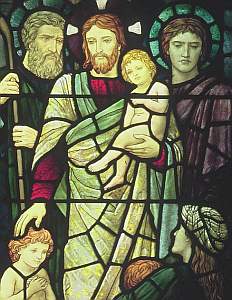
Suffer the Little ChildrenBut one thing bothers me. As someone who has been a part of both churches that practice paedobaptism and churches that abhor it, I have always had a question for paedobaptists that none has ever been willing to answer: If you baptize infants and toddlers, why do you not allow them communion?

That seems like an oxymoron to me. To deny communion to baptized members of the Body of Christ flies in the face of the Lord’s admonishments to us concerning communion (when seen through the same logic used in support of paedobaptism.) If we want the little children to come to Jesus through baptism, why would we not let them come to him through communion?

I say this because the paedobaptist churches I was a part of refused young baptized children communion until they had completed some sort of catechism or were considered to be of the age of accountability. But if we are not willing to allow young children to commune with their households (and have the biblical injunctions to make a case for not doing so), then how can we make the case for paedobaptism using household analogies?

I really want to hear a good justification for this odd dichotomy in belief. So please comment!

{Image: Detail of Henry Holiday’s “Suffer the Little Children”}

Mr. Spock Says, “Highly Illogical.”

Standard

Mr. Spock--and the discerning of spirits?Everyone’s favorite Vulcan, Star Trek‘s Mr. Spock, was forced to deal with illogical humans on a daily basis. But as any casual observer of the show knows, Spock was routinely stymied by the fact that the illogical humans got results. He was even forced to think like them on occasion. In one classic episode, Spock blew the mind of some robots even more logical than himself by resorting to illogic in order to save the crew of the Enterprise.
In the battle over cessationism, I was thinking today about a piece of illogic that strains the credibility of those who champion cessationism. For those unfamiliar with cessationism, the proponents claim that the supernatural gifts of the spirit ceased with the deaths of the apostles. A quick reminder of those gifts:

Now there are varieties of gifts, but the same Spirit; and there are varieties of service, but the same Lord; and there are varieties of activities, but it is the same God who empowers them all in everyone. To each is given the manifestation of the Spirit for the common good. To one is given through the Spirit the utterance of wisdom, and to another the utterance of knowledge according to the same Spirit, to another faith by the same Spirit, to another gifts of healing by the one Spirit, to another the working of miracles, to another prophecy, to another the ability to distinguish between spirits, to another various kinds of tongues, to another the interpretation of tongues. All these are empowered by one and the same Spirit, who apportions to each one individually as he wills.
—1 Corinthians 12:4-11

Beyond the enormous issue of asking when the gift of faith passed away, the one that I am not getting is the logical assertion by cessationists that the gift of the discerning of spirits has passed away.

Any quick read of major cessationist authors reveals a loop of illogic that would probably send Spock into fits: the fact that cessationists claim to be able to discern that the spirit behind the modern charismatic gifts is not the Spirit of God.

Think about that for a second. If that gift has passed away, then what are cessationists using to discriminate the spirit that is fueling the charismatic excesses they despise? Are they using the very gift they claimed passed away?

Truly this is a loop of illogic that Spock would have had an aneurysm over.

{Photo of “Mr. Spock” copyright Paramount Pictures}

The Message of Salvation in a Nutshell

Standard

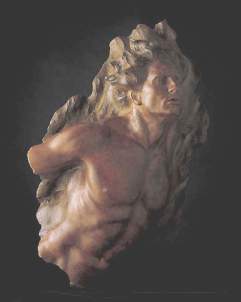
Frederick Hart's 'Ex Nihilo Fragment Five'A few days ago, I posted The Christian Walk in a Nutshell. Well, after someone in another forum asked to sum up the message of salvation, I decided to answer with as terse a layout of that message as I could—right from the Bible. I hope all who visit this blog will find this very simple (and easily memorized) collection of passages to be helpful in sharing with others:

For all have sinned and fall short of the glory of God….
—Romans 3:23

For the wages of sin is death, but the free gift of God is eternal life in Christ Jesus our Lord.
—Romans 6:23

This is the second death, the lake of fire. And if anyone’s name was not found written in the book of life, he was thrown into the lake of fire.
—Revelation 20:14b-15

But God shows his love for us in that while we were still sinners, Christ died for us.
—Romans 5:8

“For God so loved the world, that he gave his only Son, that whoever believes in him should not perish but have eternal life. For God did not send his Son into the world to condemn the world, but in order that the world might be saved through him. Whoever believes in him is not condemned, but whoever does not believe is condemned already, because he has not believed in the name of the only Son of God.”
—John 3:16-18

Jesus said to him, “I am the way, and the truth, and the life. No one comes to the Father except through me.”
—John 14:6

And Peter said to them, “Repent and be baptized every one of you in the name of Jesus Christ for the forgiveness of your sins, and you will receive the gift of the Holy Spirit.”
—Acts 2:38

Therefore, if anyone is in Christ, he is a new creation. The old has passed away; behold, the new has come.
—2 Corinthians 5:17

And this is the testimony, that God gave us eternal life, and this life is in his Son. Whoever has the Son has life; whoever does not have the Son of God does not have life. I write these things to you who believe in the name of the Son of God that you may know that you have eternal life.
—1 John 5:11-13

{All passages taken from the English Standard Version of the Bible.
Photo: Frederick Hart‘s “Ex Nihilo, Fragment Five”}