In the Spirit of The Spirit

Standard

Truly, truly, I say to you, unless a grain of wheat falls into the earth and dies, it remains alone; but if it dies, it bears much fruit.
—John 12:24

Not usually one to turn to the comic books for spiritual guidance, I recently finished reading Who Needs a Superhero? by a pastor friend of mine, Mike Brewer. His book tackles the intersection of the Gospel and the comic book in a way that is gentle and wise.

Cross & SunOne of the featured superheroes is Will Eisner’s The Spirit. Originally an intrepid reporter (weren’t they all in the 1940s?), The Spirit started life as Denny Colt. Running afoul of a real mad scientist, Colt finds himself very much dead and buried in the family vault. But the end is not written, for the very means of his death is also the means of his rebirth. Made alive again by the very thing that killed him, Colt decides he has an opportunity that no one gets—the chance to live a reborn life dedicated to righting wrong completely free of the trappings of being tagged and labeled by the world. And so his quest begins, this legally-dead man taking on the scum of the earth, now more alive than he ever was.

Paul writes:

But far be it from me to boast except in the cross of our Lord Jesus Christ, by which the world has been crucified to me, and I to the world.
—Galatians 6:14

In our modern age composed of so much hustling and fighting to get to the top of the heap, the cross speaks of dying to self. Satan can easily put down a man who lives to himself, but a dead man cannot be opposed. When we die at the cross, we are given the opportunity to be unhindered. It is the way we were meant to be. God knows that we can more fully live if we have died to “the elemental spirits of the world.”

Not everyone takes the opportunity to die at the cross and be freed from the power of the world. Far too many die in their sins, mummified and bound. I hear infinitely more messages calling out to us to live for ourselves and only one that says,

For if you live according to the flesh you will die, but if by the Spirit you put to death the deeds of the body, you will live.
—Romans 8:13

Today, let us come to the cross that we might die and by the Spirit of the Lord be made alive again.

Blessings.

Is Christianity Broken?

Standard

I've been using Bloglines to read the feeds from about fifty Christian blogs. The service works well and allows a person a quick way of scanning updated feeds. I can read through those fifty blogs as they post in less than fifteen minutes. It's almost like reading through a copy of Christianity Today, except with a far looser editorial standard. And that's a problem. Stressed & confused

Since 2001, I've had a blog up. Cerulean Sanctum came about in late 2003 because I saw a need that was going unfilled, a blog that called people back to the heart of the first century Church. I've considered this blog to be a ministry for me; I've received many letters over the last eighteen months from people who have been blessed by this blog.

But now as I read all over the blogosphere, I wonder if we Christian bloggers are actually doing a disservice to people, especially to those who are struggling in the faith or are considering the claims of Christ for the first time. My reasoning? Well, as I go through my list of fifty blogs, I often leave them feeling confused, angry, depressed, and just about every feeling but the one the Lord wants to cultivate most in us, joyful.

This is not to say that there are no Christian blogs that are edifying. But as I read the blogs, see the dissension, note the snarky comments left, and take in some of the more extreme ideas out there, I am left with only one question, Is Christianity broken?

It's hard to escape that impression after a few visits to popular Christian blogs:

  • The hardcore Calvinist blog torches the stalwart Arminian blog—and vice versa.
  • The apologist ends his disassembling of some "lesser" theologian with a haughty comment about his opponent's cranial capacity or ultimate afterlife destination.
  • The woman's blog done up in a soft-focus, pink flower design discusses how blessed it is to be your husband's footstool.
  • The family blog offers that folks who don't have ten kids or who don't "do 'it' naturally" are nothing more than soulless zombies of Planned Parenthood, little Margaret Sangers hellbent on the destruction of The Family.
  • The political blog is busy carving a copy of The Constitution out of the same Mt. Sinai rock that Moses brought down in the form of the Ten Commandments.
  • The conspiracist/eschatology blog finds an antichrist under every Mideast pebble.
  • The confessional blog lets us see that the author pines to know whether God will accept him/her despite the fact that he/she cheated on a math test in third grade.
  • The heretic blog does a fine job unmasking the devil in every preacher or teacher who ever walked the face of the planet.

After a while you can't avoid the question. The blogs beg for it. The conclusion seems inescapable. Even writing about this seems to only add fuel to "Is Christianity broken?" If a cross-sectional reading of popular Christian blogs is any indication, the answer must be "Yes."

So on this Friday morning I'm wondering if those of us who blog are only making the Christian walk harder for people rather than easier. This weekend I plan on taking some time to ponder this question. I don't know what this means for this blog, but I'd like to hear what others think about how we Christian bloggers are portraying Christianity to the world. Truthfully, we have an enormous burden in an age when ideas are so readily presentable to the entire planet via the Internet. Maybe we just need to tone down our rhetoric and be a little less dogmatic in some of our thinking.

Or maybe all we need is to simply shut up and listen for a change.

Wrongly Dividing the Gospel

Standard

Boy in doorwayThe social gospel is not new. There have always been those who gravitated to the more man-centered part of the message of Jesus. With the rise of the Emerging church and a mini-backlash against those who seem to espouse only a moral gospel, the social gospel has come back into focus.
A few of the more left and centrist leaders in Evangelicalism have been pushing to counter the moralists. Men like Jim Wallis, Tom Sine, and Tony Campolo are increasingly speaking to the disconnect that has formed within the ranks of Christians between what we believe and endorse and what we actually get out and do.

Let me say that I wholeheartedly believe we need to be not only working for moral righteousness, but also social righteousness as well.

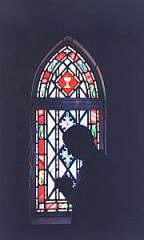
The “as well” there is key. As much as we need to hear the messages of Wallis, Sine, and Campolo, we cannot forget that Christianity is not one gospel or the other, it is The Gospel. Stained glass & prayerStrip any pieces off of it an attempt to stand them on their own and you have a corrupted message or action. The Lord does not intend for us to be hearers only. Nor does He wish for us to simply do for doing sake.

In addressing some recent statements made by Bono of the band U2—a huge proponent of the social gospel—Jared over at The Thinklings nails this dichotomy perfectly (and references Bonhoeffer in the process, always an astute decision) in “No Ethos Without the Theos“:

Kingdom behavior cannot create kingdom hearts. It is the other way around. For the former approach puts the focus on man, while the latter gives the glory to God. This is more, I suspect than many of Bono’s acolytes would be willing to accept. Bono says, “To me, faith in Jesus Christ that is not aligned with social justice, that is not aligned with the poor — it’s nothing.” But the reverse— “Social justice that is not aligned with faith in Jesus Christ is nothing”—is just as true, is in fact truer. Why is it not preached except by those accused of bigotry and judgmentalism and putting conditions on the Gospel? Because most of us, Christians included, want the glory without the cross.

The evangelical, conservative church is not exempt from this error either. I think the Church makes the same mistake, despite its explicit acceptance of the exclusivity of Jesus. The Church reduces the Jesus ethic to pious sentimentalities, as well, equating “doing good” with “being good,” decontextualizing the teachings of Jesus until they become little more than baptized proverbs. Discipleship is about self-improvement, taking up one’s cross is about staying positive through a rough time, etc. We are just as guilty, because we are drunk on self-help and our own potential and discovering the champion in ourselves. We too want the glory without the cross. Bonhoeffer had a phrase for that: cheap grace.

No sentimentality without (the) sacrifice.
No justice without holiness.
No right behavior without righteous character.
No ethos without theos.

Kingdom actions without kingdom character are rubbish.

To this I say, “Amen.” We can’t filter out the parts of the Gospel that stick in our throats. The Gospel is always true—all of it. We are the ones that must be bent to it, not the other way around. There are not two gospels, only one. Folks who advocate for a piece of it are wrongly dividing the Gospel.

Once again, the reality of the Christian walk is found only in the balance.