
Jared Wilson at The Gospel-Driven Church pointed out six framing questions for preaching the word as suggested by Mark Driscoll of Mars Hill Church in Seattle. I think this list is outstanding, but I also think it is missing a critically important #7. The list:
1. The Biblical Question: What does Scripture say?
To answer this we need to check translations, do our word studies, and find out exactly what words best convey the meaning of Scripture.
2. The Theological Question: What does Scripture mean?
Here we need to interpret what is said, which requires commentaries, cultural background studies, etc. At this phase, John Glynn’s Commentary and Reference Survey is a must-have for every preacher and teacher. He rates all of the best commentaries and other reference material on various books of the Bible and theological topics.
3. The Memorable Question: What is my hook?
A word, image, concept, doctrine, emotion, or person needs to be the hook that is woven through the sermon. Without a unifying hook, the sermon will not be memorable for the hearer and will end up seeming like a number of disjointed thoughts.
4. The Apologetical Question: Why do we resist this truth?
Here we are assuming that people will not simply embrace God’s truth but fight it with their thoughts and/or actions because they are sinners who, like Romans 1:18 says, suppress the truth. So, we attempt to predict their objections so that we can answer them and remove their resistance to get them to embrace God’s truth for their life. This part of the sermon must be confrontational and often results in people walking out, standing up to argue, and sending nasty emails, all of which indicates you’ve hit a nerve like God wants you to. The real fight begins at this point and a preacher needs to come with his hands up looking for an opening much like a boxer. The issue here is uncovering the idols that people have and breaking their resistance to the truth of the gospel. This is also accomplished by co-opting their cultural hopes and presenting the gospel as the only answer to their deepest longing.
5. The Missional Question: Why does this matter?
We need to connect all that we have said to a missional purpose for our lives, families, church, and ultimately God’s glory. Something may be true but if people do not find it to also be important, they tend not to act on it. On this point I like to connect Scripture to the character of God, nature of the gospel, our mission in our city, and the quality of our lives both individually and collectively as a city of God within our city.
6. The Christological Question: How is Jesus the hero/savior?
The Bible is one story in which Jesus is the hero. Therefore, to properly teach/preach the Bible we have to continually lift Him up as the hero. Any sermon in which the focus is not on the person and work of Jesus will lack spiritual authority and power because the Holy Spirit will not bless the teaching of any hero other than Jesus.
Like I said, great stuff.
But I also think there’s a glaring omission.
As I look around the Church in America today, I see and hear a lot of preaching that is nothing more than pop psychology packaged in spiritual terms. It’s Christianity as self-help therapy, stripped of the cross, the blood, sin, redemption, and the Lord. In truth, it is no gospel at all.
On the other hand, I see and hear sermons that contain the full Gospel of grace. Yet something is still missing. Curiously, the item that is missing is the one item that previously mentioned pop-psych sermons address very well. And that’s to ask
7. The Praxis Question: So what are the next steps toward daily living out this truth in your life and mine?
If you read my post “The Question No One Wants to Ask…” you’ll know that our preaching today has not been very effective at making disciples. I give some reasons why in that post and note what we can do to help address the problem. I think what Driscoll lists above is very valuable at fixing the problem also. He’s just missing that seventh step.
The #5 Missional Question comes close to #7, but it’s still too conceptual. People in the seats are dying to know how the Gospel works in a practical way in their modern lives. They might hear the world’s best theological explanation of the cross, but if no one will tell them what to do to make that explanation real in their own lives, the message becomes like seed sown on hardened, baked soil.
Those of us in the seats today are clueless. Seriously, we are. Most of the foundation of Christianity that undergirded this nation is gone. We’ve got people today who don’t know what a hymn is. Even if what was in the past was merely a reflection of American civil religion, at least people understood that language and what to do with it. Today, few do.
Folks today have to be shown. They need to have someone tell them in detail what to do. Just as the Paul explicitly told the Philippian jailer what he needed to do to be saved, preachers today must give some idea what the next step should be. 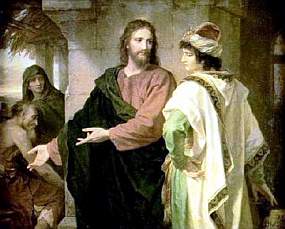 “Jesus is Lord!” Yes, now what must we do next? “Sin kills!” Yes, now what must we do next?
Jesus, whenever He spoke with individuals or small groups, absolutely taught this way. Consider His example of washing His disciples’ feet. I think they got that message of love and service pretty clearly because Jesus showed them what to do next. Or take the negative example of the rich, young ruler who asked the high concept question about the commandments. Jesus responded by telling him what the next step should be in response. Jesus left no doubt as to what to do next; the ruler simply didn’t want to do it.
I’m not sure we’re preaching what to do next in Gospel-centered churches. I think we sometimes spend too much time filling people with knowledge they can’t figure out how to use. But if the difference between the sheep and the goats in Matthew 25 is what they did and didn’t do, then the people in the seats have to know what the godly next step is for what they have learned. They must have a clearly directed outlet for praxis.
Not only this, but as Jesus showed, people need something else that very few preachers are willing to offer—and that’s for the preacher to model the truth so obviously in true servant fashion that no one can miss how the message is supposed to be lived out.
It’s one thing to say that Jesus Christ is the only way to salvation, quite another to show how that should inform our evangelism, and quite another again to have the preacher model how it’s done. Yet I would guess that the number of churches where that occurs in all three steps can be listed in the single digits percentage-wise. I suspect that in the biggest churches with the most famous pastors it’s impossible for the average Joe to even scheduled a meeting with that pastor, much less hang out with him doing door-to-door evangelism together.
We need that #7 question. And we need our leaders to draw alongside the people and show them how it’s done.