
Rights, Oppression, and the Death of the Shared Societal Script

Standard

12 Years a Slave won Best Picture at the 2014 Academy Awards.

I did not see the film. In fact, in a stunning case of cultural cluelessness, I’d not even heard of it before it won.

That said, I’m not surprised at its win. In fact, it may not have been possible for any other film to take home Oscar.

I wish I could find the link to the article, but several months ago I read an enlightening post concerning Hollywood’s rather banal decent into repetitive storylines. Slate had an insightful look at the Save the Cat phenomenon and how it has rendered all plots the same (“Save the Movie!“), but this gone-missing article struck a bigger nerve.

The contention is that movies today lack a touchstone for the American script—not a movie script, but the ongoing dialog we Americans maintain that defines our core beliefs as Americans.

Core beliefs? Can you even HAVE core beliefs today?

The article contended we were at a point in our history as a nation that we can no longer agree on shared values and core beliefs beyond some very general ones, milquetoast values that make for boring movies. We saw Man of Steel at the box office this summer, but what we didn’t see was much truth, justice, and the American Way on display. Wouldn’t want someone watching to get riled that a pro-America Superman places the Man of Steel into the imperialistic oppressor category.

Let’s be frank here: About the only shared value we Americans have left is a distaste for oppression. While in an earlier age that might have meant us fighting some tyrannical, overseas dictator or championing the cause of the poor, today it means something less noble: Don’t oppress me by questioning whatever it is I want to do to gratify myself.

OppressionBy choosing a film about slavery as Best Picture, the Academy recasts the worst of oppressions and shoehorns it into the modern expression. I mean, what kind of barbarian could possibly endorse the oppression of a fellow human being as expressed in Civil War-era American slavery? Now fast-forward that to America 2014 and witness how easily we slide from championing freedom from slavery to demanding freedom from all moral constraints.

Who is the new oppressor? The one who questions same-sex marriage. The one who questions abortion. The one who questions…

See, to be an oppressor today, to be the villain in a modern movie plotline, all one must do is question another person’s desire (now called “a right”) to do ____________.

The questions the supposed oppressor is asking may be worthwhile on the surface, but their worth is now trumped by any implications of inherent oppression. Carte blanche has never been more acceptable, at least when the self-satisfiers are in charge.

Movies are boring today because we have seen our American script became a one-note message. Worse, even that one-note message of opposing oppression lacks the depth and wisdom it once possessed. Today, it is all about self-gratification. Any constraint that prevents self-gratification has been deemed oppression. And we all know who the new oppressors are—at least as they’ve been tagged by the ones making up the new definitions.

So, if you’re reading this and nodding your head, how does it feel to be the new oppressor?

“Alright, Mr. DeMille, I’m ready for my close-up.”

Fallen-through-the-Cracks People and the Church

Standard

Recently, Slate skewered the favored mantra of people who claim business success for themselves and therefore want you to know their secrets: “Do what you love. Love what you do.”

In “In the Name of Love,” Miya Tokumitsu notes how well this works for those chosen few who are not working an assembly line in Kokomo. As for those factory workers, the question of loving what they do looms large.

Not everyone gets a corner office. Sometimes, the destination is the basement mail room.

Nothing makes me ponder the vicissitudes of life more than that person who is one day an active presence in a church and then is gone.

In my own Christian experience, the following example people eventually fall through the cracks of our church programming:

FallingThe family with the unruly special needs child, the kid that hoots and hollers sometimes during a quiet Sunday meeting. That harried mom and dad who got one too many stares one Sunday and then weren’t there the next to receive more.
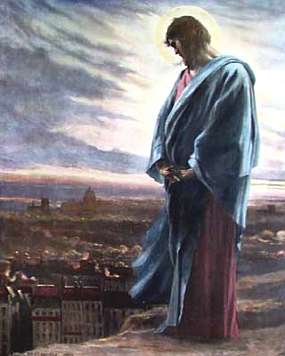
The guys who didn’t grab the brass ring. Often, they seem to be general workmen, “handymen” as it were. They did the odd job, but didn’t do it often enough. One week they are in church, and the next they are gone.

The divorced, diabetic, unemployed mother with the teenage daughter that can’t seem to stop having illegitimate kids. The whole melange lives in a trailer on the outskirts of town, and they come to church now and then, until they get one too many looks or lectures.

The healthy guy who one day stops being so healthy due to the predations of a chronic illness. He used to sit in that back pew near the windows. One Sunday, he was there, and now he’s not.

The cute single gal who gets the dark thoughts that descend on her at random, when her pretty face becomes a mask, and no one knows just what to say. Whatever happened to her? You remember her, don’t you?

I remember.

I wish I knew what happened to these people and why it may be their presence no longer darkens the nave.

I also wonder if the following is more true of them than of the people they leave behind:

Indeed, all who desire to live a godly life in Christ Jesus will be persecuted…
—2 Timothy 3:12 ESV

We don’t think of the fallen-through-the-cracks people as desiring to live a godly life in Christ Jesus, do we?

But don’t they? In fact, could it be they may have wanted that more than the folks with whom they may have once shared a pew?

Do we think of them as persecuted?

And did we become the persecutors?

There’s a success idol in the Church today. We have our own forms of “do what you love and love what you do.” We find spiritual ways to take our own successes and to project them onto others and ask why that person or persons is not duplicating our achievements. How is it they are still in the basement and not in the corner office? Must be sin in their life. They must be hiding something. Or they’re lazy. Maybe they don’t read their Bible enough.

A group of men had an encounter with a fallen-through-the-cracks person:

As he passed by, [Jesus] saw a man blind from birth. And his disciples asked him, “Rabbi, who sinned, this man or his parents, that he was born blind?” Jesus answered, “It was not that this man sinned, or his parents, but that the works of God might be displayed in him. We must work the works of him who sent me while it is day; night is coming, when no one can work. As long as I am in the world, I am the light of the world.”
—John 9:1-5 ESV

That the works of God might be displayed in the lives of the fallen-through-the-cracks people.

We must work the works of the One who sent us.

Night is coming.

But the Light is still here. For now. Among us. In us.

Sadly, some of us are the ones doing the pushing that results in the fall through the cracks for someone else, someone who desperately didn’t want to fall. We must stop making the problem worse.

Instead, our task is to grab onto falling people and set them on their feet again.

The State of the Miraculous in a World of Unbelief

Standard

One of the hallmarks of the final days, as noted by Scripture, is a horrifying level of unbelief.

Jesus said it Himself:

“Nevertheless, when the Son of Man comes, will he find faith on earth?”
—Luke 18:8b ESV

The end of all things depicted in the Book of Revelation shows that even when all of the earth is afflicted by the outcomes of supernatural wrath, mankind refuses to believe:

The rest of mankind, who were not killed by these plagues, did not repent of the works of their hands nor give up worshiping demons and idols of gold and silver and bronze and stone and wood, which cannot see or hear or walk, nor did they repent of their murders or their sorceries or their sexual immorality or their thefts.
—Revelation 9:20-21 ESV

There are some today who want to cast aspersions on the Kingdom of God and its many miraculous components, and they want to question how the Holy Spirit works in believers. Oddly, many doing so call themselves Christians. Though they claim to abide by the authority of Scripture and not by personal experience, they regularly challenge the miraculous in the Bible’s pages by asking where all the miracles are today. And they ask why those Christians who still believe in the miracles that are the hallmark of the Kingdom can’t always manufacture those miracles when such is demanded.

These naysayers like to point fingers at the ones who still have faith that supernatural works can occur through the ministrations of simple believers filled with God’s Holy Spirit. When a miracle does not happen, the naysayers often mock those who still believe in the miraculous.

But what the naysayers never take into account is the power of unbelief within a community. They do not ask how it is possible for the Revelation passage above to be true, that despite all the unrepentant have seen and experienced, the recipients of unprecedented levels of supernatural wrath remain in the grips of the powerful delusion that is unbelief.

We turn to the authority of Scripture to explain what happens when an entire community is gripped by unbelief:

[Jesus] went away from there and came to his hometown, and his disciples followed him. And on the Sabbath he began to teach in the synagogue, and many who heard him were astonished, saying, “Where did this man get these things? What is the wisdom given to him? How are such mighty works done by his hands? Is not this the carpenter, the son of Mary and brother of James and Joses and Judas and Simon? And are not his sisters here with us?” And they took offense at him. And Jesus said to them, “A prophet is not without honor, except in his hometown and among his relatives and in his own household.” And he could do no mighty work there, except that he laid his hands on a few sick people and healed them. —Mark 6:1-5 ESV

Jesus, the Son of Man, who was filled in all His being by the Holy Spirit, who was the sinless Messiah and Alpha and Omega, could do no mighty work in a community filled with unbelief.

When we consider the times we live in and the supposed paucity of miracles we see, do we ever ask if the reason for the lack of the miraculous is because the community around us is mired in unbelief?

Do we ask ourselves what a community of genuine belief can do when all unbelief has been thrown off?Christ and the Community

Do we ever think that the miracle denied the faithful person is because everyone around that faithful person does not believe?

Or do we blame the faithful person?

Or worse, do we blame God?

The question of the miraculous today never takes into account the crippling power of unbelief, especially when multiplied throughout a community. And those who would question the miraculous never ask if their unbelief and the unbelief of those they gather around them is what stands in the way of miracles.