
Fumbling the Gospel

Standard

I would prefer not to start the week with a rant, but this one has been stewing in me for some time, and unless I get it out, it will only nag at me further.

Please read this post today, even if you’re not up for an in-your-face message. And while much of this is aimed at charismatics, it applies to everyone. Because it’s not just charismatics who are missing the point.

I write this today because my heart is just sick with the way we are presenting the Gospel to the lost. I’m writing because our teens are not getting the proper indoctrination into the Faith. I’m writing because I am tired of fellow charismatics who treat the Holy Spirit like a cudgel. I’m writing because a lot of people who “asked Jesus into their heart” are going to hell.

The pastor of my former church linked from Facebook to the following video:

This video, as labeled, purports to show healing revival going on at Disneyland. A group of Christians wanted to pray for strangers at the park. My response: Great! Go for it!

But then the uh-ohs start. You can find one between 40-50 seconds in. Another comes at 4:07-4:20.

There’s a move in some charismatic churches into what has been deemed “power evangelism.” For those not familiar with the term, it involves using the charismata to evangelize people. This includes healing encounters and speaking words of knowledge and prophecy to the lost.

I want to state upfront that I believe power evangelism can be a remarkable tool to lead people to Christ.

But there’s a big “IF” attached to that statement. And part of that if shows at the 4:07 mark.

Power evangelism works if power encounters with the Holy Spirit are immediately followed with the truth of God’s word, the presentation of the Gospel, repentance, and a completely changed life. In that way, people who have genuine power encounters with the Holy Spirit are not just affected by the power encounter, but by the reality of who Jesus is as presented in the Gospel.

When I hear people claiming to be born again because they asked Jesus into their heart, it riles me. Not because Jesus doesn’t dwell in the believer, but because the whole idea of asking Jesus into one’s heart has no biblical basis for salvation.

Paul Washer provides an eloquent counter to this unbiblical concept. I encourage you heartily to watch the whole video. It’s worth it:

Entire churches are dedicated to equipping their youth for power evangelism (such as this well-known example). And while on the surface that sounds awesome, I have enormous reservations.

My key reservation is the same concern shared by Paul Washer: We evangelicals and charismatics no longer understand what the Gospel is. And we don’t understand it because the people who are supposed to be transmitting the truth of the eternal Gospel of Jesus Christ have fallen down on the job, distracted by prosperity teachings, comfort, the American Dream, fun, entertainment, self-help, and even, sad to say, power encounters with the Holy Spirit (the why of which I’ll explain later on).

I think it would be safe to say that the average teen in a charismatic church who may be receiving encouragement to do power evangelism can’t articulate what the real Gospel is. In fact, knowing what I know of youth ministry today, I doubt that most teens in evangelical or charismatic churches could lay out a basic plan of salvation with a half dozen Bible verses in support.

And that’s a crime.

Say a youth group decides to go out and do prophetic prayer ministry at a mall filled with lost people. A few scenarios exist:

1. Teen prays a prophetic word over someone. Person blows them off and walks away. Result: That person may stay lost because they have not heard the Gospel.

2. Teen prays a prophetic word over someone. Person listens, is touched by the prayer, but walks away. Result: That person may stay lost because they have not heard the Gospel.

3. Teen prays a prophetic word over someone. Person listens, is touched, and asks what next to do. Person is told to ask Jesus into his/her heart. Result: That person may stay lost because they have not heard the Gospel.

4. Teen prays a prophetic word over someone. Person listens, is touched, and asks what next to do. Person is told to ask Jesus into his/her heart. That person manages to retain enough interest in the experience to look into it further and, hopefully, stumbles across someone someday who actually explains the real Gospel to them. Result: That person may truly get saved and develop a love relationship with Jesus.

Numbers 1 through 3 are a complete loss, in my opinion, while 4 is the equivalent of fumbling the football and hoping your side recovers the loose pigskin—except in this gridiron classic, there’s not just one team playing against you, but hundreds, if not thousands.

Chances are, these mallwalkers who do bite may taste the fruits of heaven, end up calling themselves Christians, and fall into that netherworld of religiosity dominated by what I call “antiwitnesses.”

Too cynical? Well, I’m not done yet…

If the teens on this prophetic outreach can’t articulate the Gospel, can we be sure they even know what it is? And if they don’t know what it is, then are they truly saved themselves? And if all this is in question, what spirit is driving their power evangelism? Yikes!

(If you think I’m just charismatic bashing, then you’ll have to argue with well-known charismatics Andrew Strom and Derek Prince on these same issues. And for evangelicals, see “10 Reasons to Not Ask Jesus into Your Heart.”)

Youth ministry in this country is in a full-on freefall if we look at its ultimate results. Surveys by many of the most respected Christian pollsters and organizations repeatedly show that the majority of our supposedly born-again young people go into college as Christians and come out as unbelievers. George Barna paints an even bleaker picture, wherein only 0.5% of those ages 18-23 hold what is considered to be a traditional Christian worldview. No matter how you may want to slice and dice Barna’s figure, it’s a tragedy.

Those heartwrenching numbers exist solely because we in the Church today are not instructing our young people in the faith. They don’t know the Gospel. If they did, they wouldn’t be falling away in droves.

Instead, we teach kids who may not know the Gospel how to do power evangelism. Then they go around trumpeting how they’re going to “whack people up with the Holy Spirit.”

Frankly, I’d like to “whack up” whatever heretical “teacher” ever taught someone to talk about the blessed Holy Spirit in such a crass, demeaning way. Godless people speak that way about the members of the Trinity, not those who are indwelt by the genuine Holy Spirit. And for another thing, the Holy Spirit exists to relentlessly point to Jesus, not to Himself. Again, if we don’t know that, we don’t know the Gospel.

Are you mad yet at the foolishness that passes for discipleship and ministry today?

You don’t give a howitzer to a baby, no matter how much they may scream for it. The early Church did not let people go off spiritually half-cocked like we do today. Maturity was lauded and immaturity criticized.

We MUST instruct the immature in the basics of the faith. Any 13-year-old kid who was raised in a church MUST be able to espouse basic doctrine, including the core of the Gospel,  in a coherent way. When I was that age, I had to study my Lutheran catechism for hours, do personal Bible study on basic doctrine, and sit through a one-hour, two-on-one  grilling on tough issues of the faith by the pastor and youth worker before I was considered an adult member of the church.

We have GOT to get back to that kind of intensive discipleship or this will be the terminal generation of the Church. God will not forever excuse the kind of educational folly we’re practicing in all too many churches before He takes decisive action.

In a bit of sychronicity, I happened to stumble across a likeminded post over at iMonk’s blog, “Higher Things: A New Model of Youth Ministry.” It reads like a breath of fresh air, even if it’s again the Lutherans doing it right. I’m just glad SOMEONE takes ministry to the next generation seriously. Much more power to ’em.

But as for the rest of us, we’re atrocious at turning our young people into mature Christians. Atrocious. Too many distractions knock us off the core, foundational doctrines.

Power evangelism is incredible when it’s in the hands of people who know the Gospel, can articulate it, and know how to discern good from evil. But that simply is not our young people today.

If we want to undermine the Church in America even more, let’s keep being stupid about discipleship. But God help us then on Judgment Day.

The One Who Left the Gate Ajar

Standard

I’m a bit late to the commentary on iMonk’s post “Another One Gets Off the Evangelical Bus: Thoughts on A De-Conversion,” which is a response to a post by the blogger known as theBEattitude, “Losing my religion. Why I recently walked away from Christianity.” But I have to comment because this issue of people walking away from the faith is something we Christians must address—even more as the days grow darker.

In reading iMonk’s commentary and theBEattitude’s post and its follow-up comments, the one thing that strikes me more than any other is the travesty that is the loss of even one sheep from the fold.

Jesus says this:

What do you think? If a man has a hundred sheep, and one of them has gone astray, does he not leave the ninety-nine on the mountains and go in search of the one that went astray? And if he finds it, truly, I say to you, he rejoices over it more than over the ninety-nine that never went astray. So it is not the will of my Father who is in heaven that one of these little ones should perish.
—Matthew 18:12-14

I believe one of the most hollow vows American Evangelicals take occurs during infant baptisms and dedications. In nearly every church I have been a part of, the congregation pledges to join the parents in the spiritual development of the child. God takes such vows seriously, yet I would guess that fewer than ten adults in any given church will have any meaningful spiritual impact on that child’s life, even through adulthood. (And I believe that number to be generous.) When you consider the size of some churches, that’s an abysmal number.

The fact is, the average person in the pew has very little spiritual impact on the lives of fellow believers. The compartmentalized island that we call My Life™ here in America doesn’t make a whole lot of room for other people, and one of the areas we make the least amount of time for is discipling the less mature in the faith.

When I read the pile-on that functions as comments to theBEattitude’s post, it’s a stunning indictment of the spiritual wasteland that passes for modern Evangelicalism. I read through at least a hundred comments and most consisted of individuals stating (a) it sure is freeing to cast off the chains of religion, or (b) now you’re going to burn in hell, and it’s your own damned fault.

Apart from atheists rejoicing in their folly (Psalm 14:1), what got me more than anything was that the Christians who responded placed all the responsibility on theBEattitude for wandering out of the fold. To that I ask one hard question, “Oh, yeah?Well, which one of us left the sheep pen gate ajar?”

In a Christian culture that has de-evolved into the same “every man for himself” mentality that afflicts the worldly, placing the entirety of the blame on theBEattitude for apostasizing should come as no surprise. gate_sheep.jpgWhile it is true that each of us must give an account before God, it is just as true that too many of us who claim to be Christians don’t give a hoot about our culpability when the  gate goes unlocked.
When I read theBEattitude’s tale of apostasizing after 33 years of being in the faith and the junior-high-school-level questions posted that form the backbone of his wandering through the open gate, I have to wonder, What mature Christians invested in theBEattitude’s discipleship? How blind were they to his building on sand?

Yet on reading the comments to his post, I did not see any that said, “We fellow Christians failed you.” Instead, we want to blame theBEattitude for his failure. Rather than wonder how his end might have been different if all those adults at his baptism had actually followed through on their pledge to raise him up firm in the faith, we want to blame him exclusively for wandering out the open gate when there never should have been an open gate to begin with.

How easy it is to point the finger of blame at the person who was wronged.

And theBEattitude was wronged. I wronged him and so did you. We didn’t keep up our end of the discipleship bargain. No, we hoped that someone else would. And all that hope led to nothing but apostasy.

In every church around this country, there are people like theBEattitude. He is representative of an enormous problem facing the Church in America, a massive failure that increases each year with little effort on our part to lay aside our own little kingdoms and do something to stop the flight from the unsecured sheep pen.

It is a failure of individuals to take time for others in genuine community.

It is a failure to see the necessity of solid, biblical teaching.

It is a failure to build a comprehensive Christian worldview in impressionable people.

It is a failure to address the issues of the day from an intellectually rigorous viewp0int.

It is a failure to understand the eternal life-and-death nature of raising up the next generation of believers.

It is a failure to take seriously the vows we make concerning our young people.

It is a failure to read the times and prepare for the future.

It is a failure to understand what is most important in life.

It is a failure on our parts to humbly accept part of the blame when those in our care wander away from the faith.

It is a failure to love our brothers and sisters and, most of all, to love Jesus.

What tears me up every day is that this most precious charge doesn’t have to end in failure. That it does is mostly a reflection of our smothering love for our own lives. The first casualty is people like theBEattitude. We are the second casualty (Mark 8:35).

Jesus says:

Everyone to whom much was given, of him much will be required, and from him to whom they entrusted much, they will demand the more. “I came to cast fire on the earth, and would that it were already kindled!
—Luke 12:48b-49

We have been entrusted with so much here in America. Yet how is it that we care so little for that trust that we so easily blame the weak for their own destruction!

The following is a well-known verse most often used in a completely different context, but it applies most fully here:

Rescue those who are being taken away to death; hold back those who are stumbling to the slaughter. If you say, “Behold, we did not know this,” does not he who weighs the heart perceive it? Does not he who keeps watch over your soul know it, and will he not repay man according to his work?
—Proverbs 24:11-12

Instead, how easy it is to blame those who are wandering off to destruction and absolve ourselves of any responsibility for them. The sheep have left the pen. Oh well, guess they’ll get eaten by the wolves. That’ll teach ’em!

But our God neither sleeps nor slumbers, and He knows who left the gate ajar.

Wicked Systems

Standard

Anyone who reads this blog knows that I have little patience for attempting to run churches by business principles. That’s been weighed in the scale and found wanting every time it’s been attempted.

Last evening, as I was prepping for an interview I was to conduct with a supply chain expert for one of the world’s most notable companies, I brushed up on William Edward Deming.

Deming had a handful of adherents here in the States, but he was practically deified in Japanese corporations. While his ideas on efficiency and productivity were toyed with elsewhere, the Japanese latched on and rode Deming’s ideas to the top. Acceptance of Deming is why Toyota has thrived, while rejection of his principles is epitomized by GM execs groveling on Capitol Hill.

Deming’s theories include 14 main principles, all of which are intriguing. To me, none grabs like this one:

Eliminate slogans, exhortations, and targets for the work force asking for zero defects and new levels of productivity. Such exhortations only create adversarial relationships, as the bulk of the causes of low quality and low productivity belong to the system and thus lie beyond the power of the work force.

Translation: If the system is broken, it’s a waste of time asking more from the laborers. Instead, fix the system.

I look at this statement of Deming’s not as a prescription, but as an astute observation. Therefore, we can learn from it as Christians without trying to run our churches by it.

When I watch the American Church in action, what passes for leadership is little more than slogans, exhortations, and targets tied around the necks of people who cannot possibly meet leadership’s criteria because they labor in a broken system. Yet who is tackling the broken system? Who is that brave?

You would think Christians, of all people, should be, right?

I believe the singular failure of Evangelicalism in our lifetimes can be tied to its leaderships’ inability to speak to broken systems. Those leaders did not address economics, justice, relationships, work, politics, or anything else from a systemic perspective. As a result, despite the fact that our God is a consuming fire, we have brought His powerful Truth to bear on the fringes, not on the core presence of wicked systems. It’s like using a sword to clean under one’s fingernails, or wielding a napalm-based flamethrower to toast marshmallows. The sword and the flamethrower are intended to do battle with dire enemies, not with a clod of dirt or the raw middle ingredient of a s’more.

The culture wars are one example of the resulting massive failure. For instance, teen pregnancy is a serious issue, but have we addressed it systemically? Or have we fought  it with slogans, exhortations, and targets?

Sadly, our leaders neither waged that battle on a systemic level, nor did they even bother to ask the right questions. (Why? Because those tough questions beg for tougher answers, ones that may ask much of the askers.) In the case of the teen left unsupervised at home after school, why not question why both mom and dad are working? Or ask what it is about the way we work that may make for more children born to teens? Instead, unwilling to tackle the systemic issues of why our society labors as it does, Christian leaders opted for the path of least resistance—and least success.

But it doesn’t have to be that way.

Christianity provides a unified answer for the whole of life.
Francis Schaeffer

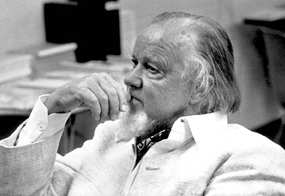
I have always enjoyed reading Schaeffer because he tried to speak to the Church about more than just eliminating defects in the individual or boosting spiritual productivity. Francis SchaefferHe understood that Christians must address broken systems. Unless the Christian brings truth to bear on systems, most larger changes will be superficial—or nonexistent.

Kingdoms are built on systems. The world has its kingdom system and God has His. In the clash of kingdoms, systems must be overthrown for one kingdom to displace the other. Yet where are the Christian leaders who are waging war against systems? Where are the Schaeffers of 2009? It’s been nearly a quarter century since he died, and as far as I can tell, he’s had no successors. And the Church continues to suffer for this lack.

Want to truly change the world for Christ? Start asking tougher questions about the way the world systems work, then bring the Gospel light to bear on the very heart of their darkness.

Now, who out there is going to do just that?