On Peace and Mental Strength

Standard

You keep him in perfect peace whose mind is stayed on you, because he trusts in you.
—Isaiah 26:3 ESV

I’m reading How Children Succeed by Paul Tough. One of the startling study results noted in this book is that stress may be the major difference between a child that learns and one that doesn’t. Remove stressors from a child’s life and brain function kicks into learning gear. Add stress, and it shuts down. Memory and recall suffer. The difference between the smart kid and the not-so-smart one in any classroom may have little to do with the smart one going to some tony pre-preschool and everything to do with the not-so-smart kid being bounced between relatives and getting smacked around. So if you’re thinking about having your 4-year-old tutored in pre-algebra, perhaps give her more hugs instead. Seriously.

Another fact from the book discusses the reality of modern life that our stress levels are through the roof and unceasing. While “olden day” stressors such as evading enemies cause a needful surge in stress chemicals within our bodies, that kind of physical stress is wholly different than mental stress. That latter kind, which is part and parcel of modern living, doesn’t spike and then fade like the evading enemies kind does. Instead, it persists and causes all sorts of longterm damage within the body.

In short, our American lifestyle is packed with mental stressors that ruin our health–and make us forgetful and stupid.

Jesus said this:

But the Helper, the Holy Spirit, whom the Father will send in my name, he will teach you all things and bring to your remembrance all that I have said to you. Peace I leave with you; my peace I give to you. Not as the world gives do I give to you. Let not your hearts be troubled, neither let them be afraid.
—John 14:26-27 ESV

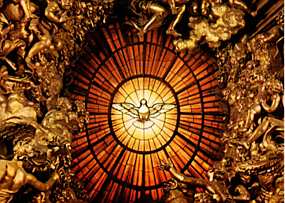
Holy SpiritPeople often quote the second half of that verse alone, but in separating it from the first half, we lose meaning. The promise Jesus makes is that He is leaving, but the Spirit is coming. His Spirit will quicken His disciples to remember. He gives them peace.

In breaking up that passage, we divorce receiving the Spirit from peace. But read that passage again; the two are linked.

The world can’t give us the Spirit. The world can’t give us peace. God can do both through His Son Jesus.

Note also how the Spirit helps us to learn and remember. While the world’s stressors make us forget, the Spirit counters that mental erasure.

Want more peace in your life? Want to be sharper mentally? Ask God for more of the Spirit of Jesus. Learn what it means to live by the Spirit. Sadly, it’s almost a lost art to live by the Spirit and not by our human understanding or wisdom. The things of Man fail; the things of God do not.

Cultivate the Spirit and you will know peace—and be strong in your thinking.

Knowing Jesus and the Death of Self-Help

Standard

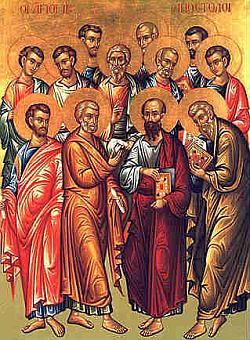
12 ApostlesIt was turning out to be the worst meeting Matthias had attended.

Yes, the worship had been exemplary, as usual. No doubt the Lord was present in their midst. But then, so it seemed was a spirit of bureaucracy—and Matthias hated bureaucracy. Hadn’t he been chosen by a casting of lots? How much easier could it have been?

And why DID the Gentiles have to receive the Gospel? Why couldn’t it have stayed among the Jews only? What a bureaucratic nightmare.

So there he sat, hoping against hope that Peter was not going to chime in again.

Oh, heavens no. Here we go.

Peter stood up.

“Brothers,” the apostle announced in his bass voice that shook the flimsy meeting room furniture, “having weighed this question in my soul after much placement before the Lord, I conclude that there are actually only seven steps to a God-honoring sex life.”

“We weren’t talking about sex, Peter,” Silas said. “Were you asleep—again?”

“The question was the title of Levi’s preaching series,” Barnabas reminded, “The 10 Principles of Financial Success.”

He had a gift for reading lips, and Matthias swore that James mouthed,  It’s a baker’s dozen, not 10. That James’s little brother then punched him in the arm meant the youngest attendee at the meeting had heard him too.

A man with a pained expression on his face stood and asked, “How are the Gentiles going to live a life of fullness in our Lord if we who are appointed their leaders can’t decide these simple issues?”

Matthias shook his head. Thomas again. Always stirring the pot.

“Everything depends on our hammering down what is necessary for the Gentiles to live,” Peter agreed.

“You remember that our Lord said I was an Israelite without deceit—” Nathanael started.

Matthias rolled his eyes. Always the same prelude from Nathanael.

“—and I think that we never settled on the take-away points of my series, Raising Godly Children in an Ungodly World.”

“Hey, Mr. Honesty,” someone yelled from across the dimly lit room, “why not be truthful with the Gentiles and tell them you don’t have any children?”

Matthias thought that was worth a good chuckle. He wasn’t alone.

“Now listen here—” Nathanael began, before he was cut off again.

Five Biblical Ways to Reach Your Neighbors for Christ,” Philip said. “I mean, c’mon, guys. Isn’t that what we’re all about? I used those five when I spoke to that eunuch, and you all know how effective that was. Shouldn’t the Gentiles know them? Just five simple ways?”

Andrew leaned over to Matthias and said, “I tuned out after they kicked out Martha. I kind of liked her Beat Busyness the Bible Way.” He then turned pensive and asked, “Do you remember how many steps her method had?”

“I think it was five,” Matthias answered.

Andrew glowered. “No, I think you’re thinking about Philip’s five ways.”

“Maybe I am,” Matthias said. “Maybe I am.”

***

That meeting in Jerusalem among the leaders of the young Church actually happened. It just didn’t happen that way. The question of how to live a godly life wasn’t found in principles or spiritual To-Do lists. Here’s that meeting’s conclusion:

After they finished speaking, James replied, “Brothers, listen to me. Simeon has related how God first visited the Gentiles, to take from them a people for his name. And with this the words of the prophets agree, just as it is written, “‘After this I will return, and I will rebuild the tent of David that has fallen; I will rebuild its ruins,  and I will restore it, that the remnant of mankind may seek the Lord, and all the Gentiles who are called by my name,  says the Lord, who makes these things known from of old.’ Therefore my judgment is that we should not trouble those of the Gentiles who turn to God, but should write to them to abstain from the things polluted by idols, and from sexual immorality, and from what has been strangled, and from blood.”
—Acts 15:13-21 ESV

In short, don’t load up the Gentiles with stuff to do. Stuff wasn’t the point of the Gospel.

Here’s how Paul saw living the Christian life:

For I decided to know nothing among you except Jesus Christ and him crucified.
—1 Corinthians 2:2 ESV

Jesus summed it up nicely:

And this is eternal life, that they know you the only true God, and Jesus Christ whom you have sent.
—John 17:3 ESV

How is it then that we sit still on Sunday and have someone tell us all these things we should be doing so as to be good Christians? How is it that we say we embrace grace, yet we load ourselves up with lists of necessities and principles and ways and means of living like Christians, when it all begins and ends with knowing Christ?

What if we just knew Christ and knew Him a little more each day? Can’t anyone tell us how to know Christ more?

Or do we not believe this Scripture?

And I am sure of this, that he who began a good work in you will bring it to completion at the day of Jesus Christ.
—Philippians 1:6 ESV

If we know Christ more deeply, isn’t it the work of the Father to make us perfect in His Son? Why then do we trouble ourselves with endless self-help sermons?

Now if the ministry of death, carved in letters on stone, came with such glory that the Israelites could not gaze at Moses’ face because of its glory, which was being brought to an end, will not the ministry of the Spirit have even more glory? For if there was glory in the ministry of condemnation, the ministry of righteousness must far exceed it in glory. Indeed, in this case, what once had glory has come to have no glory at all, because of the glory that surpasses it. For if what was being brought to an end came with glory, much more will what is permanent have glory. Since we have such a hope, we are very bold, not like Moses, who would put a veil over his face so that the Israelites might not gaze at the outcome of what was being brought to an end. But their minds were hardened. For to this day, when they read the old covenant, that same veil remains unlifted, because only through Christ is it taken away. Yes, to this day whenever Moses is read a veil lies over their hearts. But when one turns to the Lord, the veil is removed. Now the Lord is the Spirit, and where the Spirit of the Lord is, there is freedom. And we all, with unveiled face, beholding the glory of the Lord, are being transformed into the same image from one degree of glory to another. For this comes from the Lord who is the Spirit.
—2 Corinthians 3:7-18 ESV

N.T. Wright, Christian Virtue, and the Missing Person of God

Standard

 N.T. Wright -  'After You Believe: Why Christian Character Matters'You can’t run in certain “intellectual” circles of modern Evangelicalism without hearing the name N.T. Wright. To some, the Bishop of Durham in the Church of England is the modern day C.S. Lewis, only with more degrees in theology.

I’ve never read Wright, so when his After You Believe: Why Christian Character Matters showed up in my local library recently (though the book came out in 2010), I availed myself of the opportunity to finally become hip and cool by claiming, “Oh yes, I’ve read Wright.”

The central idea of this Wright book is that a return to instinctual practice of Christian virtues is the only way to save Christianity. Too many Christians today don’t function like genuine Christians because a true Christian ethic eludes them. Most of this, Wright claims, is due to a misunderstanding of what it means to be a Christian postconversion. Too few people grasp how the basic truths of Christianity should inform our practice of the Kingdom of God on earth, and how the Kingdom should undergird our beliefs.

Wright’s solution to the problem is to instill Christian ethics in people the same way a drill sergeant teaches his military charges how to rebuild a gun while blindfolded. Everything about the Christian life needs to be so instinctual and second nature that we no longer think about what we’re doing, but it instead comes naturally. Wright claims this occurs through a synergistic practice and methodical incorporation of five elements: Scripture, Stories, Examples, Community, and Practices.

Quite a few leaders in Evangelicalism would certainly add a hearty Amen to Wright’s plan, especially those who love to talk about the Desert Fathers and Ancient Faith. Practice makes perfect in their regard, and building a new Christian army of those who do without thinking sounds like the cure for what ails us.

While I can certainly see that drilling people in the core truths of Christianity, both truths in fact and truths in practice, is a good thing, Wright’s book has a glaring omission. As someone who has not read Wright before, I see this lack as so enormous, it makes me wonder just how wise Wright truly is and how he ever ascended to gathering such a herd of fanboys.

To me, what cripples modern Christians more than anything else, even when they embody those worthy virtues Wright espouses, is a complete lack of understanding as to what it means to live by the Spirit. The key differentiator between the righteous people of the OT and the righteous people of the NT is that the NT folks now have the Spirit of God living in them always. Say what you will about the Church, but its defining characteristic is that God now resides in men. No other reality trumps this.

That Wright writes almost nothing in his 307-page tome about how to live by the Spirit pretty much renders his entire book useless. Christian virtues are critical, but Wright’s advocacy of a drilled Christian ethic resembles building a Lamborghini and then leaving out the engine. Unless Christians learn to live by the Spirit, all that drilling, worldview, and ethic will lead to just another failed attempt to turn Christianity into a set of rules, with Wright’s entire plan condensed to making those rules reflexes that require no thinking—and no Spirit, either.

What is particularly galling is that Wright goes so far as to downgrade the idea of fully realized Spirit-led living as “romantic.” This smacks of rushing to the polar extreme in an effort to make his point about the need for a practiced, down-to-earth Christian ethic. He makes the mistake of denigrating the key element of the Christian life in his effort to amplify a smaller component he feels has been neglected. In the end, though, he commits the ultimate “throwing the baby out with the bathwater” error that someone of his stature in Evangelicalism should NEVER make.

When Evangelicalism persists in reducing Christianity to a Spirit-less ethic, it substitutes the zombie religionist for the fully alive believer. And we need more “Christian” zombies like we need…well, more zombies. Which is to say, not at all.

How Evangelicalism can continue to mangle life in the Spirit and push out this pale imitation of Christian maturity is beyond me, yet this is what passes for the Christian life in most churches: Here are the rules of the Faith; now live by them. How no one can see that this is no different from any other failed religious system is startling to me, yet this is what I perpetually see in most Evangelical churches. We simply do not know how to live by the Spirit.

Words cannot adequately express my utter disappointment with After You Believe. To me, it’s little more than an intellectual exercise that represents the half-answer now working against restoring the Church in the West to its former glory, despite Wright’s contention that it is the balm for what ails us. A partial balm maybe, but until more reputable Christian authors start writing on how to live by the Spirit, we’ll keep instituting partial balms that ultimately prevent us from becoming all that God intends us to be.