
One Outstanding Characteristic of Great Christians

Standard

It is with great humility that I share that God has richly blessed me through the lives of great Christian people I have known personally. It is with great sadness also that I confess that I have not known many such people, far fewer than I should, and not through any fault of my own.

That unique person who seems to walk with God in some deep relationship that appears unfathomable is a rarity. More than anything else, I wish I could be one of those people, though it seems like my own failings and the circumstances I encounter daily conspire against me. I still hope though.

In meditating on these great Christian people I have known, one characteristic shines brightly: Every last one of them always tried to see the best in people they encountered. It didn’t matter if those people they encountered were worthy of being thought of as best in anything, outstretched handthose great Christian people treated them as if they were.

If there is a sign of our times, it’s that we always tend to think the worst of others. We see them only as foes, as sinners, as people of low thinking, idiots, fools, perverts, jerks, libertines, and a host of other labels easily applied and—potentially—accurate.

But great Christians choose not to see people that way. They see them as they could be. They see them as they should be. They offer respect when none is deserved. And they respond to people in such a way that their caring and love helps raise others to the level of vision those great Christians possess. Great Christians elevate everyone around them and make them want to be better people.

I knew a great Christian once who was certainly not someone who at first glance would seem to be an exemplar of distinction. In a crowd, you would miss him. He didn’t talk fast or use big words. He never got beyond a high school education, and he lived in some podunk town off the beaten path. But I watched that man embrace a known drug dealer one day and the drug dealer called him “sir.” That great Christian knew who and what that man was and loved him anyway. I saw tears in that drug dealer’s eyes, and they were there because he saw past the insignificance of a great Christian’s exterior and saw Jesus Christ in all His glory in that great Christian’s interior. We all knew something happened to that drug dealer right then and there. He was convicted by Christ in another, all without a word needing to be spoken. Because of love. And because a simple man of God chose to reach out to the one person everyone else in the room avoided.

Great Christians don’t see the drug dealer. They see the person in pain who is lost and in need of Jesus. And those great Christians become Jesus to him or her.

We live in an age where the defense of our position, our rightness, our superiority over perceived foes and infidels, is the characteristic most admired in others. Yet the true nature of God is antithetical to this. Instead, He works through great Christians who are willing to see more in others than a practice or ideology opposed to their own.

Do you and I see the best in others? Does our presence raise up others? Are we winsome and attractive? Or do we scare off the spiritually needy with our need to be portrayed as paragons of truth and righteous ire?

When you and I were nothing, Jesus reached out to us and made us something. How can we offer anything less to those people who most need Him?
Humility in Light of the History of Christian Thought

Standard

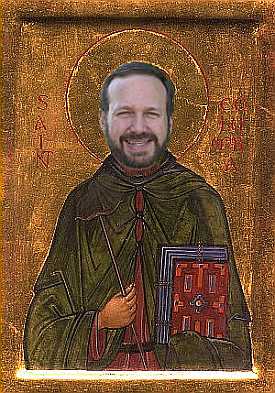
Saint Dan?One of the things that bothers me most about believers in today’s churches, especially Western churches, is our assumption of superiority. Many of us church people display an inflated sense of arrival, as if we are the pinnacle of Christian expression in all of human history.

Those fellow believers in some old cave somewhere who wrote about their experience of the Faith? Morons. Those Middle Ages Christians who hid from “the infidel” and saw their numbers martyred? Know-nothings. Those theologians from the halls of 18th-century European centers of learning? Mental midgets.

Only we get it. Ours is the only understanding of Christianity that matters. The foundation upon which we stand is little more than a pile of spiritual-sounding ideas whose time has passed. Our knowledge and praxis are the epitome of what it means to be a Christian, and no one who came before us has anything to say to us about what to believe and how to live.

Here is the lunkheadedness in that commonly encountered line of thinking…

The predominant eschatology within the United States today is dispensational premillenialism. As an explanation of end times, it is only about 160 years old. The form most widely held, which mirrors what is found in Hal Lindsey’s 1970s-era series of Late Great Planet Earth books, is closer to 60 years old.

What is amazing about this is that nearly all the Christians who have ever lived NEVER believed that explanation of the events of the end. They held another view—one of many, it seems. I once took a class in college that covered 16 different understandings of the events in the Book of Revelation, each understanding predominant in the Church at one time or another.

If you are a betting person, you understand chances are high that not all those forebears were entirely wrong in their interpretations of the Bible and the practice of the Faith.

While it is true we have a bit more knowledge today about science than we once did, even scientific thought changes, and often in ways that reinforce what someone said a hundred years ago rather than last week. But as much as we want our faith to be scientific, most of the questions answered in the Bible are philosophical in nature, and to think what Christians thought 300 years ago has no application today is a grave error.

Every day, I must ask myself how much more of the Holy Spirit I have than say Justin Martyr, Polycarp, Augustine, Thomas Aquinas, Jan Hus, Martin Luther, Jonathan Edwards, Alfred Edersheim, and so on. The answer? Probably less. Much less.

And I would suggest that given the reality of the presence of God in the lives of those long-deceased men of faith, you are not looking so good yourself. Yet you and I somehow think we know more about God, Jesus, the Holy Spirit, and the Christian Faith than they ever did because our teaching today is SO much better than it was in their day.

Hardly.

If anything, I find myself brought low by the reality that I know almost nothing. While there is no glory in ignorance, I am at least humbled by the truth that I am not the final authority on most things that pertain to the Christian Faith. People from the past, many centuries dead, can still speak to me today through their writings. And chances are—to the betting man, at least—they have more to say to me (and to you) than I care to give them credit. Perhaps I should read them to see what they knew and how they lived in light of that knowledge.

What is worse than a puffed-up Christian who thinks he knows everything—unless it is one who discounts the wisdom of those who went before him? And isn’t that what most blowhards do? Don’t most think they are the ones who have arrived?

More and more, a hand clasped firmly over the mouth seems to be the response of the wise. We know less than we think we do. Better to rejoice humbly and be quiet than to remove that hand and show our arrogance despite how little we actually comprehend.

To the Christian, All of Life Is Holy

Standard

Heard  a good message recently that was marred by someone adding her thoughts to it. The ruinous addition was that we need always to be careful about those things in life that distract us from God or bring us down to a more worldly level.

When I was younger, I would have heartily endorsed that addendum. Now, I see it as a dilution of the Gospel.

One of Paul’s consistent understatements in his books is that the sacred/secular divide is something of a hoax. Yes, the OT is filled with illustrations about what is holy and what is not, but doesn’t Christ’s death redeem ALL of life?

What verse in the Bible is more astute than this one?

To the pure, all things are pure, but to the defiled and unbelieving, nothing is pure….
—Titus 1:15a ESV

Nothing destroys the joy of Christ more than dogmatic, persistent sin management. We encounter these semi-tortured folks who burn worry lines into their faces from all the concern over potential sinning. It’s like grace doesn’t even exist. To those people, I recommend reading about Martin Luther’s rediscovery of grace and his own fight against perpetual sin.

Can I have a glass of wine, play a game of Ca$h ‘n’ Gun$ with friends, and read a novel that makes no pretenses at being Christian? Why would anyone have to even ask that question? Yet there are M-A-N-Y Christians out there who struggle with all that. (Why? Because well-meaning Christians in authority positions keep knocking certain actions as sinful when those actions are anything but.)

One of  the reasons people don’t want to be Christians is that they don’t want to constantly monitor themselves for “sinful” behavior. You know what? I don’t blame them. Call me lazy, but I don’t want to either. That’s not what being a Christian is about.

Crazier still, the sins that most bother some Christians are the ones the Lord Jesus spent the least amount of time denouncing. He wasn’t so worried about how people dress, what they eat and drink, their leisure activities, and so on. Instead, He was angered by pride, injustice, lack of concern for other people, factionalism, materialism, and the like. Last time I checked, those latter sins were the ones least addressed and most stumbled over by the greater crowd of Christians in North America.

Even if we are guilty of any and all of those sins, let’s deal with them and move on. Let’s not keep wallowing in our own filth and lamenting it. Instead, be glad for grace and live fully.

To the Christian, all of life is holy. And there is joy in that!