How Social Media Disabuses Us of the Goodness of People

Thomas Cole painting, 1828, Expulsion from the Garden of Eden
Standard

All have turned away;
all alike have become corrupt.
There is no one who does good,
not even one.

—Psalm 14:3

I subscribe to behaviorist Jonathan Haidt’s After Babel Substack. It’s one of the more informative and lucid analyses of contemporary culture and society.

In today’s post, “On The Degrading Effects of Life Online,” Haidt talks about the brutal and sadistic postings we all have witnessed on social media. Every aspect of man’s inhumanity to man is viewable, and Haidt wonders about the corrosive effect of encountering this toxic stew hours at a time, every day, on the Internet.

It’s not just gross, sadistic acts either. Haidt cites another commenter, Freya India, who writes in her Substack GIRLS:

Most of the time when we talk about social media being bad for us we mean for our mental health. These platforms make us anxious, depressed, and insecure, and for many reasons: the constant social comparison; the superficiality and inauthenticity of it all; being ranked and rated by strangers. All this seems to make us miserable.

But I don’t just think it makes us miserable. I’ve written before about how it makes us bitchy. And self-absorbed. And over time I’m becoming convinced that our most pressing concern isn’t that social media makes us feel worse about ourselves. It’s that social media makes us worse people.

—Freya India, “What’s Become of Us?

Many people will nod in agreement, but I want to propose a redemptive way that Christians can use this reality as an evangelistic talking point.

This is my take, and you may have your own, but I think the single biggest lie that has permeated modern society is the belief that people are inherently good. You’d be hard pressed to enter any conversation with nearly anyone, save for a conservative theologian, and convince them that at our core we human beings are sinful, with evil rooted in our very being.

Here’s the thing, though. EVERYBODY is aware of this online. Everyone has had a bad experience with a total stranger online. Everyone has seen garbage and filth posted by other people online. Everyone has a Facebook friend who has inexplicably turned on them like a mad dog for some seemingly innocent post or comment.

In short, original sin is on ample display online, and this verse is as true as it ever was:

For all have sinned and fall short of the glory of God…

—Romans 3:23

As an opportunity to talk about this truth and share Jesus with others, when someone brings up how people are inherently good, ask them whether social media confirms this or denies it. Ask what it means that “anonymous” people who could very well be a neighbor or coworker tear into complete strangers online, or post gruesome and degrading images, or brag about themselves, or do all manner of hateful, spiteful things under the lite cover of a username. Ask them if they’ve ever said anything they regret on social media.

In closing, I would offer this: We have a choice to be salt and light online or not.

I added this in the comments of the Haidt article:

“You can resist the urge to follow the crowd. Instead, you can choose to be a helper, to assist people, to offer hope and encouragement online. You can even reveal yourself not as a tower of strength but as someone who makes mistakes and whose life isn’t perfect. Every one of us can choose to be a genuine, positive, encouraging force online.”

Of course, the caveat on my statement is that sin-sick people can’t do this. You can’t be salt and light if you don’t know the One who is the source of that salt and light.

But then, that’s the challenge, isn’t it?

Image: Thomas Cole, Expulsion from the Garden of Eden (1828)
Powerlessness and the Church

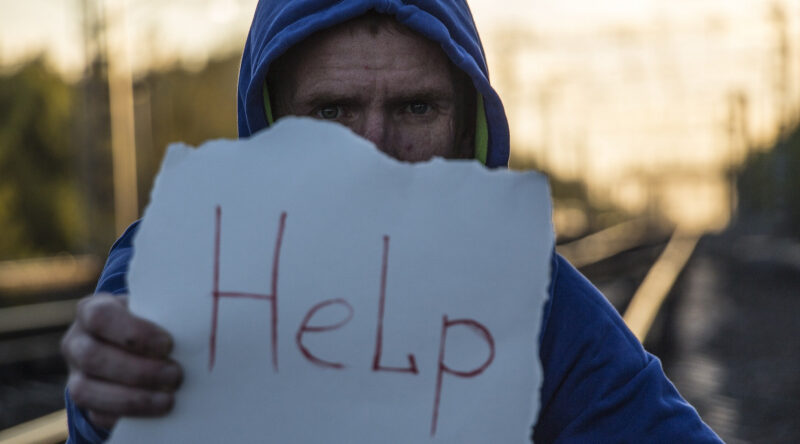
Man holding HELP sign
Standard

Jesus answered them, “Truly I tell you, if you have faith and do not doubt, you will not only do what was done to the fig tree, but even if you tell this mountain, ‘Be lifted up and thrown into the sea,’ it will be done. And if you believe, you will receive whatever you ask for in prayer.”
—Matthew 21:21-22 CSB

Now the entire group of those who believed were of one heart and mind, and no one claimed that any of his possessions was his own, but instead they held everything in common. With great power the apostles were giving testimony to the resurrection of the Lord Jesus, and great grace was on all of them. For there was not a needy person among them because all those who owned lands or houses sold them, brought the proceeds of what was sold, and laid them at the apostles’ feet. This was then distributed to each person as any had need.
—Acts 4:32-35

If the Church in America wants to stem the tide of declining attendance, restoring supernaturalism isn’t the only fix.

“Can’t someone do something?” seems to be the biggest lament I see across the web. People have lost faith in institutions that can’t live up to their promises. Law enforcement is hamstrung to control indiscriminate crime and vandalism, City governments can’t control vagrancy and the trashed condition of their streets. Legislatures seem incapable of passing laws the average person needs. Job agencies can’t find people work. Companies charge us more and yet give us smaller portions of worsening quality.

Every institution we used to count on can’t seem to get its act together. In the middle of all this entropy, you would think the Church would be a bastion of efficacy.

But if so, why are people leaving our churches?

I read many articles about the state of the Church in America, and it never fails that when someone wants to point a finger of blame at anyone for the Church’s declining attendance and iffy discipleship, it’s always pointing at the people in the pews. Then when you find out who the author of the article is, it never fails to be either a church leader or an outsider journalist.

Hmm.

People will be loyal and will stick around if they…

  1. Feel wanted and needed.
  2. Have an opportunity to make a difference.
  3. Find what they need.

It’s really that simple. If those three things are not being met, people won’t stay.

How easy it is to pass that off as selfishness, and sadly, that often happens. That’s one of the blame points, that people are only in something for their own needs.

But why wouldn’t they be?

Check out that passage in Acts 4 above about the early Church, and note this:

For there was not a needy person among them

People were getting their needs met in the early Church. They prayed for this and that, and this and that happened. People came in with an expectation of awe, and they experienced awe. They needed signs and wonders, and they got signs and wonders. They came in with financial and personal needs, and they got financial and personal needs met.

People won’t leave when the group has got their back and they know it.

It worries me that many churches seem devoid of power, whether that’s powerlessness in the Spirit, powerlessness in addressing the needs of people, or powerlessness in the face of the entropy of the age.

But why is this?

One sad trend that has perplexed me for as long as I have been writing about the American Church is the growing prayerlessness of our churches.

Consider this thought experiment…

A church leader decides that instead of 20 minutes of worship music and less than five minutes of corporate prayer, the church will do 20 minutes of prayer together and five minutes of worship. It may even mean soliciting prayer needs from the people in the seats so the church as a whole can pray for those needs.

Now, do you think that will change anything?

I think that literally everything that should happen in the life of the Christian and the church that Christian attends should begin and end with prayer. If we are not praying, then we should not be starting anything. If we are not praying, then we should not be expecting anything. And if we are not praying, then we are contributing to powerlessness in all its forms.

Yes, there remain practical responses to needs, but have we ever considered that the practical responses arise out of prayer? That prayer is the soil from which fruitfulness springs?

How do we overcome powerlessness as a Church? When the Church makes up its mind to pray with genuine faith.

Church leaders, you are the ones who must lead this turn to prayer. The onus is on you and no one else. If you’re not leading meaningful prayer time in your assemblies, you are failing your church. And I’ll go out on a limb here and say that if your church spends less than five minutes of its assembly time in corporate prayer for real needs, then that’s a fail.

No church will have problems keeping people when its prayers are powerful and efficacious. Believe it.

The Benedict Option, God’s Will, and Why Everyone Needs to Chillax

Standard

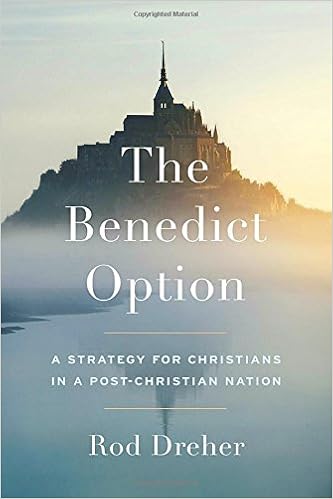
The Benedict OptionIn Christian circles, many have been talking about Rod Dreher’s book The Benedict Option: A Strategy for Christians in a Post-Christian Nation. Fact is, people have been talking about it for about three years now, because that’s how long Dreher has been doling out bits of his major thesis about why Christians need to form their own remote, intentional communities. Given how much I’ve read of what Dreher has already written online, I will probably never read the book.

Nonetheless, here is my review of The Benedict Option. It’s one word:

Whatever.

Oddly enough, that’s my review of most Christian books advocating for widespread change or action from all Christians. At one point, I used to be keen to grasp and understand this idea of preserving Christian faith from the ravages of rapidly degrading culture. Like many Christians, I had concerns about this thing or that. I had worries. I’m sure you have or have had worries too.

But what I have come to realize in the last few years is that the reasons the Church in America is worried, or needs to worry, or doesn’t need to worry, are not really about what is happening outside the Church, but inside. You can say that’s always been the focus of Cerulean Sanctum: Church Heal Thyself.

But you read all these dystopian nonfiction books about the bad stuff arriving soon to hurt the Church, and what you finally realize is that all these books and warnings, and cautions, and handwringings are all brilliantly reasoned answers to the wrong questions.

We have this strange, self-absorbed idea in contemporary Western Christianity that the most pressing issue for the entirety of the world is that one thing that is most pressing to me. And we wonder how it is that people can be so blind so as not to see X bearing down on us like a runaway train. Why is it that you aren’t taking X seriously? Why aren’t you doing something about X? You must be in sin because X doesn’t matter to you as much as it does to me.

And after a while, it all gets silly, this one-size-fits-all approach to discipleship and God’s working in the lives of His people.

Here’s what I’ve learned:

Draw near to God.

Hear what God asks of me for my situation alone.

In response to that hearing, do what I can to achieve it with the unique resources God has provided to me.

Be at peace.

It sounds to me that God may be asking Rod Dreher to write a book about intentional communities that create a place of retreat. Maybe God is asking Rod Dreher to even start one.

That’s great for Rod Dreher.

And while it’s great for Rod Dreher, what it does not mean is that I must necessarily heed Rod Dreher’s call and follow the Benedict Option.

What is God asking of me in the situation in which He has placed me? What is God asking of you?

It seems to me that where we have gone astray in the modern church isn’t so much that we lost the culture wars and now must retreat to intentional communities but that we have made it mandatory to follow what some Christian leader, prognosticator, or pundit says. Sure we can listen, but we can also reject if that person’s message conflicts with what we know God is asking of you or of me in the situation you or I find before us.

Possessing no one-size-fits-all approach to life can be frightening. It means there isn’t a uniform plan. I think this scares us because listening to God to find our next steps can be hard. You can’t listen if you don’t draw near, and drawing near takes time and quiet. And we run the risk of getting the listening wrong.

This causes anxiety. Here is where we make our second mistake.

The Bible says this:

Therefore, since we are surrounded by so great a cloud of witnesses, let us also lay aside every weight, and sin which clings so closely, and let us run with endurance the race that is set before us, looking to Jesus, the founder and perfecter of our faith, who for the joy that was set before him endured the cross, despising the shame, and is seated at the right hand of the throne of God.
—Hebrews 12:1-2

For by grace you have been saved through faith. And this is not your own doing; it is the gift of God, not a result of works, so that no one may boast. For we are his workmanship, created in Christ Jesus for good works, which God prepared beforehand, that we should walk in them.
—Ephesians 2:8-10

“Woe to him who strives with him who formed him,
a pot among earthen pots!
Does the clay say to him who forms it, ‘What are you making?’
or ‘Your work has no handles’?
Woe to him who says to a father, ‘What are you begetting?’
or to a woman, ‘With what are you in labor?’”
—Isaiah 45:9-10

Who founded the faith you have? God alone.

Who is perfecting the faith you have? God alone.

Who can force God’s hand on any of this? Not you. Not me. No one.

You and I are not in control. You and I did not start this, and we will not finish it. All that is on God.

So relax.

In fact, all God really asks of us is to show up. That’s it. And some days, we may not even do that. I think He understands that happens sometimes. What God really wants from us more than anything else is to draw near to Him and to talk with Him and listen.

It may be that in any given day, all I can do is go to the grocery store, buy some Pepto, and help a sick family member get over an upset stomach. Is that what God is asking of me? Perhaps it is. Perhaps that is the extent of today’s focus.

Perhaps that is what I am hearing from God when I draw near to Him today. And if that’s all there is, that’s OK. My eternal security does not rest on what I get done today but in whom I rest, the Lord.

It may be that God is calling some Christians to live radical lives on the fringes of civilization.

Or He may be calling some to care for the sick in hospitals or to build airplanes.

Or He may be saying to some to cease from their labors for the moment and just rest in Him.

Or He may be asking some to write a poem or a letter of encouragement to someone else.

Most likely, whatever it it is He may be asking of you or me, it may be something small, something for this moment.

Our mistake is to criticize another Christian for what he or she may or may not be doing based upon what we think we should or should not be doing. Yes, the Bible does lay out a few clear boundaries, but within those boundaries reside entire worlds of conversation and opportunity. And the conversation you had with God and the opportunity it created is unique. I won’t criticize you about mine. Don’t criticize me about yours. When and if possible, let’s do what we can to help each other make each other’s possible.

So as a review of The Benedict Option, I say, whatever. Maybe it is God’s word to you about your next step. Or maybe it’s not. Whichever answer it becomes to you as you draw near to God and listen, God is thankfully in control.