
Forgiveness That Isn’t?

Standard

Keith had seen Franklin Fastener, his great-great-great-grandfather’s company, through many trials in his tenure since taking over from his dad at the tender age of 30. The company made the best nuts and bolts in America. Which is why it pained Keith to think that he might have to close it down on his watch. Too little business coupled with too much competition from China. So when ConHugeCo asked for a bid on a massive project that would keep Franklin rolling in dough for another decade or more, Keith was ecstatic. He spent three months working hand in hand with ConHugeCo’s people to ensure the bidding went smoothly and the multinational got everything it asked for—both immediately and in spades. So it came as a terrible shock when the winning bid went to Shin Dao Manufacturing. Keith went home an hour later and cried for the first time in as long as he could remember.

Kendra first spotted Zach when he prayed for an elderly couple after the service. She was new to the church then, but it was impossible for her not to notice the tall, handsome, young man. Something clicked inside her when their eyes first met. It took Zach almost a year to ask her out, but when he did, she was convinced that this was finally The One. Zach was loved by many and could not be more respected. He had a job in banking and seemed to do no wrong. After a couple months of “by the book Christian dating,” Kendra thought she might finally hear the three words every gal longs for, but instead, Zach said he didn’t think that the relationship was working for him, and he walked away.

Rebecca had the house, the means, and the love of children to start a daycare in her home. Her husband, Rick, encouraged her to go for it, especially since many in their neighborhood were struggling to find good daycare. Though Rick has a solid job as a security specialist for a large computer company, he and Rebecca were planning to give her daycare income to some friends who were missionaries working in an orphanage in Uganda. But Rebecca’s elation and godly hope soon turned to despair. There would be no daycare in her home because the state would not license her. Why? Because in Rick’s youth he had been convicted of felony computer hacking before he turned his life around, and the state would not issue a daycare license if a convicted felon lived in the home.

Keith, Kendra, and Rebecca. Three burned people.

'Parable of the Wicked Servant' by Domenico FettiThen Peter came up and said to him, “Lord, how often will my brother sin against me, and I forgive him? As many as seven times?” Jesus said to him, “I do not say to you seven times, but seventy-seven times. “Therefore the kingdom of heaven may be compared to a king who wished to settle accounts with his servants. When he began to settle, one was brought to him who owed him ten thousand talents. And since he could not pay, his master ordered him to be sold, with his wife and children and all that he had, and payment to be made. So the servant fell on his knees, imploring him, ‘Have patience with me, and I will pay you everything.’ And out of pity for him, the master of that servant released him and forgave him the debt. But when that same servant went out, he found one of his fellow servants who owed him a hundred denarii, and seizing him, he began to choke him, saying, ‘Pay what you owe.’ So his fellow servant fell down and pleaded with him, ‘Have patience with me, and I will pay you.’ He refused and went and put him in prison until he should pay the debt. When his fellow servants saw what had taken place, they were greatly distressed, and they went and reported to their master all that had taken place. Then his master summoned him and said to him, ‘You wicked servant! I forgave you all that debt because you pleaded with me. And should not you have had mercy on your fellow servant, as I had mercy on you?’ And in anger his master delivered him to the jailers, until he should pay all his debt. So also my heavenly Father will do to every one of you, if you do not forgive your brother from your heart.”
—Matthew 18:21-35 ESV

We know well this passage about the unjust steward who received forgiveness for his massive debt but would not forgive another for a much smaller one. My pastor preached on it yesterday and talked about forgiving those who sin against you as a bedrock discipline for true disciples.

I wondered about those cases when no sin is involved, though. That comes up often enough to merit some discussion. In fact, I discussed these same cases with three friends after the service.

In the examples above, ConHugeCo simply chose another winner for their bid, while Zach decided that his relationship with Kelly was not going to lead to marriage. Keith and Kelly felt the brunt of those decisions, and ultimately felt terrible and suffered for the decisions, but again, no one sinned, so by the Bible’s standard, there was nothing or no one to forgive. In Rebecca’s situation, Rick had been forgiven years ago. And the state was just abiding by its own laws in an attempt to protect children.

In these three cases, each person feels wronged. But is forgiveness merited? And to whom?

What do you think? Why?

Out of the Shallows

Standard

Lighthouse at sunsetYesterday, I switched the wallpaper on my computer. It shows lighthouses now.
I didn’t know a computer desktop wallpaper could be prophetic, but this morning, while praying, God showed me something, and when I looked up, I saw the lighthouse on the screen.

I am fully convinced that we as a Church are running out of time to get things right. We haven’t reached the end yet, but it’s nearer than ever.

We Christians in America have put ourselves in a place where we are like toddlers splashing in the water’s edge at the beach. Oh, look! A starfish. Oh, over there! A sand dollar. The water is warm. Mom waves to us. Look how clear the sky is. The water comes up to our knees.

That’s how we may think of shallow water.

But while that may be a comforting place for the small, it’s disastrous for anything larger—like the American Church.

I didn’t set out to think about lighthouses. It was only after prayer that the lighthouse made sense.

The Bible says that “deep calls to deep.” Out in the deep is where the unknown lurks. The deep is off limits to anyone but the experienced. The line of transition from the toddler splashing in the shallows to the salt-encrusted face of the grizzled sea captain extends from the shore to that great emptiness that stretches from horizon to horizon, where the land goes missing, and all points of reference vanish.

We use the lighthouse as a symbol of Christ guiding us home, but that’s a mistake. The lighthouse exists to warns of the shallows, to force us to head out to deeper water. The real danger is not in the great emptiness out at sea, it’s from being dashed to pieces in the shallows when the conditions turn against us.

As a Body of Christian Believers, the American Church needs to steer away from the shallows. We’ve been in them for far too long. We see them as safety, but that’s where the rocks are, and when the surf rises, and the winds along with them, the shallows are the most dangerous place to be.

God wants us deeper. We have to move away from our natural home on land. We must familiarize ourselves with the denizens of the deep in their natural environment and know their sonorous callings. We must become comfortable navigating by the stars and their dim, often difficult to read, guidance. We must see the lighthouse not as an inviting light, but as a warning to drive us to the real place of safety, even if that place doesn’t look safe on the surface.

Church, we must move out of the shallows. We must learn to navigate the ocean and its depths. We must know how to be at peace, even when no land is in sight. The times demand it.

In closing, this came to mind:

Rights, Oppression, and the Death of the Shared Societal Script

Standard

12 Years a Slave won Best Picture at the 2014 Academy Awards.

I did not see the film. In fact, in a stunning case of cultural cluelessness, I’d not even heard of it before it won.

That said, I’m not surprised at its win. In fact, it may not have been possible for any other film to take home Oscar.

I wish I could find the link to the article, but several months ago I read an enlightening post concerning Hollywood’s rather banal decent into repetitive storylines. Slate had an insightful look at the Save the Cat phenomenon and how it has rendered all plots the same (“Save the Movie!“), but this gone-missing article struck a bigger nerve.

The contention is that movies today lack a touchstone for the American script—not a movie script, but the ongoing dialog we Americans maintain that defines our core beliefs as Americans.

Core beliefs? Can you even HAVE core beliefs today?

The article contended we were at a point in our history as a nation that we can no longer agree on shared values and core beliefs beyond some very general ones, milquetoast values that make for boring movies. We saw Man of Steel at the box office this summer, but what we didn’t see was much truth, justice, and the American Way on display. Wouldn’t want someone watching to get riled that a pro-America Superman places the Man of Steel into the imperialistic oppressor category.

Let’s be frank here: About the only shared value we Americans have left is a distaste for oppression. While in an earlier age that might have meant us fighting some tyrannical, overseas dictator or championing the cause of the poor, today it means something less noble: Don’t oppress me by questioning whatever it is I want to do to gratify myself.

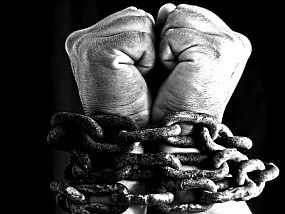
OppressionBy choosing a film about slavery as Best Picture, the Academy recasts the worst of oppressions and shoehorns it into the modern expression. I mean, what kind of barbarian could possibly endorse the oppression of a fellow human being as expressed in Civil War-era American slavery? Now fast-forward that to America 2014 and witness how easily we slide from championing freedom from slavery to demanding freedom from all moral constraints.

Who is the new oppressor? The one who questions same-sex marriage. The one who questions abortion. The one who questions…

See, to be an oppressor today, to be the villain in a modern movie plotline, all one must do is question another person’s desire (now called “a right”) to do ____________.

The questions the supposed oppressor is asking may be worthwhile on the surface, but their worth is now trumped by any implications of inherent oppression. Carte blanche has never been more acceptable, at least when the self-satisfiers are in charge.

Movies are boring today because we have seen our American script became a one-note message. Worse, even that one-note message of opposing oppression lacks the depth and wisdom it once possessed. Today, it is all about self-gratification. Any constraint that prevents self-gratification has been deemed oppression. And we all know who the new oppressors are—at least as they’ve been tagged by the ones making up the new definitions.

So, if you’re reading this and nodding your head, how does it feel to be the new oppressor?

“Alright, Mr. DeMille, I’m ready for my close-up.”