
The coming of the lawless one is by the activity of Satan with all power and false signs and wonders, and with all wicked deception for those who are perishing, because they refused to love the truth and so be saved. Therefore God sends them a strong delusion, so that they may believe what is false, in order that all may be condemned who did not believe the truth but had pleasure in unrighteousness.
—2 Thessalonians 2:9-12 ESV
After an evening of gaming at our friendly, local game store with my son and his friend, we did the mandatory munchies run. Unable to cope with the odd collection of rambunctious folks inhabiting the dining room of the nearby McDonald’s at 10 p.m., I decided we would eat in the bed of my pickup out in the parking lot. A fair, lovely, clear night…why not? Overhead, a half moon blazed brightly, but the night sky was a curiously empty canvas of unrelenting black.
Where were the stars?
From the corner of my eye, I could barely make out Mars, but Venus was nowhere to be seen. One expects those two planets to be visible, but the emptiness of the sky was still startling. 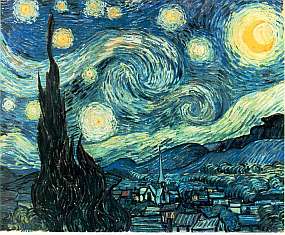 I live in the countryside, and even though southwest Ohio is one of the worst spots in the nation for stargazing, I still get a decent view of the night sky at home, with the Milky Way band clearly visible.
Still, nothing here compares with the overhead view I witnessed in northern Ontario in the early ’80s. I was on a lake so remote, I think the human population density was about a dozen people per 10 square miles. The stars there? Well, you could read by them. They were that bright. And the reflection of that star-laden heavens in the lake surface was simply glorious. Wow.
But sitting in a McDonald’s parking lot 25 miles from my house, near a shopping mall flooded with unnatural light, the manmade daytime overwhelmed the celestial story intended by God to speak His praises.
The Holy Spirit nudged me then, and I could not escape the words of 2 Thessalonians 2:9-12.
If I had never been to northern Ontario, never lived in the country, if my home had always been somewhere near this shopping mall ablaze with electric light, I would have no idea that in that murky blackness overhead, billions of suns burned with fusion’s fire. The heavens that declare the glory of God would be silenced, a dark cloth stretched across the expanse of sky, save for the solitary punctuation of the moon.
How would anyone know that stars lay beyond the cloak of artificial darkness? Unless all the manmade lights were quenched, one never would.
How would you convince someone that anything bright existed in that unremitting blackness? Don’t the eyes alone reveal the truth?
A powerful delusion.
People in the grip of a powerful delusion do not know any better. They cannot understand anything beyond what that deception allows. It informs all parts of their personal experience.
“Pinpoints of light so widespread and bright that you can read a book by them? In the night sky? Nah!” And someone laughs at your stupidity and fanciful imaginings.
I offer some thoughts and questions following. Nothing fully formed. I’m not sure that all of them are worthwhile. I simply offer them.
I wonder sometimes if even “church folks,” people like you and me, are caught in the powerful delusion. I wonder if we are seeing clearly, if the figurative stars are visible, or whether we are creating our own unnatural light to compensate and making matters worse.
The star-filled nighttime sky in Ontario was more than bright enough for me to go about my business after dark. Reflected in the lake, it was even more powerful. The night was aglow.
Are our efforts to be light in this world manmade? Artificial? Unnatural? Are we reflecting the true, natural light? Or are we creating a fake alternative that only serves to wash out the true, natural light, effectively replacing the heavens that shout the glory of God with an empty canvas?
Are we contributing to the powerful delusion?
Should we partner with God to enhance the delusion He has sent? Or is our task to do what He asks and keep telling people that there is more to this life than they can see?
Can people caught in the delusion ever break free of it? Or are they doomed to an empty night sky, devoid of the praises of God?
What of “church folks” who receive perpetual doses of artificial light? Does it blind them to the natural light? Will they ever see the natural light amid the washout created by all the fake spotlights we throw up in an effort to draw attention to what we think is genuine, but which may not be?
What if you and I are caught in part of the delusion, even a bit? Would we know? The passage in 2 Thessalonians says the delusion will look remarkably like the genuine. Would we be wise enough to discern that there is more than what we are seeing? And that our own efforts to recreate the light may in fact be blinding us to the real thing?
Somewhere overhead, there are stars burning in the void. And their message is that of the angels. More than anything, God, please, help us to see and hear only that which is of you, and which persists eternally beautiful, filled with the One True Light.
 As a result, like other failed institutions wracked by hubris, the Church has been lumped with all the pride-filled transgressors and relegated to meaninglessness in the lives of most Americans. And for those people who have not thrown the Church on the dung heap, usually Christians, they continue to be slaves of their own pride, unable to say those three little words.