
The Stone-Cold Sober Church

Standard

This past Friday, I had a long chat with my son about alcohol.

I talked with him about how alcohol lowers inhibitions and what a lack of inhibitions looks like when someone’s drunk. We talked about how drunks and druggies can be talked by themselves or others into doing or believing all manner of stupidity they would not ordinarily do or believe when not drunk or drugged up. How bright people can no longer discern right from wrong when they’re high or bombed. The drunk/druggie thinks his slurred commentary is genius, but all ability to follow the wisdom of a subtle rebuke goes out the window. Drowsiness sets in. All self-control is lost. A fool is born.

Sitting in church on Sunday, that conversation came back to me. I realized that by that explanation, our entire society is wasted.

The Bible says this:

So then let us not sleep, as others do, but let us keep awake and be sober.
—1 Thessalonians 5:6 ESV

The problem that most struck me while I pondered this was how a substance abuser can be talked into believing almost anything. All the filters of discernment fail.

You hear some people talking about being drunk in the spirit. I wonder if they mean the spirit of the age. If anything, when we talk about the Holy Spirit, I wonder if the state of genuine union with the Lord should instead make us sober in the Spirit.

That’s what I want to be: sober in the Spirit.

This is what being sober in the Spirit yields:

But, as it is written, “What no eye has seen, nor ear heard, nor the heart of man imagined, what God has prepared for those who love him”—these things God has revealed to us through the Spirit. For the Spirit searches everything, even the depths of God. For who knows a person’s thoughts except the spirit of that person, which is in him? So also no one comprehends the thoughts of God except the Spirit of God. Now we have received not the spirit of the world, but the Spirit who is from God, that we might understand the things freely given us by God. And we impart this in words not taught by human wisdom but taught by the Spirit, interpreting spiritual truths to those who are spiritual. The natural person does not accept the things of the Spirit of God, for they are folly to him, and he is not able to understand them because they are spiritually discerned. The spiritual person judges all things, but is himself to be judged by no one. “For who has understood the mind of the Lord so as to instruct him?” But we have the mind of Christ.
—1 Corinthians 2:9-16 ESV

There’s a distinct lack of spiritual understanding today. In the American Church, we go for just about anything that seems right to us. We make assumptions about what is good, rely on our intellects, and then conform everything to that perceived good—yet  we may not have been sober in the Spirit when we finagled that outcome.

It’s easy to pick apart a drunk’s argument, but what happens when the Church is not as sober as it should be?

Sure, some of us will take a look at the culture wars and wring our hands because we have lost and some of that junk is seeping into the Church, poisoning the well. But because we may be tipsy, subtler issues creep in, too, born out of listening to good-sounding ideas that were not subjected to spiritual sobriety. Sometimes, that’s how the bigger errors get through.

The following is NOT something Jesus said in the Bible:

“Is it not written, ‘My house shall be called a house of worship for all the nations’? But you have made it a den of robbers.”
NOT Mark 11:17b

No, actually it’s not written that way. The correct wording is house of prayer, not worship.

Yet if your Sunday church meeting is like most big evangelical churches today, you’ll spend 20-30 minutes “worshiping” and about two minutes praying.

Sure, the temple was razed, but don’t we understand the priority from that passage? And that’s just one small aspect of Christian practice and living.

Sober, alert watchmanIf we are drunk, then we lack the sobriety in the Spirit to know the difference between the good and the best. Have we asked soberly if spending 10-15 times as much time singing on a Sunday turns prayer into an afterthought? Should we then scratch our heads when nothing changes for the better? Should we then blame God for the fruit of our corporate prayerlessness?

Many issues as simple as that one perplex American Christians. But then we tell ourselves nothing is wrong, and it’s the other guy who needs to get his act together.

You can convince a drunk of anything.

Church, it’s time to get stone-cold sober in the Spirit.
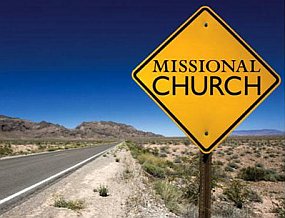
Is “Missional” Sending People to Hell?

Standard

American Church leaders love buzzwords. Toss a buzzword around long enough and you seem smarter, more with it. “He uses that word a lot. He must be an expert.”

Past buzzwords of note include these “winners”:

Visioncasting

Transformational

Impact

Best of breed

Leverage

Organic growth

Long tail

For the past five years or so, the American Church has fallen over itself to let potential local church members and disaffected believers looking for an “active” church know that it groks its mission to the world. The answer it offers is missional.

The word missional came from the title of a 1998 book assembled under the auspices of the World Council of Churches that sought to rediscover the true mission of the Church in the 21st century. It outlined de-emphasizing the Church as an institution and instead concentrating local church purposes on the “gospel mission,” doing the things the Bible depicts the Church doing in Acts.

All that sounds great—well, except for the World Council of Churches’ involvement.

Cerulean Sanctum exists to help Christians consider what it means to be New Testament believers living in 21st century America. When someone mentions the Book of Acts, my ears prick up. Missional appears to align perfectly with this blog’s intent.

But as I’ve watched churches scamper to redo their mission statements to include the word missional, even as church after church rejiggers its advertising to ensure people know it’s missional, I get a bad feeling about this swing to focusing on mission.

Missional church?Serving the poor is great. Healing the sick is a beautiful calling. Living simply is a must. Putting the mission of Jesus central in all we do is wonderful.

Or is it?

The problem  with the massive move to missional in the Church is that Christians ARE doing a much better job of putting the gospel activities of the Church central. More and more churches are effective at being less institutional and more missional.

So how is that a problem?

Making the activities of Christian mission central is subtly distinct from making Christ Himself central.

In the midst of all this missional hubbub, I wonder if we have forgotten Jesus.

A couple weeks ago, a friend mentioned that he was seeing a massive shift in the local church ecosystem. Large churches known for their programs were banding together to be more aggressive in missional practice, uniting under the banner of a missional program known as 3DM.

On the surface, this sounds amazing. Never mind that unifying under something calls into question that something’s ultimate message, Christians have long seen a need to be both more ecumenical and more mission-focused. This looks like a possible answer.

But as my friend described what was actually playing out, it sounded to me like a lot of great work done, but without a lot of “being.” in other words, this missional thrust looks super as an action, but what is going on in the spiritual depths of the people doing all those missional activities?

One of the most startling verses in the Bible, spoken by Jesus:

And this is eternal life, that they know you the only true God, and Jesus Christ whom you have sent.
—John 17:3 ESV

Jesus gives us the very definition of eternal life: Knowing God and knowing Jesus Himself.

Knowing.

Knowing is distinct from doing. It is possible to do and not to know. One can take part in activities that look and feel godly without knowing God. Fact is, this is what Protestants have accused Catholics of since the Reformation.

Is it possible to be missional and yet not know God and Jesus Christ whom God sent?

Sadly, I believe it is.

Consider the source of the word missional, a World Council of Churches book. Does a more doctrinally suspect organization exist? While that may be a “guilt by association” argument, researching the beliefs of those most ardent about missional uncovers compromises, usually with regard to traditional orthodoxy. The most missional-focused folks on the national stage often seem fuzzier about who Jesus is or what He says. They sometimes make statements that it’s OK to be a Muslim-Christian or a Buddhist-Christian. Or that the Church must embrace whatever the latest spirit of the age is to stay relevant. Relevance seems to be critical to being missional. As long as one stays relevant, one stays missional, so it doesn’t matter what happens to 2,000 years of Christian doctrine.

But if people who claim to know Jesus don’t track true to what His entire word says, in what way are they really following Him?

If a person does Gospel-looking activities but doesn’t adhere to everything in the Gospel, how can it be said that person is a Christian? How can the argument be made that such a person knows the real Jesus at all?

Jesus had a response to this:

Now as they went on their way, Jesus entered a village. And a woman named Martha welcomed him into her house. And she had a sister called Mary, who sat at the Lord’s feet and listened to his teaching. But Martha was distracted with much serving. And she went up to him and said, “Lord, do you not care that my sister has left me to serve alone? Tell her then to help me.” But the Lord answered her, “Martha, Martha, you are anxious and troubled about many things, but one thing is necessary. Mary has chosen the good portion, which will not be taken away from her.”
—Luke 10:38-42 ESV

In many ways, missional is a reaction against a moribund Church that sat at Jesus’ feet and soaked up the goodness—without doing anything with what was soaked up. But like so much that happens in the American Church, fleeing to one polar extreme after dwelling at the other is not the way to achieve balance.

Christians can’t just do works that look Christian. We must know Jesus. We must sit at His feet and dwell there.  It is as important to be as it is to do. In fact, as we see in the above passage from Luke, it may be MORE important.

We can do everything that looks like Christian mission and yet not know Jesus. The Muslim world has studied how Christian ministry works and now models many new Islamic charities off their Christian counterparts, which is winning converts to Islam. In short, missional success, just without Jesus.

Jesus is the difference. We must know Him. We must know what is truth. A Christianity that acts like the early Church but doesn’t know Jesus well—or at all—will fail because it is the arm of flesh and not the working of the Spirit.

How tragic to someday find yourself before the Lord and hear Him say He never knew you, despite all the missional things you did.

People are dying to know Jesus. Really, that’s all that matters. If our churches neglect to give Jesus to people in ample measure, all the missional in the universe will not save them.

God’s Forever Family: The Jesus People Movement in America

Standard

God's Forever Family @ Amazon.comI came of age in the late 1970s. Amy Grant’s song “1974” was for me closer to January 1977, but the sentiment was the same. My spiritual life up to that point reflected the influence of the Jesus People Movement (JPM) that began in the late 1960s and eventually faded away by 1979. The Lutheran Church I was raised in channeled some of the movement and had even begun to change its musical styles for youth before the JPM hit, incorporating folk-styled worship songs that emerged from Roman Catholic youth revivals that erupted post-Vatican II.

So when Christianity Today magazine named God’s Forever Family: The Jesus People Movement in America by Larry Eskridge its book of the year, I snapped it up and immediately started reading. A historical overview of the  Jesus People Movement, the book traces the movement’s rise among Haight-Ashbury hippies in San Francisco circa 1968, covers the establishment of countercultural Christianity across the country, looks at Christian communes, notes predatory pseudo-Christian cults that arose alongside the movement, discusses the genesis of Contemporary Christian Music, and concludes with how the JPM changed the American Church.

For Christians who came of age in the late 1960s and 1970s, I’d call it a must read. You might even see people you know discussed in the book. (I know I was surprised to see a pastor of a church I formerly attended named in the acknowledgments as a contributor of material and background info.) The story Eskridge lays out for readers has a bittersweet taste for those of us who recall those innocent days and wish the best parts of that JPM mentality had not gone missing from the modern American Church.

For those too young to remember the 1970s, God’s Forever Family serves as a history to explain why the Church today looks and acts like it does, for good and for ill. I even learned a few things.  I did not know the Full Gospel Business Men’s Fellowship graciously bankrolled many of the most influential JPM ministries, or that Pat Robertson had a hand in establishing and legitimizing Christian rock music. The history depicted in God’s Forever Family will help make sense of contemporary evangelicalism and may de-vilify Christian leaders and their ministries that started with good intentions but somehow went off course or moved the entire Church in a direction that has not best served the Lord. In the pages of this book, we see how good intentions sometimes lead to less than ideal outcomes.

I won’t offer a review of the book other than to say I wish author Eskridge had delved deeper into more of the issues closest to my heart. But as an overview, it’s essential reading, covering a tumultuous era, the movement it spawned, and the impact it still has today. The JPM has been forgotten in recent years, so a contemporary revisit is most welcome.

The best Christian book published in 2013? Whether it is or not, you would do well to read it.