Peace, Not “Not War”

Standard

Peace on EarthOne of the oddest duets in the history of music occurred in 1977 when Bing Crosby was in London to film his final Christmas special. Looking for a young local musician with whom to share a song, Bing's people settled on David Bowie. That's Ziggy Stardust-era David Bowie—about as avant garde as was humanly possible in 1977.

And so the unlikely duo performed "The Little Drummer Boy" with Bowie singing a counterpoint, "Peace on Earth," over Crosby. Bing died less than a month later, but the show was broadcast. TV Guide in 1999 proclaimed the Bowie/Crosby duet—a true study in contrasts—one of the Top 25 musical TV events of the 20th century. (Click here to see the TV excerpt.)

Peace on Earth is a continual theme during Christmastime. If you want to send a Christmas card with a religious theme that is considered universally "acceptable," you can't go wrong with one depicting a dove carrying an olive branch.

Unfortunately, pinning down what peace is proves to be as large a study in contrasts as Bing and Bowie. One of the odd things about the idea of peace is that we tend to think of it not as was it is, but what it isn't. Peace is viewed as being "not war."

Christians, the ones who follow the Prince of Peace have just as difficult a time thinking about the positive aspect of peace rather than what it represents in reverse. Pull your average Christian off the street and ask him or her about Philippians 4:8:

Finally, brothers, whatever is true, whatever is honorable, whatever is just, whatever is pure, whatever is lovely, whatever is commendable, if there is any excellence, if there is anything worthy of praise, think about these things.

You're just as likely to get a definition of Paul's list of concepts as not lies, not dishonor, not unfairness, not corruption, not ugliness, and not triviality or cheapness, either. The positive side of ideas like peace or purity get lost in our tendency to work toward the good by thinking of an absence of the bad.

What we are left with in many cases is a deficient idea of what kind of peace Christ has purchased for us by His death and resurrection. We tend to think of peace in 2005 as an absence of stress or conflict. Because of this, we fall prey to the world's peace, a man-made utopian ideal that pursues peace by removing anything that interferes with the goal of total tranquility. Again, negation is what drives us, not true peace.

Unshakable peace is not the absence of something, it is the presence of someone: Jesus Christ. The contrast with the world's peace versus the peace that Christ alone can give could not be starker, yet how poorly so many of us perceive the difference, even in the Church.

Peace I leave with you; my peace I give to you. Not as the world gives do I give to you. Let not your hearts be troubled, neither let them be afraid.
—John 14:27 ESV

I have said these things to you, that in me you may have peace. In the world you will have tribulation. But take heart; I have overcome the world."
—John 16:33 ESV

The peace Christ gives is Himself. We overcome strife because He did and He dwells in us. The peace He gives has teeth because it stands in stark contrast to the peace the world gives, overcoming it by faith.

Therefore at that time certain Chaldeans came forward and maliciously accused the Jews. They declared to King Nebuchadnezzar, "O king, live forever! You, O king, have made a decree, that every man who hears the sound of the horn, pipe, lyre, trigon, harp, bagpipe, and every kind of music, shall fall down and worship the golden image. And whoever does not fall down and worship shall be cast into a burning fiery furnace. There are certain Jews whom you have appointed over the affairs of the province of Babylon: Shadrach, Meshach, and Abednego. These men, O king, pay no attention to you; they do not serve your gods or worship the golden image that you have set up." Then Nebuchadnezzar in furious rage commanded that Shadrach, Meshach, and Abednego be brought. So they brought these men before the king. Nebuchadnezzar answered and said to them, "Is it true, O Shadrach, Meshach, and Abednego, that you do not serve my gods or worship the golden image that I have set up? Now if you are ready when you hear the sound of the horn, pipe, lyre, trigon, harp, bagpipe, and every kind of music, to fall down and worship the image that I have made, well and good. But if you do not worship, you shall immediately be cast into a burning fiery furnace. And who is the god who will deliver you out of my hands?" Shadrach, Meshach, and Abednego answered and said to the king, "O Nebuchadnezzar, we have no need to answer you in this matter. If this be so, our God whom we serve is able to deliver us from the burning fiery furnace, and he will deliver us out of your hand, O king. But if not, be it known to you, O king, that we will not serve your gods or worship the golden image that you have set up."
—Daniel 3:8-18 ESV

Two stark contrasts are depicted in this passage. The world's peace is for the trio of Shadrach, Meshach, and Abednego to bow down to the idol. It is the peace of worldly conformity. However, they chose the peace of God, letting Nebuchadnezzar know that there is a peace that passes understanding, the peace that Christ modeled for us when He went as a lamb to the slaughter, the devil's lie ringing in His ears, "Come down from the cross; you are the King of Israel, are you not?"

Death brings peace. Not a funeral goes by that someone says of the deceased that he or she is at peace. But one of the reasons Christ endured crucifixion was to offer a peace that comes only by death on a cross. And so He showed us the way as we too join in saying that we would rather die at the cross than worship the idols of this world. Only the dead to the world know the peace an exchanged life brings at Gethsemane, Christ's for ours.

This Christmas, let us rightfully consider what peace is. It is not the absence of war, conflict, stress, and turmoil; it is the overcoming presence in our lives of the God-man born in a stable, who grew to maturity, learning obedience, and dying so that we might bear the seal of His peace.

May we have more of Him and, in turn, know godly peace.

That Strong Hand

Standard

This is a break from the “Hidden Messages of American Christianity” series.

I’m at that age where I think about mortality more readily. There’s something about reaching your forties that the aura of invincibility has totally worn off. I turned 43 a few weeks ago and my middle brother joins me in that fifth decade this weekend.

I seem to like a lot of dead authors and musicians, especially those that shuffled off this mortal coil before their time. Keith Green has long occupied my pantheon of greats, Rich Mullins and I attended the same church for a while, and Mark Heard penned the one Christian song that I wish I had written. Dry Bones DanceGreen never made it to 30 and Mullins and Heard were barely into their 40s.

After a long while searching for a pristine example of Heard’s Dry Bones Dance, I was able to find an unopened copy. Evidently it’s in print again—lucky me. This makes the second CD I’ve purchased in the last three years. (Note to young guys: You won’t believe me, but you start getting burned out on music. Somewhere along the line you’ll be fifty and playing nothing but old Coldplay albums, harkening back to your youth. Trust me on this one. I’m still stuck in that era from 1976-1991. I hear “More Than a Feeling” or “Wheel in the Sky” and start getting all misty-eyed.)

My copy of this outstanding zydeco/country/pop/folk album from 1990 arrived today and I can’t stop playing it. I never got into all of Heard’s stuff, but this collection is superior. My hard drive is just about fried from looping through it all day—I burned it to iTunes almost immediately.

Why such passion? Like I mentioned a few paragraphs ago, this album contains what I consider to be the best lyrics ever written in a CCM song. That song is “Strong Hand of Love”:

Down peppers the rain from a clear blue sky
Down trickles a tear on a youthful face
Feeling in haste and wondering why
Up struggles the sun from a wounded night
Out venture our hearts from their silent shrouds
Trying to ignite but wondering how

We can laugh and we can cry
And never see the strong hand of love hidden in the shadows
We can dance and we can sigh
And never see the strong hand of love hidden in the shadows

Young dreamers explode like popped balloons
Some kind of emotional rodeo
Learning too slow and acting too soon
Time marches away like a lost platoon
We gracefully age as we feel the weight
Of loving too late and leaving too soon

We can laugh and we can cry
And never see the strong hand of love hidden in the shadows
We can dance and we can sigh
And never see the strong hand of love hidden in the shadows

Mark Heard – 1990 Ideola Music

I told my wife that I want this song played at my funeral. I can promise you that even if I go at 109, I would still want to have others know that the Father’s Strong Hand of Love is always there, even in the shadows.

Too many of us love too late and leave too soon. God knows how much of my life has been lived with regrets. All those years consumed by the locusts and still I’m picking them off me.

Far too maudlin for the Christmas season? Jesus was born to die and so are we. What gets us through to the end is seeing the Strong Hand of Love hidden in the shadows.

May this season be filled with us noticing that Strong Hand more than we ever have before.

Have a great weekend.

That Other Standoff

Standard

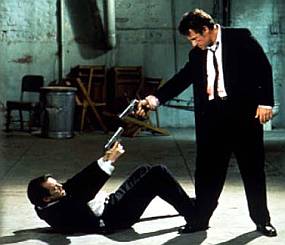
Is it almost Thanksgiving? You’d never know it from the various wars erupting all over the Christian blogosphere as one faction yells to the other faction,Standoff “Oh yeah, well what about this!”

Yes, I’ve participated, but I’ve tried to be as civil as possible. I’m not trying to establish a beachhead. I just desire that other people understand the faction I’m tenuously a part of, especially since mine seems to be on the small side as factions go.

The cessationist/charismatic debate on the surface has tended to be civil. I think that the default faction leaders, David and Adrian, have done well. There have been a few gashes, but I’m not seeing any severed limbs lying around.

But there’s another war out there and this one has turned grisly: Emerging Church vs. Traditional Church. The rhetoric on both sides is so dense that it’s approaching depleted uranium stage. This week brought out the mustard gas and biowarfare as Emerging Church proponent Justin Baeder attempted a domain rustling by securing “emergentno.com” in an effort to put the spoofing screws to Traditional Church proponent Carla Rolfe of Emergent No at “emergentno.blogspot.com.”

Two words: Truly Lame.

While the cessationists and charismatics appear to at least be listening to each other so far, the Emerging Church (EC) vs. Traditional Church (TC) battle has degenerated into a hatefest. I’m halfway tempted to pronounce a pox on both their houses. (I’ve previously blogged about this issue here, here, and here.) The sad part is that there are people on both sides of this EC/TC war whom I appreciate, and the truly thoughtful folks on both sides are not as heinous as they are portraying the other side to be. In many ways, both sides there are attacking the same fringe elements that are under assault in the charismatic/cessationist debate.

But assaulting the weirdos is easy. I’m a charismatic and I’m fed up with the fringe within the charismatic movement. (I’m even more fed up that the fringe may be taking over!) When examining the war going on between the EC and TC camps, each side has every right to be hacked at the lack of Christlikeness in the other side, but then we all know what Jesus said to the group ready to stone the woman caught in the midst of adultery.

I’ve got zero diplomatic skills, so if I tick someone off here in either the EC or the TC camps, I apologize in advance.

This is what the Bible says:

And one of the scribes came up and heard them disputing with one another, and seeing that he answered them well, asked him, “Which commandment is the most important of all?” Jesus answered, “The most important is, ‘Hear, O Israel: The Lord our God, the Lord is one. And you shall love the Lord your God with all your heart and with all your soul and with all your mind and with all your strength.’ The second is this: ‘You shall love your neighbor as yourself.’ There is no other commandment greater than these.”
—Mark 12:28-31 ESV

Earlier this week, Ingrid Schlueter of Slice of Laodicea, one of the TC blogs that is most fiercely battling the EC, had this to say about Traditional Churches:

There is, without doubt, a shortage of biblical love and concern on the part of church members in Bible preaching churches today. There is a reason that emergent churches and mega churches with small groups are attractive. There is no more empty feeling in all the world than having attended a church service as a visitor and leaving without a kind word being spoken. In my husband’s and my search for a church for our family in an area where good churches were in short supply, we found this again and again. At one point, after attending a church for almost a year, I said, “Tom, we could be in an advanced stage of rigor mortis in the back pew and I doubt seriously that anyone would notice.” … After moving to a new state, we visited one church where we needed directions. I went to the church office and said, “Excuse me, we’re just visiting and we need to find out where to put our children for Sunday School.” The woman looked me up and down rather cooly, and gestured vaguely down the hall. “Someone will help you down there.” She said. This, folks, was a small church. But I was new and uninteresting looking and that was that.

I don’t think I can add anything to her disappointment. Far too many Traditional Churches, filled with people who adore God and love the Scriptures, are getting the first part of Jesus’ two greatest commandments right, but are missing the second. Doctrine has no strength unless it’s put into practice. It’s not enough to be able to cut down every heretical anti-lapidarydipsydoodlearian out there with the Truth of the Scriptures. Yes, that has extreme value and must be guarded, but if we do not love the very people that the Lord Jesus died for, all the doctrine in the world will sit idle in our hearts, gone begging for someone, anyone to put it into practice for the disenfranchised of the world.

Ingrid’s lament is even more tragic, since it should be second nature for us to at least love the rest of the Body of Christ, even if we have difficulties with extending the love of Christ to the lost. Yet how can we do the latter, as the Lord Himself showed us, if we can’t even love our brothers and sisters in Christ?

Does the EC do this better than the TC? Probably. That need to be part of a loving community greater than oneself is one of the reasons that the EC is gaining adherents. The people who don’t normally get called to the wedding party are being handed an invitation. The Traditional Church needs to understand this and repent.

Now as open as Ingrid was about failures of the TC, I’ve searched high and low to find someone within EC ranks who was willing to take on the fact that the EC plays fast and loose with a lot of Scripture, muddying just about every doctrine it touches. With Open Theism increasingly discussed within the EC (but not in those exact terms, since the EC doesn’t desire to have exact terms about anything), one wonders if they’re doing the second commandment right, but are unraveling the tapestry that spells out that the first commandment clearly. What the TC does well—speaking to sin, holding up the cross, affirming the inerrancy of Scripture and its authority—the EC outright mangles, with many of the leading lights in the EC giving depositions on doctrine in the same manner that Clinton asked us to rethink what the definition of “is” is.

For this, the TC has every right to hold the EC’s feet to the fire, but the EC won’t stand for it. I won’t go into all the sites posting doctrinal fallacies attributed to the EC (and they are legion), but suffice it to say, it’s hard to think of the EC in any way other than a reactionary movement that can’t form a coherently Biblical reason for everything it supposedly believes. What other outcome, other than rank heresy, can be expected from the EC if it continues to deconstruct the Scriptural base on which it’s supposedly founded. The oldest lie in the Book is, “Did God really say…?” The Emerging Church needs to understand this and repent.

All this makes me tired.

Why is it incongruous to think that we can have solid doctrine that holds up the full revelation and personhood of the Triune God while ministering Christ to His Chosen and the lost around us? When those two are melded in purpose, isn’t that The True Church? Emphasizing any part of the whole revelation of the Gospel over any other part is a recipe for disaster, yet somehow Traditional Churches and Emerging Churches are doing their best to cook up such a mess.

And we wonder why the Church in the West is failing.