
Post-Election 2012: Sex, Race, Evangelicalism, and the Future

Standard

A week ago, we as a nation were set to decide several important political outcomes. A week later, those outcomes are decided, with the clearest message of all being that Evangelical Christians were repudiated convincingly at the polls. Whatever hubris existed in that voting bloc at the time of the 2000 elections has been wiped away, possibly forever, in the wake of the elections of 2012.

I wrote some initial thoughts on the 2012 election last week (“The 2012 Election Results and What They Mean for ‘Evangelical Christian America'”), but I wanted to throw out more musings and questions for those of us who are Bible-believing Christians who vote conservative.

  • Rod Dreher may have prophesied when he addressed the same-sex marriage issue. Absolutely read this: “SSM, Social Conservatives, & The Future.” The gist of Dreher’s contention is that social conservatives (Christian, in particular), have lost the battle against same-sex marriage (and other “traditional values” issues). He believes this will force the Republican Party to move center-left if it wants to compete politically. I believe Dreher is correct, which means a GOP/Evangelical divorce in the future or a weakening of Evangelicals on issues of abortion, same-sex marriage, and so on—and possibly both.
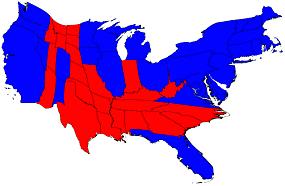
  • 2012 Electoral Vote Map Adjusted for Population

    2012 Electoral Vote Map Adjusted for Population

    While the election was close by popular vote, it was not by electoral college vote. Not only this, but it shows a country divided by the following:

Urban vs. Suburban/Rural

All Other Races vs. Whites

Women vs. Men

Younger vs. Older

Liberal vs. Conservative

In every pairing, the group on the left sided with the majority of winners.

  • The vote of women decided this election, for the most part (but see below). And with the popular vote in four states approving same-sex marriage, it raises the question of whether women, as a whole, are less negative concerning lesbianism as men are of male homosexuality. It would appear so. (Witness the election of lesbian Tammy Baldwin of Wisconsin to the Senate, for instance.) In addition, this outcome begs for clarification on whether women are more likely to desire same-sex marriage for themselves than men are. If so, the only way to prevent further erosion of traditional family values is to appeal to women.
  • One “truth” we are always told is that Hispanic and Asian cultures are both strongly pro-family, largely allying with Evangelicals in rejecting the liberal social reconstruction agenda. The results from Election 2012 violate that supposed bromide. The question is whether the strong support Barack Obama received is the prioritization among Hispanics and Asians of a racial minority mindset over conservative family values. Further research on this issue is necessary, because the liberal social reconstruction agenda those two groups assented to has not been adopted by the GOP—yet. If Hispanics and Asians are voting for a candidate primarily because they identify with that candidate as a fellow minority, then race is moving to the forefront of politics again, trumping any other social agenda.
  • In that same vein, if the GOP had managed to snag just 10-15 percent of the Asian and Hispanic vote that otherwise went to the Democrats, the outcome of this election may have been dramatically different.
  • For all the talk from Evangelical pastors of black congregations who were incensed at the Obama administration’s wholesale attack on values those churches hold dear , they were totally ineffective at swaying their congregations to vote to support those values and reject the current administration’s finagling. One must also look at the Roman Catholic vote, in that RC leadership leans GOP, while the congregants themselves seem devoted to the Democratic cause. This divorce only highlights an increasingly obvious truth: Leaders of “conservative” churches are far more conservative than are their congregations, and their own hubris causes them to overestimate their influence on the folks in their churches.
  • Stats show Mitt Romney pulled more votes from conservative Christians than any GOP candidate on record, nearly 80 percent of self-identified Evangelicals. In addition, few Evangelicals voted for third party candidates. Obviously, Evangelicals worried more about the policies of Barack Obama than were troubled by Romney’s Mormonism. This is a disturbing trend since it seems that Evangelicals will vote politics above theological truth. Regardless of where you stand on Last Days theology, Christians who downgrade heresy are setting themselves up to side with future leaders of questionable doctrine, all in the name of political promises. Obviously, few are reading the Book of Revelation.
  • Those of us who voted third party or for write-ins saw one of the worst showings ever for such candidates. However, if the GOP does move center-left on social issues (see above), Evangelical Christians will be stuck. Yet imagine a scenario where a new political party united by Christian belief challenged the Democrats and Republicans. It’s not hard to believe that a less Evangelical GOP could draw off some Democratic voters, while a Christian-leaning party would give the two other parties a serious run. Perhaps, though, it is impossible due to too much factionalism within Evangelicalism to create a political party favorable to its causes. Still, should the GOP move center-left as I believe it will, a competitive third party based on the beliefs the GOP is soon to repudiate might actual make some inroads and win a few elections. I mean, Maine elected an independent senator, so it’s possible.

Those are my additional thoughts. What do you think about the above or about other issues pertaining to the future we conservative Christians now face?
The 2012 Election Results and What They Mean for “Evangelical Christian America”

Standard

Four more years.

Whether that phrase elicits joy or sorrow in you in the wake of the 2012 presidential election results says a great deal about you as a person and your future influence in America.

If you are an Evangelical Christian who votes Republican, today seems a far cry from just 12 years ago, when magazine covers and stories trumpeted that Evangelicals were hot and in control of America’s future.

No more.

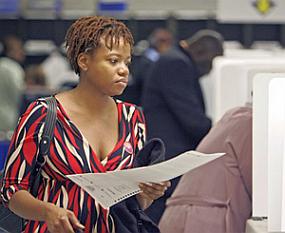
woman voterThe demographics of America continue to flex, and this is what the election results tell us about who is really in charge:

  • Women
  • 18-45 years of age
  • Nonwhite
  • Urban (or college town)
  • Non-Evangelical

That demographic pwned all others and gave Barack Obama four more years. Today, we understand that the conservative white male has been consigned to the dust bin of American history. Any idea that such people run this country is now passé. Given trends in overall demographics within the United States, this will not reverse itself—ever.

Yesterday’s election showed three other trends:

  • Same-sex marriage restrictions that passed in two states less than four years ago went down to defeat
  • Legalization of marijuana passed in two more states
  • Prolife candidates who were cornered late with the question “What do you think about abortion in the case of rape?” went down to staggeringly bad defeats despite having led their opponents for much of the race

Abortion and opposition to same-sex marriage are hallmark positions for the majority of Evangelicals, with opposition to illegal drugs another definable (though less broadcast) position.

What is worrying for anyone who holds a prolife position is that despite the overwhelming opposition to abortion as a procedure, pro-abortion forces have a new weapon for derailing prolife candidates that is perhaps the most effective ever: the rape question. Until prolife candidates can answer that question without seemingly inserting foot in mouth, expect withering losses to continue.

And why is that question so effective? Because the new vote-deciding demographic is women of childbearing age who live in urban areas (or college towns). And they will mercilessly punish anyone who answers that question poorly. Worse, that question may even sway women who are not in that demographic simply because all women have a visceral reaction to anything dealing with rape. When it seems that male politicians condone certain aspects of a post-rape experience—well, the resulting backlash cannot be unexpected.

So where do Evangelical Christians stand as of November 2012?

The trends of the last few years are telling. Any political power that Evangelicals thought they wielded was always illusory, and the conceit of holding power only goes to show how low Evangelicalism has sunk with regard to genuine godly humility. What it will take for Evangelicals to wake up is anyone’s guess, though, as no amount of political pain seems to break through the arrogance.

Evangelicals don’t seem to understand the lives of non-Evangelicals, which is why Evangelicals continue to fail to connect with people who are different from them. Blame this on a bunker mentality. Honestly, how many liberal friends do most Evangelicals have? Why expect any influence at all then?

That lack of influence illustrates how Evangelicals have forgotten the root of their label: evangelism (though not to lead people to convert to a political party but to convert to Jesus). Evangelicals simply do not evangelize non-Christians anymore. And you especially will not find them evangelizing women 18-45 who are not born again and who live in cities and college towns. If Evangelicals were to stop plowing so much of their time and energy into political causes and start leading people to Jesus, that trio of causes so near and dear to them (upholding traditional heterosexual marriage, the sanctity of human life, and religious freedom) will take care of itself. How this reality continues to elude Evangelicals is damning.

Conservative Evangelicals failed miserably to help nominate a viable presidential candidate, with most of the supposedly workable alternatives proving to be ridiculously repellent to the average non-Evangelical voter. What must be avoided is a sense of persecution at being rejected. Instead, Evangelicals need to look at themselves and genuinely question whether it is Jesus who is turning off others or the personality of major Evangelical politicians. That distinction is critical, yet most Evangelicals don’t get it. Winsome Evangelicals exist, but a failure to place them on any national stage is a major failing of Evangelicalism as a whole. Instead, Evangelicals ended up stuck with a non-Evangelical presidential candidate who thinks God is an ascended man enthroned on the planet Kobol. One must ask what exactly was in that Kool-Aid they were drinking. One must also ask how much of their souls Evangelicals will sell to achieve by politics what they should be achieving through converting others to Jesus (see above).

Evangelicals must come to grips with their own diminishing demographic. Simply put, the Church is not growing in America. Having now slid into minority status, Evangelicals must pursue much soul-searching and honest reflection to find that humility they so need to rediscover. This loss of power is what it means to be a minority. It doesn’t feel good, does it? Still, if this second class position does not result in a refocusing on the main and the plain in Evangelicalism, if being a minority within a larger culture does not clean out the dross that is holding Evangelicalism back, then Evangelicalism is finished as a movement not just within American politics but within American culture, society, and religious affiliation. Period.

Evangelicals must learn that no political party is their friend. Selling out to the GOP has hurt Evangelicalism more than it can imagine, and Evangelicals must stop believing that any one political party represents them. Strange bedfellows have hurt the cause of Christ in America, and it is high-time the reflex to vote Republican stops. Evangelicals must support political candidates, regardless of party affiliation, who more accurately reflect the nature of God’s character and who perfectly answer how God can be known. Evangelicals must also realize that values voting is a major failure because it does not take into account all aspects of who God is. Picking and choosing values only further muddies Evangelicalism’s larger stance on what it means to be in Christ. All of who God is must be considered, and that means looking at aspects of God’s character Evangelicals have neglected. If Evangelicals were as well-known for championing the causes of the poor in America as they were for championing the cause of traditional marriage, perhaps those single, urban mothers who went en masse for “the other guy” might have voted differently.

I believe it is possible for America to return to greatness if born-again Christians stopped running around like headless chickens and instead focused on what is really important to the cause of Christ. If this latest election failing in the eyes of Evangelicals does not teach them anything, then we can forget ever seeing the American Church influencing our nation anytime soon.

Question

Standard

Between the silence of the mountains
And the crashing of the sea
There lies a land I once lived in
And she’s waiting there for me
But in the grey of the morning
My mind becomes confused
Between the dead and the sleeping
And the road that I must choose

I’m looking for someone to change my life
I’m looking for a miracle in my life
And if you could see what it’s done to me
To lose the love I knew
Could safely lead me to
The land that I once knew
To learn as we grow old
The secrets of our soul

–Excerpt from “Question” by The Moody Blues


In searching for some factoid last week, I stumbled into a piece about The Moody Blues and their top songs, one of which is “Question” (shown in the excellent video above).

I always liked that song. The plaintiveness of the question that erupts from the heart of the singer resonates.

Many people are looking at life right now and asking how it is we are where we are. Beyond the questions that afflict us all comes that one individual query, the one that haunts a lot of us who scout our personal situations and ask what happened to that place of refuge and hope from long ago, that “land that I once knew.”

I turn 50 in a few weeks, and I guess that’s good enough time as any to get introspective. Now more than ever, I run into fellow travelers paralyzed by the search for the land they once knew, for someone to change their lives, for some miracle to happen that will forever alter the inevitability of the road they find themselves on, the road that winds through the grey mists of morning that lead into forgetfulness and loss.

How is it that some people seem to find their mission and fulfill it, while other people look and look and yet the road never makes itself clear?

How is it that some people can clearly see where they have come from and where they are going, yet they never quite get to their destination?

How is it that some people find the opposition to their entire journey so strong that it never truly begins?

Where the trouble for me begins is that I know a lot of Christians who are stuck in these No Man’s Land locations. For whatever reason, they’ve been sidelined. All those things they hoped to do now seem less likely than ever. The vision that lit up their early lives now flickers, a cooling ember inside a broken heart. You can see that cool nostalgia in their eyes and hear the tremor in their voices when they tell their stories, especially when they reflect on what might have been.

Some wonder how it was that they had a yearning for foreign missions, yet every opportunity to do those missions blew up or met with seemingly pointless resistance.

Some wanted nothing more than to work with young people, yet the vicissitudes of life kept pulling them away, and now they no longer understand youth.

Some wanted to change the world for Christ, yet they got drawn into the embrace of the American Dream and saw their youth and enthusiasm sucked dry by it.

And some reflect on it all and wonder if they are the ones who put their hands to the plow but then looked back. And they wonder if there is any redemption for that very human failing, a second chance, a ticket back to that land they once knew, where they could start again and do it all right this time.

I think there are a lot of people who found that Someone who changed their life. And yet the finding somehow didn’t shield them from broken hopes and dreams, especially when those hopes and dreams were to be all they could be for that Someone.

There is no joy being caught in that time of discernment yet unable to tell the difference between the dead and the sleeping.  When the road we take from here seems obscured. I don’t know what to say to people when I see them struggling to find how to move on when there appears to be no place to move to. I hope that whatever words come out of my mouth have some of God’s life in them, but I don’t know myself how to answer the questions of how one finds himself here, because I’m not so sure of my own location.

At this point in my life, I wonder about systems and how people end up mired in them. Government, institutional religion, personal expectations, other people’s expectations– they seem to conspire to cloud rather than clarify. And the “land that I once knew” seems farther off than ever.

What do you do when you tried to do everything right by God and yet it led to this far off place that feels so alien and removed from where you think you should be?

I wish I had an answer to that question. I wonder if it lies back in that land we once lived in, but I don’t know how we get back there.

 ***

See also: