

When Believers Stumble: Trusting Our Senses Over God’s Truth

Standard

Peter sinksI’ll start by giving credit where credit is due. The pastor of my church preached on the Numbers and Judges passages below, so credit goes to Mark Otten for inspiring part of this post. Yet because this fits so well with the posts to come—and is an issue discussed recently on other blogs—I felt it was a great place to start this mini-series, “When Believers Stumble.”

We say it’s always about faith, but anymore, I wonder just how much faith we really have. How many people who claim to be Christians are willing to ask themselves the tough question: Do I really have enough faith? You’d be hard pressed to find a die-hard Christian who would admit that they don’t have enough faith to believe for the most impossible situations. I think that our classification of what is “impossible” is slipping, though. Skimming through about a hundred Godblogs shows a remarkable amount of “We believe, but….”

Why is it so hard to take God at His word? If someone says that the Bible isn’t inerrant, most of us will protest vociferously. But press us on which parts we actually believe and the flopsweat forms and the excuses flow.

This isn’t self-righteousness on my part. I struggle with truly believing some parts of the Scriptures. Mentally, I can assent to everything, but when push comes to shove, some parts are almost too good to be true. Now before someone labels me just another wolf in sheep’s clothing, my defense is that I’m in good company.

Take Gideon for example. Some people might call his actions “discernment,” but I read this passage and see a guy with a bagful of “buts.” And before whom is he pulling them out? God Himself:

Now the angel of the LORD came and sat under the terebinth at Ophrah, which belonged to Joash the Abiezrite, while his son Gideon was beating out wheat in the winepress to hide it from the Midianites. And the angel of the LORD appeared to him and said to him, “The LORD is with you, O mighty man of valor.”

And Gideon said to him, “Please, sir, if the LORD is with us, why then has all this happened to us? And where are all his wonderful deeds that our fathers recounted to us, saying, ‘Did not the LORD bring us up from Egypt?’ But now the LORD has forsaken us and given us into the hand of Midian.”

And the LORD turned to him and said, “Go in this might of yours and save Israel from the hand of Midian; do not I send you?”

And he said to him, “Please, Lord, how can I save Israel? Behold, my clan is the weakest in Manasseh, and I am the least in my father’s house.”

And the LORD said to him, “But I will be with you, and you shall strike the Midianites as one man.”

And he said to him, “If now I have found favor in your eyes, then show me a sign that it is you who speaks with me. ”
—Judges 6:11-17 ESV

Things have been so bad for so long, that Gideon can’t let it go. God’s talking to him and he’s so stuck in a rut that it doesn’t seem to matter. He vents like a pent-up volcano. Even when God says He’s going to make it all better through Gideon, the puniest guy in the tribe of Manasseh just won’t drop the disbelief. His eyes tell him all he needs to know. He’s seen the Midianite oppression and no one, not even God, is going to convince him of another truth.

Now the happy ending of the story has Gideon eventually triumphing over the Midianites, but I’ve got to think that God wasn’t entirely happy with his pushback.

It gets worse when all of Israel is called to believe:

At the end of forty days they returned from spying out the land. And they came to Moses and Aaron and to all the congregation of the people of Israel in the wilderness of Paran, at Kadesh. They brought back word to them and to all the congregation, and showed them the fruit of the land. And they told him, “We came to the land to which you sent us. It flows with milk and honey, and this is its fruit. However, the people who dwell in the land are strong, and the cities are fortified and very large. And besides, we saw the descendants of Anak there. The Amalekites dwell in the land of the Negeb. The Hittites, the Jebusites, and the Amorites dwell in the hill country. And the Canaanites dwell by the sea, and along the Jordan.”

But Caleb quieted the people before Moses and said, “Let us go up at once and occupy it, for we are well able to overcome it.”

Then the men who had gone up with him said, “We are not able to go up against the people, for they are stronger than we are.” So they brought to the people of Israel a bad report of the land that they had spied out, saying, “The land, through which we have gone to spy it out, is a land that devours its inhabitants, and all the people that we saw in it are of great height. And there we saw the Nephilim (the sons of Anak, who come from the Nephilim), and we seemed to ourselves like grasshoppers, and so we seemed to them.”
—Numbers 13:25-33 ESV

God came out and said, “I’m giving you a land flowing with milk and honey,” and the response was “We’ll be crushed like gnats by those sons of a Nephilim!” One man here, Caleb, believed God despite what his eyes told him. It didn’t matter how big the giants were; those monsters were the real gnats because Caleb’s God can’t be contained by the whole universe. Caleb’s eyes were focused on a world bigger than the one the rest of the spies saw, his ears attuned to a promise everyone else drowned out with cries of doubt. “Let us go up at once….”—is there a speck of unbelief in that statement? None that I can find.

What is particularly sad about this is what follows in Numbers 14. Read it and ask what happens when God speaks and the people would rather believe their senses than the Author of Truth. We know the wandering that results from this distrust. We know that God let an entire generation of faithless people pass on before the Israelites took possession of that golden land. We can’t believe how crazy they were not to believe, but at the same time, we squirm in our seats.

Lastly, we come to Peter, one of Jesus’ handpicked, the brashest of the bunch:

And in the fourth watch of the night he came to them, walking on the sea. But when the disciples saw him walking on the sea, they were terrified, and said, “It is a ghost!” and they cried out in fear.

But immediately Jesus spoke to them, saying, “Take heart; it is I. Do not be afraid.”

And Peter answered him, “Lord, if it is you, command me to come to you on the water.”

He said, “Come.”

So Peter got out of the boat and walked on the water and came to Jesus. But when he saw the wind, he was afraid, and beginning to sink he cried out, “Lord, save me.”

Jesus immediately reached out his hand and took hold of him, saying to him, “O you of little faith, why did you doubt?”
—Matthew 14:25-31 ESV

Why is this passage in the Scriptures? It wasn’t only for the early Church. What does it say to us in 2006?

The Lord commanded Peter and he came, but looked at the waves.

The Lord commanded the Israelites and they looked at the giants.

The Lord commanded Gideon and he looked at his circumstances.

They all had their senses attuned to the natural world, not the supernatural. They could see past their noses, but not past their preconceptions. They heard God, but relegated Him to a distant second place, choosing instead their fallen, shrill cry of faithlessness.

We are very much like them.

What troubles me is that we don’t have to be. God can do so much more if we believe:

When he entered Capernaum, a centurion came forward to him, appealing to [Jesus], “Lord, my servant is lying paralyzed at home, suffering terribly.”

And he said to him, “I will come and heal him.”

But the centurion replied, “Lord, I am not worthy to have you come under my roof, but only say the word, and my servant will be healed. For I too am a man under authority, with soldiers under me. And I say to one, ‘Go,’ and he goes, and to another, ‘Come,’ and he comes, and to my servant, ‘Do this,’ and he does it.”

When Jesus heard this, he marveled and said to those who followed him, “Truly, I tell you, with no one in Israel have I found such faith. I tell you, many will come from east and west and recline at table with Abraham, Isaac, and Jacob in the kingdom of heaven, while the sons of the kingdom will be thrown into the outer darkness. In that place there will be weeping and gnashing of teeth.” And to the centurion Jesus said, “Go; let it be done for you as you have believed.” And the servant was healed at that very moment.
—Matthew 8:5-10

Jesus, say the word and it will be done. No hesitation on the centurion’s part, none on the Lord’s in answering. And here’s the part that really wows: The centurion’s faith was so strong that Jesus didn’t even have to be in the presence of the centurion’s slave in order to heal.

How easy it is when we believe!

Times are not going to get easier for us Christians, though. There’s no cruise control on this car. Honoring Christ means believing the whole counsel of Scripture, not the parts that are easy to grasp, convenient to believe. Moving beyond our senses is at the core of Christian maturity.

One of the charismata is the gift of faith. You’ll get arguments from theologians as to what exactly that gift entails, but the one thing I know is that we all need to be praying that God would pour it out on us in full measure. We’ll need it in the days to come.
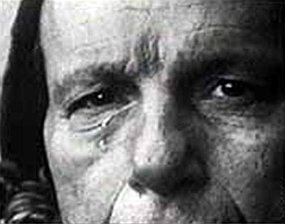
Warring Evangelicals Make Iron Eyes Cody Cry

Standard

I’ve blogged on green topics before (for instance, see this post), so perhaps I’m excluded from commenting on the recent environmental brouhaha as Evangelicals once again savage each other over an issue that neither side understands completely.

Several well-known Christians have signed an initiative asking for greater sensitivity to the issue of global warming. Iron Eyes Cody—The Crying IndianA wide variety of Christian leaders from Jack Hayford and Duane Litfin to Brian McLaren and Robert Yarbrough signed on the dotted line of the Evangelical Climate Coalition (ECC.)

Meanwhile, Chuck Colson, Ted Haggard, and James Dobson have said they don’t share that same feeling. And yet again, another highly vocal group of Christians has been brutally critical of the ECC, basically calling any Christian interest in environmental issues a concession to Gaia worship.

Like so many of these stupid battles—and they are stupid—the brutal misunderstanding, tortured Scriptural citations, and outright mean-spiritedness dishonors the Lord.

Here’s what I don’t get:

1. The harshest critics pull out the Great Commission factor. They act as if it’s impossible to walk and chew gum at the same time. Why is it so impossible to think that Christians can be good stewards of God’s creation AND evangelize at the same time? Why the bogus either/or argument? Whether we’re going door-to-door or just sharing Christ wherever and whenever, we still consume food, gasoline, and other resources. Can’t we think a little bit more about how we do it? Will that somehow negate Matthew 28:19-20? People arguing that we can’t do both are only doing so because they are short-sighted and simply wish to justify their own personal selfishness. And Jesus doesn’t think much of people who think of themselves first.

2. Even if you disagree with the global warming clarion call (and I’m certainly not convinced either way), what is the absolute worst that can come out of Christian leaders asking us to be more sensitive to the issue? We burn through fewer non-renewable resources? We’re more aware of our own personal wastefulness? We live more simply? Are any of those bad aspirations? Do any run counter to God’s word?

3. I don’t understand why some folks ignore the whole of Scripture when it comes to stewardship. The very first charge God gives Man in Genesis is to care for creation, yet some believers act as if that command has been rescinded. If they can point to chapter and verse that negate that charge, I’ll fully concede the point. Simply put: they can’t. Again, our entire lifestyle can be one of stewardship and simple living and those detract not one iota from our greatest purpose.

4. If it’s a matter of witness, what witness do wastrel Christians give the world when they toss trash out the windows of their ICHTHUS-labeled Chevy? Every week I see self-labeled Christians littering. Every week. Without exception. Why? What does that accomplish except to drive people away from the Lord?

5. Unfortunately, we’d rather fight than switch. If it’s all about showing the proper witness, then why not join the Sierra Club or the Audubon Society, befriend unbelievers in those organizations and lead them to Christ? We can witness anywhere, so why not right in the belly of the beast, so to speak? Salt and light—no matter where we are. And I’m not talking about joining environmental organizations just to convert people, but doing so because it’s the right thing to do.

6. Is there a truckload of weird New Age garbage wrapped up in environmentalism? Absolutely! You’d had to have sleepwalked through the last forty years to have missed that one. But as we all know, the Enemy tries to counterfeit or corrupt everything that God values. So why the shock on our faces that the Enemy’s got a grip on a lot of folks in the environmental movement? What are we afraid of?

7. Too many Christians have short (or selective) memories. I remember 1971 and the debut of the iconic Ad Council campaign simply called “The Crying Indian.” Remember Iron Eyes Cody standing on side of the road by a pile of trash with a lone tear streaming down his face? It’s considered one of the greatest commercials of all time. And what did it accomplish? By the end of that campaign’s run in 1983, litter in this country had been reduced by 88%.

I live not far from the Little Miami River, a historic waterway. A few years ago, that river was so filthy that canoeing companies that made their livelihood off the river were facing extinction. The water was so bacteria-laden from pollution run-off that anyone who fell in while canoeing faced a horrid gastrointestinal nightmare days later. Yet people who were saddened by what had happened to that beautiful river didn’t give in. Thousands worked to clean it up.

Today that river is pristine, with nearly all the driven-off wildlife having returned. Some folks cared enough to clean up that river. More cared to clean the air. Others focused on litter. People who were not satisfied with breathing smog and walking through empty pop cans did something about it. Who benefited? We all did. We live cleaner today because some people cared enough to make a difference. We can live even cleaner still.

Christians today have that same opportunity. Why should the children of the world show greater care of the Lord’s creation than we do?

Even if the whole global warming thing is a boondoggle, there’s no reason why we can’t all be less wasteful, live more simply, and show greater care of what God has given us. If the ECC accomplishes that tangentially, then we’re all better for their effort.

Now say it with me: UNLESS.

Calling a Truce in the Worship Wars

Standard

WorshipOver the last year, one topic has arisen on more blogs than any other: proper worship. The tenor of these posts is typically aimed at how to do worship right, with the writer explaining why his/her token method of worship is THE ONLY KIND THAT WORSHIPS GOD IN SPIRIT AND IN TRUTH. Like so many aspects of the Faith, we’ve turned worship into a tangle of pointing fingers. Rarely do we claim any higher ground than to contend that our higher ground is loftier than someone else’s.

Yiddish speakers have a name for this: Oy Vey!

There’s no better place to start than the battle between modern worship choruses and classic hymns. Nothing will split a church faster than forcing people to take sides on which is better. Advocates of modern worship choruses tend to be younger, middle class, with less history of long-term church attendance, and a greater affinity for Third Wave and Megachurches. The Vineyard churches get a lot of press—good and bad—for being the nexus for the trends in church music today; a Vineyard moldy oldie like John Wimber’s “Isn’t He” is a classic example of a modern worship song. The Pentecostal church I attend favors this kind of music, and as the drummer on our worship team, it’s what I’m used to playing for church music.

On the other side are those who advocate the old hymns. These folks tend to be older, were raised in the church (usually in a conservative congregation) and tend to be from churches that are either wealthy/upper-middle class or dirt poor. On the Web, most of the Reformed bloggers are fans of the old hymns; they tend to be the most vocal critics of modern worship choruses, too. I grew up in the Lutheran church (and spent time in an old-fashioned AoG and modern Presbyterian church who supported the hymns) so my history is also with the hymns.

If you listen hard enough, you hear the arguments pro and con for one side or another, but I want to cut through the rhetoric and tackle the common talking points we hear on the Web.

Modern worship songs are theologically shallow.
Yep, many of them are. The hymn supporters get a point there. Unfortunately, they lose it, too. The problem? The hymns we commonly sing today are a tiny fraction of all the hymns that have ever been written. Only the best have survived the test of time. In defense of the modern worship song camp, time will have the same pruning effect on worship choruses. A hundred years from now, we may still be singing some of them. Chances are that those that will have survived will be the ones that have the deepest theological meaning—just like the old hymns.

Now this doesn’t excuse shallow lyrics and brain-dead melodies in today’s worship music, but we need to apply standards fairly. There have been many hymns that were popular in their day, but have since vanished from our Sunday repertoires because they weren’t all that deep. They played into the era’s popular music styles, corresponded to theological fads that have since passed away, or weren’t all that great to begin with. Sounds a lot like modern worship songs and the deficiencies noted by those folks who love to criticize them. Outcome? Draw.

Worship music (and the people who write it) must reflect our doctrine.
Oh really? Let’s look at the facts.

  • If we believe that the only source of revelation is Scripture, then we must oppose singing “How Great Thou Art,” “Great Is Thy Faithfulness,” “This Is My Father’s World,” and a whole host of other hymns that have lyrics that support the fact that God’s creation speaks—apart from the Scriptures—attesting to His glory. If we’re part of that group of Christians who believes that it’s all going to burn one day anyway—so why not cut down the rainforests now—then these hymns must also be verboten. That’s a tough loss; a lot of people really like those hymns.
  • If we believe that Christian mysticism is just another word for apostasy, then we’ve got to cut out hymns like “O Sacred Head Now Wounded” by Catholic (uh oh, there’s another problem) mystic Bernard of Clairvaux. That puts a serious damper on Good Friday services, now doesn’t it? Clairvaux also wrote the popular hymns “Jesus, the Very Thought of Thee” and “O Jesus, Joy of Loving Hearts.” Too bad. He and all the other mystic hymnwriters are out.
  • If our eschatology is not postmillennial, then we must no longer sing “Onward, Christian Soldiers,” “The Battle Hymn of the Republic,” and just about any hymn that came out of The Salvation Army movement. That’s a big chunk of hymns in the 1865-1890 timeframe, too.
  • If we’re Reformed and reject books written by Arminian authors, then in order to remain consistent we should also reject hymns written by Arminians. This is particularly painful since that means all hymns by Charles Wesley have to go. Considering he wrote more than 900, that’s a big loss. Say goodbye to “O for a Thousand Tongues to Sing,” “Jesus, Lover of My Soul,” “Love Divine, All Loves Excelling,” and “Come, Thou Long-Expected Jesus.” We also have to reject “Hark! The Herald Angels Sing” because not only did Wesley write it, but George Whitefield changed it so that it was no longer Scripturally accurate to the Luke 2 passage Wesley based it on (because nowhere does it say that the angels were singing.) The two fought bitterly over the change, and we can’t be supporting two Christian brothers fighting, now can we?
  • If we’re Arminian and can’t stand what Reformed hymn writers have to say, then we’re probably Dave Hunt and could care less what this blog has to say about anything anyway, nevermind my comments on hymnody.
  • If hymns written by the unconverted and apostates are out, then we need to delete “O Holy Night” from our Christmas services. The lyricist was a Catholic who later renounced Christianity and became a Marxist, while the music was written by a Jewish composer. That song contains political overtones, too, by dealing with the then current issue of slavery. We all know that politics and hymnody should never mix.
  • If we oppose Catholic theology, then besides all the Bernard of Clairvaux hymns we must stop singing, scratch everything written before the Protestant Reformation. Wow, that’s a lot of hymns we need to chuck!

At issue here is that the same people who are unwilling to stop singing the hymns listed above are the same people who rant and rave against writers, pastors, and whomever doesn’t toe their doctrinal party line. That’s profoundly hypocritical no matter how we look at it. It’s even worse when we apply those filtering criteria to modern worship songs and their writers, while giving the hymns a pass. Yet we seem to do it all the time. Call it just another case of selective memory on the part of Evangelicals. Just be consistent—that’s all I’m asking for here. If we can’t be, then we need to stop judging other houses because we can’t get our own in order.

Too many of today’s worship songs sound like nothing more than “God is my boyfriend” songs.
You know what I mean, the “I love you, I love you, I love you” kinds of worship choruses that never point out who the “you” is. We could be singing them to our sweetheart or to God…who knows?

This is a favorite argument among hymn supporters and there’s a legitimate beef there. However, my experience is the amount of these kinds of worship choruses is highly overinflated by those who oppose them. I looked through all the worship choruses I’ve played in church over the span of three years and only one or two fit this accusation. If you ask me, this argument is a non-starter.

If there’s a legitimate beef against “God is my boyfriend” worship music, it’s actually the modern worship chorus fans who have a better case against the hymn supporters. Any perusal of hymns written in the hundred years between 1800 and 1900 shows a fascinating tendency of hymn writers of that era to portray an overly feminized Jesus who resembles a sort of sensitive 1980’s man. Hymns like “Softly and Tenderly Jesus Is Calling,” “In the Garden,” and “Pass Me Not, O Gentle Savior” were often criticized in their day by clergy who believed they were softening the manliness of Christ. When compared with hymns that came a hundred years before them, it’s difficult to argue against that criticism. Later Church historians can point to these and other hymns of their day as one of the sources for the long-term feminizing effect on the Church in this country, a problem cited by many of the same people who sing those very hymns and defend them tooth and nail.

Our worship needs to be Scripturally based.
Do we really believe this? I mean truly? If so, where are the loud crashing cymbals, tambourines, and dancers?

Praise the LORD! Praise God in his sanctuary; praise him in his mighty heavens! Praise him for his mighty deeds; praise him according to his excellent greatness! Praise him with trumpet sound; praise him with lute and harp! Praise him with tambourine and dance; praise him with strings and pipe! Praise him with sounding cymbals; praise him with loud clashing cymbals! Let everything that has breath praise the LORD! Praise the LORD!
—Psalms 150:1-6 ESV

Some would argue that this doesn’t represent a New Testament worship sensibility. However, if you do worship-related keyword searches on the New Testament, there’s not a single Scripture that would imply that the early Church negated psalms like Psalm 150 above in order to dial down to some different form of worship. The early Church worshiped in the temple, right? Would that worship not include Psalm 150 styles of worship? Unlikely.

I hear far too many Christians negating the kind of worship styles that their brothers in Christ might use. Whenever I hear some stone-faced believer saying that his church doesn’t provide “entertaining worship,” I look at Psalm 150 and ask myself how it would be possible for those worshiping with trumpets, dance, cymbals, tambourines, stringed instruments and pipes not to find that stirring!

True worship involves ________.
That’s a pretty big blank. Some things that can fill that blank include:
* Our minds
* Our emotions
* Our cultural identities
* Our confession before God
* Our personal histories

No matter what we put in that blank, true worship involves our whole man, driven by the Holy Spirit alone. When we read this oft-quoted passage

But the hour is coming, and is now here, when the true worshipers will worship the Father in spirit and truth, for the Father is seeking such people to worship him. God is spirit, and those who worship him must worship in spirit and truth.”
—John 4:23-24 ESV

we use it to justify our particular form of worship without asking if it means something totally different. Truthfully, worship that is done in spirit and in truth is worship that proceeds from the Holy Spirit alone. The Holy Spirit is the one who enables us to know God, and knowing God is what leads to true worship. Jesus’ rebuke of the woman at the well for discussing the means by which people worship is the whole point here. The focus is not on externals, yet so often this is all we can note when we hold our own ways of worshiping up as the only way, while deriding those who worship in ways we don’t understand.

Is it possible to worship the wrong way? I believe it is. Like I’ve said a trillion times here, discernment is always needed. The Holy Spirit will not guide true worshipers into worship that is not true. But the Spirit is not so concerned with the cultural trappings, which is why a lot of us are going to be shocked when we get to heaven and see forms of worship that are not familiar to us culturally. Our worship wars are based on cultural trappings more than anything, and that’s too bad because that’s a very narrow slice of reality that we bring to worship. The true worshiper of God is content in all worship environments that are driven by the Holy Spirit. Such a worshiper is equally at home with an a cappella choir, an amplified worship band, a pulse-pounding black gospel group, a classical quartet, or any other musical expression that is fueled by the Holy Spirit.

Worship isn’t just about music, but you would think it was all that matters from all the furor over its musical aspect. I’ve talked only about music in this post, but all of worship incorporates this same common sense. Worshipers with hearts focused on God, worshiping by the Spirit, can sing (and dance) to any kind of music and God will be pleased with their offering.

Why do we strain so hard to define what is appropriate? We want to honor God. We want to do the right thing. But the right thing is focusing more on God and less on our methods.