In Part 1 of this examination of three ideas/trends that rose to prominence in the 19th century, we looked at the industrial revolution, social Darwinism, and postmillennialism and how they fueled each other to wreak enormous societal change. Today, we look at their effects on Western Christianity and the Church’s response.
As the industrial revolution swept England, society shook under the massive move from the countryside to the city, from the farm to the factory. The agricultural revolution that had been instrumental in bouying the fortunes of those families that had once labored under feudalism crumbled under the competition from factories, leading to a renew servitude. Cottage industry gave way to heavy industry. With young people fleeing farms for factories, many enchanted by the lure of “progress,” the small landowner system collapsed. Soon, entire families were working the mills under what quickly became inhuman conditions.
To the powerful, little of this made a difference. In fact, they had good reason to believe it was all for the best; their theology and science said so.
That theology was postmillenialism, which postulated that Christ would return to a world perfected by Christians through science, education, the arts, and high culture. The rise of postmillennialism went hand in hand with industrialization. They fed off each other. The poor, “godless” underclass was simply the labor in the machine of progress.
The science was social Darwinism, the idea that some prosper because they are inherently more fit to live than the underclass, an idea that arose out of On the Origin of Species. To the upper crust of England, this proved a most intriguing explanation for the distinction between the classes. In many ways, it was used to justify the factory system, especially by the ones who owned the factories. They were, as they saw it, the superior race. (Their workers, on the other hand…)
Caught in the middle of this perfect storm of industrialism, social Darwinism, and postmillenialism was the Church. And it was caught unprepared and without thoughtful leadership that questioned the rush to empire.
While a few Christian leaders showed some dismay over the societal upheaval, the most influential bowed to the spirit of the age. The allure of heavy machinery and the efficiency of the mills and factories sucked in many Christian leaders. It was new and exciting. It was the triumph of the genius of man. The fervor of the factory powered the idea that no challenge was unmeetable, even one of Christianizing the world. With the locomotive and the steamship, no region lay unreachable.
Social Darwinism also affected the Church. The theory provided scientific evidence for the superiority of the aristocratic English lifestyle. The good, churchgoing person was among the fittest, while the savage in the jungle was not. The Church dealt with this by splitting into two halves, one that saw this disparity as surmountable through Christ, the other accepting it as a permanent state of God-ordained distinction between themselves and the rest of the world.
The half of the Church that rejected the perfectibility of the “inferior” classes/races began to see the Bible as less capable of explaining the world than science. The subsequent release of Darwin’s The Descent of Man, and Selection in Relation to Sex only confirmed their suspicions. This led to the rise of liberalism and higher criticism of the Bible.
The result for the half of the Church who believed that Christ could raise the state of all men was the modern missionary movement, which was primarily conservative and evangelical. Marrying postmillennial fervor with a mandate to perfect the rest of mankind, this movement sought to make the world’s unreached peoples as fine and fit as the missionaries who reached out to them. Christ in them was the goal, but, in keeping with postmillennialism and industrialization, so was enculturation.
(A perfect illustration of 19th century Evangelicalism’s synchronistic purpose for evangelizing the world can be found in an episode involving Hudson Taylor of the China Inland Mission. On returning from the mission field to report on his work, Taylor scandalized his Victorian-era supporters when he appeared in native Chinese garb and confessed that it was a means to show himself to be one with those he served. To the mission supporters, it seemed that this example of prime English gentility was being enculturated by those he was sent to save rather than the other way around. This was the premise of social Darwinism, which the Western Church of all persuasions readily accepted, brazenly turned on its head.)
So what we have in the 19th century Western Church is an imprimatur regarding the spirit of the age, with full-fledged support for industrialism and postmillenialism, and a bifurcated response to social Darwinism that accepted the science fully, if not the inevitable outcome of its conclusions.
The result has been a litany of social tragedies that the contemporary Church has not been able to overcome:
Families split to pursue industrialized jobs. Long-standing communities were subsequently decimated, resulting in weaker local social ties. Social Darwinism spurred the idea that it was every family for itself, further weakening interpersonal connection while strengthening the need for each family to be self-sufficient, which led to duplication of effort, the need for multiple sources of income to pay for that duplication, and what would eventually become consumerism. The communities, particularly the church community, that had been charged with the care of people on a local level was forced by this increasing pressure to abandoned that care. The state, caught off-guard by this abandonment and the need to be socially aware given the times, rushed in to fill the void. (Which is why complaints by modern Christians about state intrusion into “hallowed” institutions rings so hollow, as it was the Western Church that abandoned its role.)
In that same way, children abandoned the care of their elderly parents to others, leading to a growing reliance on state-run welfare systems, and a further fracturing of the family bond.
Children who moved to factory work no longer took over family lands, which led to inheritances issues (and a dependency on the state to sort them out), the rise of industrialized farming, and a weakening of the genetic diversity of harvested food sources, which threatens modern food supplies. (In a similar creation care vein, industrialization led to environmental pollution.)
As parents were forced into industrialized work, they no longer worked from home in cottage industry. This placed additional burdens on raising children, which fed the public school system. The home lost its place as the source of income, work, and education, transferred instead to factory and state. Cottage industry, which had led to improved incomes for a wide range of demographic groups and better living conditions in general, was wiped out indiscriminately, leading to a degradation of lifestyle and overall health for those affected.
Children lost their role as an essential part of a family’s survival, a pivotal place in what had been an agricultural society. Industrialism at first enslaved even the young, but brutal factory conditions led to laws that took children out of the factories and rendered them a burden on their families rather than a necessity for survival. For this reason, the birth rate dropped in industrialized nations. (Which also explains today’s increasing Islamicization of Europe.) It also contributed to juvenile delinquency, which Christians countered with youth ministry (which, with 80+ percent of Christian youth abandoning the faith by their final year of college, has proven to be a dismal failure).
The influence of social Darwinism and industrialism altered the way businesses operate and how people work, mostly for the worse. Social Darwinism fed into capitalism and created a dog-eat-dog corporate world that chews up those who work within it, reducing people made in God’s image to “human resources” and increasing ethical failures by business leaders who live by the motto Only the strong survive.
With the above factors in place, human life cheapened, as people became cogs in the machine of progress. The eugenics movement grew, often supported by Christians who saw it as a way to prevent the suffering of the deprived underclass. As social Darwinism became the prevailing wisdom, blockades to political embodiments of the ideology fell. (For this reason, the rise of Hitler and the “Final Solution” met little opposition from liberal, and even conservative, Christians in Germany.) Abortion as a state-mandated right was inevitable, as will be euthanasia.
The Church let social Darwinism into its “house” rather than keeping it outside where it could be more easily addressed. This led to a splitting into liberal and conservative factions that have warred ever since. The conservative branch, caught up in postmillennialism and the spirit of the age, married Christ with that other spirit and exported both to the world. This created the “Ugly Missionary,” who went beyond simply preaching the Gospel to preaching the Gospel and 4:00 tea time. Sadly, some cultures more readily adopted the imported culture and ignored Christ. (Japan comes to mind.) By embracing the missionary’s culture rather than accepting his Lord, those nations became innoculated against the primary message, undermining the growth of the Church.
This splitting created the liberal branch of Christianity that cherished its position as the upper class within social Darwinism. This branch, enamored as it was of Darwinian theories, began a systemic dismantling of its own past theology, resulting in higher criticism of the Bible and increasing concessions to science over Scripture.
Because of this split, the contemporary Church finds itself on opposite sides of the culture wars, confusing the lost and damaging its ability to be a beacon of light in a dark world.
In fact, it is hard to find a modern dilemma, social ill, or ethical issue that does not owe some of its presence/difficulty in modern society to the tragic alignment of the industrial revolution, social Darwinism, and postmillennialism. Exponential increases in latchkey children, teen pregnancy, divorce, depression, interpersonal distance, consumerism, and others have derailed the Church, as it has gone off message by fighting the culture wars that resulted from this alignment.
This is not to say that these issues never existed previously. Sin is sin and there is nothing new under the sun. But the combination of events detailed here drastically rewrote the way we live and think as a modern society. They contributed to a Pandora’s box of issues that have plunged us into more grief than we might have experienced if the Church had viewed industrialism, social Darwinism, and postmillennialism with more discernment.
In short, we have done this to ourselves. We Christians fight vigorously for the preservation of the family today because we preferred industrialization back then.  Our ancestors may have seen that it was okay for some families to rot in factories, but now most of us are under the thumb of industrialization and the sterility of the modern business world. Our families are the ones that are torn apart as dad works a job downtown, mom works ten miles away, and the kids are spread out among various public schools. All rush together for brief , unfulfilling interaction in island-like homes that keep the rest of the world out. Meaning is lost. Community lies shattered. Psychoactive drugs are bestsellers. Yet our churches continue to lobby for this lifestyle, the unholy result of what we thought was liberation through industrialism and empire.
Today, there are few Christians who excuse the Crusades. We all realize they were a mistake. However, we have been loathe to acknowledge the mistakes of the 19th century Church that birthed the mess we find ourselves in. That Church jumped on the empire bandwagon and failed to ask hard questions that may have tempered the enthusiasm and give us a more healthy modern world.
How can we as a contemporary Church deal with what our 19th century ancestors in the faith wrought?
We Christians need to “swallow the red pill” and spur on our best thinkers and leaders to begin to address the fallout from the tragic synchrony of the industrial revolution, social Darwinism, and postmillennialism. Too few Christians understand this history and the Church’s role in enabling the mess. Fixes will only come when we awake from our stupor.
We must acknowledge our failure to respond properly. In large part, we Christians are responsible for many of the problems we face today because we did not react with discernment back then. This is a humbling truth and we must face it humbly and with contrition. Sadly, too many want to excuse us from culpability, but it is impossible to view history and not see the Church of that day leading the gung-ho charge. Yes, these three may have seemed from a fleshly perspective to be worthy of support back then, but then again, Christians long ago felt the same way about the Crusades.
We must realize that the Church cannot let the spirit of the age determine our theology. Our theology must stand apart from the age and work in judgment of it. Failure to do this changes the Church rather than the other way around.
We need to revisit life before the arrival of industrialism, Darwinism, and postmillennialism and learn from that history. Few in the West have a good understanding of the many benefits of the agricultural revolution, cottage industry, and the lifestyle benefits enjoyed by people of that age. We need to examine what worked then and how those ideas might help us reverse some of the damages we experienced from their loss. Ironically, many pro-family, pro-America, Christian organizations idolize that pre-industrial era that graced America at its founding, yet they fail to understand that industrialism, which they also embrace, was what contributed to its demise.
We must find a better way to frame industrialism and Darwinian theory. While evolution is a whipping boy among conservative Christians, succumbing to a kill-or-be-killed mentality of natural selection informs much of how we live. Our worldview, therefore, is not as inherently Christian as we may believe. As George Barna noted in his polls of Christians, more parents are concerned that Junior grabs an exclusive spot at an Ivy League School than for his knowledge of Christ. There is merit in acknowledging our tendency toward that belief as natural men while understanding that Christ offers something better. In the same way, it’s foolish to abandon industrialism altogether—imagine trying to build commercial airliners otherwise—but we must see its limitations and prevent it from running roughshod over viable alternatives.
The confluence of the industrial revolution, social Darwinism, and postmillennialism shattered our society in myriad ways, making us poorer in key areas that are of great interest to Christians. Sadly, we are so used to our condition that we have failed to question the foundations of modern society. So we fight culture wars we helped create because we built a world that rested on faulty premises.
If we Christians in the West don’t like the world we see around us, we need to look no further than the mirror for part of the cause.

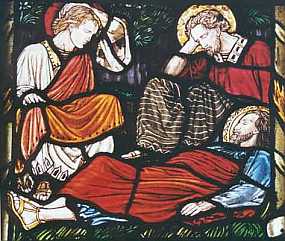 Malaise coupled with resignation. We sit at home helpless to make a difference in what is going on around us. We turned the country over to naïfs lacking in genuine Christian thought, so now we can sleep, oblivious, while they plunder.
 You open the front door, which was fashioned by the local carpenter. You hang up the coat your mother made, then sit down at the table your next-door neighbor crafted. The plates you take out of the pantry—made by the couple around the corner—will be filled with the vegetables your farmer neighbor grew.