
So, how about that recent celebrity performance in the news?
Or that latest ghastly thing our government leaders did/said?
Or that unbelievable event that caused that stir among Christians that we’re all up in arms about?
Or that thing that happened there?
You know, that thing.
Notice how generic those questions are? They’re that way because not a day goes by when there isn’t some uproar from Christians about something that happened that made the news and is causing us to shake our heads and lament the age we live in.
While I may lack the ability to breathe the rarefied air at the altitude occupied by pundit Victor Davis Hanson, he nails the intellectual response to that recent celebrity performance in the news in his “An American Satyricon” post at the National Review. As always, please read the whole thing (though I offer no additional commentary on it).
I have only one general statement:
But evil people and impostors will flourish. They will deceive others and will themselves be deceived.
—2 Timothy 3:13 NLT
In other words, no matter what the latest buzz is, ho hum. Just another day in Babylon.
To all the Christians riled by the latest completely expected behavior from lost people, I ask this:
What are you doing concerning your own glass house?
If I have a beef with the contemporary Christian Church in America, it’s that we seem to be startlingly reflective about what other people are doing but almost never so about our own behavior. 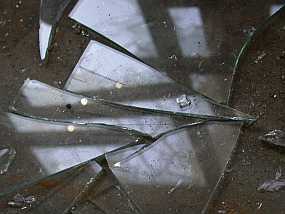 We can wonder what kind of lousy father or mother some debauched former teen superstar might have had that led that fading star to commit whatever sins he/she committed, but then we scream at our kids on the way home from church and generally let ourselves off the hook for our own miserable taint.
I wish there were some way to get Christians in America and their self-appointed spiritual leaders to start looking in the mirror and asking what can be done about the person staring back. You know, that person who never goofs, never blows an interpretation of world events, never makes a hypocritical comment, and never does anything that requires amending, fixing, or apologies.
With an indignation right of hell, we do a smash-up job of judging the other guy, and I wish we would stop.
Lost people act like lost people. We should not be surprised.
When we SHOULD be surprised is when saved people act like lost people. And even then, the surprise shouldn’t be that great. All have sinned and fall short of the glory of God.
Our biggest problem is that we don’t respond appropriately to what causes our indignation.
Rather than join the masses by spouting off, do something almost no one ever does: pray instead. Rather than posting on Facebook about what some celebrity, government leader, or 15-minutes-of-fame-grabber did, pray. Pray for that person and for the situation. Pray that the holy and perfect light of Christ would dawn in that broken life and dismal circumstance. Do this every time instead of adding to the shrill discourse. Just pray and move on.
And after we’ve prayed, let us consider our own state as a creature of dust that is here one day and blown away by the breeze the next.
There’s a reason the eldest in the crowd dropped their stones and walked away first when confronted with words from Jesus regarding a terrified, guilty-as-sin adulterer. And yet that reason doesn’t seem to grab us anymore. We all think too highly of ourselves and our accumulated “wisdom.”
I wish there were more personal reflection in the American Church today. I wish we all could acknowledge our own glass house. I wish we all spent more time dealing with our own failings rather than concerning ourselves with another’s. I wish we would stop thinking that people who don’t know Jesus should act as if they do, especially when those who do know Him act as if they don’t.
But then, perhaps I should stop wishing and start praying.
 My son and I have been reading out loud through the New Testament this summer. We’ve tried to read as much as we can of one book in one sitting so that the harmony of the books is maintained. I’m convinced that we too often approach the Bible with a piecemeal mentality that ends up losing the bigger picture. This is especially true of the epistles, which should never be read any way other than in one piece. Reading them this way spotlights the confusion that our over-reliance on chapter and verse markings has created.