Taking Away Your Church Building

Standard

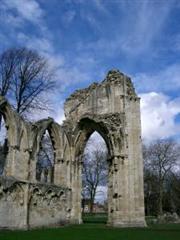
Church ruins The issue of the use of eminent domain for seizing property is looming larger for churches. Couple this with a reluctance of many localities to allow a church building to be built because it means a loss in tax revenue that could have been generated by a similar retail property, and you have a big problem not enough of us are talking about.

WORLD magazine’s blog made note of this recently with a link to the The CSM (not a source I usually link to, obviously, but the article is right on). The response on the blog to the article has been that “house churches don’t have this issue.” Well, I wouldn’t be too sure that truly flimsy eminent domain can’t be used against a house church after President Clinton’s shock-inducing Executive Order 13112 (which is conveniently “offline” at the National Archives) that basically gives the government the right to use eminent domain to seize property that has been taken over by “invasive species.”

What is insidious about EO 13112 is that our entire country is swarming with non-native species. You have a flock of starlings (European) in your backyard? The government can seize your property citing EO 13112. Got any honeysuckle (Japanese) growing in your yard? The government can seize your property under 13112. Truth is, this can be cited down to even the microbial level, so no one’s “house church” is ultimately safe under this EO. To make matters worse, President Bush—rather than responsibly rescinding it—amended EO 13112 with EO 13286 which gives the Department of Homeland Security the right to seize land based on “invasive species.”

Now I am not a conspiracy buff, by any means, but we Christians should be sobered by this trend to block church buildings and to use eminent domain to seize church properties. (Though, I am one who believes that churches today should be less concerned with building since churches may lose tax-exempt status in my lifetime. Having an expensive property is one way to bankrupt a church with property taxes.) We need to not be asleep on this battle. We may lose it sooner than we think if we are not diligent.

{Update 2/22/05}

The Supreme Court just stuck a knife in the back of property owners in the Kelo case and has set a very scary precedent for allowing the government to seize property for no real reason at all.

“Judgmental Christians” and The Way of Christ for 2005

Standard

I have been thinking quite a bit the last week about why we Christians are being progressively labeled “judgmental.” It is a word that seems to erupt out of the very fabric of society, smothering the voice of Christians in the public square, and offering a sanctuary for those who openly oppose, do not understand, or simply do not care to comprehend Christianity.

This is not a political blog, nor do I like mixing politics and the Christian faith. Too many Christian blogs and Web sites inextricably link the two and I wish to avoid that. Still, since politics is so critical a means of expression for many of those who do not side with Christian thought, it is a necessity to speak about this issue with some level of politics involved.

We live in an age when people are defined by what they are for or against. Nihilistic postmodernism has created an odd human, though, who seems to be more “against” than “for.” This last year drove that point home. Many politically-charged people argued vehemently against some person or issue, but when pressed were unable to articulate what they were actually for, or how to make the reverse of the thing they were against a reality. When the political season had run its course, we saw in those same people a new psychosis labeled “Post-election Stress & Trauma Syndrome” or (amusingly—no matter which side you are on) “PESTS.” This syndrome manifested in those who were largely against many things, but once they had wound up on the losing side of politics were unable to cope with the fact that their “against-ness,” once broken, left them nothing to be for. Their subsequent bout with PESTS being the natural outcome of having no positive ideas apart from their negative ones, they lived solely out of their anger toward what they are against.

When Christians spoke into the public square this year, the “judgmental” label was tossed around with abandon. I cannot ever remember hearing the word “judgmental” attached to Christians more than I did this year. Being a presidential election year surely made some of that true, but I think another force is at work here. It is the force of postmodern nihilism, the very heart of PESTS, and the core of what is left in people who dwell solely on the negative.

2004 will be remembered as the year in which postmodernism reached full flower. With its blooming comes a time when what we are for and against can no longer be assigned values (at least in the minds of proponents of postmodernism.) Relativism, so inherent in postmodern thought, has resulted in this resurgence of nihilism. That bleak outlook on life informed much of the discussion in politics this year. What the new Nietzsches accomplished in 2004’s discourse was to successfully stigmatize anyone who was actually for something, rather than being merely against something.

As a people who are defined by what (and who, especially) we are for, Christians drew the most attacks. Unable to understand that a worldview exists that does not merely state what it is against, postmodern voices in the public square operating solely out of a negative worldview successfully used the “judgmental” tag to label all opponents to their cause, opponents who actually stood for an issue. Nine times out of ten the ones labeled were Christians.

We should recognize this twisting. It is the same force that brands love “hate” and calls truth a “lie.” While this affords us Christians the proof we need that the world is hellbent on our destruction, we should not wear this with pride, but humility. We should not counter this opposition with noses in the air, but should instead become more humble in our recognition that the light of Christ only shows the darkness to be what it is. And we know how Mankind loves darkness.

In 2005 I believe we will see this labeling by those on the other side of Christ intensify. While we recognize the spiritual battle, our response should always be one of Christ the Servant. Our enemies are conquered by the burning coals they heap on themselves when we serve them out of true love. Our reminder for this year is to seek first the way of love while holding true to what is good, noble, and pure. No concession is needed to be what Christ has called us to be, but neither should we forget that the servant heart is what overcomes the world. For this coming year let us remember to always seek the way of servant love so that our enemies have nothing they can hold against us. We may never depart the judgmental label, but our enemies will look all the more foolish for using it.

Blessings for 2005.

The Curse of Monasticism Reborn

Standard

No sooner do I get done writing a far-between post noting how my posts have been far-between while I work on finishing up my novel, and offering up a link elsewhere to ponder just to prove the point, God grabs ahold of me and makes me write this.

I wonder if we are creating a new monasticism.

The Reformation drove a stake into the separatist mentality that is the core of monasticism, proving that the Gospel belongs out among the people, out in our communities, villages, towns, and cities. It was a call to leave the ivory towers and get one's hand dirty out in the "real" world. And not only that, it called Christians to be pillars in their communities, villages, towns, and cities, to have a real presence that brought Christ into the marketplace of ideas.

The True Light cannot be hid in us who cherish Him, so the Reformers told us to get out from under our bushels and shine. They taught that Christianity was not to be a religion of disconnection, but a relationship with Christ who gathers us in a Body and dwells amid that Body—a Body centered in our local communities.

This is why I wonder about the current moves going on in the American Church. There is a gung-ho attitude toward small groups, house churches, and select meetings of a few outside the large church assemblies. It is good that we think about those types of groups and consider their impact.

However, in a day and age when fractionalization and withdrawing from community are the norm are we Christians missing the bigger picture by de-emphasizing large assemblies while heaping praise on smaller groups?

My wife and I spent much of this year searching for a new church. More than three years ago, we moved an hour's drive away from our old church while continuing to go there. The outcome of this was that we did not plug into the village we lived in because our church was fifty miles away. Having one foot in the community we lived in and one in our community of faith many miles away meant that neither found a connection to the other. In the end, both were diminished.

Yet it is more than just a distance issue. It may also be a numbers issue. The church that we have landed in near our home has about four hundred people in it. That winds up being four hundred connections into our local village. That's four hundred reinforcements to a presence in town AND four hundred reinforcements to our community of faith.

A small group cannot do that. A house church cannot do that, either. When we wonder why we feel disconnected in our own communities, perhaps this is why. Neglecting our presence in our towns and villages in numbers that reinforce rather than divide is ushering in a new monasticism. We find ourselves cut off from the world at large and also cut off from the Church at large. Dwelling in this limbo, we gut our effectiveness not only to reach new people with the Gospel, but to enjoy relationships with a wide variety of people, relationships that have Kingdom potential ranging from a simple "God bless you!" to the clerk at the local grocery store to a deep discipleship relationship with a new believer at our church.

Synergy is also lost. It is one thing to cast the seed everywhere we go, but how much more effective can we be when we repeatedly cast it right where we live? The compounding of this synergy repeated four hundred times every day by the folks in our new church can also not be overlooked. A new monasticism cripples this kind of synergy, diluting its effectiveness.

One of the first verses I ever felt God illumined in me is this one:

As the rain and the snow
come down from heaven,
and do not return to it
without watering the earth
and making it bud and flourish,
so that it yields seed for the sower and bread for the eater,
so is my word that goes out from my mouth:
It will not return to me empty,
but will accomplish what I desire
and achieve the purpose for which I sent it.
—Isaiah 55:10

God's word does not return void. In some people it is like rain, soaking into the soil of a barren heart, that rain finally giving nourishment to the seed there. In others, it is like snow, piling up and up until something warms it, causing it to melt and seep into the soil.

When we Christians spread ourselves thin or withdraw into little groups, the storm is lost, and the blizzard is reduced to a mere frost.

There is something to be said for churches between two hundred and a thousand people. A church that size allows us to know the ones with whom we fellowship. It also can take a people of one mind and cause a storm in the towns and villages in which we live. And lastly, it affords us connections into those same towns and villages that allow us to be a vital part of their livelihood rather than just listing them as a place where we get our mail.

People wonder why we feel disconnected from the people who live right next door to us. They ask why our churches seem to be so ineffective, too. Perhaps our monastic mentality is the cause.

God helps us break out of our ivory towers and get out among the people, both those who know the Lord and those who hope one day to know. Let us be a vital presence in our local communities, bringing the Gospel Light into all we do. And let us also be the beneficiaries of the connections we forge immediately around us, to our neighbors, and to the community at large. Always for Your glory and Your Kingdom. Amen.