
“Arise, My Love, My Beautiful One, and Come Away”

Standard

Last Monday, the FedEx driver delivered a package for Christmas, the gift I bought my wife this year. Due to some good fortune, I found that gift for ten percent what it normally cost. We can't afford to have a big Christmas this year, so ninety percent off comes as a real boon.

Since we're literally the last house on the line, the people who built our house needed a power booster box in order for the electric to work right. For some reason they elected to put that box close to the house. When they added a second garage later, the bulky box wound up in the middle of the newly expanded driveway.

Typically, delivery drivers knock and hand me my package. I warn them about the box and all is well. But at Christmastime, drivers hustle, so they don't knock. The FedEx driver didn't, therefore he got no warning from me. You can guess the rest.

Homeschooling got derailed that day as I spent the afternoon contacting all the right parties to ensure that no one got killed from the damaged electrical box. My electric company brought out a crane truck to put the box back in place, then tested to make sure everything was safe.

Jump to this past Thursday morning.

I typically write this blog for the following day after 10PM the night before. Then I date it for just after midnight. For some reason, I wrote "We Need a Gospel That Speaks to Failure" early in the morning on Thursday, then posted it for just after midnight. Unbeknownst to me, as I was writing that post, failure poised to strike the Edelen household.

Shortly after taking a shower that seemed a bit chill, I walked down into my basement to find our hot water heater had exploded. Think how the Tasmanian Devil balloons after Bugs feeds him a cake made out of dynamite, freeze that image at the point of maximum Taz expansion, and you have a perfect image of what our hot water looked like.

Well, I know a man in our church who stood up at a recent men's meeting and declared his plumbing business needed more clients. Being a freelance writer, I know how hard it is for independent contractors to get work. So even though my tendency would be to go with the plumbing company I would typically call, I called the church guy instead.

The thought of another big, unexpected expense heavy on my mind, I contemplated the irony of the post I had waiting to go out later. Of course. Write about a trial; face the trial.

The church plumber tells me when he arrives that it wasn't the hot water heater that failed initially but the pressure regulator on the water line. With no pressure regulation, the hot water heater then blew. He didn't have a new pressure regulator with him.

Now I had a problem.

When you live in a town of 2,000 people, the sidewalks roll up at 6PM. My wall clock read 6:10 PM. To my surprise, a call to the local hardware store reveled they had extended hours that evening—and they had one pressure regulator in stock. Huzzah!

Wanting the job to go as quickly as possible, I told the church plumber that I'd go into town to get the regulator if he wanted to keep working. So my son and I jumped into my truck to head for the hardware store.

Pulling out of my garage, I had to maneuver into a portion of my gravel driveway I never drive over so I could avoid the plumber's truck. By the time I got to the end of my driveway, I noticed my truck handled sloppily. I didn't get 0.05 mile away from home before the thud, thud, thud behind me told me a sad story. Turning around, I limped up the driveway, and found a cotter bolt sticking out of my back tire. Between the tread and the sidewall. Where it can't be repaired. On an expensive 4×4 tire only ten months old.

Merry Christmas.

Oh, the bitter irony that the electrical company's crane would toss a cotter bolt that ended up destroying a perfectly good tire. Oh the extreme bitter irony that I should drive over that part of the driveway in order to get around the plumber's truck. Oh the heart crushing irony that all the money I saved on the item I bought for my wife that the FedEx guy delivered would be more than wiped out by the cost of a new tire.

And Thursday's trial's not over yet… 

{Tonto mode on}

Friday, much filled with appointments. Thirteen-year old spare on truck leak slowly. Ruined tire must be replaced. Appointments must be kept, else great trouble arise. Tire stores in town that can be reached on slowly leaking spare do not have tire. Dan must make dangerous trek over many miles of prairie to procure tire elsewhere, while making many appointments under far less than many moons.

By grace of the Great Spirit, Dan succeeds. Dan very much tired and grinding teeth. Dan not happy with last rising, setting, and rising of the sun.

{Tonto mode off}

I didn't go to church on Sunday. Once a year, for most of the last thirty years, I volunteer for the Audubon Society Christmas Bird Count. I've been a birder since I was twelve, so I've got a little experience. The local Audubon Society president lives across the street from me, so we've gone out before to count. It's a good time with a friend and neighbor.

While I normally play drums every Sunday morning for worship, I'd already arranged for someone to fill in for me. Most of the Christmas Bird Counts I've done have been the Sunday after Christmas, but different Audubon clubs run the counts differently, so any Sunday over a four week period is possible. The Sunday before Christmas, I'm sure, wasn't the best time for me to be shirking my rhythmic duties. 

I don't miss church very often. I don't like to miss church. I need to be with God's people every Sunday.

The alarm goes off yesterday at 5:20 AM and I roll out of bed. The day is gorgeous, partly cloudy with temperatures in the mid-60s—a rare confluence this time of the year in Southern Ohio. My neighbor, Rob, and I head out, eat breakfast with the counting crew, and hit our region to count.

Within hours, all the garbage from the week before drained out of me as I walked through God's Creation. I spotted a beautiful Ring-necked Pheasant and marveled at the power God built into its legs as it sprung into flight. Ring-necked PheasantI considered the Red-bellied Woodpecker's head, so wondrously made that it doesn't give itself a concussion hammering for bugs under tree bark. I watched the Northern Harrier hover in place, then trace lazy circles in the cerulean blue sky. I stood awed at a flock of Starlings twisting and turning in flight, but with no single bird leading the dizzying formation. The perfectly aerodynamic V formation of Mallards. The Belted Kingfisher's plunge into cool waters. The Kestrel's patient hunt for food.

Four things on earth are small, but they are exceedingly wise: the ants are a people not strong, yet they provide their food in the summer; the rock badgers are a people not mighty, yet they make their homes in the cliffs; the locusts have no king, yet all of them march in rank; the lizard you can take in your hands, yet it is in kings' palaces. Three things are stately in their tread; four are stately in their stride: the lion, which is mightiest among beasts and does not turn back before any; the strutting rooster, the he-goat, and a king whose army is with him.
—Proverbs 30:24-31 ESV

I worshiped God outdoors today. Carolina Wrens and Song Sparrows provided the special music. In the power and mystery of God's Creation, I heard the same words the Lord spoke to Job, and I asked myself, Who am I in light of so great a God?

When I walked through the doors of my house, I realized I hadn't considered my troubles all day. And I doubted that a Sunday spent in church would have led to the same release I found from the Creator's sparrows:

Look at the birds of the air: they neither sow nor reap nor gather into barns, and yet your heavenly Father feeds them. Are you not of more value than they? And which of you by being anxious can add a single hour to his span of life? And why are you anxious about clothing? Consider the lilies of the field, how they grow: they neither toil nor spin, yet I tell you, even Solomon in all his glory was not arrayed like one of these. But if God so clothes the grass of the field, which today is alive and tomorrow is thrown into the oven, will he not much more clothe you, O you of little faith? Therefore do not be anxious, saying, 'What shall we eat?' or 'What shall we drink?' or 'What shall we wear?' For the Gentiles seek after all these things, and your heavenly Father knows that you need them all. But seek first the kingdom of God and his righteousness, and all these things will be added to you. "Therefore do not be anxious about tomorrow, for tomorrow will be anxious for itself. Sufficient for the day is its own trouble.
—Matthew 6:26-34 ESV 

Sometimes, God will speak to you apart from the fellowship of believers for a time of special, intimate healing. Listen for that time; this is what He'll say:

My beloved speaks and says to me: "Arise, my love, my beautiful one, and come away, for behold, the winter is past; the rain is over and gone. The flowers appear on the earth, the time of singing has come, and the voice of the turtledove is heard in our land. The fig tree ripens its figs, and the vines are in blossom; they give forth fragrance. Arise, my love, my beautiful one, and come away.
—Song of Solomon 2:10-13 ESV 

Then let yourself be swept up in His arms. 

We Need a Gospel That Speaks to Failure

Standard

Again I saw that under the sun the race is not to the swift, nor the battle to the strong, nor bread to the wise, nor riches to the intelligent, nor favor to those with knowledge, but time and chance happen to them all. For man does not know his time. Like fish that are taken in an evil net, and like birds that are caught in a snare, so the children of man are snared at an evil time, when it suddenly falls upon them. I have also seen this example of wisdom under the sun, and it seemed great to me. There was a little city with few men in it, and a great king came against it and besieged it, building great siegeworks against it. But there was found in it a poor, wise man, and he by his wisdom delivered the city. Yet no one remembered that poor man.
—Ecclesiastes 9:11-15 ESV

We hear a lot about the sovereignty of God. How He is in control of all things. When good things come our way, we rejoice, and it’s ridiculously easy to feel the favor of God’s sovereignty in a moment of joy. His blessings are raining down. His will is at work. And we know it.

I’ve been in Christian circles all my life, so I’ve witnessed the myriad ways we respond to God and to other Christians. I’ve seen that thrill of experiencing God’s will.

But I’ve also seen what happens when His will appears to us to go “awry.” I’ve seen how we Christians respond to failure, and I’ve concluded that more than just about anything, we need a Gospel that speaks to failure.

You won’t hear much about failure in the American Church. In Evangelicalism in particular, failure gets held at arm’s length, as if people who fail do so because they’ve acquired a disease. FailureWe’ve made failure into some kind of plague. “Don’t come too close! I might catch your failure and it will ruin my perfect little world!”
We live in a country where failure isn’t an option. Every system we’ve erected in America extols the self-made man and kicks the failure when he’s down. While we venerate the rag-to-riches stories and laud everything that led to those riches, we come up with excuses to explain the mirror opposite, the riches-to-rags story.

The American Church acts more like Americans and less like the Church because we adopt the same belief about failure as the world does. Failure makes us squirm. And though we’re all ready to jump on the “God is sovereign” bandwagon when blessings rain down from heaven, failure presents a problem for us.

When blessings come, they come solely by grace. We don’t truly merit blessings. God offers them to us out of the grace and riches of His heart. Or so we say. But what happens to our view of God’s sovereignty when failure strikes? What becomes of His grace when someone’s life winds up in the toilet?

Many American Christians believe failure results from something the failing person DID. Yet if we claim to be people who truly live by grace, acknowledging that we did nothing to deserve the benefits of grace, why then do we approach failure with a morbid works righteousness? The response to failure in people’s lives seems to abandon God’s sovereignty and grace to become a legalistic list of activities the person who failed must now undertake in order to dig himself out of his hole. The Gospel we’re so ready to trumpet in good times suddenly gets turned on its head, and grace goes out the window.

Think about it. Our business failed because we didn’t pray hard enough. We need to pray more. We got a chronic illness because we didn’t read the Bible enough. We need to read the Bible more. We lost our home because we didn’t tithe enough. We need to tithe even more.

Yet blessing was all of grace and not because of anything we’ve done? Curious dichotomy, isn’t it?

Sadly, we only like one side of the coin when it comes to God’s sovereignty. We’ll take the blessing, and our church will love to gather round us then, but how to explain failure in light of sovereignty? If failure IS a part of God’s sovereignty, why do we address failure so differently from how we deal with sovereignty in the midst of plenty?

Remember Job:

But [Job] said to [his wife], “You speak as one of the foolish women would speak. Shall we receive good from God, and shall we not receive evil?” In all this Job did not sin with his lips.
—Job 2:10 ESV

Why is it then that the American Church talks like a foolish woman when it comes to failure and the sovereignty of God?

Yes, some failure clearly stems from sin and a lack of faith. We all understand this. Our problem becomes one of ALWAYS applying that standard to every case of failure we encounter. Case in point: what was Job’s sin?

We see our faulty mentality at work in the following Scripture:

As [Jesus] passed by, he saw a man blind from birth. And his disciples asked him, “Rabbi, who sinned, this man or his parents, that he was born blind?” Jesus answered, “It was not that this man sinned, or his parents, but that the works of God might be displayed in him.
—John 9:1-3 ESV

That’s God’s sovereignty at work.

The problem goes beyond merely accepting God’s sovereignty even in the midst of failure. Our response to failure either takes the form of piling on a list of things for the failure to do in order to fight against the sovereignty we supposedly uphold, or we act in another faulty way.

Consider this famous person of faith:

Jesus looked up and saw the rich putting their gifts into the offering box, and he saw a poor widow put in two small copper coins. And he said, “Truly, I tell you, this poor widow has put in more than all of them. For they all contributed out of their abundance, but she out of her poverty put in all she had to live on.”
—Luke 21:1-4 ESV

We tend to comfort ourselves by believing that people who have failed in the world’s eyes will somehow rise up out of their failure so long as they have faith and persevere. Yet I’m not certain it works that way. The poor widow who faithfully gave all she had may have been putting in all she had for a long time. We probably weren’t seeing a one-time event; she faithfully contributed not once, but every time she visited the temple. Faithfulness tends to be a pattern of life, not an isolated incident.

Yet by all standards of Jesus’ day (and ours), that woman was a failure. No husband. No money. Failure. And we’re not given any assurances from the Luke passage that her condition changed immediately after her contribution. (We can only hope that she became a believer and was cared for by the early Church.)

The poor wise man in the Ecclesiastes passage that begins this post fell back into obscurity after rendering his faithful deed. He got his pat on the back and that was it. One day lauded by the city, and the next forgotten by everyone. Success for a moment, but a failure otherwise.

Notice that many of my failure examples so far in this post have dealt with money. In America, success equates to money. Sadly, the American Church has bought this lie. As a result, our standard for spiritual success and maturity automatically means passing the wealth test.

Too accusatory? Well, consider this. Your church is looking for new elders. Which of these two 40-year old men has a better chance of becoming an elder, the self-made man who runs his own company OR the fellow who works the night shift as a convenience store clerk? In the split second (Blink!) you thought about that pair, did class distinction enter into your assessment? Has anything been said about the spiritual maturity of those men? Don’t we assume that one is more spiritually mature simply because he runs a successful business, while the other only makes $8/hr.?

Did Jesus ever think that way? He summons the less esteemed to the head of the table, while one who believes he belongs in the place of honor is sent down. The beggar Lazarus, whose sores were licked by dogs, winds up in heaven, while the rich man suffers in torment. Jesus said nothing about Lazarus’ spiritual maturity, did He? But Lazarus is the one in Abraham’s bosom. Obviously, failure and poverty have nothing to do with one’s eternal destiny and spiritual depth.

Why then do we place such an emphasis on success and pour so much contempt on failure?

We need a Gospel that speaks to failure. I don’t believe that most churches and the Christian people who comprise them deal with failure biblically. Instead, our models for responding to failure are psychobabble self-help tomes, blithering business books, and positive confession self-talk. We talk, talk, talk about grace and sovereignty, but find them in short supply when confronted both with people who did dumb things and failed and the innocent bystanders pumped full of rounds by the world’s drive-by shooting.

So we must ask, What does a truly biblical Gospel that addresses failure look like?

Please leave a comment. I’ll consider what readers say and comment in another post on this topic in the future.

Regulation, Ritual, and Remembrance

Standard

This last week, I celebrated Saint Nicholas day at the home of Eric and Jennifer. We go back almost twenty years and have shared in each other's faith journeys.

The gathering featured good cookies, plenty of candles, and a hearty dose of Christmas carol singing. Eric and Jennifer instituted the Saint Nicholas remembrance as a way of keeping old traditions and rituals intact. In my own childhood, we put up our Christmas stockings on December 5, and Saint Nick filled them during the wee hours of the following morning. My mom sought to keep that tradition alive.

The Bible says this: 

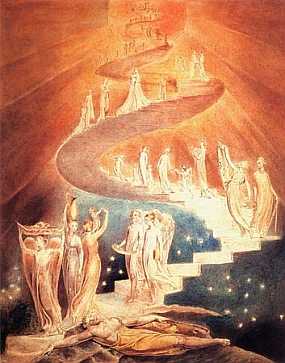
Jacob left Beersheba and went toward Haran. And he came to a certain place and stayed there that night, because the sun had set. Taking one of the stones of the place, he put it under his head and lay down in that place to sleep. And he dreamed, and behold, there was a ladder set up on the earth, and the top of it reached to heaven. And behold, the angels of God were ascending and descending on it! And behold, the LORD stood above it and said, "I am the LORD, the God of Abraham your father and the God of Isaac. The land on which you lie I will give to you and to your offspring. Your offspring shall be like the dust of the earth, and you shall spread abroad to the west and to the east and to the north and to the south, and in you and your offspring shall all the families of the earth be blessed. Behold, I am with you and will keep you wherever you go, and will bring you back to this land. For I will not leave you until I have done what I have promised you." Then Jacob awoke from his sleep and said, "Surely the LORD is in this place, and I did not know it." And he was afraid and said, "How awesome is this place! This is none other than the house of God, and this is the gate of heaven." So early in the morning Jacob took the stone that he had put under his head and set it up for a pillar and poured oil on the top of it. He called the name of that place Bethel, but the name of the city was Luz at the first. Then Jacob made a vow, saying, "If God will be with me and will keep me in this way that I go, and will give me bread to eat and clothing to wear, so that I come again to my father's house in peace, then the LORD shall be my God, and this stone, which I have set up for a pillar, shall be God's house. And of all that you give me I will give a full tenth to you."
—Genesis 28:10-22 ESV

And later…

And [God] said, 'Lift up your eyes and see, all the goats that mate with the flock are striped, spotted, and mottled, for I have seen all that Laban is doing to you. I am the God of Bethel, where you anointed a pillar and made a vow to me. Now arise, go out from this land and return to the land of your kindred.'"
—Genesis 31:12-13 ESV 

And later still…

Now Moses and the elders of Israel commanded the people, saying, "Keep the whole commandment that I command you today. And on the day you cross over the Jordan to the land that the LORD your God is giving you, you shall set up large stones and plaster them with plaster. And you shall write on them all the words of this law, when you cross over to enter the land that the LORD your God is giving you, a land flowing with milk and honey, as the LORD, the God of your fathers, has promised you. And when you have crossed over the Jordan, you shall set up these stones, concerning which I command you today, on Mount Ebal, and you shall plaster them with plaster.
—Deuteronomy 27:1-4 ESV

I don't understand Evangelicalism's obsession with wiping out the past. In many parts of the American Church today, a flagrant disregard for what and who has come before us dominates all expression toward God. It's as if today's Christians must live in a self-imposed vacuum. "Jacob's Ladder" by William BlakeWe are told by the more "learned" to build no Bethels. Soon, forgetfulness washes over us like a dulling fog.

Part of this unhealthy contempt for the past springs from mistaken notions about the New Testament Church. Some sectors of the American Church believe that all practices of the Old Testament ceased at the empty tomb. But that notion casts doubt on the immutability of God and the essence of how we experience Him.

Yes, the Holy Spirit now dwells inside us, but this does not do away with remembrances. God does not want us to forget what He has done. The healthy expression of Christianity in today's world should still erect remembrances, as Jacob did, when encountering the living God. When God set the rainbow in the sky, it formed a remembrance—not only to us but to God as well—of God's promises. I don't see that the indwelling of the Holy Spirit erased rainbows from the skies. Remembrances of the past matter.

The Saint Nicholas gathering is a remembrance, the kindling of a ritual designed to remember the generosity of a man who gave away his money so that three poor sisters would have dowries and not wind up in prostitution. Do you know the story? If not, then it only goes to show how poor we American Christians have become in our crazed effort to establish ourselves as the pinnacle of historical Christendom.

When I moved out of the Lutheran Church of my youth into full-fledged Evangelical "superiority," I looked down on rituals and observances as mere icing on an already tasty cake. Who needs an advent wreath at Christmastime? Why read the same Bible passages yearly on the Sundays leading up to Christmas? Why have rites of passage for our youth? Why do anything that smacks of ritual?

"Only take care, and keep your soul diligently, lest you forget the things that your eyes have seen, and lest they depart from your heart all the days of your life. Make them known to your children and your children's children– how on the day that you stood before the LORD your God at Horeb, the LORD said to me, 'Gather the people to me, that I may let them hear my words, so that they may learn to fear me all the days that they live on the earth, and that they may teach their children so.'
—Deuteronomy 4:9-10 ESV

One of the curious artifacts of the Saint Nicholas party concerned the children. They sang "Rudolph the Red-nosed Reindeer" with unusual gusto, but stumbled through the old carols of their parents' youth. Those kids only know an Evangelicalsim devoid of rituals, their lives lacking what I experienced as normative in my childhood. Children grow up without rituals that root them to all of Christendom before them. Today's Evangelical children float in a secularized sea, cast there by well-meaning Christian leaders who employ "regulations" that denounce rituals or scry pointless contemporary "alternatives" to tradition. Is it any wonder that our children reach age eighteen and have no roots to keep them from being torn away from the Faith? How easy is it to depart from God when the experience of God one's been fed has been solely intellectual, tradition relegated to weepy-eyed emotionalism by people who rarely weep!

And it's not only churches that adhere to modern worship music that suffer from this. Some that perpetuate the old carols unwittingly toss aside others rituals and remembrances. Catechism—gone. Studying the history of Christianity after the deaths of the apostles—gone. Gone too are the sights, sounds, and smells of traditional, historic Christianity: incense, candles, organ music, and stained glass.

Fluff? Hardly. All those things root us. They create Bethels that call to mind history and help us remember the eternal and perpetually valuable in our lives. They mark an experience of God that persists through generations. Unfortunately, Evangelicalism's righteous assault on all thing ritualistic has turned us into shallow people unfamiliar with the sacramental, yet we call this "progress" and "spiritual maturity."

What will our children call it?

We have every opportunity in the world to make our experiences of God like Jacob's. Each family can preserve its own traditions recalling what God has done and is still doing in the lives of His people. So can each church. I'm glad that Eric and Jennifer saw fit to call us all together every year on the Feast Day of Saint Nichololas in order to prepare our hearts for the coming King of Kings. I'm even more happy for our children. How much better that our preparation for Christmas begins by remembering someone whose heart lay with the poor and downtrodden, just as our Savior's was.

Let us never forget the Lord, even in the seemingly inconsequential. Because even the small things may have lasting effects.