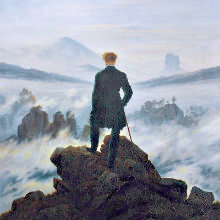
Recovering Christianity’s Balance

Standard

A couple weeks back, I asked the question, "Is Christianity Broken?" Today, I want to revisit this issue, probably the most popular post to Cerulean Sanctum thus far.

Golden balanceAs a Christian for close to thirty years, I've seen a lot of movements within the Church in America rise and fall. In the 1960s, I witnessed the Protestant appropriation of Vatican II ideals, the rediscovery of the charismata by mainline churches, and the first flowering of contemporary worship music. The 1970s brought the Jesus People, the growth of Evangelicalism as a dominant political force, and the rise of the Third Wave churches. The 1980s gave us the beginnings of the Church Growth movement and the ascendancy of seeker-sensitivity. The 1990s have proven to be a backlash time, with every aspect of the faith being questioned and reconsidered, finding charismatics adrift within fads, the "Emerging Church" attempting a shaky counter-reformation, and—sadly—greater concessions to the spirit of the age within American Evangelicalism.

Now in the new millennium, with so many opportunities to stake a claim for the next thousand years, I would offer an old direction. To the question of "Is Christianity broken?" I can only say, No. What we are instead as American Christians is horribly out of balance. We have become a church of fads, running after what appears to work, but all the while ignoring the tools, wisdom, and gifts Christ purchased for us through His blood two thousand years ago.

I cannot escape this passage:

Then if anyone says to you, 'Look, here is the Christ!' or 'There he is!' do not believe it. For false christs and false prophets will arise and perform great signs and wonders, so as to lead astray, if possible, even the elect. See, I have told you beforehand. So, if they say to you, 'Look, he is in the wilderness,' do not go out. If they say, 'Look, he is in the inner rooms,' do not believe it.
—Matthew 24:23-26

Now certainly, this is an eschatological reference, but I want to focus on the mindset behind it. When we go rushing around trying to get on board with the latest "appearance of the Lord," we swing like a pendulum. There is a tendency for us to accommodate to the wisdom of our times, too, picking up whatever business or pop-psychology trend is hot, fusing it to our new Christian fad. But for those of us who have been around a while—and have kept our eyes open and our discernment intact—all this is not coordinated movement, but spasmodic lurching from one soon-to-be-abandoned methodology to another.

Today it is the "Emerging Church" or the "Purpose-Driven Life" and so on. The future will bring some new trends. But what about yesterday's hot new ministry or devotional style? Do we even remember what it was? Or are we too busy reacting to the fallout of it as we swing on the pendulum to the other extreme, far, far away from what we so eagerly endorsed just a couple years ago?

To the world, this means one thing: "The Church has no eternal focus; we can find no answers within it."

In our attempts to read the times and accommodate to them, we have lost our balance. We continue, also, to stake out positions that only exist at the extremes on issues, rather than considering the holy middle.

Lately, I have been involved in several discussions on topics relevant to the Christian walk. Those discussions show out out of balance we are:

  • On the topic of prayer, I have talked with others about focused times of prayer and about "practicing the presence" of God all day. Supporters have gravitated to the extremes, favoring only one or the other. But isn't the truth of our prayer life centered in the balance between those two?
  • On the topic of the Holy Spirit, I have encountered cessationists and "charismaniacs," but isn't it true that the Holy Spirit still works today and that He does not contradict the Word of God? Aren't both the cessationists and the charismaniacs stuck at the extreme swings of the pendulum?
  • On the topic of Calvinism and Arminianism, like I wrote in a previous post (On the Brink of a Quantum Singularity with Calvin and Arminius), are those two positions possibly at the extremes and not in the center of where the Lord would have us be?
  • On the topic of the social gospel versus the moral gospel, is this not a false dichotomy to be making? Isn't the true Gospel a complete whole that encompasses both? (Wrongly Dividing the Gospel)
  • On the topic of the nature of Christ, isn't our Lord both a Lover who draws us to Him and a Warrior who will slay His enemies with the sword of His mouth? Isn't He both the Lamb of God AND the Lion of Judah? Why are we so often given to exalting one side of the Lord's person over the other, clubbing those people on the other pole with our "enlightened" view?
  • On the topic of the Christian's duty to the environment, must we divide into camps that either support radical groups like Earth First! or who ascribe to a pillage-the-Earth mentality based off a mangled reading of the Creation account? Is there no wise middle ground that we can support?
  • On the topic of the Bible, why must we dwell at the extremes: one that practically elevates the Bible above the person of the Lord Himself and one that shuns the Bible in favor of just hanging out with Jesus relationally? Where is the balance?
  • On the topic of the role of the Church, aren't we supposed to make disciples AND stand in the gap within our society?

No one said this kind of discernment—or the natural walking out of the results—would be easy. But isn't that why the Holy Spirit was given, to guide us into all truth?

Our failure to achieve balance in our Christian worldview has only confused the lost, the very ones who need to hear a right and balanced message from the Lord. If the Church in North America is to be all that the Lord desires us to be we have got to work for balance and show more discipline in standing against the fads of our day.

This is not to say that we compromise. In most cases, there truly is no compromise needed. We have simply spent too much time at one end of the pendulum swing to know the difference, though. It may seem uncomfortable to leave those extremes, but in truth we have done so quite a bit in just the last thirty years as we react to changes in worldly wisdom; this should not be unknown to us. Our problem is our inability to stop our momentum as we swing from one side to the reactionary other.

Cultural relevance does not trump eternal significance, and this is where we most suffer. We must be more discerning, testing the spirits—especially the spirit of the age—to see if it is of God or not. Nor should we be afraid to ask the hard questions and to administer the test at all. Examining an extreme position does not naturally lead to error if we are examining it against the Word and by the Spirit. Such an examination may reveal our own extremism and allow us to come to the truth of the center.

In closing, I offer three points that will align us:

  1. We must be prepared to look out of step with culture and culturally compromised churches. Balance is never fashionable.
  2. We must never forget our history. As Goethe once noted, "He who cannot draw upon three thousand years is living hand to mouth." Historical perspective compels balance.
  3. We must always ask, "What is eternally significant?" The answer to that question will bring us into balance.

Think about this. I believe the issue of balance is the single most important issue facing the Church today.

Blessings!

Is Christianity Broken?

Standard

I've been using Bloglines to read the feeds from about fifty Christian blogs. The service works well and allows a person a quick way of scanning updated feeds. I can read through those fifty blogs as they post in less than fifteen minutes. It's almost like reading through a copy of Christianity Today, except with a far looser editorial standard. And that's a problem. Stressed & confused

Since 2001, I've had a blog up. Cerulean Sanctum came about in late 2003 because I saw a need that was going unfilled, a blog that called people back to the heart of the first century Church. I've considered this blog to be a ministry for me; I've received many letters over the last eighteen months from people who have been blessed by this blog.

But now as I read all over the blogosphere, I wonder if we Christian bloggers are actually doing a disservice to people, especially to those who are struggling in the faith or are considering the claims of Christ for the first time. My reasoning? Well, as I go through my list of fifty blogs, I often leave them feeling confused, angry, depressed, and just about every feeling but the one the Lord wants to cultivate most in us, joyful.

This is not to say that there are no Christian blogs that are edifying. But as I read the blogs, see the dissension, note the snarky comments left, and take in some of the more extreme ideas out there, I am left with only one question, Is Christianity broken?

It's hard to escape that impression after a few visits to popular Christian blogs:

  • The hardcore Calvinist blog torches the stalwart Arminian blog—and vice versa.
  • The apologist ends his disassembling of some "lesser" theologian with a haughty comment about his opponent's cranial capacity or ultimate afterlife destination.
  • The woman's blog done up in a soft-focus, pink flower design discusses how blessed it is to be your husband's footstool.
  • The family blog offers that folks who don't have ten kids or who don't "do 'it' naturally" are nothing more than soulless zombies of Planned Parenthood, little Margaret Sangers hellbent on the destruction of The Family.
  • The political blog is busy carving a copy of The Constitution out of the same Mt. Sinai rock that Moses brought down in the form of the Ten Commandments.
  • The conspiracist/eschatology blog finds an antichrist under every Mideast pebble.
  • The confessional blog lets us see that the author pines to know whether God will accept him/her despite the fact that he/she cheated on a math test in third grade.
  • The heretic blog does a fine job unmasking the devil in every preacher or teacher who ever walked the face of the planet.

After a while you can't avoid the question. The blogs beg for it. The conclusion seems inescapable. Even writing about this seems to only add fuel to "Is Christianity broken?" If a cross-sectional reading of popular Christian blogs is any indication, the answer must be "Yes."

So on this Friday morning I'm wondering if those of us who blog are only making the Christian walk harder for people rather than easier. This weekend I plan on taking some time to ponder this question. I don't know what this means for this blog, but I'd like to hear what others think about how we Christian bloggers are portraying Christianity to the world. Truthfully, we have an enormous burden in an age when ideas are so readily presentable to the entire planet via the Internet. Maybe we just need to tone down our rhetoric and be a little less dogmatic in some of our thinking.

Or maybe all we need is to simply shut up and listen for a change.

Who I Am & Why Cerulean Sanctum—Part 4

Standard

In what is hopefully the final entry in this last month’s series covering my life’s journey, we come back to where we left off—at the Vineyard in 1989.

I came to the Vineyard after most of the leadership left the Presbyterian church I had been going to. Many of my friends and some of those leaders wound up at the Vineyard and I followed them there.

Now this does not mean that I was unfamiliar with the Vineyard. In fact, I"Fog in the Redwoods" by Dan Edelen had been listening to the worship CDs they had and loved the purity of what the Vineyard was trying to accomplish, recovering a worshipful attitude. I even recommended the church to some friends, so it was not a difficult leap for me.

It seems like an eternity ago, but at one time the Vineyard was highly controversial. Sadly, this was largely due to some poor choices the Association of Vineyard Churches (AVC) made in their attempt to remain on the “cutting edge” of the charismatic movement. But I’ll get into that later.

I started teaching classes at my new church and was heavily involved with the prayer team, the latter being a natural outgrowth of my desire to be an intercessor. Still, I was beginning to realize I had some unfinished business elsewhere.

After a few months at the Vineyard, I felt a calling to finish my education, eventually getting on at Wheaton College in the Christian Ed department. I attended a Vineyard church at Wheaton and encountered actual persecution for doing so. To this day, Wheaton acts like the AVC doesn’t exist. Being a charismatic at Wheaton was definitely no fun. The Kansas City Prophet movement blew up while I was there and I was forced into defending it by some profs who liked to put the lone charismatic on trial. The whole movement gave me the heebie-jeebies actually, so it was no fun trying to keep others at the school from throwing out the charismatic baby with the prophetic bathwater.

Truth is, Wheaton was stifling. I found the lack of openness to anything but what people grew up with to be a grind on me spiritually, so it was nice to get back to my Vineyard home church with my degree and my love for the Lord intact. In the earlier days of the AVC, there was a great emphasis on grace, and that was healing.

But what started with the Kansas City Prophet movement showed the dark underbelly of the Vineyard, too—an unwillingness to scrutinize “new moves of God” more fully before jumping on board with their imprimatur. The worst part was that when these new moves fizzled or their leadership fell into error, no one in the Vineyard would stand up and try to explain to the people in the seats what happened and why.

I met my wife, whose background was Evangelical Friends (the same denomination John Wimber had come from), in 1994 and she started coming to the Vineyard, too. I think it was a good thing for her, but we would not stay in that church for long. After getting married in 1996, I took a job with Apple Computer and we moved from Ohio to Silicon Valley.

Finding a church in California was something we thought would be easy, but we had a false start at one Vineyard church there before finding another Vineyard in Palo Alto that was a good place for us. We were at that church for almost four years.

Before we left for California, I asked the pastor of our Vineyard in Ohio to not let the church become a clone of Willow Creek. While at Wheaton I had done a year-long study of the Willow Creek ministry model and had come away seeing that what others were billing as the model of the future was actually an emperor with no clothes. I viewed that model as lowest common denominator Christianity and the last thing I wanted to see was that model being adopted at our Vineyard church. Little did I know how prophetic my warning would be.

After returning to Ohio in 2000 to address the ill health of my parents, we found our old Vineyard church had swallowed the Willow Creek ministry model hook, line, and sinker. Seeker sensitivity had become the new mantra and everything that had been good about the church had been dumbed down and laminated in order to not offend anyone.

But the Gospel is offensive to many people and you lose something by trying to take the cross and sin out of the equation. When my wife and I moved later to the far eastern portion of Cincinnati, we were now faced with an hour-long drive to the church. I’d just buried both my parents and we’d had our first child. After moving, we lost our primary source of income and were truly in the pits. When we needed to hear about the Lord most, we were instead getting sermon messages about self-esteem.

Things got better for us as we looked past our church for the spiritual strength we could not get there any longer. We also realized the importance of being local, so after a long withdrawing period we finally split from the Vineyard after fifteen years and have recently found a wonderful, small non-denominational charismatic church just a few miles from where we now live.

And that’s the whole story!

As for Cerulean Sanctum, this blog was actually born out of another blog I started in 2001 (does that make me a blog pioneer?) that looked at current events from a Christian perspective. But out of my dissatisfaction with the direction our Vineyard church in Ohio had taken, I felt a calling to change the blog to reflect the growing unease many Christians were feeling with the church growth movement, spiritual deadness in many congregations, foolishness in the charismatic movement, and “mega-Churchianity.” Many of us are reading the Bible and thinking, How come churches today are not like the one we see in Acts? That’s a very good question that we show much reluctance in addressing.

I want to tackle these issues because we cannot ignore them. The future of the Church in America depends on us using God’s wisdom to be strong and wise.

My heart is for the Church as it is expressed in America. I know where we can be because I’ve seen glimpses of how astonishing the Church can be when we are living out the truth of Jesus Christ in its fullness. But rather than this being the norm, too many Christians are settling for something far less. My prayer is that Cerulean Sanctum can be a nexus for people who are looking for more than lowest common denominator Christianity. I hope to inspire people to think more critically about many of the fads in Christian circles and to call us back to the true heart of the Lord.

Some would classify that as prophetic and perhaps it is. But that is why I am here. I hope you can be edified by the discussion here, and that together we can grow to become the Church God has always desired us to be.

Blessings on you all. Thanks for stopping by.