No, that’s not a new law firm. We need more legal eagles like we need more “spiritainment.”
Instead, that title exists because of a common criticism I see in the comments of other blogs. A Godblogger posts on some topic and, inevitably, a reader comments that the posts was essentially nullified by a lack of Scriptural citations. Never mind that the entire post speaks from the whole revelation of Scripture. Too few Bible verses plucked from Haggai or Philemon and the whole thing topples like an Enlightenment house of cards.
I saw such a criticism on another blog that linked to my post from last week, “Leer and Foaming in Las Wendy’s.” The commenter at that other blog didn’t like that I failed to quote the same verses on modesty that we’ve all heard a million times. Never mind that part of my point was that we know what to do, we just don’t do it; because I cited no Scripture, I had no real Christian admonishment worth reading.
I’m not bothered by that comment. I’ve no verse citation quota to live up to. I’ve included enormous numbers of verses in many of my posts to underline points—enough to get the imprimatur of whatever Evangelical pope exists.
What bothers me is we’re potentially abusing the Bible by always rendering up select verses to make our points; we slice and dice the word of God to make it fit our particular theory. Like cluster bombs, our choice verses descend on our enemies in awesome, domain-name-shaking explosions that threaten to destroy the very foundational IP addresses that undergird the Internet. We quote passage after passage, highlighting them with whatever our blog theme summons for a blockquote. And before blogs—remember life before blogging?—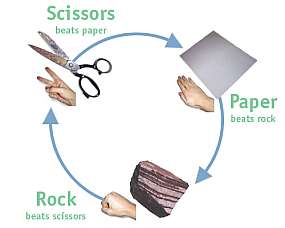 we filled our books, and sermons, and tracts, and on and on with this verse and that, carefully woven together to form a bulletproof “defense of the Gospel.”
But something’s missing. We’ve overlooked the best for the good. The result is a perpetual game of Rock, Paper, Scissors in which your passage from 1st Corinthians beats her chapter from Leviticus, which annihilates his verse from Revelation.
And yet I imagine that many Christians today are sitting back and thinking what all that verse-slinging has gotten us. I mean, are we truly happy with the state of the Christian Church in the West today?
Late last year, I read an excerpt from a book by Frank Viola, a house church proponent. The excerpt had little to do with house churches and everything to do with the way Christians today handle the Word of God. And unlike most things I read, eight months have gone by and I still can’t get Viola’s excerpt, “The Bible Is Not a Jigsaw Puzzle,” out of my head. I’ve exhausted more mental time thinking about the ramifications of Viola’s argument than nearly anything I’ve considered in the last year.
I’m not even going to attempt to excerpt his excerpt. Read the whole thing. I promise it’s worth it.
Most of us have seen the fallout from our overemphasis on chapter and verse. People can quote verse after verse of Scripture, but their micro-understanding of God’s Word suffers in comparison to His macro-revelation. It’s a little like being given the key to an Aston Martin Vanquish, only to rejoice in the key and not the whole car. If you never drive the thing because you don’t know a steering wheel from a ferris wheel, then what’s the point?
Too many Christians fail to grasp the overarching testimony of the Scriptures. We may talk about a Christian worldview, yet hardly anyone correctly handles the entirety of Creation, Fall, Redemption, and Restoration. Can’t I make a case for God’s enduring love for us humans, His ultimate creation, without citing John 3:16? If I don’t mention Romans 12:1, can I still talk about worship? If I cite no Scriptures at all, but appeal to their truth in their entirety, have I somehow slighted the Lord?
I think we’ve reduced the Scriptures to a potpourri of pithy sayings. I know that when I sit down and read an entire book of the Bible in one sitting it speaks in a way that no piecemeal reading will ever match. No rending of each verse to wring every ounce of meaning out of it, but just sitting down and reading a book all the way through. And while I admit that some books like Psalms or Proverbs are collections, Paul’s epistles were never intended to be read as a New Testament version of Proverbs. Nor were the Gospels. They have an arc in their writing that carries its own meaning, and when we neglect to read them in the form they were designed to be read, we miss more power and wisdom than we realize.
Moving away from piecemeal study into a more holistic handling of each book will carry over into a greater understanding of the entire testimony of Scripture. Our quiet times won’t be the same. Meditation on the Scriptures won’t be on just this verse of that, but on entire books, and possibly the whole of God’s revelation to Man.
An old book was entitled Your God Is Too Small. Well, I think our Bible reading is too small, too. Instead of chapter and verse, we need a more macro approach to the Scriptures that imparts a holistic view of the entirety of God’s speaking to Mankind.
Or we can keep on playing Rock, Paper, Scissors with the words of the Lord.

 Pretty sad when you think about it. Right now, the only person I’m actively pursuing in that regard is my own child. And since he’ll probably be our only child, that doesn’t make me much of an evangelist right now.
 Announcing a new, limited series featuring questions Christians are loathe to confront.