
A Facebook conversation yesterday discussed the problem of experiences in the Christian life and how those experiences must be made to conform to Scriptural authority. In other words, Scripture must determine our understanding of experiences.
Now I’m going to write something controversial: That previous sentence is not entirely accurate.
Certainly, Scripture must be a bedrock for understanding experiences, but there’s a weakness inherent in that fact: Us. Because we are human, our understanding is not always complete. While we may think we understand the depths of a Scriptural injunction, it may only be through experience that we can understand it more completely. And in understanding it more completely, our understanding may flip 180 degrees.
An example of how one apostle got his understanding of Scripture altered by experience:
The next day, as they were on their journey and approaching the city, Peter went up on the housetop about the sixth hour to pray. And he became hungry and wanted something to eat, but while they were preparing it, he fell into a trance and saw the heavens opened and something like a great sheet descending, being let down by its four corners upon the earth. In it were all kinds of animals and reptiles and birds of the air. And there came a voice to him: “Rise, Peter; kill and eat.” But Peter said, “By no means, Lord; for I have never eaten anything that is common or unclean.” And the voice came to him again a second time, “What God has made clean, do not call common.” This happened three times, and the thing was taken up at once to heaven. Now while Peter was inwardly perplexed as to what the vision that he had seen might mean, behold, the men who were sent by Cornelius, having made inquiry for Simon’s house, stood at the gate and called out to ask whether Simon who was called Peter was lodging there. And while Peter was pondering the vision, the Spirit said to him, “Behold, three men are looking for you. Rise and go down and accompany them without hesitation, for I have sent them.”
—Acts 10:9-20 ESV
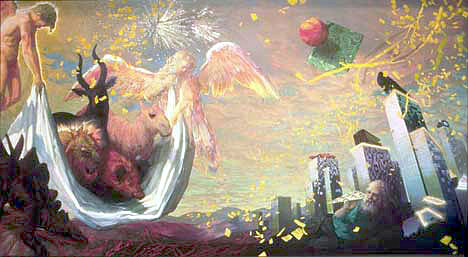 Peter knew the Scriptures and was filled with the Holy Spirit. Then he experienced this vision.
Notice how Peter answers, “By no means, Lord; for I have never eaten anything that is common or unclean.” He was responding using the Scriptures as he understood them and practiced them.
Notice too how God makes it clear that there is a deeper meaning to the Scriptures that Peter must understand. God uses an experience to alter and expand Peter’s understanding.
This led to a problem:
Now the apostles and the brothers who were throughout Judea heard that the Gentiles also had received the word of God. So when Peter went up to Jerusalem, the circumcision party criticized him, saying, “You went to uncircumcised men and ate with them.”
—Acts 11:1-3 ESV
The circumcision party had the same understanding of the Scriptures that Peter had. They accused Peter based on that understanding.
Peter explained his experience of the vision and replied:
And behold, at that very moment three men arrived at the house in which we were, sent to me from Caesarea. And the Spirit told me to go with them, making no distinction. These six brothers also accompanied me, and we entered the man’s house. And he told us how he had seen the angel stand in his house and say, ‘Send to Joppa and bring Simon who is called Peter; he will declare to you a message by which you will be saved, you and all your household.’ As I began to speak, the Holy Spirit fell on them just as on us at the beginning. And I remembered the word of the Lord, how he said, ‘John baptized with water, but you will be baptized with the Holy Spirit.’ If then God gave the same gift to them as he gave to us when we believed in the Lord Jesus Christ, who was I that I could stand in God’s way?”
—Acts 11:11-17 ESV
Peter experienced a vision.
Peter experienced the Holy Spirit speaking to Him.
Peter experienced that same Holy Spirit falling on the Gentiles.
Peter had his understanding of the Scriptures altered by those experiences.
And so did others:
When they heard these things they fell silent. And they glorified God, saying, “Then to the Gentiles also God has granted repentance that leads to life.”
—Acts 11:18 ESV
Sometimes, experience expands our understanding of the Scriptures and alters everything.
Anyone who has had a loved one die will tell you the experience of death alters their understanding of the Scriptures. In fact, it is almost impossible for it not to.
Anyone who has been taught the Bible has had an experience in that very act of teaching and learning that will alter understanding. Raise your hand if you were instructed in a Scriptural truth that altered how you understood it. Does everyone have a hand up? You should.
Every day, our experiences modify our understanding of the Scriptures. And sometimes those modifications flip everything.
And while those flips may be the work of God in our lives to deepen our understanding of Him and this wild life we live, sometimes the flips aren’t of God. Sometimes, we go off the path.
This is why we must also learn to live by the Spirit.
But we impart a secret and hidden wisdom of God, which God decreed before the ages for our glory. None of the rulers of this age understood this, for if they had, they would not have crucified the Lord of glory. But, as it is written, “What no eye has seen, nor ear heard, nor the heart of man imagined, what God has prepared for those who love him”–these things God has revealed to us through the Spirit. For the Spirit searches everything, even the depths of God. For who knows a person’s thoughts except the spirit of that person, which is in him? So also no one comprehends the thoughts of God except the Spirit of God. Now we have received not the spirit of the world, but the Spirit who is from God, that we might understand the things freely given us by God. And we impart this in words not taught by human wisdom but taught by the Spirit, interpreting spiritual truths to those who are spiritual. The natural person does not accept the things of the Spirit of God, for they are folly to him, and he is not able to understand them because they are spiritually discerned.
—1 Corinthians 2:7-14 ESV
If we live by the Spirit with the Scriptures as our counsel, we will not fall into error. Indeed, our experiences will only serve to help us grow deeper in both.

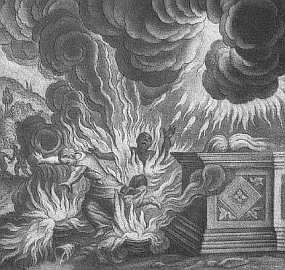 The supposed reason for the Strange Fire Conference of last week was to address and correct “charismania”—out-of-control or flat-out bogus gifts and the people who express them. The authority question arises when the correctors included no charismatics. So much for cleaning one’s own house first or sticking to the log in one’s own eye before finding the speck in your brother’s.