Rethinking Evangelicalism’s Tropes #3: Faith

Standard
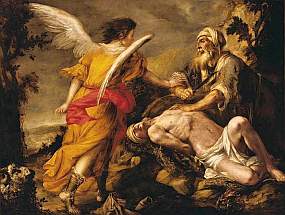
Juan de Valdés Leal - 'The Sacrifice of Isaac'

Juan de Valdés Leal - 'The Sacrifice of Isaac'

Evangelicals love the Reformation. While most Evangelicals are not Lutherans, you’ll get a lot of head nods if the importance of Martin Luther’s actions comes up in casual conversation. And it’s next to impossible to talk about Luther without talking sola fide.

But as much as Evangelicals want to talk about faith, I’ve found that the more educated an Evangelical is and the higher up on the socio-economic ladder, the more the issue of faith becomes one of talk and conjecture rather than actual practice.

In fact, when some hoped-for and prayed-over outcome fails to come to pass, anymore it seems that the most intelligent and wealthier Evangelicals are most likely to come up with a tortuous explanation for the failure based on issues of God’s sovereignty or His will. What they don’t ever want to say to one who failed to receive is “The failure was due to your lack of faith.”

In Evangelical circles, at least in the educated and wealthier ones, claiming that one failed to have enough faith is tantamount to shouting a racial slur or vulgarity in someone’s face. We just don’t do that. We’re too afraid of hurting someone’s feelings.

Problem is, I’ve read the New Testament and the writers are constantly telling us that God honors faith and that doubters shouldn’t expect to receive anything from Him. In short, we didn’t get what we asked for because we lacked faith. It’s our fault, not God’s, no matter how hurt our feelings may be to hear that.

I looked up the phrase your faith in the ESV version of the Bible, and Jesus uses that term nine times in a positive sense, typically along the lines of “your faith has made you well.” Those faith possessors got what they wanted because they didn’t doubt but instead trusted Jesus wholeheartedly.

Lack of faith is almost never (and I’ll show you the one semi-exception that I know) rewarded. Instead we get passages like this:

[Jesus] went away from there and came to his hometown, and his disciples followed him. And on the Sabbath he began to teach in the synagogue, and many who heard him were astonished, saying, “Where did this man get these things? What is the wisdom given to him? How are such mighty works done by his hands? Is not this the carpenter, the son of Mary and brother of James and Joses and Judas and Simon? And are not his sisters here with us?” And they took offense at him. And Jesus said to them, “A prophet is not without honor, except in his hometown and among his relatives and in his own household.” And he could do no mighty work there, except that he laid his hands on a few sick people and healed them. And he marveled because of their unbelief.
—Mark 6:1-6a

Jesus could not do many miracles in His hometown because his old neighbors rationalized away whatever faith they may have had in Him. They came up with naturalistic, “educated” explanations of why they could expect so little from Jesus. And they received the results of their unbelief.

Then there is this:

If any of you lacks wisdom, let him ask God, who gives generously to all without reproach, and it will be given him. But let him ask in faith, with no doubting, for the one who doubts is like a wave of the sea that is driven and tossed by the wind. For that person must not suppose that he will receive anything from the Lord; he is a double-minded man, unstable in all his ways.
—James 1:5-8

How often do we ever apply that passage to our own lack of faith? Instead, we treat those words as if they apply to some nebulous, theoretical other.

In the truly “impossible” situations, Jesus deals with the unbelieving by choosing who stays and who goes. Witness His actions here:

While [Jesus] was still speaking, there came from the ruler’s house some who said, “Your daughter is dead. Why trouble the Teacher any further?” But overhearing what they said, Jesus said to the ruler of the synagogue, “Do not fear, only believe.” And he allowed no one to follow him except Peter and James and John the brother of James. They came to the house of the ruler of the synagogue, and Jesus saw a commotion, people weeping and wailing loudly. And when he had entered, he said to them, “Why are you making a commotion and weeping? The child is not dead but sleeping.” And they laughed at him. But he put them all outside and took the child’s father and mother and those who were with him and went in where the child was. Taking her by the hand he said to her, “Talitha cumi,” which means, “Little girl, I say to you, arise.” And immediately the girl got up and began walking (for she was twelve years of age), and they were immediately overcome with amazement. And he strictly charged them that no one should know this, and told them to give her something to eat.
—Mark 5:35-43

Jesus took only the three disciples most likely to trust Him, and He had all the scoffers removed from the house. Why? Because He has no room for those who lack faith.

On the positive side, there’s this:

As they passed by in the morning, they saw the fig tree withered away to its roots. And Peter remembered and said to him, “Rabbi, look! The fig tree that you cursed has withered.” And Jesus answered them, “Have faith in God. Truly, I say to you, whoever says to this mountain, ‘Be taken up and thrown into the sea,’ and does not doubt in his heart, but believes that what he says will come to pass, it will be done for him. Therefore I tell you, whatever you ask in prayer, believe that you have received it, and it will be yours.”
—Mark 11:20-24

I once wrote a post about that Mark passage, claiming it was the least-believed passage in the Bible. I stand by that statement. That so many of us Evangelicals will try to explain away the very upfront nature of Jesus’ statement here, making excuses for ourselves and for others, is a sign that maybe we’re just as lousy at the faith thing as Jesus’ doubting neighbors.

As for Jesus even remotely rewarding doubt, the only passage that comes to mind is this one, and I believe the Lord puts this in the Scriptures as a cautionary tale (and with a big qualifier):

And they brought the boy to [Jesus]. And when the spirit saw him, immediately it convulsed the boy, and he fell on the ground and rolled about, foaming at the mouth. And Jesus asked his father, “How long has this been happening to him?” And he said, “From childhood. And it has often cast him into fire and into water, to destroy him. But if you can do anything, have compassion on us and help us.” And Jesus said to him, “‘If you can’! All things are possible for one who believes.” Immediately the father of the child cried out and said, “I believe; help my unbelief!” And when Jesus saw that a crowd came running together, he rebuked the unclean spirit, saying to it, “You mute and deaf spirit, I command you, come out of him and never enter him again.” And after crying out and convulsing him terribly, it came out, and the boy was like a corpse, so that most of them said, “He is dead.” But Jesus took him by the hand and lifted him up, and he arose.
—Mark 9:20-27

Jesus here is somewhat shocked that the father of the boy questions His ability to work through faith. Despite this, He restores the boy to wholeness, though one could argue that He does so only after the father confesses the error of his unbelief.

Yet don’t we routinely add “if you can” to our prayers to the Lord? Aren’t we constantly hedging our bets when it comes to asking for big things in prayer?

And who are we that we should be let off lightly? Maybe someone needs to simply say to us, “You didn’t get what you wanted because you didn’t have enough faith.”

My mother died from brain cancer. She died just months after our first child was born, right when we needed her most to help us. That my father had died just months before her only compounded how much we needed her help, if for no other reason than the major relief of having an on-call babysitter now and then.

During my mother’s illness, I had to come to grips with the fact that I didn’t have much faith to believe that she would be healed. Her kind of cancer was almost always 100 percent fatal within a couple years of diagnosis.

Now my perspective on supernatural healing and the ability of the Lord to work miracles was no different then than it is now. But the fact remained that a part of me doubted that God would indeed raise up my mother to wholeness. I remember the months of her slow decline and my lying in bed at night realizing that I just didn’t have enough faith to believe she would be restored. And she died.

Now it may be a horrifying thing to some of you to hear me say this, but honestly, I need to own up to my lack of faith for her healing. Her death may in fact be partly due to the lack of faith in me and those around her. It may not, but I can’t excuse myself. The whole incident made me realize that I needed to grow up.

I think it’s time we stop being babies about faith. Maybe we need to man up and accept that perhaps the bad outcome was because we simply did not take God at His word and failed to have faith. That may be galling to people. It may be hurtful to those who have suffered loss. But I can’t find any excuses in the New Testament for doubt. They just aren’t there. If we say we believe the Bible is the inerrant word of God, then we have to come to grips with this reality right from the myriad examples in Scripture: People who have faith get what they ask for and people who don’t have faith don’t.

One last thing: Paul’s thorn.

So to keep me from becoming conceited because of the surpassing greatness of the revelations, a thorn was given me in the flesh, a messenger of Satan to harass me, to keep me from becoming conceited. Three times I pleaded with the Lord about this, that it should leave me. But he said to me, “My grace is sufficient for you, for my power is made perfect in weakness.” Therefore I will boast all the more gladly of my weaknesses, so that the power of Christ may rest upon me. For the sake of Christ, then, I am content with weaknesses, insults, hardships, persecutions, and calamities. For when I am weak, then I am strong.
—2 Corinthians 12:7-10

That passage is the one most people will cite when it comes to unanswered prayers said in faith. I will fully concede that God did not give Paul what he prayed for.

But I will add what few people ever do: God audibly spoke to Paul to specifically explain why the apostle would not receive what he prayed for in faith.

When God audibly speaks to you and me to give us a reason why we should stop praying for something in faith, then we’ve got a great reason to stop praying and start accepting the hard answer. Otherwise, this is how we are to pray—always:

And he told them a parable to the effect that they ought always to pray and not lose heart. He said, “In a certain city there was a judge who neither feared God nor respected man. And there was a widow in that city who kept coming to him and saying, ‘Give me justice against my adversary.’ For a while he refused, but afterward he said to himself, ‘Though I neither fear God nor respect man, yet because this widow keeps bothering me, I will give her justice, so that she will not beat me down by her continual coming.'” And the Lord said, “Hear what the unrighteous judge says. And will not God give justice to his elect, who cry to him day and night? Will he delay long over them? I tell you, he will give justice to them speedily. Nevertheless, when the Son of Man comes, will he find faith on earth?”
—Luke 18:1-8

That final question of Jesus should haunt us. That we try instead to make excuses for our own lack of faith should haunt us even more.

True Freedom in Christ: Breaking the Bonds of Legalism

Standard

UnshackledIn my previous post in this two-part series, I claimed that while many Christian talk about freedom in Christ, few live that talk. As I get older, I increasingly see why this is.

One reason that few of us truly experience Christ’s freedom is our desperate fear that we will not be liked, that we’ll be rejected and tossed by the world into a class of people labeled losers. So we play the world’s restrictive and ensnaring game, and all reality of freedom goes out the window. The world pipes, and we dance. Only by dying to self and to the world do we experience genuine freedom.

The other reason for restrictions on freedom come from within the American Church, not without.  That solution, too, starts with dying to self, but in a more oblique way that not everyone sees.

Theologian Karl Barth, when asked to sum up his knowledge, was said to reply with the words of a simple song too often relegated to children, “Jesus loves me, this I know, for the Bible tells me so.”

What I’m realizing is that my learning often gets in my way of being a simple Christian. I can get bogged down in Greek verb forms, or I can tussle with distinctions between supralapsarianism and infralapsarianism. I start thinking too much. I go off on tangents and wander in weird places.

Simplicity is not the ideal state in the minds of most people in the West. We love our complexity. Set a simple task before a half dozen business people, and the next thing you know, tasks forces arise, due diligence models erupt, and the original task, perhaps something as simple as “we need to refill this pitcher of water,” becomes a fiasco. The cartoon Dilbert is one of the most popular today because it deflates the pomposity and stifling adherence to rules that make so much of modern day business practice so ineffective.

The problem for the Church in America is that we are often worse than the hapless business world of Dilbert. We pile all sorts of junk onto the mission of Jesus, then we wonder why the mission goes awry and the people who are a part of it seem to reflect the opposite of “the joy of the Lord.”

Jesus summed up Isaiah:

“‘These people draw near to me with their mouth, and honor me with their lips; but their heart is far from me. And in vain do they worship me, teaching as doctrine rules made by men.'”
—Matthew 15:8-9

How often do we run the test to see if our everyday practice of the faith is nothing more than “rules made by men”?

We can build systematic theologies out of anything, but Jesus fought against that tendency. When a lover of complexity attempted to corner him on doctrine, here is how Jesus responded:

Jesus said to him, “‘You shall love the Lord your God with all your heart, with all your soul, and with all your mind.’ This is the first and great commandment. A second likewise is this, ‘You shall love your neighbor as yourself.’ The whole law and the prophets depend on these two commandments.”
—Matthew 22:37-40

Do we get the profundity of that final sentence? Jesus says that everything that has been revealed by God on how we are to live comes down to loving Him and loving others! I see a lot of Christians who burden themselves and everyone else with their busybodyness. They use their own systematic theologies to gleefully point out everyone’s errors, but they forget that everything they supposedly know is meant to add up to loving God and loving one’s neighbor.

That tendency explains why so much of the Church is at war with itself and why church splits are the norm rather than the exception.

In the words of the great orator Rodney King, “Can’t we all just get along?”

No, Rodney, we can’t—as long as we are bound up in legalism and judgmentalism.

Anymore, the only rules I impose on myself in this walk of faith are

Am I loving the Lord?

Am I loving other people?

I’m letting everything else go.

The ability to ask those two questions has to start in dying to self—again. Because asking those two questions, finding the answer, and putting that answer into practice demands that I not live for myself. I cannot love if I am at the center of that love.

I quoted a lot of Scripture verses yesterday on the positives of dying. I left some to use for today:

For while we were living in the flesh, our sinful passions, aroused by the law, were at work in our members to bear fruit for death. But now we are released from the law, having died to that which held us captive, so that we serve in the new way of the Spirit and not in the old way of the written code.
—Romans 7:5-6

(That’s one of the most neglected verses in the Bible, if you ask me. Too many of us remain prisoners of  the “old way of the written code” and seem to have no comprehension of what it means to “serve in the new way of the Spirit.”)

For through the law I died to the law, so that I might live to God. I have been crucified with Christ. It is no longer I who live, but Christ who lives in me. And the life I now live in the flesh I live by faith in the Son of God, who loved me and gave himself for me. I do not nullify the grace of God, for if righteousness were through the law, then Christ died for no purpose.
—Galatians 2:19-21

If with Christ you died to the elemental spirits of the world, why, as if you were still alive in the world, do you submit to regulations—”Do not handle, Do not taste, Do not touch” (referring to things that all perish as they are used)—according to human precepts and teachings? These have indeed an appearance of wisdom in promoting self-made religion and asceticism and severity to the body, but they are of no value in stopping the indulgence of the flesh.
—Colossians 2:20-23

I look around at the state of Evangelicalism today and it seems to have descended into little more than mouthing “do not handle, do not taste, do not touch.” And we can complain about whether that’s truly the case or not, but sometimes it’s all about perceptions. If you ask an unbeliever enough questions in this regard, you’ll probably hear people sum up Christianity as a religion for folks who are against doing stuff.

Fact is, Christianity is not defined by the rules of what it is against, but by the truth of what (and whom)  it is for.

But Dan, you say, what is Christianity for? Here’s a simple theological answer: Love the Lord and love people. I can sum that up in a couple verses too:

For to me to live is Christ, and to die is gain.
—Philippians 1:21

For we are his workmanship, created in Christ Jesus for good works, which God prepared beforehand, that we should walk in them.
—Ephesians 2:10

No matter how poor our memories might be, I think each of us can memorize those two verses.

I’ve reached the age that I’m not so worried if I wear white socks with black shoes. I’ve stopped caring what other people think of me. I’ve died to all that. The only thing that matters is what the Lord thinks.

In fact, I’ve reached the point where I no longer care what the religious people think, which means I don’t care what many fellow Christians think. Too many religious people are busybodies who don’t understand Christianity at all because they’re mired in rules, laws, and trying to conform to a misplaced sense of righteousness. I feel sorry for them, actually.

When I read the Bible, this Christian life comes off so much simpler than what we have made it. This life is not about how long our quiet time is and when. It’s not about looking good before the religious people.

Freedom in Christ is letting everything else go, letting it die, so that we can live by the Spirit.

And when our physical bodies finally wear out, we won’t be judged by God for how much we know or for how well we applied “godly principles” and rules to life. As Jesus Himself said, it will all come down to whether we lived a life that showed we loved Him and loved other people.

That’s true freedom.

For you were called to freedom, brothers. Only do not use your freedom as an opportunity for the flesh, but through love serve one another. For the whole law is fulfilled in one word: “You shall love your neighbor as yourself.” But if you bite and devour one another, watch out that you are not consumed by one another. But I say, walk by the Spirit, and you will not gratify the desires of the flesh. For the desires of the flesh are against the Spirit, and the desires of the Spirit are against the flesh, for these are opposed to each other, to keep you from doing the things you want to do. But if you are led by the Spirit, you are not under the law.
—Galatians 5:13-18

True Freedom in Christ: When Dead is Good

Standard

FreedomOne of the benefits of being a Christian most sold by Evangelicals is freedom in Christ. I’m constantly hearing that message, largely because Americans love freedom.

But for most Christians in America, freedom in Christ is a myth. It gets talked up everywhere, but almost no one truly experiences it.

It’s not hard to see why the talk doesn’t match reality. American Evangelical Christians seem almost desperate in their desire to be liked. We want people to like us as a person, like our church as a fellowshipping body, like our theology, like our church building, like our church programming, and on and on.

I remember a few years back when Newsweek magazine had a cover story trumpeting how Evangelical Christians were the in thing. We were everywhere, happening, and almost—dare I say it—cool. Evangelicals had elected the seemingly unelectable George W. Bush, and the halls of power were filled with others like us. Evangelicalism was “teh hotness.”

Seems like ancient history, doesn’t it?

Today, I sense an almost desperate, pleading attitude among Evangelicals. Instead of being president of the high school student council, we’ve fallen from the heights back into the awkward, gangly teen with braces and zits who desperately wants to fit in with the cool kids, but just can’t seem to wear the right clothes or drop the right lingo. No one seems to understand us, so the rest of the world moves on. We’re stuck at the punch bowl at the junior high dance, swaying off-beat to the music, alone in our own little world, no one to dance with.

And it hurts.

It hurts because for too long we’ve been caught in a trap of self-talk that says,

If people like you, their approval validates your message and beliefs.

Problem is, that line of thinking is nowhere to be found in the Bible. In fact, just the opposite:

“Woe to you, when all people speak well of you, for so their fathers did to the false prophets.”
—Luke 6:26

“Blessed are you when people hate you and when they exclude you and revile you and spurn your name as evil, on account of the Son of Man!”
—Luke 6:22

That second verse is particularly telling, as our culture attempts to spin what is good and make it into evil. Suddenly, in the eyes of the world, the Gospel of Love is seen as a message of intolerance and hate.

And that spin makes for some rather sad shoehorning of all sorts of weird ideas into what the Gospel is as we Evangelicals cling madly to the hope that people will still like us, even as we serve up a message the world views as turned upside down from “truth.”

Here’s the thing, though. All that effort we put into dressing ourselves up to be presentable to a world that could care less about Christianity and our “weird, backward, intolerant message” would be a nonstarter if we didn’t care so much about what other people thought of us or our message.

Just as in our school days, the cool kids with sneers plastered over their carefully cultivated images look at us and say, “Why don’t you go drop dead, loser.”

But sometimes, even the worldly have something to teach us.

Hollywood, with its carefully cultivated images filled with artifice, bombards us with movies that exalt the schoolkid who stopped caring what the in-crowd thinks and just does what was right. Wasn’t that the kid who was truly free, who made the difference in the end?

The Bible has the answer; it’s called dying to self.

When I look over the American societal landscape, nothing strikes me more than the truth that genuine freedom in Christ only comes when Christians die to self and become nothing in the eyes of the world. Yet everything we’ve constructed in American Evangelicalism wars against that necessity.

Here is truth:

Do you not know that all of us who have been baptized into Christ Jesus were baptized into his death? We were buried therefore with him by baptism into death, in order that, just as Christ was raised from the dead by the glory of the Father, we too might walk in newness of life. For if we have been united with him in a death like his, we shall certainly be united with him in a resurrection like his. We know that our old self was crucified with him in order that the body of sin might be brought to nothing, so that we would no longer be enslaved to sin. For one who has died has been set free from sin. Now if we have died with Christ, we believe that we will also live with him.
—Romans 6:3-8

For the love of Christ controls us, because we have concluded this: that one has died for all, therefore all have died; and he died for all, that those who live might no longer live for themselves but for him who for their sake died and was raised. From now on, therefore, we regard no one according to the flesh. Even though we once regarded Christ according to the flesh, we regard him thus no longer. Therefore, if anyone is in Christ, he is a new creation. The old has passed away; behold, the new has come.
—2 Corinthians 5:14-17

Set your minds on things that are above, not on things that are on earth. For you have died, and your life is hidden with Christ in God.
—Colossians 3:2-3

I have been crucified with Christ. It is no longer I who live, but Christ who lives in me. And the life I now live in the flesh I live by faith in the Son of God, who loved me and gave himself for me.
—Galatians 2:20

And they have conquered him by the blood of the Lamb and by the word of their testimony, for they loved not their lives even unto death.
—Revelation 12:11

Truly, truly, I say to you, unless a grain of wheat falls into the earth and dies, it remains alone; but if it dies, it bears much fruit. Whoever loves his life loses it, and whoever hates his life in this world will keep it for eternal life. If anyone serves me, he must follow me; and where I am, there will my servant be also. If anyone serves me, the Father will honor him.
—John 12:24-26

Then Jesus told his disciples, “If anyone would come after me, let him deny himself and take up his cross and follow me. For whoever would save his life will lose it, but whoever loses his life for my sake will find it.”
—Matthew 16:24-25

Paul puts it succinctly:

You were bought with a price; do not become slaves of men.
—1 Corinthians 7:23

And yet we act as if we were still slaves, doing what the world tells us to do so as to garner its approval.

Wouldn’t this planet be different if we Christians in America truly died to self and to the world’s clarion call?

Think about it. The dead…

Don’t care what people think of them,
Don’t worry about keeping up with the Joneses,
Don’t consume,
Don’t have busy schedules,
Don’t put themselves first,
Don’t have anywhere to be except where they have been planted,
Don’t worry about tomorrow,
Don’t have their own agenda,
Don’t have much need for money,
Don’t fear,
And don’t care if they get killed because they are already dead.

Here’s what God can do with the dead:

The hand of the LORD was upon me, and he brought me out in the Spirit of the LORD and set me down in the middle of the valley; it was full of bones. And he led me around among them, and behold, there were very many on the surface of the valley, and behold, they were very dry. And he said to me, “Son of man, can these bones live?” And I answered, “O Lord GOD, you know.” Then he said to me, “Prophesy over these bones, and say to them, O dry bones, hear the word of the LORD. Thus says the Lord GOD to these bones: Behold, I will cause breath to enter you, and you shall live. And I will lay sinews upon you, and will cause flesh to come upon you, and cover you with skin, and put breath in you, and you shall live, and you shall know that I am the LORD.” So I prophesied as I was commanded. And as I prophesied, there was a sound, and behold, a rattling, and the bones came together, bone to its bone. And I looked, and behold, there were sinews on them, and flesh had come upon them, and skin had covered them. But there was no breath in them. Then he said to me, “Prophesy to the breath; prophesy, son of man, and say to the breath, Thus says the Lord GOD: Come from the four winds, O breath, and breathe on these slain, that they may live.” So I prophesied as he commanded me, and the breath came into them, and they lived and stood on their feet, an exceedingly great army.
—Ezekiel 37:1-10

God makes an army out of the dead, an army that goes forth in His name. As they were once dry bones covered in rags, they have no fear of death, no cares of what the world thinks. And unlike in the days of Ezekiel, today God animates the dead with the life of His Son, who lives and reigns forever.

We have too many Christians today who live for themselves and not for God. Too many of us are not dead to all the worthless things this world has to offer. We worry how we’ll replace our iPod now that we dropped it and it stopped working (or worse, what to do when a new model comes out). We worry what people with think of us if we don’t have a smartphone, only a dumb one. We spend countless hours roaming stores buying stuff we don’t need. And we worry. About everything. Especially about what other people think about us. Especially when those other people are Christians.

We drive our kids to take on a million worthless activities so they can get into a worthless Ivy League college to gain a worthless career that makes worthless money so they can be a worthless person surrounded by worthless stuff that receives the worthless approval of other worthless people.

How stupid.

In my head, I can see what a church looks like when it is filled with people who are dead to the world and alive to Christ, people who live only to Him because He alone is their life. Mostly, I hear real world examples of this kind of church from missionaries who come back from impoverished nations and tell me that what we call church here in America is a pale imitation of the real thing. And they can say that because they’ve seen the real thing.

I hear a lot about freedom in Christ in America. But I think we confuse that with the American Dream, that same dream that only keeps us from dying to self.

Freedom in Christ comes only when we step out of our old, worthless selves and into a rough-hewn tomb. If we let Christ then roll away our stone, something amazing will happen.

For am I now seeking the approval of man, or of God? Or am I trying to please man? If I were still trying to please man, I would not be a servant of Christ.
—Galatians 1:10

See also: