

Slowly to Oblivion: How Christians Fall Away from the Lord, Part 2

Standard

Falling AwayPreviously, I wrote how Christians fall away (“Slowly to Oblivion: How Christians Fall Away from the Lord, Part 1“). In doing so, I realized I erred by focusing on one type of falling away solely: Phariseeism.

In truth, more than one way exists.

If you missed the intro explaining the idea of falling away, rather than rehash it here, please see the previous post.

Here is another pathway to falling away. Some will contend it afflicts you folks in the younger generation more so than older folks who are so susceptible to the other type of falling away.

Another way in which some Christians fall away from the Lord…

Crown Doubt.

Faith is one thing, but when you repeatedly parade your doubt before your Christian friends, you show how cool you really are. After all, the sword swallower  and fire-eater in the circus side show are the real attractions, aren’t they? Talk about doubt all the time. Love doubt. Write poems and hymns about the wonder of doubt. Make sure you sanctify that doubt, too, by dredging up historical references to Desert Fathers and Ancient Patricians who doubted all the time, like some type of Old Timey Doubt Machines.

Embrace appealing causes.

Get on board! You know which causes people are talking about most. Make sure you like that cause’s Facebook page. And don’t forget to buy the T-shirt. Wear it proudly so others can see how committed you are—until a hotter cause comes along.

Take the temperature of the times and adjust your beliefs accordingly.

What does the culture say? What’s society’s scuttlebutt? If you don’t already know, find out. Then open your Bible—if you still have one—and find a way to make the words in it conform to whatever the trend gurus say. Truth is flexible, right? A living document should change with the times. So be the one who changes it! Or find a pioneer or two who have already done the flexing for you and parrot everything they say. Besides, that pioneer is surely popular. You have his/her/its T-shirt and iPad app by now, don’t you?

Pick fights with the unenlightened.

Find a deeply held belief in someone else? Challenge it. Especially if it conflicts with your cause or the temperature of the times. Jesus challenged people all the time, so you’re just imitating Him. Convince yourself this makes you look more like Him. Remember, there’s a solid biblical precedent to ask questions that start with “Did God really say…?”

Talk in riddles and circles.

What is the sound of one hand clapping? That is the sort of thing Jesus would ask because He liked to unsettle people. Make statements that don’t say anything concrete. Ask questions you never plan to answer (which is a great way to allow for plausible deniability should the temperature of the times change). People will see you are spiritually deep if they can’t make sense of what you’re saying or pin you down. Clarity is so 2002.

Endorse other religions while making sure everyone knows the evils of your own.

Make sure other people know that Christianity is messed up, terribly. Apologize for being a Christian to anyone who will listen. Talk about how truth can be found in so many other religions. Read just enough about those other religions to be able to talk about them with likeminded people over a biscotti and fair trade mocha grand latté with organic soy milk.

Proudly avoid church.

Church? “Old and busted indoctrination factory” is more like it. And while you’re not attending church, make sure other people know your reasons. The reasons are always good, especially if you own a T-shirt that explains them.

Sin boldy.

Nothing says you are sanctified better than showing that you can sin as much as the next guy and not be affected by it. Nike said it best. And the founder of Lutheranism, Martin Luther King.

Read the right pseudepigrapha.

You have read the gospels of Judas, Marcion, the Four Heavenly Realms, and all the rest. Of course you have. Wisdom right there, ladies and gentlemen. John Shelby Spong says so.

Hate whatever is the new hate.

Point out that some Christians are really haters in disguise. Ensure other people know you hate that. While you’re at it, hating yourself in a meta sort of way can give you street cred (see Endorse other religions while making sure everyone knows the evils of your own).

Love yourself.

Look at those fundamentalists. Morons. Pretty much everything bad in the world can be traced to them. But not you. You are soooooooo much smarter than they are.

Sarcasm isn’t pretty, but then neither is the kind of delusional thinking depicted above. Yet it is very common among people who once started in the Faith and then kept pushing past the limits God set.

While the above may seem like caricature, I wish it were. I’ve met folks like this, though. They seem to be the reverse of the Pharisaical type mentioned in the previous post. They have pushed so hard not to be seen as a Pharisee, they have become one, albeit of doubt rather than faith. Sadly, their nonstop questioning only leads them to faithlessness and ruin.
Slowly to Oblivion: How Christians Fall Away from the Lord, Part 1

Standard

Falling AwayNothing in the Bible should be more sobering than the reality that some people aren’t going to make it to heaven. Even more sobering is that some of them were once considered part of the in crowd.

Now some will protest that Scripture is clear that the saints will persevere. (Hey, that rhymes!) But it also seems clear that the Bible repeatedly notes that some who were at one point counted part of the group were not counted so at the end.

Something happened. Something undeniable.

Claim all you will that those who don’t make it were never part of the group to begin with, but there’s that daunting reality again that a lot of people who now seem out of the group were the same ones we once accepted readily as being in.

Once.

Take care, brothers, lest there be in any of you an evil, unbelieving heart, leading you to fall away from the living God.
—Hebrews 3:12 ESV

Throughout his writings, Paul used the term brothers to refer only to those who were in.

“Then they will deliver you up to tribulation and put you to death, and you will be hated by all nations for my name’s sake. And then many will fall away and betray one another and hate one another. And many false prophets will arise and lead many astray. And because lawlessness will be increased, the love of many will grow cold. But the one who endures to the end will be saved.”
—Matthew 24:9-13 ESV

Context is king. In this context, the King of Kings is talking to the in crowd. They are the ones who will see their numbers dwindle and fall.

For it is impossible, in the case of those who have once been enlightened, who have tasted the heavenly gift, and have shared in the Holy Spirit, and have tasted the goodness of the word of God and the powers of the age to come, and then have fallen away, to restore them again to repentance, since they are crucifying once again the Son of God to their own harm and holding him up to contempt. For land that has drunk the rain that often falls on it, and produces a crop useful to those for whose sake it is cultivated, receives a blessing from God. But if it bears thorns and thistles, it is worthless and near to being cursed, and its end is to be burned. Though we speak in this way, yet in your case, beloved, we feel sure of better things–things that belong to salvation. For God is not unjust so as to overlook your work and the love that you have shown for his name in serving the saints, as you still do.
—Hebrews 6:4-10 ESV

“…as you still do.” What matters in the end is perseverance, and it is clear that some who were once in may not persevere.

“And to the angel of the church in Sardis write: ‘The words of him who has the seven spirits of God and the seven stars. “‘I know your works. You have the reputation of being alive, but you are dead. Wake up, and strengthen what remains and is about to die, for I have not found your works complete in the sight of my God. Remember, then, what you received and heard. Keep it, and repent. If you will not wake up, I will come like a thief, and you will not know at what hour I will come against you. Yet you have still a few names in Sardis, people who have not soiled their garments, and they will walk with me in white, for they are worthy. The one who conquers will be clothed thus in white garments, and I will never blot his name out of the book of life. I will confess his name before my Father and before his angels.”
—Revelation 3:1-5 ESV

A name once written in the Book of Life has the potential to be blotted out if what was once alive becomes dead, if the works once started remain incomplete.

The one who continues to long to remain in Christ will remain there, for no outside force can rip us away from God. But we need to be careful of what we harbor within.

How can you and I fall away from the Lord? It’s scarily simple.

Hoard.

Hoard everything God gives you. Time. Goods. Knowledge. Wisdom. Love. Keep it all to yourself. Build barns and silos to store it all. And if you should dole out a tiny portion of what you have been given, make sure others know how generous you are in doing so. And make sure the knowledge you portion out is used to crush others who don’t have the silo full you do. Also ensure the pittance of love you offer has every expectation of being returned. Then when people don’t treat your generous gift with the appreciation you believe they should, horde more. And don’t ever repeat the mistake of throwing your pearls before those you deem “swine.”

Cultivate cynicism.

Knowing everything means suffering fools, of which there seems to be no end. The person who knows it all can see through it all. Every motive in others becomes clear. Every sell job known for what it is. The cynic claims to see all as it rightly is and calls it out from the lofty grandeur of self-deemed righteousness. Some go so far as to label this “discernment.”

Love only those who love you.

While you’re not casting your pearls of wisdom before swine, don’t give them your love either. Talk about those people. Make sure everyone knows who you think they are. Save your love for people like you; the right kind of people. And since there are usually so few who measure up, most of your love will eventually deepen into further self-love. Because it’s easier to love yourself and leave it at that.

Find a ghetto to dwell in—then never venture out of it.

Lutheran. Charismatic. Calvinist. Paedobaptist. Dispensationalist. And on and on. The Christian life contains all sorts of ghettos. Of course, the one you choose to live in is the best. The others contain nothing but error. Best not to visit them—ever. There’s nothing anyone in those other ghettos can teach you anyway. No sense risking damnation by checking out how the other half lives.

Fight every battle.

It doesn’t matter what the battle is, proving how right you are is all that is essential. Make sure everyone knows where you stand on every position. “Fight the good fight,” right? Take on your enemies and pound them into submission. And if it seems after a while that everyone else is the enemy, chalk that up to the rightness of your cause. Because anyone who is on the side of rightness will be persecuted—or so you keep telling yourself.

Pursue comfort.

Even though you’re fighting endless righteous battles, no need to work up too much of a sweat. Look after yourself. Make sure you have the best of everything. You’re a King’s Kid. You deserve the best. This is especially true of Americans. You’re pretty sure the American Dream is right there in the Bible, so it’s in your best interest to embody it.

Exude righteousness.

Practice your religion before others and make sure they know how well you are doing it and how poor their execution is. Talk about your spiritual giftings all the time. You’re a model. You probably even tithe your mint and dill, though others give you strange looks when you toss part of your spice rack in the offering plate on Sundays. What do they know?

Use the lingo of the in crowd.

When you talk about your religion, use the buzzwords. Often. Because nothing says you’re in like talking in the approved code. In addition, this is a good way to ensure the out crowd stays out.

Find ways around the must-do’s that only the noobs must attend to.

You’ve been around. You’re proven. No need to spend too much time attending to the basics, like prayer and Bible study. Or serving the downtrodden. Leave that to the new guys. You’ve got bigger fish to fry. Besides, you know it all and have done it all already.

Resist reproof.

And the noobs? Who are they to question you? Error is for the other guy. Really, the nerve…

Never question yourself.

Once you’ve arrived, why make trouble for yourself by checking to see if your destination is the correct one after all? The other guy is in the wrong place. He always is.

I’ve heard it said that sarcasm isn’t very Christian.

What seems to be not so Christian is to let oneself fall into the kind of delusion the sarcasm above attempts to pierce. It’s a common delusion though. What makes it really sad is that most people who need desperately to reverse course before they find themselves out of the in group will read that set of warnings above and resist reproof. Because error only and always dogs the other guy. Always.

I end by saying that to the person afflicted by the delusional thinking depicted above, all change is bad. And yet a great swath of Christianity in the West needs desperately to change. This doesn’t mean abandoning solid doctrine, just bad practice based on self-righteous misunderstandings of the words of God.

Too many of us have become the living embodiment of the Pharisees we mock. The mirror of Scripture and the inner prompting of the Holy Spirit should reveal us for what we have become.

Unless it is already too late.

***

Slowly to Oblivion: How Christians Fall Away from the Lord, Part 2

Mistakes As Sin: Does the Church Need a New Grace?

Standard

I keep wondering why the American Church seems to be having little or no impact on this nation. It doesn’t take a genius to realize that evangelism ain’t what it used to be. I’ve said before that in my younger days I was routinely approached by people trying to share Jesus with me, but that hasn’t happened in a long time.

Speaking of a long time ago, Cerulean Sanctum turns 10 this year, and back in the early days I wrote a post called “Whatever Happened to Sin?” The important line in that post stated the obvious: “In short, it used to be about sin.”

It used to be.

The Church’s main talking point was sin. Sin used to be obvious. We knew what sin was. And we knew who the sinners were.

Today, we think we know who the sinners are, but their sins are not always as clear as they once were. Or should I say that they aren’t so easily labeled sin as they once were.

Think about these “sins”:

The pharmaceutical company that releases a batch of tainted drugs that harm people.

The accountant who makes an error in a corporate spreadsheet that causes shareholder losses.

The bus driver who falls asleep, his bus careening off the road, killing a dozen passengers.

The politician who said one stupid thing amid a host of smart ones and derailed his election chances.

The school principal who responds to angry parents by banning a disputed book from a reading list, only to anger other parents.

People can do a million things right, but that one thing done wrong, that decision made in a flash and under pressure, comes back to haunt them. It’s what they fear more than the fires of hell when they go to bed at night.

Christians will argue that people have the wrong priorities. And maybe they do. Maybe the unbeliever SHOULD be more worried about the fires of hell.

But in a daily existence where every last one of us is bombarded by an endless series of choices our forefathers never had to contend with, most people are wary of every little decision they must make. Because we’ve ramped up the consequences of decision-making mistakes to a fever pitch.

I’d hate to be a doctor today. I can’t imagine the minefield most doctors must contend with. Make a tiny mistake—or even the patient perception of a mistake that actually isn’t—and you could be sued to within an inch of your life and lose everything you spent decades working for.

And it doesn’t have to be the doctor. It seems like each of us, no matter what our profession or life goals, is under a ridiculous amount of scrutiny, where even an innocent mistake can derail a lifetime of hard work, where the difference between success and failure may be one word more carefully chosen.

Beyond our own competency issues and the ever-present whip of punishment, what of the unforeseen?

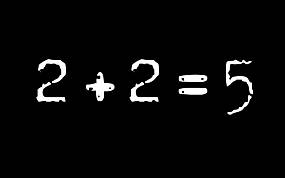
I confess: I was an Enron investor. It wasn’t a lot of money, just $1,500, but I watched it vanish. I’d done all the research too. Even had a couple investment advisers commend the choice of that Houston company. 2+2=5All the stats about the company looked good. No one realized all the stats were lies foisted on the SEC by the company.

Life happens, right? It’s not always in your favor or mine.

But decisions matter, and sociologists are noting an increased fear of decision-making and a subsequent burnout with having to make an endless stream of choices daily. Each of those decisions may offer potential downsides, with the fallout from a mistaken choice not always obvious on the surface.

Sure, Boris Yeltsin wept from all the choices that bombarded him when he and George H.W. Bush visited an American supermarket. And yes, we have to contend with that decision overload every day.

But where is the grace for mistakes when making those decisions?

Also in the distant past of Cerulean Sanctum, I wrote “We Need a Gospel That Speaks to Failure.” More than at any time in history, I think meeting that need is critical.

It’s not that people don’t understand sin. It’s that we’ve conflated sin and mistakes. For the most part, the world at large can’t tell the difference anymore. Worse, we’ve elevated the cost of mistakes and we’ve made them the worse offense.

You make a goof at work that gets you fired and you yell at your kid because of it. The real sin is yelling at your kid, but the consequences of failing to carry the one that led to underestimating a project’s cost that dominoed into your job ouster seem far more oppressive and dire.

Or you chose the wrong major in college and spend the rest of your life in a series of dead-end jobs because of a decision you made at 18, when your head was full of Jell-O and your naiveté on overdrive.

Or you complimented that “nice” woman at work on her fashion sense and she slapped you with a six-figure lawsuit because of it.

Or all that you learned as a kid got turned upside-down by a changing society and you can’t adapt fast enough because none of your coping mechanisms work now that all the rules have changed.

Life is merciless anymore. There is no room for mistakes. Ever.

Can we blame people for thinking that maybe a mistake is worse than a sin? Or that we’ve made the two synonymous? And how can we get back to talking about sin, grace, and where people spend eternity if we can’t get past this issue of simple mistakes that carry nasty, earthly consequences?

We STILL need a gospel that speaks to failure. As far as I see, though, we don’t have one. The American Church continues to deal poorly with failure. Witness how church leaders who goof, whether by actually sinning or just making a simple mistake, often suffer the worst consequences of all and find the grace they heard about constantly now in preciously short supply.

Here’s the thing: What Jesus said about the measure we judge with being the measure we will be judged by extends beyond sin. If we hold every little non-sin mistake against people, that will come back to bite us some day.

I keep wondering if we Christians need to reexamine our theology to work up a new grace that addresses non-sin mistakes. Because, honestly, those mistakes trouble people immensely, and the guy who made the wrong choice of contractor in the heat of the moment and ended up costing his company dearly for that decision still needs grace for his mistake.

And if the Church can’t offer that kind of grace, who will?