Hidden Messages of American Christianity: Correctness Before Love

Standard

This is the third in a series of posts covering the hidden messages that sneak into American churches' proclamation of the Gospel. For more background, please refer to this post.

And behold, a lawyer stood up to put him to the test, saying, "Teacher, what shall I do to inherit eternal life?" He said to him, "What is written in the Law? How do you read it?" And he answered, "You shall love the Lord your God with all your heart and with all your soul and with all your strength and with all your mind, and your neighbor as yourself." And he said to him, "You have answered correctly; do this, and you will live." But he, desiring to justify himself, said to Jesus, "And who is my neighbor?" —Luke 10:25-29 ESV

We all know about love. Those of us who came of age in the Seventies heard "God is Love" so many times it must have been drilled into us via some clever ad campaign. Remember, the crying Indian? Somebody must've had a "God is Love" public service ad just as catchy.

For all the talk of love, you would think our churches would have that message down pat by now. And even if we don't love perfectly, we should at least understand the priority the Lord gave to love. No need to pull out 1st Corinthians 13 and 2nd Peter 1: 5-8, right? The love message percolates in everything we do.

Well, supposedly.

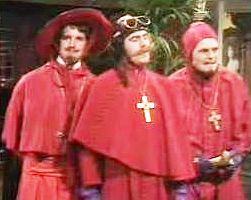
Somehow, we Christians in the West have this affinity for misprioritizing love below faith, hope, and everything else. Nobody expects the Spanish InquisitionThe very people of a God who is characterized by His Fatherly Love talk a good game about love, but the message we send out rarely starts with love. And when we end with it, that love's usually in the form of "Sorry about ripping your still-beating heart from your chest, but I did it in love."
Listen, our interaction with the brethren and with the lost shouldn't always take on the form of an intervention. It doesn't have to be a bare lightbulb, a hard wooden chair, and a cult deprogrammer we hired out of the Yellow Pages.

Too often our attitude is that of the lawyer who confronted Jesus. A master of splitting hairs, he swiftly noted how well he'd followed the love rules of the Law, but showed his true colors by adding his final element of personal correctness: "And who is my neighbor?" You can almost see the smirk.

Having been on a blogout last week, I evidently missed an enormous brouhaha that erupted over something Michael Spencer said over at BHT. At this point, I don't even want to know the specifics. All I know is that a lot of normally sane people forgot that love comes before correctness. The idea of leading with love first before tactfully addressing a fault got buried in a rush to judgment.

Can we see why the lost have no deep desire to join our little temples of pettiness? "Oh, shocking statement, Dan! 'Temples of pettiness'? Isn't that being a tad harsh?" All I can say is that our message of the love of Christ is being trumped by our desire to be correct. Love must come before correction. Love must come before EVERYTHING, folks. The mature Christian leads with love first and follows with everything else.

And yes, I know that love must be tough sometimes. My argument here is that it doesn't have to be tough all the time, nor does it have to be tactless. Our sense of proportion is out of whack when a few comments on a blog cause the strongest voices in the Godblogosphere to turn shrill and unloving.

Here's a little "Count to 10" anger management idea when we stumble across some inflated comment: Let's ask ourselves, How can I be a true example of love to my brother before I confront him?

I know a couple who were driven out of their church by folks who were more concerned about being correct than being loving. That couple's crime? They thought it was okay to read the Harry Potter books. When this opinion was expressed in a group of believers who did not share that belief, things turned ugly. To make matters worse, the couple was fairly young in the Lord and were new to that church. Now those final two elements aren't generally in themselves a reason to let things slide, but love should still have come first, then the acknowledgment that perhaps it is best to remark and let the Lord work it out in the lives of this couple. The result, however, was a bludgeoning, tears, anger, despair, and two fine people leaving the church.

It breaks my heart that we are too often concerned with being correct than being loving. And for all those who would accuse me of being soft on doctrinal stances for thinking that way, I would ask if the spirit in which anyone corrects another truly flows out of love and not self-justification. I would also ask that any of us who correct consider our own faults first, then consider if we are functioning more like the lawyer in the passage above than in the Spirit of Christ. Even in those passages where Jesus corrects sinners, he starts off by letting them know they are loved before He adds, "Now go and sin no more."

Which message do we lead with when we encounter others? Correctness or love? Only one is the way of Christ.

Hidden Messages of American Christianity: Kneeling at the Altar of Excellence

Standard

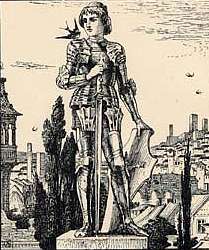
The Happy PrinceThis is the second in a series of posts covering the hidden messages that sneak into American churches’ proclamation of the Gospel. For more background, please refer to this post.

Fourteen years ago I sat among the throngs at Willow Creek Community Church and heard Bill Hybels talk about Christian excellence. Taking time to note that all their musicians were professionals, Hybels went on about the fact that unchurched Harry and Mary couldn’t tolerate a church service that wasn’t excellent and just as slick as anything you’d find on TV.

To a student of Christian Education looking to make church programming better, those words were true and right. Too often we church people had put up with off-key singers, monotone Scripture readers, and SAG-card-lacking actors in our church dramatic productions. It was all kind of tacky. Of course non-Christians would flee our little exercises in indulging the talentless.

But then a thought got the better of me.

As a pimply-faced teenager, I’d more than once walked out on stage in my old Lutheran Church and offered up my less than accomplished skills to the people of that church and to the Lord. I wasn’t Buddy Rich back then (or now), but I was encouraged to use my meager drumming ability for the youth productions we put on during Easter and Christmas. I’m almost positive I played way too loud. When I picked up a guitar later, the organist/youth minister encouraged me to play that instrument, too, and to even solo, playing songs I’d written.

Here at Willow Creek, though, they probably had armed guards with M-16s barring the stage from the likes of me. I’d certainly play or sing to the best of my ability, but it would never be good enough for “Christian excellence.”

I can’t really point to a time when Christianity turned professional. Researching older books has not turned up the first occurrence of this idea of excellence. Yet I have to believe that we lose something when we insist that only the remarkably gifted be allowed to share their talents with the family of God.

I also suspect that on any given Sunday, the truly remarkable people are in short supply in most churches. Sure, Willow Creek has a mid-size city’s worth of people from which to draw upon reserves of excellence (or they pay outsiders to come in and do what they do so excellently), but your average church does not. Still, that message that everything has to be perfect continues to trickle down from the brightest and best churches to those that are jealous to mimic churches of excellence.

How many churches today are more stringent in just who gets to do what on a Sunday? Growing up, I had the luxury of people who understood that encouraging youth to perform with the burgeoning talents they possessed was essential to a healthy church. I fear that today more and more churches are loathe to ratchet down their insistence on excellence to allow that.

The doppelganger of excellence is success. Success means reducing failure, and nothing spells excellence more than eliminating mistakes. The inroads that business practices made into our churches through the Church Growth Movement have enshrined success as the be all and end all. The only problem is that now there is no room for true grace for the fallen. Just as a company can’t go to shareholders and confess they had a bad quarter without paying the penalty, so our churches are becoming places where failure isn’t tolerated for very long. (We’ve all heard the aphorism that the Church in America is the only place where we bury our wounded, right?) If recent bestselling “Christian” book Your Best Life Now by Joel Osteen is any indication, success is the new goal of the Christian faith. So much for all those martyrs. Horrible failures all.

One of the most moving stories I have ever read is Oscar Wilde’s “The Happy Prince.” Despite his being jailed for debauchery by order of Queen Victoria, Wilde at least understood that the Gospel isn’t pretty. It’s not about success or excellence, but about the bloodied remains of the Messiah nailed to rough lumber. If you are not familiar with Wilde’s lovely story, I would heartily encourage everyone to read “The Happy Prince” at this link (pops) before going on.

The story tells of a gilded statue dubbed “The Happy Prince” erected in honor of a long-dead prince who was known for his lightheartedness. As winter approaches, the bejeweled statue befriends a stray swallow on his way to the warmth of Africa. The swallow is concerned at the statue’s sadness over the plight of the downtrodden in the city, so at the statue’s request, the bird begins stripping all the gems and gold leaf off the Happy Prince and giving them away to the needy. In time, there is nothing precious left of the statue, and the dedicated swallow who once told exotic tales of Egypt to the statue, is chilled and exhausted.

Wilde concludes the story:

The poor little Swallow grew colder and colder, but he would not leave the Prince, he loved him too well. He picked up crumbs outside the baker’s door when the baker was not looking and tried to keep himself warm by flapping his wings.

But at last he knew that he was going to die. He had just strength to fly up to the Prince’s shoulder once more. “Good-bye, dear Prince!” he murmured, “will you let me kiss your hand?”

“I am glad that you are going to Egypt at last, little Swallow,” said the Prince, “you have stayed too long here; but you must kiss me on the lips, for I love you.”

“It is not to Egypt that I am going,” said the Swallow. “I am going to the House of Death. Death is the brother of Sleep, is he not?”

And he kissed the Happy Prince on the lips, and fell down dead at his feet.

At that moment a curious crack sounded inside the statue, as if something had broken. The fact is that the leaden heart had snapped right in two. It certainly was a dreadfully hard frost.

Early the next morning the Mayor was walking in the square below in company with the Town Councillors. As they passed the column he looked up at the statue: “Dear me! how shabby the Happy Prince looks!” he said.

“How shabby indeed!” cried the Town Councillors, who always agreed with the Mayor; and they went up to look at it.

“The ruby has fallen out of his sword, his eyes are gone, and he is golden no longer,” said the Mayor in fact, “he is little better than a beggar!”

“Little better than a beggar,” said the Town Councillors.

“And here is actually a dead bird at his feet!” continued the Mayor. “We must really issue a proclamation that birds are not to be allowed to die here.” And the Town Clerk made a note of the suggestion.

So they pulled down the statue of the Happy Prince. “As he is no longer beautiful he is no longer useful,” said the Art Professor at the University.

Then they melted the statue in a furnace, and the Mayor held a meeting of the Corporation to decide what was to be done with the metal. “We must have another statue, of course,” he said, “and it shall be a statue of myself.”

“Of myself,” said each of the Town Councillors, and they quarrelled. When I last heard of them they were quarrelling still.

“What a strange thing!” said the overseer of the workmen at the foundry. “This broken lead heart will not melt in the furnace. We must throw it away.” So they threw it on a dust-heap where the dead Swallow was also lying.

“Bring me the two most precious things in the city,” said God to one of His Angels; and the Angel brought Him the leaden heart and the dead bird.

“You have rightly chosen,” said God, “for in my garden of Paradise this little bird shall sing for evermore, and in my city of gold the Happy Prince shall praise me.”

When we are in the grips of the message of excellence and success we become like the Mayor and Town Councillors in the story. Our ability to see true beauty in the less than perfect is stymied and along with it the beauty of the Gospel.

Creating a Theology from Unbelief

Standard

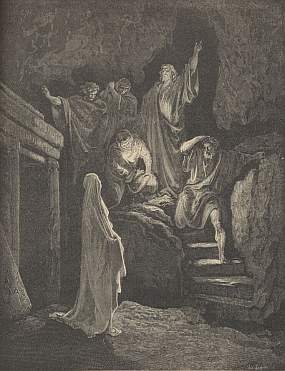
Christ raising LazarusThis is one of the most difficult posts I’ve ever written on Cerulean Sanctum. I have no doubt that there will be people who delist me from their blogroll or who will never visit this blog again simply because of this post.

But what I write here is something that has to be said. I hope you will read it to the end.

A couple weeks ago, Christianity Today online posted an article entitled “Can I Really Expect God to Protect Me?” (I would encourage everyone to read the entire article.) The author of the post goes on to relate the tragic story of her daughter who was born with a rare metabolic disorder and later died. This was indeed a heartrending event. However, I believe the author proceeds to deconstruct Psalm 91 and come up with a new theology that attempts to shoehorn her personal tragedy into the Scriptures and pull out something that does not exist.

Psalm 91 says:

He who dwells in the shelter of the Most High will abide in the shadow of the Almighty. I will say to the LORD, “My refuge and my fortress, my God, in whom I trust.” For he will deliver you from the snare of the fowler and from the deadly pestilence. He will cover you with his pinions, and under his wings you will find refuge; his faithfulness is a shield and buckler. You will not fear the terror of the night, nor the arrow that flies by day, nor the pestilence that stalks in darkness, nor the destruction that wastes at noonday. A thousand may fall at your side, ten thousand at your right hand, but it will not come near you. You will only look with your eyes and see the recompense of the wicked. Because you have made the LORD your dwelling place— the Most High, who is my refuge— no evil shall be allowed to befall you, no plague come near your tent. For he will command his angels concerning you to guard you in all your ways. On their hands they will bear you up, lest you strike your foot against a stone. You will tread on the lion and the adder; the young lion and the serpent you will trample underfoot. “Because he holds fast to me in love, I will deliver him; I will protect him, because he knows my name. When he calls to me, I will answer him; I will be with him in trouble; I will rescue him and honor him. With long life I will satisfy him and show him my salvation.
—Psalms 91:1-16 ESV

The disturbing issue for me is that the author takes the promises of Psalm 91 and spiritualizes them in such a way that they no longer refer to earthly protection, but instead have been translated into a form of gauzy spiritual protection by bringing in Matt 10:28a (“And do not fear those who kill the body but cannot kill the soul….”) and using it as a means of tempering the starkly-framed promises of Psalm 91. The end result of her exposition of Psalm 91 is that God doesn’t truly mean He’ll protect our physical selves, only our spiritual selves. The pestilence may very well kill the body, but it cannot kill the soul—we should be satisfied with that.

But is that what Psalm 91 really says? Or has the article’s author tried to bend the Scriptures to account for her experience?

The more I stand back and look at the state of Christian belief in this new millennium, the more I see that our theologies, while good on the surface, are rife with our own unbelief. We insist that the Bible is God’s inerrant word (and this I wholeheartedly believe), the very truth that frames our salvation and belief, but why then do we spend so much time trying to construct theologies that negate the truths we supposedly endorse?

Nothing makes me grind my teeth more than attending a funeral of a person who died from an illness, especially a protracted one, only to hear a half dozen people offer the same platitude: “Well, he’s finally healed.” What I have to ask is if Jesus or one of the apostles would have been satisfied with that assessment? Can you imagine that coming out of the mouth of Paul? Or who here, no matter how much of the Bible is believed to be inerrant, has the nerve to go up to James and say, “In this case, you really messed up in your chapter 5, verses 14 and 15!”

Am I the only one that thinks that the sort of attitude displayed by those half dozen at the funeral is nothing more than a theology of unbelief? A theology that says, “Plan A didn’t work, so we now have to settle for Plan B, shoehorn it into our experience, and explain it to our kids.” Despite the fact that we say the Bible is true, I suspect that many Christians today—even seasoned apologists—simply don’t believe it is, so they dance around the things they don’t believe and try to come up with verses and high-sounding enlightened spirituality to explain away the stuff that doesn’t seem to work.

Since we’re on the topic of healing, here’s a well-known passage to illustrate:

Of David. Bless the LORD, O my soul, and all that is within me, bless his holy name! Bless the LORD, O my soul, and forget not all his benefits, who forgives all your iniquity, who heals all your diseases, who redeems your life from the pit, who crowns you with steadfast love and mercy, who satisfies you with good so that your youth is renewed like the eagle’s.
—Psalms 103:1-5 ESV

Okay, so here’s the checklist of what God does here:

Forgives sins—check
Redeems our lives—check
Crowns us with perpetual love and mercy—check
Satisfies us with good—check
Renews our strength—check
Heals all our…hey, wait a second!

Wait a second, indeed. We seem to have no problem believing all the things we just checked off above. I would dare say there’s not a person reading this now who doesn’t assent to the truth that God makes those checked items happen. But do we believe God heals all our diseases? He said the pestilence wouldn’t touch our tent in Psalm 91, didn’t He? He ended that passage by saying something about blessing the righteous with long life. Well?

A few months ago I blogged on the least-believed verse in the Bible, Mark 11:23:

Truly, I say to you, whoever says to this mountain, ‘Be taken up and thrown into the sea,’ and does not doubt in his heart, but believes that what he says will come to pass, it will be done for him. (ESV)

Suffice it to say, Jesus drops a nuke here. When that ICBM explodes in our lives, I think too many of us erect a theological shack over the resulting crater and say to others and ourselves, “Move along! Nothing to see here.” Still, the crater and its fallout persist. Our choosing to ignore their existence is not a measure of God’s truth, but the tortured theology we’ve created to explain away the fact that whatever the mountain was that we needed moved, it dauntingly stayed right were it was.

Call me immature in my walk, if you wish to. Trot out all the great theologians over the centuries to lambaste what I’m saying. All I know is that I can’t escape the fact that far too many of the Bible’s promises, especially the most outlandish ones that don’t always fit with our experiences, are glossed over by Western Christians, explained away by complex manipulations of the Scriptures to suit whatever our personal blind spot is.

Why can’t we just come out and tell the truth here? The problem is not the Bible; it’s us. It’s our lack of faith. It’s our doubt. We can’t help but doubt because we live in a world where divine healing or exorcisms or mountains being cast into the sea are ruled out scientifically. Though Peter can’t be considered the be all and end all of scientific knowledge, he knew that a man can’t walk on water. Yet for a brief moment he was able to—until he let his earthly knowledge overrule heavenly faith.

Sadly, our willingness to believe only our eyes, our microscopes, our newspapers, or what our grandma says has led us to question the veracity of the Bible. In the end, every last one of us has traded at least some part of the truth of God for a lie. We’ve constructed a portion of our personal theology on smoke because some verse or passage in the Bible, from our point of view, just can’t be saying what we think it’s saying.

So when we doubt and use our manufactured theology to prop up that doubt, we create a self-fulfilling prophecy that ensures that none of those promises of God that we have a hard time swallowing will ever come to pass. We can believe 98% of what the Bible says is the truth about the world we live in and the world we cannot see, but what about that other 2%? How easy it is to find a religious-sounding means of explaining it away!

I am by no means a saint. If I listed all the sin in my life that routinely holds me back, you’d never visit this blog again. I’m sure if you posted your sins, there’d be a collective “Ooh!” from a lot of people, too. All have sinned and fall short of the glory of God. My heart truly goes out to the author of the Christianity Today article. This post is not meant to burden people, but to ask if we are as bold in our faith as we think we are. It’s a gut check for us to examine ourselves and see how we fail in regard to truly believing the promises of God.

I confess my own theology is not 100% faith-based. I’ll come right out and say that there are Scriptures that I mentally assent to, but deep in my heart I don’t fully believe them. One that always trips me is from the most beloved Psalm in all the Bible:

Surely goodness and mercy shall follow me all the days of my life….
—Psalm 23:6a

I don’t always believe that goodness and mercy will follow me all the days of my life. Too often I think that surely calamity and injustice will follow me all the days of my life instead. However, what I can’t escape is that somewhere in my inner man, in that place where the Spirit of God dwells, I know that if I truly did not doubt what Psalm 23 said, my life would be radically transformed.

That kind of unflinching, unwavering faith is the call of God, not only for me, but also for you. To fully believe all the Bible at face value is what God asks of us all. He doesn’t want us constructing negations of His truth from other parts of His truth. He wants us to believe and not doubt.

Are the dead still raised? Or are we going to try to spiritualize the raising of the dead by saying that God doesn’t really raise anyone physically from the dead anymore, but just spiritually, while piling on a heap of other Scriptures that speak tangentially to the issue we would rather not confront at face value? What other tough sayings or issues in the Bible cause us to trot out our finely-honed theological excuses? Are we ready to abandon them at the foot of the cross and take on a faith that believes the mountain can be cast into the sea?

Say it with me now: “I believe, Jesus! Help my unbelief!”