
A Faith of One: Why the Church Must Teach to the Individual

Standard

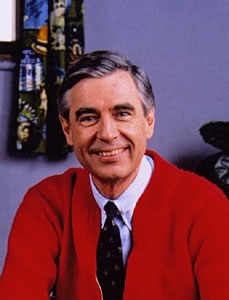
Fred Rogers of Mister Rogers' NeighborhoodFred Rogers of Mister Rogers’ Neighborhood fame told a story about his seminary days.

Rogers and a group of his friends took a road trip to hear a famous minister preach. To their brutal disappointment, the minister was on vacation that Sunday and a visiting speaker would preach.

The replacement droned on, and Rogers grew furious. It was one of the most boring, pointless messages he had ever heard, and he cursed his bad timing.

Then he looked at the woman seated next to him. She was crying her eyes out, hanging on the speaker’s every word.

The incident proved a profound lesson for the young Rogers, who understood that no matter how badly that speaker missed connecting with him, someone other than him needed to hear those words. It was a truth he never forgot, incorporating that experience into the philosophy of his classic TV show.

If you’ve been a reader of Cerulean Sanctum long enough, you’re familiar with my rant about spiritual gifts. To sum up: I think leaders in a local church must make it their priority to assist in helping congregants identify and use their spiritual gifts. Our failure to do this on an individual basis is one reason why our churches fail in their missions. God put those people in that church with those gifts for a reason. Not employing their gifts properly hurts everyone.

It’s the truth of the Body of Christ: different people, different gifts, and different purposes within the Body.

It’s not just differences in giftings and uses, either. As Mister Rogers noted, people will react individually to different messages and different types of learning.

My degree is in Christian Education from Wheaton College in Illinois. Later, the major was renamed Spiritual Formation. Now it’s called Christian Formation and Ministry. They ought to cut to the chase and call it Making Disciples.

Just as God gives each person a special role in the Body of Christ, so He also equips us differently and by different means. No one-size-fits-all approach to making disciples exists because we all form spiritually in unique ways. I know people who came to faith through reading St. Augustine’s Confessions. I can’t imagine a more dry path, but then, it’s not entirely about me. My own conversion was quickened in part from an intimate and personal message delivered to a small group followed by time alone. That may work for some but not for others.

My college learning on this topic focused more on how Jesus taught, but even He didn’t use one means. He drew his disciples through miracles, discussion, confrontation, paradox, and friendship. He taught them by stories, Scripture, His example, and through their own personal experiences. He knew each person and reached out to each with what best grew each. And he addressed the failings of each individually such as Peter’s reinstatement and Thomas’ need to see and feel.

I don’t believe most churches take the individual into account. Spiritual growth is seen as a blanket endeavor, with blanket approaches, and blanket goals.

The problem here is that in going for blanket growth, we miss one of the most important aspects of that growth: connecting with each other one-to-one.

It takes time alone with another to find out how he or she ticks. Knowing how best to grow someone means observing that person and adjusting how we work with that individual. Parents do this naturally with their children, yet we forget personal distinctions when we approach making disciples of people outside our own households.

God asks that we individualize the way we make disciples, because in doing so, we build a connection to another life. We are forced to slow down, to observe, and to show genuine care for that one person made not only in the image of God but also made in His uniqueness and depth. It is one reason why Jesus had to go away and send the Spirit, because one person cannot reach everyone at the level needed for maturing growth.

A church with a one-size-fits-all approach to making disciples is likely also a church that doesn’t have time to get to know people. The result? A church with a stunted community. Likewise, if the interpersonal relationships within a church are shallow, the making of disciples will be also.

The individual, with all his or her quirks and distinctions, matters to God. An education and discipleship program that does not take the unique gifts, talents, and needs of each person into account cannot be effective. Such a customized approach is time-consuming and costly, but it’s God’s intention. Our balking at the cost is our failure to see with God’s eyes.

In short, the only way to counteract the anemic nature of Christianity in the West is to prioritize the needs of the one to nurture a many that can truly reach all of the world for Jesus.

Why the Christian Must Model Slow

Standard

I used to live in a little cabin in the woods. Just me. I would walk there after quitting time, cook my meal for one, hand clean and dry my dishes, and settle in for the evening.

That simple housework amid solitude proved to be some of the holiest times I’ve experienced in my life. To this day, I can think of few mountaintop experiences with God that matched the simple joy of making food and cleaning up afterward in His presence. It was slow work, never hurried. While it asked for concentration on the task, I never felt overwhlemed. I did, however, feel holiness in the moment.

Something in those basic, careful actions in a quiet cabin in the woods centered me on God. He was there. Always. I could feel Him connecting with me in my doing.

I don’t believe most people today ever experience that kind of focused yet unhurried connection with God in their work. It’s one reason why so many people see their jobs as soul-inhibiting. Paycheck, yes. Personal meaning, no.

Much has been written concerning the recent New York Times piece on the frenetic atmosphere at Amazon. Frankly, I think many people will wonder at the singling out of Amazon, given how blender-like corporate life has become for everyone.

People in a blenderWhat’s the most commonly used phrase in job postings today? I’ll cast my lot for fast-paced environment. It’s ubiquitous, a badge of corporate honor. Businesses stopped pushing the blender’s Stir button and progressed with boasting to Liquify.

What’s being “liquified” is people.

Let’s get real here: Fast-paced environment most likely expresses itself as a needlessly disorganized workplace that is understaffed and poorly managed at all levels due to horrendous forecasting and unrealistic expectations. Companies use that phrase with pride when they should instead be soberly calling it failure and correcting it.

Yes, I went there.

I’m not alone, though, as the NYT Amazon article and this one, “Work Hard, Live Well,” show us. Our harried work lives are getting noticed as a negative. Finally.

Beyond our jobs, the general pace of life is killing us as well. Too much incoming data to process. Too many commitments. Too much striving to stay on top. Too much structure to maintain. Too much need to control. Too much.

We can’t live in a perpetual state of being overwhelmed and still maintain our mental and physical health. It’s time to stop lying to ourselves about what we can and cannot do.

We were not created by God to be little flesh-bundles of process optimization. Being counts as much, or more, than doing.

The blur that is our daily existence leaves no room for God. This lie that we can cram an entire day’s spirituality into a 15-minute quiet time is just that: a lie. And it always has been, despite whatever some nationally recognized pastor, spiritual leader, Christian author, or life coach says.

Why? Because God is to be found in EVERY moment. In something as basic as cooking dinner for one. Or in handwashing the dishes.

Julie, a friend and essayist in the vein of Annie Dillard, rebooted her Lone Prairie site and elected to hand code the HTML and CSS. Most would say that’s the hard way.

But some would contend it’s the way God connects with us in our work. It’s slow. It may even be tedious. Yet I think that pulling back from the most optimized, GTD-approved way is how we can reconnect with the holiness of our professions. It’s how we can slow down enough to find not only ourselves but God.

If we Christians are not the people who stay off the dance floor when the world says mambo or who cannot laugh in the face of demanded mourning, who will?

Christians are supposed to be the most countercultural of all people, yet more often than not, we American Christians, through a grace-less misunderstanding of responsibility, instead lead the parade toward dis-ease.

Slowing down enough to find God in more than just the “holy moments” but in ALL of the day will cost us. It must.

If lost people are going to find God, we Christians must be the examples of how to connect with Him. If we’re racing around like headless chickens, we will have no time for perception and observation, either of the natural world which God created or of the spiritual one, where He is found. Neither will we have time to process the crucial connections between the two, where wisdom dwells. We will instead become blind guides. There won’t be any counterculture left, only concession to the deaf and dumb spirits of the age.

“I’ll rest when I’m dead” is no statement of integrity but of stupidity. Christian, find ways to slow down or risk losing everything that truly matters.

Once off the highway and on the backroads, we’ll find God on the curves, near that spot with the stunning vista. Take time to stand there and breathe. That’s where redemption abides.

Christians: The Despised of the World

Standard

“Blessed are you when people hate you and when they exclude you and revile you and spurn your name as evil, on account of the Son of Man!”
—Luke 6:22

A boot to the neckEvery day, news stories proliferate of Christian believers being killed, raped, tortured, and persecuted by the people of the world. While there are isolated incidents of the same occurring to people of other beliefs, Christians bear by far the brunt of this hate.

Christians in the United States are disliked primarily because we have strong opinions about cultural issues. But in most other countries, Christians are hated for Jesus’ sake, because they are light amid darkness. People love darkness and hate the light, because it exposes their wickedness. The light doesn’t have to do anything but be the light. By its very nature, it reveals darkness for what it is.

If anyone needs proof of the veracity of the Christian faith, the blood of the martyrs speaks volumes. One can’t look at the number of people who have died with the name of Jesus on their lips and blithely dismiss that faith as fanaticism or wishful thinking. Honest people can’t look at those numbers and wave them off. They have to ask the question: Why are Christians worldwide so despised for their faith?

Christians built the world’s hospitals, schools, and orphanages. Go to the worst places in the world and Christians are toiling there anonymously to make those places something othen than hellholes.

Christians gave the world much of its stunning art and architecture, music and literature. If it’s inspiring and noble, chances are, whatever it might be, it has the touch of the Christian message in it.

In most places around the globe, Christians go quietly about their business, ambassadors of Jesus in a world otherwise filled with sickness and strife.

Yet somehow, the reaction of the people of the world to the above is to hate Christians, often to the point of wishing them dead. And sometimes, the wishing turns real.

If you are not a Christian, ask yourself how it can be that one group of people can inspire such opposition. Don’t shrink away, but ask why. Ask yourself what it is about a couple in Pakistan that is so wrong that a mob would drag them out of their home and set them on fire. Or that Christians would be beheaded for no reason other than believing that Jesus is Lord.

God sent Himself through Jesus to die for our failures, hidden depravity, and rebellion against all that is good and right so that we would not have to die because of them. Instead, He offers us grace and a place in His Kingdom that never ends. We can’t earn that place. He gives it as a free gift when we place our faith in Jesus. Because of this, we can love God as Father, Son, and Holy Spirit, and love our neighbors as ourselves. Subsequently, no matter where we go, we are ambassadors for that Kingdom, reconciling people to God, who desires that all come to Him and find rest for their souls.

This message and its realization in the lives of Christians get us hated and killed the world over.

If you are not a Christian, ask yourself what sense that makes, that people would be burned alive or beheaded for such a message. Why does this trouble so many to the point of hatred and violence against Christians?

Does it makes sense to you? Think hard. Ask yourself the tough questions. Go there.

Because this hatred of Christians isn’t going to get better, only worse. If you are not a Christian, you’ll watch this happen. Maybe it will be enough to show you the truth of the Christian message amid the lies of the world.

My prayer is that it will.