
My favorite parable Jesus told gets no respect. As one of the shortest, it’s easy to overlook. Nor does it swim in allusions. Stark, it makes its point quickly like a jab to the solar plexus.
When I get asked about this fave parable by well-meaning Christians, I often get a blank stare. I’ve had more than one tell me, “That’s not in the Bible.”
I assure you it is:
“What do you think? A man had two sons. And he went to the first and said, ‘Son, go and work in the vineyard today.’ And he answered, ‘I will not,’ but afterward he changed his mind and went. And he went to the other son and said the same. And he answered, ‘I go, sir,’ but did not go. Which of the two did the will of his father?” They said, “The first.” Jesus said to them, “Truly, I say to you, the tax collectors and the prostitutes go into the kingdom of God before you….”
—Matthew 21:28-31
I don’t think any parable Jesus told messes with the head more than this one.
The brother with the right answer missed it, didn’t he? He was probably the good son. The one who had it all together. Called dad “Sir.” He is the one his mother doted on.
The other? Possibly the surly one. Today’s version would be up in his bedroom,  its windows painted black, listening to Godsmack while he surfed those sites on the Internet.
The good son talked a good game. Said all the right things.
The bad son told dad to kiss off: “I’m not into your corporate farm lifestyle.”
But the unlikely one did the will of the father and the other didn’t.
All the talk in the world, the smooth, glib words spoken politely and in accordance with all righteousness, led to zero output on the part of the supposedly good son. He tickled the father’s ears, but the results spoke for themselves.
Recently, a post from a couple months ago (“Priorities Amid Darkness“) got some new traffic because of a link from Milton Stanley’s Transforming Sermons. The general response was a tad negative.
In all deference to my friends out there who think it’s all about believing, the more I read the Bible, the more convinced I am that all the right words and thoughts aren’t going to cut it. The proof is in the doing.
Jesus framed the parable of the two brothers in context to show the stark contrast between the people who talked and the people who actually responded. The talkers with the holy thoughts, the good sons of the world, had convinced themselves of their standing, but they were, in fact, outside looking in. Goats, as Jesus called them in Matthew 25.
Who was in? The people who didn’t say the right things. The surly ones, perhaps. Harlots and hustlers. Time and again, their actions in the New Testament proved louder than any audible sermon.
I’ve said, “I go, sir,” more times than I care to admit. I say it constantly in church, but then I wander off afterwards and forget about the vineyard. I suspect I’m not alone.
Whoever has my commandments and keeps them, he it is who loves me. And he who loves me will be loved by my Father, and I will love him and manifest myself to him.” Judas (not Iscariot) said to him, “Lord, how is it that you will manifest yourself to us, and not to the world?” Jesus answered him, “If anyone loves me, he will keep my word, and my Father will love him, and we will come to him and make our home with him. Whoever does not love me does not keep my words. And the word that you hear is not mine but the Father’s who sent me.
—John 14:21-24
The one who does the will of the Father is the one who ultimately receives the blessing of the continuing revelation of Christ. Jesus doesn’t say one word about Bible reading or prayer here. Doing the will of the Father is all that matters. The confession of faith is in the doing. And the doing proves the faith.
As James 2:19 says, even the demons believe. What sets the true followers of God apart from His enemies is that the followers do what He says. In fact, they’ll do anything it takes to do what He says.
I know that James’ “right strawy epistle,” as Martin Luther called it, doesn’t sit well with some people. But we can’t ignore the fact that the doing matters. Doing may not justify you, but the lack of doing—at least as the Bible portrays it—proves a surefire way to know who is out.
It’s just as the John passage says. The doers receive the ongoing revelation of Christ. This is why that matters:
And this is eternal life, that they know you the only true God, and Jesus Christ whom you have sent.
—John 17:3
Eternal life comes through knowing God. Knowing comes through the revelation of Christ. And Jesus himself said in John 14 that the revelation comes through doing what He commands. We can setup night watches and pray for days on end. We can memorize the entire Bible. But if we don’t do what the Lord says, it all comes to nothing.
That is why this verse carries meaning:
But be doers of the word, and not hearers only, deceiving yourselves.
—James 1:22
The good son, the one who promised his father he would go, deceived himself into thinking he was doing right just by his saying yes to his father. Our churches are packed with good sons and daughters with obedient words that roll off the lips, yet the vineyard goes untended.
And I wonder about all those who don’t say or think as I do, yet are doing the work of the Kingdom even as I talk a good one that ultimately produces no fruit for the God I claim to love.
 Back a half a year ago or so, a small earthquake in southern Illinois radiated far enough east to successfully remove the overloaded “clothing management system” from the wall on my side of our master bedroom walk-in closet. As it took five months for me to locate the replacement wall connectors to reattach the system, and I have been too busy to deal with them once I bought them, the system remains unattached.
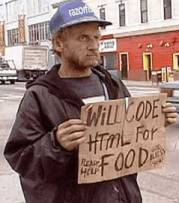 I’m thinking that nothing hurts worse than to go down in flames in your church while everyone around looks the other way or quotes you Romans 8:28 off the motivational plaque they bought from the local Christian bookstore. Why stick around listening to sermons on Christian leadership when you were desperate for a servant in your time of need and one never showed up.