George stood at the bus stop and muttered a prayer under his smoking breath that the bus would arrive before his feet froze solid. Even his wool socks were claiming they’d met their match.
“Lovely weather,” said a tall woman trying to warm her hands on a steaming coffee. “Counting the degrees on one hand makes it easy for everyone.”
A couple folks laughed, but not George. He hadn’t laughed much in the last three years.
“Where’s that damned bus?” an elderly man whispered to no one.
George figured the man for about 77. He thought that would be him in 17 years. He wondered if he would still be taking the bus to the clinic every day. He wondered how everything could go so wrong so fast, and in that moment, 17 more years felt a little more like jail.
Living in a city that was home to several Fortune 500 consumer packaged goods companies was a boon to a packaging engineer such as himself, but life is odd, and when his firm offered him early retirement due to increased competition from overseas, he and Jeannie thought their nest egg sufficient for a longer-than-expected retirement. They had some money, a pension, could even handle their daughter Lynn’s college payments, and the company hinted they might throw some consulting work George’s way now and then. Retirement at 57 seemed perfect.
Five months later, while he and Jeannie walked through the bright gold and red of their neighborhood’s autumn leaf fall, a blood vessel burst in her brain.
That was 2½ years, $2.7 million dollars in medical bills, and their retirement home ago. All gone. To keep his daughter on track for graduation, George sold his car and Jeannie’s. Then he got a bill from the college announcing a 15% tuition hike.
George called in some markers at his old workplace and they gave him a basement office and paid him for two days a week. Competition hadn’t eased, but George had been someone once, and the old guard did what they could, shaking their heads at the injustice of it all.
So George caught the 7:55 bus each day. On his two work days, he walked from his 8’x8′ office to the extended care clinic and held Jeannie’s hand. On good days, she’d fix her eyes on his and he could see the light still in them. No one could make out what she said, but George told everyone they were words of love. God help them both if they were something else.
George didn’t talk about the bad days. He’d read to his bride even when her eyes were cloudy glass and no Jeannie seemed present. He didn’t know what else to do. Read, hold a hand, and watch the bank account dwindle to nothing. Sometimes George hated himself for what he thought on the worst days.
Where’s that damned bus? he thought now. A glance at his wrist: 8:08.
Some anxious young turk in clothes three sizes too big spat one of those words that always grated on George’s ears. People didn’t talk like that when George was younger, and whenever he heard someone curse, something inside him died a little m0re. What is wrong with people today? What happened to propriety? George heard someone else spout the same ugly word: the tall woman, her coffee gone.
The sound of a diesel engine. Every head turned to peer down the street. Suddenly, life entered the small collection of people. The bus. Finally. Even from a tenth of a mile away, George could see the “sorry, folks” look on the driver’s face.
When the bus pulled up to the curb, George let others board first, though he and the elderly man exchanged proferred hands, each insisting the other go ahead. Wisdom prevailed, as the senior gave up the battle of politeness, boarded, and George walked into the anticipated warmth of the coach.
Except none greeted him.
He looked at the driver, perplexed.
“It’s why I’m late,” the driver said. “The cold took down two other buses completely. At least this one runs.”
George looked that the mass of people on board and wondered where all the body heat was. The bus stop felt warmer.
“No heater? I’ve got a half hour ride,” he said to the driver.
“You and most everyone else” was the reply.
A half hour of frozen misery.
George sat down next to the largest person he could find and hoped for the best. By the time his stop came, all theories about hoping and the warmth of people of immense size had been chucked out the moisture-frosted window.
Goodbye, frigid conveyance. Hello, old semi-workplace.
The lobby stairway proved a difficult walk when one cannot feel at least one of one’s feet. George wondered if this was what being a pirate with a wooden leg felt like. Arrr.
His office didn’t have a door, so on arriving in the basement, he immediately noted the envelope on his beaten, 1950’s-era desk. A lone envelope. An omen. He opened it, hands trembling.
Numbers flooded the page, and George inhaled sharply at the sight of them. What they said: Health care costs would now be subtracted from pension payouts. George looked at the number at the bottom of the side column. He flopped into the desk chair, which groaned along with him, and with his back to the doorway, cried.
“You okay, George?” came a voice from behind him.
“Jeannie had a bad night is all,” he said to the wall before him. His reliable, catch-all answer. Anyone would understand it.
“Sorry to hear that,” said the voice. “Hope things get better.” A reliable, catch-all answer. Everyone knew the dance steps. Everyone.
When no further words came and George felt his eyes grow dry, he walked out the door and wandered to a stack of recycling. Toward the bottom of the pile he saw a phone book and grabbed it. Back in his office, he dialed a number.
“Metro. How can I direct your call?” said a voice on the other end of the line.
“My bus didn’t have any heat this morning,” George said. “It’s five degrees outside. I’m 60 years old.”
The woman had a pleasant voice, and she said something pleasant and reassuring.
At the end of the day, George walked to the extended care clinic and found a dull, wrinkled face staring at nothing. He held the hand that belonged to the inert woman in the bed, read from The Psalms and something from a Max Lucado book. Jeannie had liked that author once. At 6:45, George called it a day and caught the—thankfully heated—7:05 back to the two bedroom apartment that was all that remained of once big dreams of retirement.
The 7:55 arrived on time the next morning—without a working heater.
George gritted his teeth.
At the office, he hit redial on his phone.
“Metro. How can I help you?”
“The 7:55 on Erie still doesn’t have any heat,” George said.
Reassurances. Promises. Pleasant talk.
“Can I speak to a supervisor?”
Reassurances. Promises. Pleasant talk.
Hang up.
Work. Extended care clinic. Home.
The cold morning ride racked up more days. George spent those days, in full, at the clinic. One day of light in the eyes, but nothing the rest.
The next week, the 7:55 still had no heat.
“What’s with you people?” George yelled into the phone at the woman with the pleasant voice. “I want to talk to a supervisor. Can’t you fix the damn heater? This is the 21st century. It’s a damn heater. Fix the damn thing, damn it!”
Reassurances. Promises. Pleasant talk.
Work. Extended care clinic. Home. A letter was in the mailbox. The next pension check—so much smaller. Again, the tears.
And the next morning, the 7:55 felt like a Siberian mausoleum on wheels.
“Look,” George said into the phone. “My heart doesn’t pump like it once did. I know the economy isn’t great, but c’mon. The heater. We’re all freezing on that bus.”
Reassurances. Promises. Pleasant talk.
More days of cold.
When the 7:55 was a couple minutes late the following week, George ran all the scenarios. He kept coming back to a fixed heater. Please, God. Please.
What he got that morning was a bigger surprise. Something was different about the 7:55. Sure enough, on the side it read: Bio-diesel-powered. And George’s heart leapt.
A smile on his face, he waved the elderly man on board and stepped inside.
To an all-too-familiar cold.
“Heater doesn’t work,” said the bus driver.
“What the hell?” George yelled. “Can’t anyone please fix the damned heater? Anyone?”

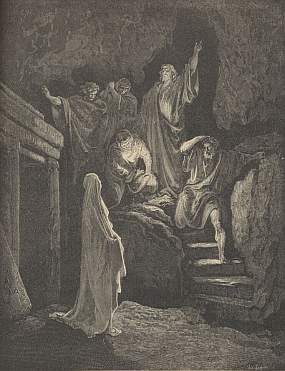 Why are Western Christians so fascinated by the miraculous? Because the Bible is filled to the brim with miracles and yet we experience so few genuine ones today in the West. I keep seeing that the most neglected aspect of our church life is the freedom to stand up before the congregation on Sunday and say, “This is how God made a miracle happen in answer to my prayers and yours.” (And conversely, “This is how I asked for a miracle and have not yet seen it come to pass,” a bold confession that scares the living daylights out of a lot of Christians—oddly enough, mostly church leaders—who find a lack of miracles disturbing to their faith.)