

The Old, Gray Church, She Ain’t What She Used to Be

Standard

When your church grows elderly...A month or so ago, I remarked to our worship leader that I realized that, at nearly 49 years of age, I’m now the eldest worship team member. He replied that I was certainly reflective of the rest of the congregation.

As the drummer, I have a nice vantage point from center stage. That morning, it hit me that he was right. The amount of gray hair now visible among those heads out in the pews was never before so obvious.

The week afterward, I mentioned this to a friend in his early 40s. He concurred: The average age of folks in our church was creeping upward.

Our church is planning to add two elders, with neither candidate under 50. The existing elders asked for commentary. Alarmed by this sudden realization of advancing years in our congregation, I wrote that I thought perhaps we should investigate having younger elders, if for no other reason than the “elder” elders could shepherd a few younger men as part of a torch pass. Having a younger face on leadership would certainly prove us to be at least semi-open to the input of the nonarthritic.

Over the years, I’ve been a part of several churches, each coming from a different denominational slant. My current church of the past seven years traces its lineage back to the Azusa Street revival of the early 20th century. One thing I have noticed about churches with Azusa Street ancestry is that the young people who grow up in those churches bolt the second they graduate from high school. Gone. Vamoose. A few of them marry, settle down, and then get nostalgic after their children are born and return to the fold. But for the most part, they take off and are never heard from again.

We live in a mobile society. College forces young people out of the “suffocations” of their youth and into the world. We know all the reasons why people leave a church.

But the questions of a church going increasingly gray loom large.

When I was in college back in the early 1980s, I remember trying to find a church home while at school. Every church I walked into was packed—with old people. And by old, I mean retired. I remember visiting one Lutheran church where the youngest person, other than me, was the pastor. And he had to be 60.

I’ll let you guess whether I settled at that church or not.

In my younger years, I used to think I had all the answers when it came to “fixing” churches, yet reversing an aging trend is pretty darned difficult, and I’m no longer convinced the usual “tricks” work.

So I open this one to you, readers. Other than Grecian Formula and Miss Clairol, what’s the secret to increasing the number of gray-free heads in a church that seems more and more like its filled with candidates for Geritol?

Like a Bullet

Standard

trajectoryI was praying the other day while I was alone in the car, driving on one of the endless, self-serving errands that afflict me as a contemporary American, when the word trajectory started ringing in my head.

Each of us is like a bullet shot from a gun, hurtling toward destiny, impact certain. Our lives are the brief interval between leaving the barrel and colliding with the target.

Unfortunately, that target is known for all of us: eternal death and separation from God.

Knowing Jesus Christ is supposed to change that trajectory. The target becomes an entirely different one, with the arc of aim wildly out of line with the original bullseye. The Gospel pulls on us to create a physically impossible shot that bends us toward the real intentions of life and keeps us from hitting the wrong target. No bullet is smart enough to pull this off on its own. Only a radical, external intervention can make it happen.

Which is why it is so distressing that for so many of us the path of our flight seems unaltered by our encounter with the Lord. Perhaps we are deflected a fraction of degree by our church attendance, small group Bible studies, quiet times, general niceties, and groupthink chatter that passes for righteous ire concerning “those” people, whoever they may be. The outcome remains the same though:  We collide with the wrong target.

Isn’t an encounter with Jesus supposed to radically alter lives? Why then is it that we hurtle on as if nothing happened?

The frustrated lament of the disciples was that they had left everything to follow Jesus and yet they still seemed to be aimed at the wrong target. If this is their lament, how can we who say that we are in Him not identify with it? Of course the Lord reassures them that their reward is great because of what they have given up, because their trajectory is different for knowing Him. And so they were comforted.

Can we enjoy the same sense of comfort at Jesus’ words when we have given up so little? When our trajectories differ imperceptibly from those of the people around us who are headed for the wrong target? Shouldn’t we instead be concerned that our lack of leaving everything is apparent in our unchanged trajectory?

Cyrene Surpasses Berean

Standard

If you’ve noticed the lack of posts here recently, kudos for being a consistent reader! I must admit to some burnout. It’s not that I don’t have many topics I’d like to write about, it’s just that the Internet is such a poor place from which to minister to others that I’m having something of a crisis of conscience adding my voice to the cacophony and lack of action.

One of the things that has set me off lately concerns several posts and comments I’ve read from folks under the age of 40. I have no axe to grind against younger Christians, but when such folks start talking about how someone else isn’t carrying his or her cross correctly, I get furious.

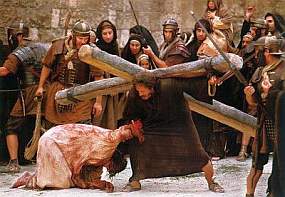
The problem of judging someone else’s ability to carry the cross is a huge one on the Internet. Simon the Cyrene bearing the cross for JesusThe amount of presumption on the part of these judges is staggering, particularly when that judger has lived a golden, carefree life in which “my cross” consists of mistakenly receiving a mocha latte instead of the ordered cappuccino from the barrista at Starbucks (or whichever coffee dispensary is trendiest among the self-righteous).

The wisdom to discern anything about another person’s life can only be gained through time and the Holy Spirit. Bury a parent or two. Have a child wind upon the wrong side of the law. Suffer a divorce. Care for a chronically ill or terminally sick family member. Adopt a special needs child. Suffer repeated job losses.

There’s a reason why the eldest were the first to drop their stones in John’s chapter 8 telling of the woman caught in the midst of adultery. The eldest were the first to understand what Jesus was saying. Age buys people rights, but that’s largely because they’ve experienced enough vicissitudes of life to know that sometimes they need to withdraw their dog from the hunt.

A prime example of how the young often get it wrong is the pile-on concerning stupid things Pat Robertson said to a man wondering if his pursuit of personal happiness trumped taking care of his wife, who had Alzheimer’s. Was it okay to divorce her and marry someone else?

No, it’s not okay. And the youngsters quoted Scriptures and got riled up and foamed at the mouth and all the other things they tend to do to make sure EVERYONE knew it was not okay. To let everyone know how right and just and perfect they were by letting their righteousness shine before all on the Internet.

But the funny thing about holding onto the rock when the elders have already dropped theirs is that the rock cries out against the holder. And it does so because the holder lacks the wisdom of empathy and basic compassion. To the fool, the path is always clear and obvious. Needless to say, the fool often winds up on the wide path that leads to destruction.

The ugliness that is self-righteousness starts from frame of reference. In the case of judgmental people, they rarely wander outside themselves to ask what it is like to be the person on trial. They don’t have enough rotten experiences in life to have any kind of empathy. They lack that perspective of Jesus, who saw lost people as more than just another face in the “bound for hell” crowd. He saw people as being more than their disease. More than anything else, He saw how He could be there for others.

The great unanswered question in the Robertson fiasco was not about the rightness or wrongness of the reply to the man asking the question about his wife, but why that man asked it in the first place. People who lack widsom and empathy never ask those kinds of deeper questions when confronted with a problem situation. They instead rush to the obvious question with the most broad, simplistic answer. The problem with that mentality is that life is found in the narrow, more difficult way.

While self-righteousness and judgmentalism rush to the approved mob answer, empathy and wisdom draw people to ask how difficult it must be for others to carry the cross.

Anyone who has spent a couple decades watching a spouse slowly lose his/her mind endures a cross unimaginable by most. Not everyone can afford the kind of professional, third-party care that allows the remaining spouse to put some distance between the horror of that cross and the rest of life. We know the simplistic answers, but it’s the daily living in the shadow of that cross that should have us clapping a hand over our mouths before we presume to speak and to reveal our ignorance.

No one wanted to help Jesus carry His cross. Someone had to be compelled to do it.

We can talk all we want about right and wrong. We can point fingers at weasels, liars, and cheats. We can let the world know just how right the Law might be. But for most of us, we are far, far away from anyone bearing a difficult cross.

All the Scripture study in the world cannot trump helping another bear the cross. I don’t care how right you are or how well you divide the Scriptures. It all comes to naught if you are too preoccupied to shoulder for a time someone else’s crushing cross.

Young people, here’s my word for you: One day it will be you. No one gets out unscathed. Be careful what you speak to others bearing up under the weight of the cross. Because you might very well have a massive one dropped on you, and when you cry out for help, you better pray that some kind soul shows you more compassion and aid than what you offered to others.