Unshackling the American Church: The Tyranny of Modernism

Standard

The eyes are not here
There are no eyes here
In this valley of dying stars
In this hollow valley
This broken jaw of our lost kingdoms

In this last of meeting places
We grope together
And avoid speech
Gathered on this beach of the tumid river

Sightless, unless
The eyes reappear
As the perpetual star
Multifoliate rose Of death’s twilight kingdom
The hope only
Of empty men.
—Excerpted from T.S. Eliot’s “The Hollow Men”

They built seven houses on the former gas station lot. Yes, a violation of the physical laws of the universe, but I saw the houses with my own eyes.

Less than six months after my wife and I pledged our troth, I took a job with Apple Computer in the heart of Silicon Valley. Having lived my entire life in the Midwest, I expected some disorientation, but nothing prepared me for the future shock I experienced.

We settled in a two bedroom apartment in Sunnyvale—a name epitomizing idyll—nestled between AMD, Sun Microsystems, Yahoo!, and Lockheed Martin. As the local rubes, we wore our homespun naïveté on our sleeves, attempting to live as we had in the heart of the heartland. Our first agenda was to get to know our neighbors. Isn’t that how they do it back in Mayberry? Our complex was a chutney of Indian, Hong Kong, and German immigrants, all drawn to the computer capital of the world. We saw them through their windows, watched them walk into their apartments, but every knock on the door was met with a vast unanswered nothingness. We spent three-and-a-half years attempting to meet our neighbors. In the end, we met no one.

How to describe the eerie feeling when you knock on someone’s door, can hear people talking inside, but no one answers. Worse yet was to descend the staircase in the morning only to see the people below us attempting to leave, but instead scamper back inside like so many timid mice when the cat’s around.

Our Hong Kong ex-pat neighbors stayed invisible. The Indians would be out and about talking in English, only to change to Bengali when they noticed us coming. Conversations consisted of them looking confused when we said, “Hi, we’re the Edelens…,” before they distanced themselves from our outstretched hands. MannequinThe Germans, who inhabited the farthest buildings in our complex, would gather at the pool in their micro-bikinis and thongs and play a sort of game called “Let’s See How Long We Can Ignore the Two Americans Crashing Our Party Before They Go Back Where They Came From.” Never in my life had I introduced myself only to have someone laugh and turn back to his friends as if I were a kind of comedic, talking vapor.

Hundreds of people lived in that complex; surely someone would warm to us.

Only later did we learn from one of my immigrant co-workers that American television and movies piped into Hong Kong and India had effectively taught everyone in those countries that every last American carried a Smith & Wesson with a caliber big enough to down a 747. Open the door and you risked having Dirty Harry and his wife, Foxy Brown, put a slug in your head just for the fun of it.

We had a good church, but we noticed little spots of social leprosy there, too. When our official small group meeting was over, you would have thought someone had finished our prayer time by yelling, “Grenade!”—the room cleared that fast.

The excuse was always the same:

Me: “You’re going to work at 9:00 PM?”

Not Me: “Yeah, gotta fix some code for the video drivers.”

Me: “Wanna grab a coffee with us before you head in?”

Not Me: “Sounds great, but no time. Maybe next week.”

Next week rolls around. Lather, rinse, repeat. Evidently, not much got done; the video drivers, product manual, or marketing plan never received their promised healing. Nor did we ever share a coffee. Not once.

Our first church attempt had been far less successful. We were new to the area, but the church’s small groups were all closed. Weren’t accepting new people. One older couple did invite us over to their house, which oddly enough reminded me of something out of “Ozzie and Harriet,” and we enjoyed one of the three homecooked meals we had in our three-and-half years in the Valley. But the small groups were closed and most people rushed home after the Sunday service. Work? Seemed to always be the reason. No reason for the closed groups, though—at least that we could tell.

We had some friends who lived on the other side of San Jose whose new house had about ten feet of yard all the way around it. They wanted to paint the outside of their house a certain color, but the housing association that owned the land only approved five colors and their choice wasn’t one of the five. Nor did they have any say about their landscaping. Kiss the planned cherry tree goodbye! In fact, our friends didn’t technically own the outside of their home—just the inside. There wasn’t much to the outside anyway. You could pass the Grey Poupon through one kitchen window to the next. To step outside their patio door was to promptly step into their pool. The patio itself was more a concept than an actuality.

But the neighborhood was even more perplexing than the limitations, as houses that had been sold the week before never saw new occupants. In those mad, housing run-up days, the buyers flip-sold the house and pocketed upwards of $50,000 by doing so. The result was a neighborhood dotted with homes perpetually for sale, yet not even a year old—possibly forever empty.

All this time, the disquiet in my soul grew.

In the Valley, the measure of a man was his job, his affluence, his earning potential. I’d seen glimpses of this back in Ohio, but like a city-sized thumb it pressed down on you here with a new kind of ferocity. And affluence wasn’t just the measure of men. The teenager drove a Porsche Boxter. Private schools, each more tony than the next, sprouted in the hills, sponsored by aging rockers with kids (or grandkids), who had to ensure the little darlin’ got into Stanford with a full ride. This led to the quandary of choosing between battling school fundraisers, this one featuring Neil Young and that one headlining Joan Baez. (Tip: Go for Neil.) Because we all know that unless Junior gets into that accelerated pre-school, he’ll never take home the sheepskin from that Ivy of the West, dooming him to a future managing an ice cream shop with only twenty flavors.

Don’t ask any of those measured men to give, though. A study came out while we were there noting that residents of the Valley gave only 2% of their income to charity. A man would never consider dropping a measly 2% of his income into his 401k, but 2% was good enough for the least of these. Maybe the parents of those least people should have worked harder to finagle them into a name private school.

It was in our last weeks in California that they built the seven houses on the former gas station lot near the corner where we lived. Somehow they put a driveway down the middle of that, too. Einstein would have had all his wackiest theories proven by the way the architects had folded space to make room for seven houses. Seven houses that were nearly touching, but for all that closeness might just as well been on different planets. As we had learned, proximity did not mean neighborliness. A lot of other things were missing, too. The blur of life left everyone panting for something to make life worth living. But in the Valley, what was truly sacramental eluded many.

We slave away at jobs that have little meaning so we can buy things that provide no lasting meaning at all.

We willingly severed our connection to the soil from which God first fashioned our original ancestor because soil is dirty and doesn’t look good on our Steve Maddens.

We lost God in the blur of a million spurious activities that hold no eternal value.

We do not pray because our televisions and computers bury us under the problems of the entire world, so we don’t know where to begin. We don’t have the time anyway.

We love the material and tolerate people rather than the other way around.

Our savior died on a rough-hewn cross and rose again, yet many of us who claim His name find our iPods to be more real and the music gracing them more comforting.

We talk about community, but we cannot name our neighbors’ children, nor have they ever stepped foot in our home.

Time with the family is rated by quality, not quantity.

And the very things of God that He created for our benefit are forgotten amid the hustle—and cheapness—of modern life.

It’s disheartening. But it doesn’t have to be this way. We don’t have to lie down and accept this as the only way to live. Yet so many Christians, the ones who hold the breath of God in their spirits, are all too willing to join the world’s parade when confronted with the discordant times we live in. Need I remind us, the Church was not founded on “If you can’t beat ’em, join ’em!”

What’s needed are people who understand that the simple ways we abandoned in our rush to modernity have meaning because God Himself gave them meaning. Lose them and we lose part of the eternity He placed in our hearts.

To cow to the times and say that nothing can be done because we live in a fallen world is to fundamentally deny that He that is in us is greater than he that is in the world. This is not blind utopianism, but a call to live lives wholly consecrated to manifesting God’s will for us in a world tainted by sin. It’s a call to rediscover what is pleasing to the Lord in each small moment of the day, whether we be baking bread or sharing our childhood stories with the next generation. It’s dedicating every thought, every action to the Lord in a way that finds His sanctification working out through us in the tiny slices of this present day. It is the heart of worship.

In the days ahead, I’ll be exploring how we Christians can challenge the assumptions of Modernism and find what is truly of God in a discordant age too preoccupied with the earthquake and storm to hear God in the whisper.

Thanks for reading.

***

So much of what we do as a Church in this country is devoid of meaning. We’ve allowed the Enemy to strip out so many simple and sacred aspects of life that we didn’t notice they’d gone missing one by one until it was too late.

Other posts in the “Unshackling the American Church” series:

The Passion FOR the Christ–Yet Another Worship Wars Post

Standard

Despite the penetration of the Internet into countless households, most computer-related activities on the ‘Net are dominated by a particular personality type. We know these folks as the Mr. Spocks of the world, their early incarnations being those computer mavens glued to their monitors while playing Rogue into the wee hours of the morning. You know Rogue, the ASCII dungeon game (developed by Christians, BTW), wherein a little “@”-sign adventurer would explore an ever-changing dungeon looking for magic potions while fighting all manner of hideous beast? Fast-forward a couple decades and Rogue lives on in every first-person shooter that ever plunged through a bank of VRAM.

But I digress…

If Marla Swoffer were still blogging, she’d have these folks tagged by their Myers-Briggs type indicator: NT, or Intuitive Thinker. I gave up on the Myers-Briggs a long time ago, but the fact remains that Intuitive Thinkers dominate nearly every grotto carved out by the Silicon Glacier that has blanketed the world since the Homebrew Computer Club fired up their first Altair in the early Seventies. Toss a pack of Myers-Briggs tests into that group and you’d think all the respondents were the same person.

But I digress again…

Whether you adore the Myers-Briggs or think it’s a bunch of New Age Jungian hooey, there’s no ignoring the kind of person described by the NT personality: rational and logical—definitely not a sufferer of fools or “bleeding hearts.” The patron saint of this particular kind of person is the low-key cop of Dragnet, Det. Joe Friday. His trademark phrase: “Just the facts, ma’am.”

NTs still dominate the computer world. They’re the quintessential early adopters. If there’s a tech bleeding edge, they’re perched on it. Not only were they the first bloggers, they developed all the software for the non-NTs to start their own blogs. NTs have a limited set of passions because passion isn’t all that logical. However, if George Lucas were to film a few more Star Wars flicks, the NTs would be first in line with their homemade Darth Vader outfits sporting custom MP3-rigged labored-breathing effects. Or else they’d be out trying to create the world envisioned in the Matrix movies for no other reason than perhaps the Machines were right.

Christians who are adept at the Internet are also largely NTs. Scratch a Christian NT and they’ll bleed systematic theologies, a term for each minutia of doctrine, and enough intellectual apologetics firepower to sink every representative depicted in (Walter) Martin’s Book of Cults.

Because of the combo of Internet and Christianity, Godbloggers of the Intuitive Thinking persuasion dominate the Godblogosphere. Totally. For those few Godbloggers who aren’t NTs, wading into the collective Godblogosphere under NT terms is a little like gathering a few likeminded buddies and knocking on Dan Rooney’s door, wondering if his team is up for a game.

Better have REALLY good dental insurance.

I say all this because the worship wars are heating up again. Chuck Colson (could a former-Nixon-hatchet-man be anything else but an NT?) pitched a hissy over the weepy-eyed Jesus music he encountered recently. By “weepy-eyed Jesus music” I mean, of course, modern praise and worship choruses. Dr. Sam Storms (non-NTs do get PhD’s, believe it or not) leapt into the fray to defend the worship song in question, “Draw Me Close to You,” whose words follow:

Draw me close to you, never let me go.
I lay it all down again, to hear you say that I’m your friend.
You are my desire, no one else will do.
No one else can take your place, to feel the warmth of your embrace.
Help me find the way, bring me back to you.
You’re all I want. You’re all I’ve ever needed.
You’re all I want. Help me know you are near.

Not NT hymnody. There’s a hint of possible hugging and nearness. Too touchy-feely. No smiting at all. For NTs, it’s a bit like that Hymn That Dare Not Speak Its Name, Fanny Crosby’s “In the Garden.” The NT response on Fanny’s classic: “We acknowledge that certain hymns of determinate age are indeed superior to all other forms of sentient music, particularly when they reflect a Supralapsarian viewpoint, but by our considerable whiskers, that hymn has the line ‘He speaks and the sound of His voice is so sweet the birds hush their singing.’ You can’t rationally expect church elders to sing a line like that, now can you?”

And thus we get to yet another facet of the worship wars.

Despite Sam Storms’s attempt to punch through the psychological Maginot Line erected by NT folks who go searching for a hari kari knife the second someone fires up a song like “Draw Me Close to You,” he failed. That should come as no surprise though, because few of us ever stop to think that our opponents might have a good point once in a while. Too often, those of us who say, “Once saved, always saved,” are the same folks who add, “And once wrong, always wrong.”

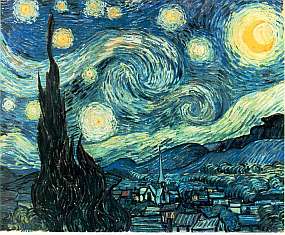
Van Gogh—Starry NightLet’s draw a parallel in another medium. You find the exact dispute in the art world. Before the worship wars came the Realist vs. Impressionist wars. Neither side in that fray found the common ground that still said “art.” The Realists might have looked at Van Gogh’s “Starry Night” and said, “Well, the night sky depicted in this deranged work bears no resemblance to what we see with our eyes. The artist is taking brutal liberties.” On the other hand, the Impressionists might have considered Millet’s Millet—The Sheep Meadow, Moonlight“The Sheep Meadow, Moonlight” and said, “It’s lacking the passion of the artist to see with the mystical eyes of the soul.”


When we start this debate in the Christian music world, it’s the same tired dichotomy.

Nothing is more difficult than trying to get disparate people to understand the merits of differing viewpoints, especially in the Church. Take your staunchest NT-like Christian and sit him down next to a bawling single mother of six in your average Pentecostal church and the disconnect will be so brutal both parties might explode. Yet in the same way that “Come Ye, Sinners” stirs the heart of Mr. NT, that bawling mom is experiencing the same feeling (oops, bad word) when singing “Draw Me Close to You.”

I hate to say this to the NTs out there, but we can’t put a tricorder on a Christian connecting with the Lord and derive any kind of meaningful data out of the experience. There’s no yardstick capable of measuring passion! And God is not only passionate about His chosen, but a few of His chosen return that same passion.

Sure, we can distill a commentary on the Song of Solomon and we can systematize its theology, but if we miss the passion in it, the unrestrained feelings expressed in that most holy book, then we’ve missed most of the point:

Let him kiss me with the kisses of his mouth! For your love is better than wine; your anointing oils are fragrant; your name is oil poured out; therefore virgins love you. Draw me after you; let us run. The king has brought me into his chambers. We will exult and rejoice in you; we will extol your love more than wine; rightly do they love you.
—Song of Solomon 1:2-4 ESV

Bears a striking resemblance to “Draw Me Close to You,” doesn’t it? And if you try to analyze that passage under a theological microscope, you’ll miss not only the entire context, but the very passion of the Author.

Let’s remember: One of the many wonders of Christianity is that it embraces both mind and heart.

  • “Set your minds on things above…”—the mind! The rational part of our being that God fashioned to grasp wisdom and knowledge. That same mind God Himself designed!
  • “I have laid up your Word in my heart…”—the heart! The blood and guts passionately human essence of who God shaped us to be. That same heart God Himself designed!

To those who are siding with Colson—and they are legion—I say this: Our love for Christ can’t exist only in our minds. Nor can it be analyzed for logical consistency. “You’re all I want. You’re all I’ve ever needed.” Sometimes there is no greater truth found than what burns in the passionate heart of the child of God. Even the wisest wise man with the strongest mind every forged knows that passion is too wonderful to understand.

These worship wars are complete nonsense, folks. Unless a song is utterly heretical, we need to stop persecuting works we can’t understand because we’re only perceiving their usefulness with either our mind or our heart (but never both). Doesn’t matter if we’re castigating today’s worship song or yesteryear’s hymn. We’ve got to stop.

Call the truce
. But before we do, let’s all consider the merits of the other side first.

And in this week of Christ’s Passion, may our passion for Him encompass both our hearts and our minds.

Hyperbolic Missionary Tales and the Exalted American Christian

Standard

Normally, I don’t sweat the titles of posts much. However, I thought about this one a lot. Why? Because it says something about where many Christians in this country are today.

But what do I mean by that snarky title? Let me explain by telling five missionary stories.

Story 1:

    A team of young American men are ministering in SW Asia. Evangelizing door to door down a street, they are cautioned by residents to avoid what looks like an empty brownstone. Fearless, they enter the building and note that no one seems to live inside. As they climb the steps, they note Bible verses scribbled on the wall, but certain words in them are wrong. Only when they reach the top apartment do they find the building’s sole occupant: a bent old lady. The woman invites them in, and they begin to share the Gospel. Immediately, one of the missionaries has trouble breathing. Another feels hands around his throat, but there is no one behind him. Another feels something hit him forcefully. The room’s temperature drops. Unable to breath, the one young man falls to the floor and suffers respiratory collapse. The men gather up their fallen friend and beat it out of that apartment. Some have to be hospitalized. Later, they regroup after realizing they’d had an encounter with the demonic, bringing in some older men who have encountered this type of dark power before.

Story 2:

    Another team of missionaries in Asia have been working in a village for some time, but have had no success in converting the villagers. One day, a man comes down from one of the nearby mountains, walks into the village, starts preaching and healing the sick, and the entire village is converted. The man goes back to the mountain, leaving the missionaries to tend the new flock.

Story 3:

    A teen is part of a 10-day mission trip to Russia, but is bedridden after picking up the flu. She spends her entire trip unable to leave the hotel. On her last day there, while everyone else is getting ready to pack, she ventures out for what will be the only time she’s been outside the whole trip. Brokenhearted, she sits on the curb and asks God why this happened. A woman comes by and the Lord tells the teen to go talk with her. She walks over to the women, and despite not knowing any Russian at all, opens her mouth to speak , only to find she is speaking to the woman in a language she doesn’t know. The woman begins to cry, says something to the teen, and gives her a handshake.Back in the United States, it’s a couple months before the youth minister at the church receives a letter (and a translation written by another person) from a woman in Russia who says she had met a teen from the church. That teen had approached her on the street and—in fluent Russian—told her the story of Jesus and what He had done for the woman. The woman had gone home, prayed to accept Christ, and had started to tell everyone she knew about Jesus—all thanks to the fluent Russian-speaking girl from the church.

Story 4:

    A missionary team is preaching to a large crowd in Africa when a wailing family brings in a woman who has obviously been dead for a few days. The family says that if what the missionaries are preaching is true, like Lazarus, this woman could be raised to life. The team is taken aback, but all eyes are on them, so they begin to pray. Soon, the presence of God is heavy on them and they see the dead woman’s eyes flutter, then open. Minutes later, the woman is on her feet praising God.

Story 5:

    A missionary plants a church in a burned-out Eastern European town. One day, a man with AIDS comes in and requests prayer. The church leaders pray and the man is healed. This starts a revival in that town, especially among AIDS sufferers, who are healed of the disease by the laying on of hands.

We’ve all heard missionary stories, right? But do we believe them?

Now I ask you, can you spot the true story among the false ones?

Over my nearly thirty years as a believer, I’ve heard my fair share of firsthand missionary stories. I never fail to be enthralled by these tales, and have long wanted to do missions work myself. Just this last Saturday, Missionary to HawaiiI had folks from my church praying that one day I’d have the opportunity to serve as a missionary in some capacity.

Besides the accounts I’ve heard in person are the amazing adventures of missionaries that I’ve read in books. It’s hard not to be caught up in the glory of God’s working in amazing ways in countries whose culture is not far removed from the kind we see in the Book of Acts.

So have you separated the real stories from the false ones yet? Tell you what, I’ll save you some time by telling you that they’re all true. Not only did I hear them firsthand, but I personally knew most of the missionaries involved. Amazingly, one of the stories (#2) I’ve heard from more than one source, happening 0n two different occasions in two different places. And story #4 had video corroboration!

The problem with these stories is that too few Christians are ready to believe they’re true.

I don’t know when American Christians (and Western Christianity, for that matter) got so smug, but we’ve somehow convinced ourselves that we’re the final measure of ALL THINGS CHRISTIAN. We live our comfortable lives in the U.S. free from the burden of believing that anything supernatural occurs anymore, so when we hear these kinds of tales from missionaries—tales that are quite commonplace, actually—we chalk it up to some kind of hysteria. We find ways to explain those stories away. The woman in story #4 wasn’t really dead, even if the missionaries claim rot had set in. The teen in story #3 actually said something to the Russian woman in English and just forgot about it later on. People just don’t come out of nowhere and heal people. A revival featuring converted AIDS sufferers who are freed of the disease? No way.

All I can figure is that those kinds of stories scare the average American Christian. We don’t want to think the demonic is real or that healings and evangelism go together. We don’t see that kind of stuff at home, so why should we believe it goes on in backwater nations? We want to live our Christian life out of our head knowledge about the Faith. We don’t want to confront the truth of these wild stories spun by people laboring in Third World countries because if we do, that truth asks something of us, challenging our careful, comfortable existences. Too many Christians in the West want to make liars out of missionaries rather than accept their tales as true and be forced to deal with the ramifications.

This is not a post about charismata or the continuationist/cessationist battle, but a wake-up call to Westernized Christians that we are not the be all and end all of Christianity. In fact, I would argue that we Christians in America are woefully behind the leading edge of what God is doing around the globe. In fact, the Lord may even have passed us by and gone on to those places in the world that aren’t so cocksure of being the top of the spiritual foodchain.

When missionaries tell us the kinds of stories I shared above, do we really believe them, or do we make them out to be liars by brushing off their encounters with the miraculous power of Jesus Christ?

When did we Christians in America become the sole measure of true faith?