
Regulation, Ritual, and Remembrance

Standard

This last week, I celebrated Saint Nicholas day at the home of Eric and Jennifer. We go back almost twenty years and have shared in each other's faith journeys.

The gathering featured good cookies, plenty of candles, and a hearty dose of Christmas carol singing. Eric and Jennifer instituted the Saint Nicholas remembrance as a way of keeping old traditions and rituals intact. In my own childhood, we put up our Christmas stockings on December 5, and Saint Nick filled them during the wee hours of the following morning. My mom sought to keep that tradition alive.

The Bible says this: 

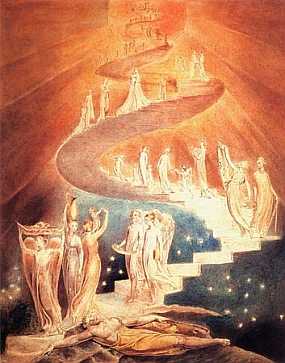
Jacob left Beersheba and went toward Haran. And he came to a certain place and stayed there that night, because the sun had set. Taking one of the stones of the place, he put it under his head and lay down in that place to sleep. And he dreamed, and behold, there was a ladder set up on the earth, and the top of it reached to heaven. And behold, the angels of God were ascending and descending on it! And behold, the LORD stood above it and said, "I am the LORD, the God of Abraham your father and the God of Isaac. The land on which you lie I will give to you and to your offspring. Your offspring shall be like the dust of the earth, and you shall spread abroad to the west and to the east and to the north and to the south, and in you and your offspring shall all the families of the earth be blessed. Behold, I am with you and will keep you wherever you go, and will bring you back to this land. For I will not leave you until I have done what I have promised you." Then Jacob awoke from his sleep and said, "Surely the LORD is in this place, and I did not know it." And he was afraid and said, "How awesome is this place! This is none other than the house of God, and this is the gate of heaven." So early in the morning Jacob took the stone that he had put under his head and set it up for a pillar and poured oil on the top of it. He called the name of that place Bethel, but the name of the city was Luz at the first. Then Jacob made a vow, saying, "If God will be with me and will keep me in this way that I go, and will give me bread to eat and clothing to wear, so that I come again to my father's house in peace, then the LORD shall be my God, and this stone, which I have set up for a pillar, shall be God's house. And of all that you give me I will give a full tenth to you."
—Genesis 28:10-22 ESV

And later…

And [God] said, 'Lift up your eyes and see, all the goats that mate with the flock are striped, spotted, and mottled, for I have seen all that Laban is doing to you. I am the God of Bethel, where you anointed a pillar and made a vow to me. Now arise, go out from this land and return to the land of your kindred.'"
—Genesis 31:12-13 ESV 

And later still…

Now Moses and the elders of Israel commanded the people, saying, "Keep the whole commandment that I command you today. And on the day you cross over the Jordan to the land that the LORD your God is giving you, you shall set up large stones and plaster them with plaster. And you shall write on them all the words of this law, when you cross over to enter the land that the LORD your God is giving you, a land flowing with milk and honey, as the LORD, the God of your fathers, has promised you. And when you have crossed over the Jordan, you shall set up these stones, concerning which I command you today, on Mount Ebal, and you shall plaster them with plaster.
—Deuteronomy 27:1-4 ESV

I don't understand Evangelicalism's obsession with wiping out the past. In many parts of the American Church today, a flagrant disregard for what and who has come before us dominates all expression toward God. It's as if today's Christians must live in a self-imposed vacuum. "Jacob's Ladder" by William BlakeWe are told by the more "learned" to build no Bethels. Soon, forgetfulness washes over us like a dulling fog.
Part of this unhealthy contempt for the past springs from mistaken notions about the New Testament Church. Some sectors of the American Church believe that all practices of the Old Testament ceased at the empty tomb. But that notion casts doubt on the immutability of God and the essence of how we experience Him.

Yes, the Holy Spirit now dwells inside us, but this does not do away with remembrances. God does not want us to forget what He has done. The healthy expression of Christianity in today's world should still erect remembrances, as Jacob did, when encountering the living God. When God set the rainbow in the sky, it formed a remembrance—not only to us but to God as well—of God's promises. I don't see that the indwelling of the Holy Spirit erased rainbows from the skies. Remembrances of the past matter.

The Saint Nicholas gathering is a remembrance, the kindling of a ritual designed to remember the generosity of a man who gave away his money so that three poor sisters would have dowries and not wind up in prostitution. Do you know the story? If not, then it only goes to show how poor we American Christians have become in our crazed effort to establish ourselves as the pinnacle of historical Christendom.

When I moved out of the Lutheran Church of my youth into full-fledged Evangelical "superiority," I looked down on rituals and observances as mere icing on an already tasty cake. Who needs an advent wreath at Christmastime? Why read the same Bible passages yearly on the Sundays leading up to Christmas? Why have rites of passage for our youth? Why do anything that smacks of ritual?

"Only take care, and keep your soul diligently, lest you forget the things that your eyes have seen, and lest they depart from your heart all the days of your life. Make them known to your children and your children's children– how on the day that you stood before the LORD your God at Horeb, the LORD said to me, 'Gather the people to me, that I may let them hear my words, so that they may learn to fear me all the days that they live on the earth, and that they may teach their children so.'
—Deuteronomy 4:9-10 ESV

One of the curious artifacts of the Saint Nicholas party concerned the children. They sang "Rudolph the Red-nosed Reindeer" with unusual gusto, but stumbled through the old carols of their parents' youth. Those kids only know an Evangelicalsim devoid of rituals, their lives lacking what I experienced as normative in my childhood. Children grow up without rituals that root them to all of Christendom before them. Today's Evangelical children float in a secularized sea, cast there by well-meaning Christian leaders who employ "regulations" that denounce rituals or scry pointless contemporary "alternatives" to tradition. Is it any wonder that our children reach age eighteen and have no roots to keep them from being torn away from the Faith? How easy is it to depart from God when the experience of God one's been fed has been solely intellectual, tradition relegated to weepy-eyed emotionalism by people who rarely weep!

And it's not only churches that adhere to modern worship music that suffer from this. Some that perpetuate the old carols unwittingly toss aside others rituals and remembrances. Catechism—gone. Studying the history of Christianity after the deaths of the apostles—gone. Gone too are the sights, sounds, and smells of traditional, historic Christianity: incense, candles, organ music, and stained glass.

Fluff? Hardly. All those things root us. They create Bethels that call to mind history and help us remember the eternal and perpetually valuable in our lives. They mark an experience of God that persists through generations. Unfortunately, Evangelicalism's righteous assault on all thing ritualistic has turned us into shallow people unfamiliar with the sacramental, yet we call this "progress" and "spiritual maturity."

What will our children call it?

We have every opportunity in the world to make our experiences of God like Jacob's. Each family can preserve its own traditions recalling what God has done and is still doing in the lives of His people. So can each church. I'm glad that Eric and Jennifer saw fit to call us all together every year on the Feast Day of Saint Nichololas in order to prepare our hearts for the coming King of Kings. I'm even more happy for our children. How much better that our preparation for Christmas begins by remembering someone whose heart lay with the poor and downtrodden, just as our Savior's was.

Let us never forget the Lord, even in the seemingly inconsequential. Because even the small things may have lasting effects. 

Black Dogs and Slate-Colored Skies

Standard

It is better to go to the house of mourning than to go to the house of feasting, for this is the end of all mankind, and the living will lay it to heart. Sorrow is better than laughter, for by sadness of face the heart is made glad. The heart of the wise is in the house of mourning, but the heart of fools is in the house of mirth.
—Ecclesiastes 7:2-4 ESV

Greater Cincinnati broods under a pall of slate-colored skies for much of the winter. That frigid, monochromatic season arrives like a boorish houseguest, and his anticipated departure encapsulates the entire household's hope. Slate-colored skiesAs for me, I've never been one for a perpetual grayness that obscures the colors of life. Cerulean skies and a smiling sun are more my style.

I've noticed a trend in talking about depression on several Godblogs. Brad Hightower of 21st Century Reformation discusses depression and the creative process, Nathan Busenitz looks at failed secular answers to confronting depression, Dan Phillips of Team Pyro observes forty years of desert wandering, while Lisa Samson chronicles her own battle with the affliction. Various reasons for depression exist. B.H. ties it in with the ever-popular tortured artist effect, N.B. for the lack of a godly foundation, D.P. goes for the unbelief angle, while L.S. attributes it to artificial sweeteners. I can definitely see all four causes as possible culprits.

Winston Churchill, the peerless political hero of WWII, referred to his depression as his "black dog." Man's best friend took on a Stygian demeanor, but Churchill's affliction undergirded the hope that lifted his entire nation in evil days. Out of his own personal abyss, he saw a light in the distance and led his countrymen to it.

The patron saint of a majority of the Godblogosphere, Charles Haddon Spurgeon, fought depression most of his life. Several people died at one of his preaching events when some fool hollered "Fire!" in the crowded theater. Those deaths haunted the "Prince of Preachers" for much of his life. Later, Spurgeon dealt with respected Christian ministers who belittled his ministry. Then came his declining health. He writes:

I know that wise brethren say, ‘You should not give way to feelings of depression.’ … If those who blame quite so furiously could once know what depression is, they would think it cruel to scatter blame where comfort is needed. There are experiences of the children of God which are full of spiritual darkness; and I am almost persuaded that those of God’s servants who have been most highly favoured have, nevertheless, suffered more times of darkness than others.

As the nights grow longer and the news around the world tells ever more grim tales of hate, fear, loss, and death, many go into "the most wonderful time of the year" with sad faces. Nothing weighs the heart than to fall into the recessed corners of life while others decorate brightly-ornamented trees and sing festive songs.

The Christmas carol "O Come, O Come Emmanuel" begins

Oh, come, oh, come, Emmanuel,
And ransom captive Israel,
That mourns in lonely exile here
Until the Son of God appear.

Four hundred cursed years without the voice of God speaking life into His chosen people. The heavens were as brass, sealed with bars of cruel iron. Yearning and mourning, but to no immediate satisfaction.

I believe that one of the dark secrets of our churches are the countless souls stumbling through fog under slate-colored skies, black dog at their side. Maybe they've failed to believe in their hearts, or maybe they never should've downed that Diet Coke with a Splenda chaser.

Or perhaps they are simply people who know the deep, deep love of Jesus, but weep with Him for a world rent by injustice, want, and human savagery. For the True Light of the World is also the sinless Man of Sorrows. 

Are we ministering that Light to others? Have we tasted of the heavenly sorrow that brings wisdom so we can speak the voice of God into the yearning barrenness of another?

Spurgeon again:

I would, therefore, try to cheer any brother who is sad, for his sadness is not necessarily blameworthy. If his downcast spirit arises from unbelief, let him flog himself, and cry to God to be delivered from it; but if the soul is sighing–‘though he slay me, yet will I trust in him’–its being slain is not a fault.

This Christmas, take a moment to look around. Someone you know is struggling with depression, I can guarantee it. Find out why. Better yet, shine the light of Christ in the midst of his or her darkness.

Wintertime cannot prevail. One day the Lion of Judah will return and this perpetual chill we dwell under will surrender to eternal Springtime.

Winter

In sibilant winter winds hear the answer

To the questions, to the groanings of the trees,

"How long, how long must we slumber

And the nights saunter on without number

While we sleep away day and we slumber

As the hours roll by as they please?"


And from the ice-stifled brook by the woodside

With the echoes of its runnings frozen still,

"What time, what time will I waken

To the courses and swells now forsaken,

To meander my way when I waken

From the grip of this dire winter chill?"


See, hibernating, the vole in the meadow

In its dreaming, in its breathing whispers, too,

"Enough? Enough in my larder?

Will the length of the winter make harder

My assault on the stores in my larder;

Will I have all I need to get through?"


Listening in on the widower weeping,

Hear the anguish of a young man turning old:

"Oh who, oh who will be waiting,

And my shattered heart anticipating,

As I live out my winter here waiting

For the rest of my life to unfold?"


In sibilant winter winds comes the answer,

"There's a splendor to the coming of that day

When the trees' dormant hands will applaud me,

And the streams' many voices will laud me,

And all creatures below will applaud me

When the wintertime passes away."


"Winter" © 2002 by Dan Edelen, Ethereal Pen Productions, LLC.

How to Think Like a Follower of Christ

Standard

In the last week, controversy flared around the recent prank pulled by a Minneapolis/St. Paul radio station. Michael Spencer, the iMonk, alerted me to this, and other blogs have pounced on the story.

In short, the radio station offered a Playstation 3 to parents who would drop off their baby at the station for the day. People lit up the phone line for a chance to let strangers have their baby for 24-hrs in exchange for the impossible-to-find new videogame player. When they found out the little social experiment was a ruse, they felt cheated.

Apart from the appalling fact that iMonk’s e-mail started a catfight between the handful of respected Christian bloggers he cc’ed, the blogosphere’s seen more than enough handwringing on this incident. Like whalebone-corseted dowagers in brocade dresses, their lorgnettes fogged from the mere thought of parental impropriety, the voices of outrage fan themselves and harumph, “The nerve of such people!”

Though the Marx Brothers’ zany antics punctured the moralistic gasbags depicted in their films, Groucho Marx & Margaret DumontI suspect the Lord’s not laughing about our profound moralism. Moralists don’t come off well in the Bible. They get lines like “Thank you, Lord, that I’m not like this tax collector sinner” and “This fellow is blaspheming!” and “Look! Your disciples are doing what is unlawful on the Sabbath.” Moralists will tithe their entire spice rack, and still miss the point.

Moralists are a dime a dozen. Find any bait shop in any podunk town in America, and grizzled faces tucked into the store’s recesses will be more than obliged to regale you with their opinion on the latest indignation sweeping the country. They’ll quote any and all sources to make their point, calling on long-dead orators like Henry Clay (old) and Seneca (older), or even some Asian philosopher like Lao-Tsu. Anything to drive their wicked barb of truth through the heart of this perceived scourge or that. In fact, I’d go far as to say that no country on the face of this planet brews up righteous indignation as the good ole U.S. of A.

Unfortunately, you can be a moralist extraordinaire and still wind up in hell.

How so? Because moralism’s got nothing to do with Christianity. Jesus Christ didn’t come to set-up another moral system. He came to change dead-in-the-soul moralists into living and active saints equipped not with the latest hodge-podge of self-righteous ire, but with the mind of Christ.

What else explains the Lord saying, “You have heard it said, _____________, but I tell you…”? He didn’t support the moralistic status quo, He tore it off its foundation and installed Himself in its place. And by the way He ministered to others, He gave us a blueprint for how a redeemed mind acts out the truth of God.

Renewing our minds means allowing Christ to wash away moralistic responses to the situations that face us every day.  We need to learn to think like a real follower of Christ, rather than a moralist.

I confess that I’ve spent too many years thinking like a moralist and not a true follower of Christ. I had a moral system erected the envy of pietists worldwide. My righteous indignation burned hotter than the core of the sun, and I could rip into an abortionist with mental talons honed to razor-sharpness. And you know what? None of that expanded the Kingdom of God by one picometer.

Want to think like a Christian? Here’s what I’m learning:

1. The only way our “moral foes” are going to change is by coming to Christ.

Nothing else works, folks. Not political wrangling. Not outnumbering. Nothing. Only Jesus.  We can’t make anyone conform to Christ unless they’re born again. The world’s going to resist our moralism tooth and nail. Jesus, though, is harder to resist.

2. No one is beyond redemption by Jesus Christ.

In college, I knew a man who’d been the most wanted outlaw in Texas. A string of armed robberies got him a sentence of 500 years in prison. Then he met Christ through Chuck Colson’s Prison Fellowship. His change was so profound, he received a formal pardon from the governor. He came to study at Wheaton while I was there. We ate many meals together and I once drove him from college to see his brother who lived in my hometown. I’d trust Don with my wife and son. Jesus Christ had found him and utterly changed him.

It doesn’t matter who our opponents are. No matter how despicable we consider someone, Jesus Christ is greater than his or her sin.

3. Always lead with love.

Sometimes we act as if every act of love toward our foes must be that fabled “tough love.” That’s a lie. Actually, it’s an excuse for us to club them in the name of Christ. The Bible says this:

“You have heard that it was said, ‘You shall love your neighbor and hate your enemy.’ But I say to you, Love your enemies and pray for those who persecute you, so that you may be sons of your Father who is in heaven. For he makes his sun rise on the evil and on the good, and sends rain on the just and on the unjust. For if you love those who love you, what reward do you have? Do not even the tax collectors do the same? And if you greet only your brothers, what more are you doing than others? Do not even the Gentiles do the same? You therefore must be perfect, as your heavenly Father is perfect.
—Matthew 5:43-48 ESV

The moralist leads with his self-righteousness, but the true follower of Christ always leads with love, even when dealing with his enemies.

Only as I was preparing this did a greater truth strike me about the Matthew passage. Jesus ends it with “You therefore must be perfect, as your heavenly Father is perfect.” While we always talk about context, no commentary gives an interpretation for that phrase that has ever satisfied me. But now I get it.

In context, the perfection Christ asks of us is to love perfectly. God embodies that perfect love because He desires that not one human soul be lost, despite the reality that our world is filled with people who hate Him. By us loving our enemies, we embody that same love of God.

Though missionary Jim Elliot wore a pistol in the steamy jungles of Ecuador, he took a fatal spear rather than use that pistol to take the life of someone certainly bound for hell. The man who threw that spear is a believer today.

Do we understand that kind of perfect love? Moralists never will.

4. Put ourselves in other people’s shoes. 

In those instances when I find it easy to judge, I first exchange roles with the person I’m ready to throttle. What do I know about him? Is he the way he is because he came home from school every day as a kid to a father who beat him to within an inch of his life? Does she act out her sin because her uncle raped her repeatedly from age eight until she packed up and hit the streets?

I know iMonk doesn’t remember this, but I got banninated from The Boar’s Head Tavern a long time ago because we clashed over people’s pasts. I took the position that one’s hard-luck story won’t keep anyone out of hell. Sin is sin. If the weepiest story got the worst sinner into heaven, then the afterlife resembles the old TV show “Queen for a Day” and not the heaven Christ died to populate.

I still firmly believe that. However, that doesn’t mean that I should add pain onto pain. Christ exchanged roles with each one of us, bearing your sin and mine to the cross. For that reason, I need to put myself into someone else’s shoes before I go off half-cocked. If the savior thought enough to bear my sin unto death, then the least I can do is draw alongside others and help bear their burden until they also find life in Christ.

5. Ask the hard, humbling questions.

Bono’s received an enormous amount of flak in some parts of the Godblogosphere. They say all manner of nasty things against him as if they know him personally and are fit to speak apt judgment.

Two things that provoke Bono’s opponents more than anything else include his stand for more money to battle AIDS in Africa and his campaign to eliminate debts held against poor nations. For these he seems to draw more than his fair share of fire from Christians.

Personally, Bono’s not at issue here. I don’t know him and I don’t generally trust third-hand reports about most worldwide or nationally-known figures. He may be the spawn of hell just like his opponents say or he may not. What concerns me more as a Christian is to ask where are all the “approved” Christian voices speaking out on battling AIDS in Africa and eliminating the debt load of poor countries? Why aren’t we fronting for these causes? Why are we not battling for justice? Where are our nationally-known righteous preachers and teachers on these things? Why are they silent? Why must Bono step into the obvious vacuum they’ve left behind?

Worse yet, what about me? How can I castigate anyone if my saggy posterior’s parked in some hoity-toity coffeeshop tucked away from the hardscrabble life faced by most of the world’s people, my pinkie righteously extended as I sip my vente triple mochachino?

Anymore, the second I feel the urge to tear into another human being, I ask the hard, humbling question and the answer looks like a finger pointing right back at me and the rest of us in the American Church. Doesn’t matter what the issue is, in some way we American Christians have fumbled it. And rather than sit around and grouse about how other people deal with that issue, the true follower of Christ has a response:

6. Stop talking, start acting.

If you and I are unwilling to act, then we should just shut up. Moralists go on and on about issues they never plan to personally do anything about. They fill their lives with idle chatter while callouses form on their backsides.

If you and I don’t like something, then let’s start acting to fix it. That’s the Kingdom of God in action. And I’m not talking about the typical painless moralistic responses to fixing big problems, but the ones that cost us something. Pulling a lever in a voting booth against gay marriage doesn’t ask anything. Befriending a gay couple does.

I’ve learned over the years that most foes of Christianity have never in their lives encountered a true follower of Christ. Nor do they have the kind of prayer covering we take for granted. Is it any wonder then that the Enemy’s come in and sowed evil seeds on their unprotected ground?

Griping about people willing to exchange their babies for a day for a shot at a PS3 accomplishes nothing. We live in a world populated by rich churches that think they do a lot for the poor, but largely ignore them, even during Christmastime. Sure, they may contribute a few bucks here and there, but they never give till it hurts. In a lot of cases, they won’t even give to people in their own congregations who have dire financial needs.

Untrue? I blog on these kinds of issues. You should read the private letters I get from desperate people who turned to their churches for help and were sent away.

Playstation 3s are selling for upwards of $3,000 on eBay. Desperate people do desperate things and they don’t always think clearly. While this doesn’t excuse parents willing to hand their children over to strangers for a day, to a poor family, a few thousand dollars means food, shelter, clothes, and heat for the cold winter months.

Was everyone calling in so desperately poor that their first thought was to resell that PS3 to feed, clothes, house, and warm their family? Hardly. Still, I’m sure a handful existed in the hundreds who called the radio station.

Where is the Church for those families? We stuff ourselves for Thanksgiving. We close off our holiday celebration to outsiders who might benefit from our outrageous largesse. We spend and spend and spend on ourselves, toss a few dollars in a Salvation Army kettle and pat ourselves on our backs for such stirring generosity as we push a cartful of expensive junk we don’t need out to our SUVs.

Our society cares nothing for the poor on a personal basis. Yes, they seem to get some rare attention from us during the holidays, but otherwise we tend to let our governments take care of them. Few of us know any poor families personally, and even fewer of us take the time to reach out to them and welcome them into our homes, developing godly relationships that last. Yet that’s what Jesus would have done.

Hate the greed on display in the Playstation 3 stunt? Let’s check our own hearts and make certain our own consciences are clear of consumeristic greed before we point out someone else’s. Some of us work two jobs to fuel our lust for more, robbing our children in just a slightly different way than those parents willing to give up a kid for a day. We may be giving up our kids every day, so who are we to talk! We may be affixed to the computer, blogging away as our children grow up without our attention. We may be into our hobbies, or even spend too much time reading Christian books.

What goes around comes around.

Let’s give till it hurts this Christmas—and every day that follows it. Let’s esteem others, even the poor, better than ourselves. Let’s babysit the children of the just-barely-getting-by single mother so she can have time to get a couple toys for her kids. In fact, why not buy the toys for her kids out of our own wealth so she can have a break this year.

Don’t just talk about Christ. Show Him to a dying world.

7. Weep.

This is my own opinion here, so you can take it for what it’s worth. I can’t back it with a ton of Scripture, but I believe it’s true to the heart of the Lord.

I worry about any “Christian” person who can go into a secluded prayer chamber and fail to weep for the lost and hurting people of this world. If we’re not in tears from time to time over the state of our foes, then I believe we’re moralists and not followers of Jesus Christ. The stakes are too high for us to be that hardened.

It saddens me that I’ve learned these lessons so late in life. I write this so you younger readers especially will start thinking like the Lord much sooner than I have. (One day I promise, as a warning, to do a series on my disqualifications for ministry.)

God help us if we’re moralists. A church of moralists always does more harm for the Kingdom than it does good. If that’s your church—or even you—you have a tough choice to make. I pray that the Father gives us all grace to choose the better way.