

Advertising Ashes

Standard

Man on fire

You never have to advertise a fire. —Leonard Ravenhill

Are you growing increasingly distressed by the worldly attempts by many churches today to market their church? Does the latest church fad sweeping the nation leave you cold? Are you growing nostalgic for "the olden days" when a preacher would walk into the pulpit and by the unction of God set the place ablaze?

Now that everyone in the United States has a blog—it seems like it, doesn't it?—I read an increasing number of sites that are advertising that they have the solution to whatever the Church's problem is. We all know what the problems are. Just a glance at the Top 25 bestselling Christian books in your local Christian bookstore will tell you:

  • Your church needs better marketing.
  • Your church needs to understand community demographics better.
  • Your church needs to have purpose/mission.
  • Your church needs to be relevant.
  • Your church needs to be authentic.
  • Your church needs to reach out to whatever group of people it's failed to reach in the past.
  • Your church needs to be concerned with end-times prophecy.
  • Your church needs to have a better men's/women's/youth/children's ministry.
  • Your church needs __________.

In a charismatic age, when even the crustiest Presbyterians are raising their hands in worship, how is it that we have forgotten the only thing the Church needs? Why have we forgotten the Holy Spirit?

You never have to advertise a fire. That's the answer to all these books clamoring for attention, trying to get you to buy to find out the "Super Secret Christian Formula" that will suddenly take you, your family, and your church to the absolute pinnacle of Christian experience.

Yet nothing draws people like a fire. You see a fire, you immediately start wanting to linger, to see what is burning, to watch what happens next. Fire evoke memories of stories told while camping, the community around bathed in the amber glow of timelessness and wonder. Fire heals, cleanses, and illumines. It spreads and envelops.

If there is any one characteristic of the Church in America in 2005 it is that for all our bluster, our bestselling fixes, and our introspection over the failure of believers to rise above the secular mire, no other answer can come but that we need the fire of God poured out on us.

John Eldredge, bestselling author of Wild at Heart, claims that men find church boring. David Morrow recently wrote Why Men Hate Going to Church. I have the simple answer for that: they are not encountering the Holy Spirit in the churches they attend. Someone who regularly attends a church that is filled with people overflowing with the Holy Spirit and who experiences the Holy Spirit in power in those meetings will NEVER be bored and will NEVER hate gathering.

But this is not most churches.

Ever heard of the aviator cults? These were primitive people who lived in remote areas untouched by modernity. As aviation grew, these tribal people started seeing huge, unusual birds in the sky. They were a sign. And some of those tribesmen were startled when a metal bird descended from the clouds and tall, white people emerged from their bellies. These people were like the gods themselves. So when the gods got back into their metal birds and flew away, the tribesmen were compelled to erect effigies of them and the odd bird they came in. Totemic planes built of reeds were set up in hopes that the gods would some day return and bless the people. This persisted for generations.

Today, our churches resemble aviator cults. We have a vague memory of generations ago when God showed up in our churches in power. But as time goes on, the story breaks down, the reason for it becomes muddied, and we start dancing around trying to make the aviator gods return. Churches do this in a variety of ways. Most churches entertain, rely on clever marketing campaigns to put posteriors in the pews, or scour the demographic data to tailor their message to what the neighborhood wants to hear. They advertise the ashes of the fire that might have once burned brightly, but is no more. They'll sculpt the ashes into amusing shapes and toy around with the properties of the ashes until they've mined all the ashes are worth—but on reflection, the ashes remain ashes and the fire is eventually forgotten.

You never have to advertise a fire. The Holy Spirit's fire in a church will obliterate whatever feeble gains a marketing campaign can create. The Holy Spirit's fire in a church catches in the community and changes lives profoundly. The Holy Spirit's fire cleanses, renews, and empowers.

For all too many churches today, there is no fire, only ashes. This is the dirty little secret that no one can utter. And when the Sunday service is over, it's the nagging doubt in every person's mind as they walk out wondering why they feel so empty even though they just spent all that time in church.

Everything besides the Spirit will fail to change this condition. The Christian pundits out there are misdirecting people into thinking there are other ways to get there, but there aren't. Only the Spirit of God satisfies. And once you have the Spirit, all that other dross is burned away.

It's time to stop pretending. For too many the Holy Spirit has become a dim memory in a dim church filled with dim people. God, send us your Fire!

The To-Do List Christian

Standard

Buried under To-Do'sJust as Ecclesiastes says that "of making many books there is no end," so it is with the number of modifers that can be added to the beginning of the word Christian.
Casual.
Depressed.
Joyful.
Carnal.
And on and on.

But I want to add one I've never heard before, so maybe I'm coining it right here: The To-Do List Christian.

A To-Do List Christian is a believer in Christ who rushes around all day checking off each item as it is performed from his To-Do list. That list will vary from person to person, but it is usually complete enough to exhaust an entire day. For the To-Do List Christian, life is one vast list of demands upon his time that never gets completely met. And pity the poor person who falls behind.

"Let go and let God" is a phrase uttered by well-meaning people who deal with frazzled To-Do List Christians. This advice, however, is meaningless. The To-Do List Christian recognizes that God is not going to pay her bills, take out her trash, mow her lawn, homeschool her kids, or do the grocery shopping—at least she's not been able to locate any Scriptures that back up that contention. Ecclesiastes also mentions the many vanities of life, but for the To-Do List Christian there seems no way to avoid them. So letting go and letting God becomes an abstract concept relegated to mountain-top-sitting hermits who never have to balance a checkbook or deal with a 1040 form. In fact, God Himself takes on an abstract reality, demoted from His throne in the To-Do List Christians heart in place of a new master, Time.

To-Do List Christians are easily recognized by the perpetually stunned look on their faces. "Now what was I doing?" is their mantra, as they stand in the middle of a room wondering how they got there and where they might have been going. The fear that they have forgotten their next thing to do is almost overwhelming. "Our anniversary is in two weeks and I have no gift ready!" "Is it time to update my license plates?" "Did I remember to pay the doctor bill?" "When was the cut-off for preschool registration?" "Oh no, I missed the due date on my credit card and now I have to pay a $50 fine!" "My last quiet time? I can't remember when that was…but I do know I have a small group meeting, an accountability group meeting, and the Wednesday night church class—or was that canceled this week?"

To-Do List Christians are tired, run-down people. Some cannot say no to requests made of them, especially those made by their church, while others have learned the fine art of saying no and yet the to-do list does not subside even one item. Joy seems lost, buried under a pile of clamoring activities and must-do items of daily living. Drudgery becomes the norm rather than a life made more abundant. The spiritual world seems very far away, indeed.

This blog posting today is a confession of sorts for me, because I fear that I have become a To-Do List Christian. My list of things to do is so large that I ran it out on an Excel spreadsheet and it came to nearly two hundred items. Every day I feel like it grows faster than I can complete items on it. Yes, some are long-term to-do's, but many require immediate responses. Stack enough of those on top of each other and the load becomes almost unbearable.

I don't like feeling like that, but I have no idea how to get out from under the weight of things to do. I don't believe that God created us to live like this, rushing from one thing to another in a mad frenzy of checking things off a list. Yet as much as I have pondered this, I don't have a good solution. I believe that living in a more intentional Christian community can free us up somewhat, but the "world system" we have erected for ourselves in 21st century America is crushing the life—especially the spiritual life—out of most of us. Perpetually stunned people have a hard time praying, reading the Scriptures, and focusing on anything besides the conviction that a month-long vacation is needed—so long as all the bills somehow get paid during that time. (Even vacation time comes at a price.)

I have a full load of things to do in just the next two days. How much do you have to do? Are you becoming a To-Do List Christian? What can we do about it?

Please comment. I hope that many of us can recognize that we have added the modifier "To-Do List" in front of our main title of "Christian." I hate that. Do you?

Recovering Christianity’s Balance

Standard

A couple weeks back, I asked the question, "Is Christianity Broken?" Today, I want to revisit this issue, probably the most popular post to Cerulean Sanctum thus far.

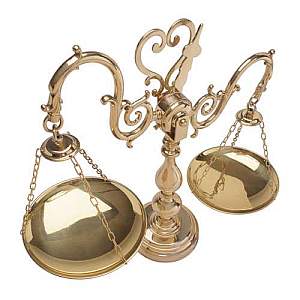
Golden balanceAs a Christian for close to thirty years, I've seen a lot of movements within the Church in America rise and fall. In the 1960s, I witnessed the Protestant appropriation of Vatican II ideals, the rediscovery of the charismata by mainline churches, and the first flowering of contemporary worship music. The 1970s brought the Jesus People, the growth of Evangelicalism as a dominant political force, and the rise of the Third Wave churches. The 1980s gave us the beginnings of the Church Growth movement and the ascendancy of seeker-sensitivity. The 1990s have proven to be a backlash time, with every aspect of the faith being questioned and reconsidered, finding charismatics adrift within fads, the "Emerging Church" attempting a shaky counter-reformation, and—sadly—greater concessions to the spirit of the age within American Evangelicalism.

Now in the new millennium, with so many opportunities to stake a claim for the next thousand years, I would offer an old direction. To the question of "Is Christianity broken?" I can only say, No. What we are instead as American Christians is horribly out of balance. We have become a church of fads, running after what appears to work, but all the while ignoring the tools, wisdom, and gifts Christ purchased for us through His blood two thousand years ago.

I cannot escape this passage:

Then if anyone says to you, 'Look, here is the Christ!' or 'There he is!' do not believe it. For false christs and false prophets will arise and perform great signs and wonders, so as to lead astray, if possible, even the elect. See, I have told you beforehand. So, if they say to you, 'Look, he is in the wilderness,' do not go out. If they say, 'Look, he is in the inner rooms,' do not believe it.
—Matthew 24:23-26

Now certainly, this is an eschatological reference, but I want to focus on the mindset behind it. When we go rushing around trying to get on board with the latest "appearance of the Lord," we swing like a pendulum. There is a tendency for us to accommodate to the wisdom of our times, too, picking up whatever business or pop-psychology trend is hot, fusing it to our new Christian fad. But for those of us who have been around a while—and have kept our eyes open and our discernment intact—all this is not coordinated movement, but spasmodic lurching from one soon-to-be-abandoned methodology to another.

Today it is the "Emerging Church" or the "Purpose-Driven Life" and so on. The future will bring some new trends. But what about yesterday's hot new ministry or devotional style? Do we even remember what it was? Or are we too busy reacting to the fallout of it as we swing on the pendulum to the other extreme, far, far away from what we so eagerly endorsed just a couple years ago?

To the world, this means one thing: "The Church has no eternal focus; we can find no answers within it."

In our attempts to read the times and accommodate to them, we have lost our balance. We continue, also, to stake out positions that only exist at the extremes on issues, rather than considering the holy middle.

Lately, I have been involved in several discussions on topics relevant to the Christian walk. Those discussions show out out of balance we are:

  • On the topic of prayer, I have talked with others about focused times of prayer and about "practicing the presence" of God all day. Supporters have gravitated to the extremes, favoring only one or the other. But isn't the truth of our prayer life centered in the balance between those two?
  • On the topic of the Holy Spirit, I have encountered cessationists and "charismaniacs," but isn't it true that the Holy Spirit still works today and that He does not contradict the Word of God? Aren't both the cessationists and the charismaniacs stuck at the extreme swings of the pendulum?
  • On the topic of Calvinism and Arminianism, like I wrote in a previous post (On the Brink of a Quantum Singularity with Calvin and Arminius), are those two positions possibly at the extremes and not in the center of where the Lord would have us be?
  • On the topic of the social gospel versus the moral gospel, is this not a false dichotomy to be making? Isn't the true Gospel a complete whole that encompasses both? (Wrongly Dividing the Gospel)
  • On the topic of the nature of Christ, isn't our Lord both a Lover who draws us to Him and a Warrior who will slay His enemies with the sword of His mouth? Isn't He both the Lamb of God AND the Lion of Judah? Why are we so often given to exalting one side of the Lord's person over the other, clubbing those people on the other pole with our "enlightened" view?
  • On the topic of the Christian's duty to the environment, must we divide into camps that either support radical groups like Earth First! or who ascribe to a pillage-the-Earth mentality based off a mangled reading of the Creation account? Is there no wise middle ground that we can support?
  • On the topic of the Bible, why must we dwell at the extremes: one that practically elevates the Bible above the person of the Lord Himself and one that shuns the Bible in favor of just hanging out with Jesus relationally? Where is the balance?
  • On the topic of the role of the Church, aren't we supposed to make disciples AND stand in the gap within our society?

No one said this kind of discernment—or the natural walking out of the results—would be easy. But isn't that why the Holy Spirit was given, to guide us into all truth?

Our failure to achieve balance in our Christian worldview has only confused the lost, the very ones who need to hear a right and balanced message from the Lord. If the Church in North America is to be all that the Lord desires us to be we have got to work for balance and show more discipline in standing against the fads of our day.

This is not to say that we compromise. In most cases, there truly is no compromise needed. We have simply spent too much time at one end of the pendulum swing to know the difference, though. It may seem uncomfortable to leave those extremes, but in truth we have done so quite a bit in just the last thirty years as we react to changes in worldly wisdom; this should not be unknown to us. Our problem is our inability to stop our momentum as we swing from one side to the reactionary other.

Cultural relevance does not trump eternal significance, and this is where we most suffer. We must be more discerning, testing the spirits—especially the spirit of the age—to see if it is of God or not. Nor should we be afraid to ask the hard questions and to administer the test at all. Examining an extreme position does not naturally lead to error if we are examining it against the Word and by the Spirit. Such an examination may reveal our own extremism and allow us to come to the truth of the center.

In closing, I offer three points that will align us:

  1. We must be prepared to look out of step with culture and culturally compromised churches. Balance is never fashionable.
  2. We must never forget our history. As Goethe once noted, "He who cannot draw upon three thousand years is living hand to mouth." Historical perspective compels balance.
  3. We must always ask, "What is eternally significant?" The answer to that question will bring us into balance.

Think about this. I believe the issue of balance is the single most important issue facing the Church today.

Blessings!