
Better Than a Beating

Standard

After you take the time to read this post today, I’d love to hear your feedback. I ask because I’m starting to think I’m crazy. Seems everywhere I go, I get the same response from people, so perhaps I’m the one who is wrong.

So fire away.

I’ve written a bit lately about the Internet’s ire. Everyone seems angry. Everyone is mad at some heretic, petty or otherwise. Plenty of talk of wolves. Plenty of hand wringing.

In all of this tension, a few positives go lacking. I talked about one, loving one’s foes. This post is about one of the others.

From the Bible:

Now a Jew named Apollos, a native of Alexandria, came to Ephesus. He was an eloquent man, competent in the Scriptures. He had been instructed in the way of the Lord. And being fervent in spirit, he spoke and taught accurately the things concerning Jesus, though he knew only the baptism of John. He began to speak boldly in the synagogue, but when Priscilla and Aquila heard him, they took him and explained to him the way of God more accurately. And when he wished to cross to Achaia, the brothers encouraged him and wrote to the disciples to welcome him. When he arrived, he greatly helped those who through grace had believed, for he powerfully refuted the Jews in public, showing by the Scriptures that the Christ was Jesus.
—Acts 18:24-28

I love that passage. It’s a gentle, godly, pastoral one. I wish it were the model for how we raise up leaders in the Church.

Here’s this Jewish fellow Apollos who is preaching Jesus. He’s a great speaker; people listen to him. He’s got charisma. Knows a few things about Jesus and passes them on fairly well.

Priscilla and Aquila stumble across Apollos and think he’s got potential. He’s mostly there, but he could use some polishing and needs to understand just a few more things more accurately in order to have the Faith down right.
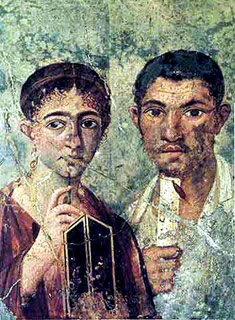
Priscilla and Aquila

Priscilla & Aquila

So rather than correct him in front of everyone, this godly couple takes Apollos aside and better explains the ways of God so as to overcome the young man’s theological deficiencies. They take time to help their charge work out the kinks. They introduce him to the right Church crowd. And Apollos goes on to become such a heavy hitter that the Apostle Paul must later address the tendency of some to say that they are “of Apollos.” (I guess there were fanboys even back then.)

I keep thinking that if this situation existed today, Apollos would be torn to shreds on the Internet or have some book written by a name pastor/teacher denouncing him for those things he said that were not deemed perfect. The court of Christian public opinion would trumpet to the world that Apollos had theological problems here and there. Plus, he knew only John’s baptism at the time. The horror. 😉

Instead, we get Priscilla and Aquila. Thank God for them. Because of them, and because of God’s great mercy, the story went in a far better direction.

Priscilla and Aquila seem like a couple I’d love to hang with. I’m sure they could teach me many things, especially about the grace needed to see raw giftings and know how to refine them with tenderness and love.

Now comes the crazy Dan part.

I’ve questioned in a few forums why it is so easy for Christians with a national pulpit or some name recognition to scold rather than to draw alongside those younger Christians who own a strong voice but who may not have all the particulars down. Actually, scold is too lax a word. Most of the time the better word is brutalize, as that’s the kind of verbal beating meted out.

Priscilla and Aquila seem long forgotten, as if they have nothing to model for older, established, respected pastors/teachers with a national voice—or you and me for that matter. Better that we defend the Faith than actually mold raw people and win them to a better position.

Here’s what really gets me: When I suggest that it would be great if one of these older, established, respected pastor/teachers calls up the “Apollos of the moment” and asks to chat or even sit down over a few meals to work out how things could be done with greater adherence to Scripture and the leading of the Spirit, the mere hint of this kind of pastoral compassion sends people into fits. Such an idea seems like anathema to some, especially the fans of those respected pastor/teachers. They’ve already piled the wood and found a suitable stake.

I’m not stupid enough to believe that all of these almost-but-not-quite-there modern Apolloses are going to wind up corrected and perfect. Yet at the same time, why do I almost never hear of any of these older, established, respected pastor/teachers with a national pulpit reaching out as Priscilla and Aquila did to people they think are slightly off? Instead, out comes the nuclear option, and the public gets to see how much supposed Christians can really hate.

I wonder sometimes if all this constant clashing is only driving the bystanders to cross Christianity off their list of viable sources of truth.

Yes, sometimes we must wipe our feet of the dust of people who will not listen. But at the same time, I see a whole lot of dust-wipers and not a whole lot of Priscillas and Aquilas.


The Perfect Church

Standard

Sainte-Chapelle church stained glassWith passion week arriving soon, we will begin to experience the high holy days of the Christian Church. We will also experience the dividing lines along which most Christian churches fall.

You see, you can tell a great deal about a church by what aspect of those days it glorifies:  Christ’s earthly ministry, His cross, His resurrection, or Pentecost.

Churches that ally themselves most with the earthly ministry identify with Christ’s love for the weak and broken people of the world and His relentless service to them.

Churches that ally themselves most with the cross identify with a lost individual’s status as a sinner, Christ’s sufferings on our behalf, and the wondrous freedom from sin purchased by Him.

Churches that ally themselves most with the resurrection identify with redemption, the new birth, and an eternity spent with God in heaven.

Churches that ally themselves most with Pentecost identify with the empowering of the new Church by the Holy Spirit to fearlessly go forth as saints to spread the Kingdom with signs and wonders accompanying.

I’ve see a lot of churches in America, but I’m not sure if I’ve ever seen the perfect church—one that ably allies itself with all four of the above in balance. I don’t know why that is so hard, and yet it is. We seem to like our one or two identifications, and that is about all we can manage.

I keep praying, though.

A Ministry of Reconciliation

Standard

For the love of Christ controls us, because we have concluded this: that one has died for all, therefore all have died; and he died for all, that those who live might no longer live for themselves but for him who for their sake died and was raised. From now on, therefore, we regard no one according to the flesh. Even though we once regarded Christ according to the flesh, we regard him thus no longer. Therefore, if anyone is in Christ, he is a new creation. The old has passed away; behold, the new has come. All this is from God, who through Christ reconciled us to himself and gave us the ministry of reconciliation; that is, in Christ God was reconciling the world to himself, not counting their trespasses against them, and entrusting to us the message of reconciliation. Therefore, we are ambassadors for Christ, God making his appeal through us. We implore you on behalf of Christ, be reconciled to God. For our sake he made him to be sin who knew no sin, so that in him we might become the righteousness of God.
—2 Corinthians 5:14-21

To me, this is one of the most powerful passages in the all of the Scriptures. The power. The hope. The love. The commissioning. The sense of purpose and meaning. This passage has it all.

And yet, I wonder how many of us take it to heart.

Do we truly look on our mission in life to be an ambassador for Christ? Are the words that spill over our lips daily revealing the great message of reconciliation?

If you were to ask me to describe the landscape upon which the Western Church rests, the image that comes to mind is one of battle lines criss-crossing the land, each line drawn boldly and fiercely into the ground by passionate people of well-meaning intent.

Yet one must ask whether it is the task of ambassadors to draw battle lines. Shouldn’t ambassadors be the ones who bring together the foes on either side of the lines? Isn’t that what is meant by reconciliation? That we were once separated by a battle line, but now that battle line is no more?

One battle line, the greatest of all, has already been removed:

And the curtain of the temple was torn in two, from top to bottom.
—Mark 15:38

This was accomplished by the work of the Son of God, the Great Ambassador, who said:

“Blessed are the peacemakers, for they shall be called sons of God.”
—Matthew 5:9

Peacemakers and ambassadors are not given many accolades in our culture. If anything, our perception of them is one of weak compromisers, people who are too mamby-pamby to pick up the sword and fight.

And yet the peacemakers are called sons of God and the ambassadors are entrusted with the beauty of the Gospel.

We don’t give such people much credit, do we? If anything, there is an art to negotiating peace. handshakeGreat wisdom is called for. And oftentimes ambassadors, as already noted, are ill thought of by people who would rather wage war. Yet it is by the ambassador’s adeptness with grace that warring factions might lay down their arms and be reconciled. Ambassadors must and always be the bigger person, even if it means they might appear diminished in the eyes of those who fail to see the greater reality. They understand that they must decrease so that the fruits of reconciliation increase.

Jesus prayed this for His ambassadors and peacemakers:

“As you sent me into the world, so I have sent them into the world. And for their sake I consecrate myself, that they also may be sanctified in truth. I do not ask for these only, but also for those who will believe in me through their word, that they may all be one, just as you, Father, are in me, and I in you, that they also may be in us, so that the world may believe that you have sent me. The glory that you have given me I have given to them, that they may be one even as we are one, I in them and you in me, that they may become perfectly one, so that the world may know that you sent me and loved them even as you loved me. Father, I desire that they also, whom you have given me, may be with me where I am, to see my glory that you have given me because you loved me before the foundation of the world. O righteous Father, even though the world does not know you, I know you, and these know that you have sent me. I made known to them your name, and I will continue to make it known, that the love with which you have loved me may be in them, and I in them.”
—John 17:18-26

If the ambassadors are not at peace within their own ranks, then the message of reconciliation can never be taken seriously by those who most need to hear its truth.

Notice, too, how often Jesus speaks of love within His prayer. For love is the language of the Kingdom, its ambassadors, and its peacemakers. Love is the lifeblood of reconciliation.

Some reading this have been burned by a church or by certain people in it. Some are still drawing battle lines in the sand. Some are still angry at God. Some hate people who are not like them.

Be reconciled.

Shedding the uniform of the rebel warrior to wear the suit of an ambassador feels unnatural, but it is all part of transitioning from darkness into light. It demands an adjustment. It means laying down our own agendas for the sake of the Kingdom’s. It means bringing together rather than dividing. It means being the bigger person, bearing the scorn of angry people who would rather fight. It means graciously overcoming the suspicions of those who are unsure of what or whom we represent. It means listening rather than talking. It means paying attention to the hidden language of others, including the Spirit of God, so that the message of reconciliation is shared at the right and proper time.

And [Jesus] said to him, “You shall love the Lord your God with all your heart and with all your soul and with all your mind. This is the great and first commandment. And a second is like it: You shall love your neighbor as yourself. On these two commandments depend all the Law and the Prophets.”
—Matthew 22:37-40

Reconciliation means bringing God and Man together in love. It also means bringing Mankind together in love.

Ours is the ministry of reconciliation.

Let’s begin today and never look back.