
An anonymous commenter on the post Love Sin / Hate Sin noted that some Christians, especially when dealing with life’s disappointments, use sin as a way of getting back at God. Call it “The Purposefully Wayward Servant Syndrome.” From what I’ve seen, it’s prevalent among all kinds of normally righteous-living Christians.
You and everyone you know at your church has been praying for three months about the transfer you put in at your company, a move that will take you to the branch location closest to where your elderly parents now live in sunny Miami. Not only will you now be in a position to assist your folks as they near the end of their lives, but you’ll be able to work from the beach, plus get a more powerful title and more pay. You pack the family up, move into the fabulous new home that you found in just three days, and spend an entire two weeks in Miami before the news comes down that corporate is closing the Miami branch and moving it to Duluth, just south of the Arctic Circle. And since there’s already a branch in place at Duluth, you’ll lose your title and your new pay increase. And you’ll be answering to the moron who is so well known in your company that every branch office not only knows the guy, but has their own set of regional jokes decrying his ineptitude. Welcome to hell.
Why, God? Why?
In keeping with Purposefully Wayward Servant Syndrome, now seems like the perfect opportunity to show God how you feel about all this by doing something really stupid. You fully admit that you’re not in control of issues like this, He is, but you can at least express what little control you have by raising a fist to the sky.
That upraised fist takes on many forms. Anger, obviously, but also frustration, depression, and a whole host on unpleasant emotions. But rarely is it just an emotion—some kind of action accompanies those feelings and that action nine times out of ten is rooted in whatever sin we judge appropriate enough to trot out before God to show Him just how we feel about His sovereignty in situations like this.
Shoplifting? Drunken rampage? Cheating on our spouse? Punching one of our kids? Binging and purging? Buying one of every porn mag on the rack at the local convenience store we would ordinarily avoid because it sells entire racks of porn? What’s the worst thing we can do to show God just how displeased we are at the way He runs the universe?
We know it’s wrong, but for one brief second it satisfies us to think that we still have some modicum of control over our lives. We’re also smart enough to know that God hates when we sin even more than we hate feeling like we moved out in faith and only later fell off the end of the world.
We have a cautionary model in all this:
Jonah went out of the city and sat to the east of the city and made a booth for himself there. He sat under it in the shade, till he should see what would become of the city. Now the LORD God appointed a plant and made it come up over Jonah, that it might be a shade over his head, to save him from his discomfort. So Jonah was exceedingly glad because of the plant. But when dawn came up the next day, God appointed a worm that attacked the plant, so that it withered. When the sun rose, God appointed a scorching east wind, and the sun beat down on the head of Jonah so that he was faint. And he asked that he might die and said, “It is better for me to die than to live.” But God said to Jonah, “Do you do well to be angry for the plant?” And he said, “Yes, I do well to be angry, angry enough to die.”
—Jonah 4:5-9 ESV
 Not a righteous anger. Definitely an upraised fist. And while I don’t want to add to the narrative, I have no problem envisioning Jonah raising a ruckus out there in the desert, probably hurling some sand, and making enough of a spectacle of himself that a few passersby asked, “What’s up with the prophet?” He may have not gone to the depths that some of us do, but he complained enough to let God know that he wasn’t a humble servant who believed “Thy will be done.”
The Book of Jonah ends with a cliffhanger:
And the LORD said, “You pity the plant, for which you did not labor, nor did you make it grow, which came into being in a night and perished in a night. And should not I pity Nineveh, that great city, in which there are more than 120,000 persons who do not know their right hand from their left, and also much cattle?”
—Jonah 4:10-11 ESV
Unfortunately for those of us who live for closure, Jonah’s response is lost to history. You’d think the correction he’d received earlier in the belly of the fish would have been enough to tame the “I’m not getting my way!” tantrums, but Jonah was a tough nut to crack.
I’d be deceiving you all if I didn’t say that I’m well acquainted with Purposefully Wayward Servant Syndrome. There have been far too many times in recent years where we stepped off the cliff in faith after much agonizing prayer only to be dashed on the rocks of despair below. I’ve done my share of finding ways that I can make myself more miserable and in the process profess my little statement of displeasure to a holy God who’s not impressed by my unrighteous escapades.
Honestly, I think this is where the Church has dropped the ball as God’s agents of hope and reconciliation. Like Job’s advice-giving friends, too often we go to the our church congregations and tell them we’ve been broken on the rocks and the first thing we get is a heaping helping of Romans 8:28, a pat on the back, and an “Everyone’s got problems, don’t they?” talk that only goes to enhance the desire to try out that Purposefully Wayward Servant Syndrome experience—at least once.
Wouldn’t those times be so much better if we knew that at least one person in our church would go a second mile with us?
More years ago than I wish to admit, I sat on the front porch of a sweaty, smells-of-unwashed-boys cabin during summer camp. As a counselor, I hadn’t done much real counseling, but now I had a boy crying his eyes out who wasn’t even in my cabin, who had just been told that his parents were divorcing. Not having come from a household wrecked by divorce, what could I say? All I could tell that weeping boy was one day God might have him sitting where I was sitting now, and unlike me, he’d know exactly what to say to some weeping boy who’d been handed the same awful news.
I don’t know what happened to that boy in the long run, but there on the porch he dried his eyes, looked me square in the face, and said, “I’ll know what to say because I’ve been there.” Then we prayed together.
If you’ve been plagued by Purposefully Wayward Servant Syndrome in your life, perhaps the Lord is asking you to sit down beside the very people who are now going through the same misery you once suffered. Your experience can show them they don’t have to eat the bitter herbs that you greedily gulped down in response to feeling abandoned at your point of greatest need, when the world was caving in and God seemed shut up behind six foot thick celestial doors of brass.
I don’t want to add to Jonah, but I’ve got to believe that we would not have seen so much frustration in the life of that Wayward Servant if others stood with him. Sometimes the mere presence of another is the tempering factor that limits the depths of stupidity that some of us so easily fall into.
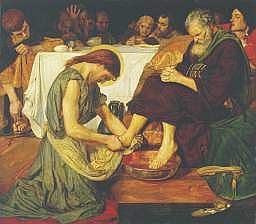
Be the Church. Be Christ to the grieving. No platitudes or generic memorized spiels that are easily dispensed to the hurting before you flit off to your next scheduled appointment, but real, bloody, messy care in the midst of someone else’s ruin.
You know how desperately it’s needed because you’ve been there, too.
 to consider before we set the barrels of our collective Gatling guns on “blazing” mode.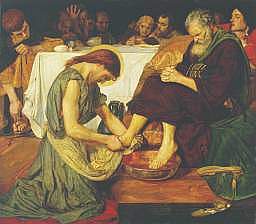
 This is in response to a couple comments in my