
And the Word became flesh and dwelt among us, and we have seen his glory, glory as of the only Son from the Father, full of grace and truth.
—John 1:14
When I think about many of the battles that rage in Christianity today, I can’t help but think that most result from a kind of theological blindness. 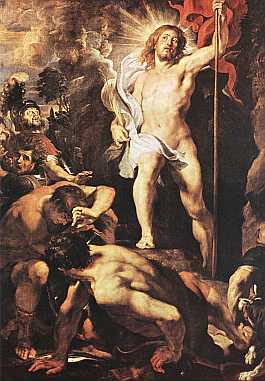 We easily fall into oversights that see our position clearly, but cannot see what our opponents believe is obvious.
The Holy Spirit leads into all truth if we do not actively oppose Him. Living lifestyles given to blinders will never let us embrace the fullness of God’s truth. Most of all, we will fail to see Jesus clearly.
How is it that we treat Jesus—as the blind men in the famous story treated the elephant—as pieces?
Any student of Church history can tell us about the rise of Roman Catholicism, the splinter with Eastern Orthodoxy, and the the coming of the Protestant Reformation. What we won’t hear, though, is how those churches chose which pieces of Jesus they wished to uphold.
The Catholics and Orthodox looked at Jesus and based their Christology on this idea:
He is the image of the invisible God, the firstborn of all creation.
—Colossians 1:15
They chose to see Jesus through the lens of Image. Theirs is the theology of the incarnation, the Word becoming Image, God in human form for us to see and touch. He became like us so that He could perfectly redeem us. Image rules.
Protestants, as a reactionary move against excesses seen in the RCC, attempted the one-eighty and based their Christology on another perspective:
He is clothed in a robe dipped in blood, and the name by which he is called is The Word of God.
—Revelation 19:13
They chose to see Jesus through the lens of Word. Theirs is the theology of the power of the word spoken, the Word that was from the beginning, the expression of God revealed in the pages of Scripture. We become like Him by learning His word. Word rules.
Both sides will defend their positions to the death. Both sides will refute, debate, and cry, “Heretic!” should the other side question the hallowedness of their piece of Jesus and His Church.
And both sides are missing the point because Jesus was and is the perfect marriage of Word and Image. His Church, then, needs to reflect that whole.
Since most people here are Protestants, we’re highly familiar with a Christianity brimming with words. We make the sermon the pinnacle of our meetings. We place great emphasis on Bible study and biblical knowledge. Christians who focus on Word in our faith comprise the largest whole in the Godblogosphere. We’re soaked in Word.
I wonder, though, if our elevation of Word had brought the unintended consequence of nullifying Image altogether. If so, I believe it explains so many shortcomings in Protestantism today, especially the Evangelical strain of it.
I believe we Protestants must recapture the profundity of Image if we’re to understand Christ in His fullness, make Him known, and live out the fullness of the Faith He entrusted to us.
Why must we not neglect Image?
1. Christ was incarnate
Check the opening verse again. The Word became flesh! We should be careful to accept that truth as is. Some have said the Word became flesh and we Protestants have attempted to revert Him solely to Word again. A jest yes, but an astute one.
2. God uses Image to convey authority
Am I not free? Am I not an apostle? Have I not seen Jesus our Lord? Are not you my workmanship in the Lord? If to others I am not an apostle, at least I am to you, for you are the seal of my apostleship in the Lord. This is my defense to those who would examine me.
—1 Corinthians 9:1-3That which was from the beginning, which we have heard, which we have seen with our eyes, which we looked upon and have touched with our hands, concerning the word of life– the life was made manifest, and we have seen it, and testify to it and proclaim to you the eternal life, which was with the Father and was made manifest to us– that which we have seen and heard we proclaim also to you, so that you too may have fellowship with us; and indeed our fellowship is with the Father and with his Son Jesus Christ.
—1 John 1:1-3And we have seen and testify that the Father has sent his Son to be the Savior of the world.
—1 John 4:14And we are witnesses of all that he did both in the country of the Jews and in Jerusalem.
—Acts 10:39aTruly, truly, I say to you, we speak of what we know, and bear witness to what we have seen, but you do not receive our testimony. If I have told you earthly things and you do not believe, how can you believe if I tell you heavenly things?
—John 3:11-12
3. God conveys His power through Image
And the LORD went before them by day in a pillar of cloud to lead them along the way, and by night in a pillar of fire to give them light, that they might travel by day and by night. The pillar of cloud by day and the pillar of fire by night did not depart from before the people.
—Exodus 13:21-22But,” he said, “you cannot see my face, for man shall not see me and live.” And the LORD said, “Behold, there is a place by me where you shall stand on the rock, and while my glory passes by I will put you in a cleft of the rock, and I will cover you with my hand until I have passed by. Then I will take away my hand, and you shall see my back, but my face shall not be seen.”
—Exodus 33:20-23
When the servant of the man of God rose early in the morning and went out, behold, an army with horses and chariots was all around the city. And the servant said, “Alas, my master! What shall we do?” He said, “Do not be afraid, for those who are with us are more than those who are with them.” Then Elisha prayed and said, “O LORD, please open his eyes that he may see.” So the LORD opened the eyes of the young man, and he saw, and behold, the mountain was full of horses and chariots of fire all around Elisha.
—2 Kings 6:15-17In the year that King Uzziah died I saw the Lord sitting upon a throne, high and lifted up; and the train of his robe filled the temple. Above him stood the seraphim. Each had six wings: with two he covered his face, and with two he covered his feet, and with two he flew. And one called to another and said: “Holy, holy, holy is the LORD of hosts; the whole earth is full of his glory!” And the foundations of the thresholds shook at the voice of him who called, and the house was filled with smoke. And I said: “Woe is me! For I am lost; for I am a man of unclean lips, and I dwell in the midst of a people of unclean lips; for my eyes have seen the King, the LORD of hosts!”
—Isaiah 6:1-5And after six days Jesus took with him Peter and James, and John his brother, and led them up a high mountain by themselves. And he was transfigured before them, and his face shone like the sun, and his clothes became white as light. And behold, there appeared to them Moses and Elijah, talking with him. And Peter said to Jesus, “Lord, it is good that we are here. If you wish, I will make three tents here, one for you and one for Moses and one for Elijah.” He was still speaking when, behold, a bright cloud overshadowed them, and a voice from the cloud said, “This is my beloved Son, with whom I am well pleased; listen to him.” When the disciples heard this, they fell on their faces and were terrified.
—Matthew 17:1-6
4. God communicates with us through Image
a. Through Christ
Jesus said to him, “I am the way, and the truth, and the life. No one comes to the Father except through me. If you had known me, you would have known my Father also. From now on you do know him and have seen him.” Philip said to him, “Lord, show us the Father, and it is enough for us.” Jesus said to him, “Have I been with you so long, and you still do not know me, Philip? Whoever has seen me has seen the Father. How can you say, ‘Show us the Father’?
—John 14:6-9If anyone serves me, he must follow me; and where I am, there will my servant be also. If anyone serves me, the Father will honor him.
—John 12:26Therefore be imitators of God, as beloved children. And walk in love, as Christ loved us and gave himself up for us, a fragrant offering and sacrifice to God.
—Ephesians 5:1-2
b. Through visions and dreams
After these things the word of the LORD came to Abram in a vision: “Fear not, Abram, I am your shield; your reward shall be very great.”
—Genesis 15:1-3At Gibeon the LORD appeared to Solomon in a dream by night, and God said, “Ask what I shall give you.”
—1 Kings 3:5But as he considered these things, behold, an angel of the Lord appeared to him in a dream, saying, “Joseph, son of David, do not fear to take Mary as your wife, for that which is conceived in her is from the Holy Spirit.
—Matthew 1:20But Peter began and explained it to them in order: “I was in the city of Joppa praying, and in a trance I saw a vision, something like a great sheet descending, being let down from heaven by its four corners, and it came down to me. 6Looking at it closely, I observed animals and beasts of prey and reptiles and birds of the air. And I heard a voice saying to me, ‘Rise, Peter; kill and eat.’ But I said, ‘By no means, Lord; for nothing common or unclean has ever entered my mouth.’ But the voice answered a second time from heaven, ‘What God has made clean, do not call common.’ This happened three times, and all was drawn up again into heaven. And behold, at that very moment three men arrived at the house in which we were, sent to me from Caesarea. And the Spirit told me to go with them, making no distinction. These six brothers also accompanied me, and we entered the man’s house. And he told us how he had seen the angel stand in his house and say, ‘Send to Joppa and bring Simon who is called Peter; he will declare to you a message by which you will be saved, you and all your household.’ As I began to speak, the Holy Spirit fell on them just as on us at the beginning.
—Acts 11:4-15
5. Image reflects our impact as the Church in the world
A new commandment I give to you, that you love one another: just as I have loved you, you also are to love one another. By this all people will know that you are my disciples, if you have love for one another.”
—John 13:34-35But someone will say, “You have faith and I have works.” Show me your faith apart from your works, and I will show you my faith by my works….”
—James 2:18
6. God intends Word and Image to go together
And the Word became flesh and dwelt among us, and we have seen his glory, glory as of the only Son from the Father, full of grace and truth.
—John 1:14And John bore witness: “I saw the Spirit descend from heaven like a dove, and it remained on him. I myself did not know him, but he who sent me to baptize with water said to me, ‘He on whom you see the Spirit descend and remain, this is he who baptizes with the Holy Spirit.’ And I have seen and have borne witness that this is the Son of God.”
—John 1:32-34
7. We Christian are to reflect the image of our Saviour
Now the Lord is the Spirit, and where the Spirit of the Lord is, there is freedom. And we all, with unveiled face, beholding the glory of the Lord, are being transformed into the same image from one degree of glory to another. For this comes from the Lord who is the Spirit.
—2 Corinthians 3:17-18Do not lie to one another, seeing that you have put off the old self with its practices and have put on the new self, which is being renewed in knowledge after the image of its creator.
—Colossians 3:9-10Rather, speaking the truth in love, we are to grow up in every way into him who is the head, into Christ, from whom the whole body, joined and held together by every joint with which it is equipped, when each part is working properly, makes the body grow so that it builds itself up in love.
—Ephesians 4:15-16
Recently, I pointed out one of the best blog postings I’ve ever read on the Web. “The Primacy of the Imagination” over at adversaria. Please read the whole thing. I guarantee you’ll have your preconceptions about the practice of the Faith challenged.
Yes, Catholics and Orthodox have spent too much time focusing on Image. Unfortunately, the Protestant response virtually ignores it. This despite the fact that 1,461 verses in the ESV include some variant of the word see. For this reason, I believe that to downplay Image is as big a mistake as ignoring Word.
We can’t divorce Word and Image. They are both powerful. We can hear God speak and live, but the power in the image of His appearance is so great that we would die if we beheld Him in His fullness. Yet His words give life.
We need to consider these truths when we live out the truth of the Faith:
1. Unbelievers will no longer take us on our word alone, but must see we manifest the faith we speak. They have heard with their ears, but now must see with their eyes. Why? Because our image didn’t match our word.
2. We have turned the Image of our faithfulness into nothing more than a systematic theology. By focusing so much on the written aspect of our Faith, we’ve lost the visual entirely. We also face losing sight of Jesus.
3. When we ignore the interplay of Word and Image, we negate the miraculous in our lives, especially charismatic gifts (an image of Christ in us) and God communicating to us through dreams and visions.
Jesus Christ is the Incarnate Word, the very Image of God. Behold Him, and heed His words.
 In fact, my wife’s family heartily encouraged me to try out for Millionaire in its heyday. I saw one show, one early one featuring the million dollar question “How far is the earth from the sun?” a question I thought most second graders were supposed to know, then wrote off the show.
 Context: the Jews had returned to the land after captivity in Babylon, had restored much of their old land, but the temple lay in ruins. God didn’t appreciate that the people had restored their former dwellings, but left his dwelling place a shambles.