
Frauds

Standard

By the time I’d counted my tenth radar-wielding cop in only twenty miles, I could only shake my head. I’m no speed demon, don’t get me wrong. Still, I knew our ride back home from visiting the in-laws over Memorial Day would be more snail-like than usual. People get cowed by all the law enforcement and they take on a herd mentality that makes good driving impossible.

When a mobile cop car pulled onto the highway, I knew we were done for. Every lead-footed, Top-Gear-watching, Michael Schumacher wannabe suddenly spazzed and downshifted into second. Think “trailing the pace car” kind of gridlock here as about forty vehicles all jammed together behind the cop car, each driver petrified of passing him. Three lanes of gear jockeys cursing their dumb luck scrunched onto I-71 heading south through Amish country. Oh, joy.

What did I think? What a bunch of frauds.

And they were frauds twice over, too. If they truly were crazed speed enthusiasts, you’d think one would have the guts to pass the cop (who was doing about 55 in a 65 zone). On the other hand, they all acted like law-abiding little old ladies out for a Sunday drive in their pristine K-cars—another lie.

Frauds.

I think most of us are frauds, each in his or her own way. Our society doesn’t reward honesty. Doesn’t give out medals to people who keep it real. We may think Jeff Bridges’ iconic character from The Big Lebowski, The Dude, epitomizes a guy just being, but he’s a fictional character in a movie mouthing fictional statements written by someone else. The whole thing smacks of fraud when you distill it down to its essence.

I think most people in this country would die a thousand times over if other people knew what they were truly like, could know their thoughts, could feel their insecurities. I think most spouses have never scratched the surface of what the other looks like deep in his or her heart of hearts.

I’m convinced that far too many Christians in churches around this country live a fraudulent life filled with keeping up an aura of spiritual perfection. They go through life as someone they’re not. FraudsA few live in such self-deception they don’t even know they’re doing it. Still, most do know—and they hate themselves for it.
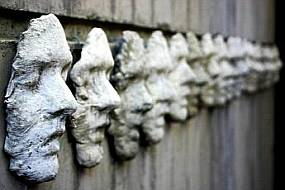
In the very early days of this blog, I’d get e-mails from folks castigating me for being holier than thou simply because I pointed out a few things I thought we all could do better. Me, holy? No, I’m just as fraudulent as the next guy. I think as time went by, people saw through whatever mask they thought I was holding up. But what they didn’t see was the more subtle one I wear all the time. It looks like me, only better, stronger, sharper, and swifter—but most of all, more spiritual.

When we age, the first thing that goes is pretense. Suddenly, the young punk down the street we used to dust in pickup basketball is creaming us every Saturday. We reek of wintergreen the day after, too. In the silence of our homes, we hear the knees creaking.

It happens the same way in the soul of the Christian attuned to the Lord. (At least it should.) We wake up and see that same masked face in the mirror. And when we pray, the Holy Spirit shows us that same lingering shadow of the Old Nature. He tries to get us to admit we’re frauds, but it doesn’t come easy. People talk. People have opinions. People, people, people—that same old fear of men. A snare, the Bible says.

The Bible also says this:

Therefore, if anyone is in Christ, he is a new creation. The old has passed away; behold, the new has come. All this is from God, who through Christ reconciled us to himself and gave us the ministry of reconciliation; that is, in Christ God was reconciling the world to himself, not counting their trespasses against them, and entrusting to us the message of reconciliation. Therefore, we are ambassadors for Christ, God making his appeal through us. We implore you on behalf of Christ, be reconciled to God. For our sake he made him to be sin who knew no sin, so that in him we might become the righteousness of God.
—2 Corinthians 5:17-21

We are ambassadors of Christ, and as such we represent the government of a new Kingdom with reconciliation as its message. And ambassadors don’t get to be ambassadors by clinging to fraudulent identities. No, they endure a character trial that proves their mettle. In other words, No Frauds Allowed.

All of creation awaits our coming into our ambassadorship. It’s groaning, in fact, that we come into our own, that “own” Christ established before the foundation of the world.

If only we’d put down the fraudulent lives, the fears, the secrets, and step into the Light.

Caltrops on the Road to Glory

Standard

Afterward Jesus found him in the temple and said to him, “See, you are well! Sin no more, that nothing worse may happen to you.”
—John 5:14

Jesus stood up and said to her, “Woman, where are they? Has no one condemned you?” She said, “No one, Lord.” And Jesus said, “Neither do I condemn you; go, and from now on sin no more.”
—John 8:10-11

A long while ago—at least in the history of this blog—I wrote a piece called “Whatever Happened to Sin?” CMM adherents will recognize the title as being from an old Steve Taylor song. Jesus adherents will simply ask the question again. See, they remember sin.

In an age where Osteen-ism rules the land, we don’t hear much about sin anymore. Church growth pundits suspected sin didn’t play in Peoria, so they found a way to dismiss it. This explains why Christians crash and burn more frequently today than I remember. Or else their faith doesn’t hold up when the time of testing comes.

An ancient weapon used in war, the caltrop is a nasty piece of work. Throw them on a path or road and they land with a vicious spike always pointing straight up. History says the Romans came up with caltrops to permanently remove chariots from the battlefield.Imagine this caltrop in your tire—or foot! Wouldn’t want to be the horses—or the pitched rider.
The kind shown at right does its work on tires. Hollow, it allows air to rapidly escape even from self-sealing tires. Run your Pirellis over a few of these and you can forget your Roman Holiday.

Sin is like caltrops. Every time we sin, it’s like tossing a bucket of caltrops behind us. But what’s behind us is behind us, right?

Funny thing about life is we sometimes must revisit the way we came to get to where we’re going. And those sins we left behind? Well, they’re sitting in the middle of the road, sharpened steel tips up, waiting to put a halt to our journey—or at least make it nastier.

Weirder yet, sin’s caltrops have a way of landing behind us, yet winding up ahead of us at the same time. They get you coming and going. The double-whammy. They seem to to multiply ahead, too. Sow a bucket of caltrops behind, reap a highway-full ahead.

So when one of us finds our plans and dreams going up in smoke, when adopting that Osteen positive attitude makes no difference in the face of despair, do we ever take a step back and wonder if our sin finally caught up with us? I don’t hear people saying that this setback or that can be attributed to personal sin. Do you?

Sure, it might be obvious in the promiscuous girl who gets pregnant and lands in a beat-up trailer with an abusive Cro-Magnon of a husband got on the end of Daddy’s shotgun. But is it so obvious in the lives of mature Christians who stuff it down in hopes that no one will ever find out?

I’ve got to believe that at least some of the grief in your life and mine comes from running over the caltrops of sin we scattered on the road to glory. But where’s the sermon on fleeing sin? On repentance? On restitution?

Too outré? Too pietistic?

Perhaps we need some good old pietism in the Church today. After all, Jesus Himself confronted two folks in His part of the world and told them outright, “Stop sinning.”

I don’t know about you, but I don’t see any addenda from the Lord on that command. No “Only by God’s grace and power” or “You’re not the one in control, God is” or even a “You can’t do it in your own strength.” I just see the admonishment to stop sinning.

We used to revere men and women who wised up and stopped sinning. Now we try to find something wrong with their theology. Or we use that our own brand of theology to make excuses when one of us today tries the same approach only to fall back into sin. I’m beginning to wonder if folks two hundred years ago who turned and shunned their sin and never looked back AREN’T better people than we are today. They sure seemed to take God’s wrath a lot more seriously than we do.

After a promising start down the life’s highway, are we staring at four Bridgestones that look like deflated porcupines? Did we run over the consequences of our own sin, those nasty caltrops we sowed, the ones we thought would never catch up to us? They did, didn’t they?

Well, let’s not just sit there moping because past sins caught up with us. Clear the road! If we made the mess, we need to deal with it. And stop throwing the caltrops down, too! Yes, Jesus provides forgiveness. He forgave the man at the pool of Bethesda who tried to game the old familiar system. He told the hooker He didn’t accuse her. But He also told them both to stop sinning.

If life’s not treating you the way you want it to, stop sinning. And if not for you, then for your progeny. Because the sins of the fathers have a way of working themselves down through the generations. That promiscuous girl in the trailer with the abusive husband? Chances are that’s how her own mother got started. We can’t think our kids won’t inherit our little problems. (Note: Lying to oneself is a sin.)

So stop sinning. No excuses.

The Cornelius Factor

Standard

At Caesarea there was a man named Cornelius, a centurion of what was known as the Italian Cohort, a devout man who feared God with all his household, gave alms generously to the people, and prayed continually to God. About the ninth hour of the day he saw clearly in a vision an angel of God come in and say to him, “Cornelius.” And he stared at him in terror and said, “What is it, Lord?” And he said to him, “Your prayers and your alms have ascended as a memorial before God. And now send men to Joppa and bring one Simon who is called Peter. He is lodging with one Simon, a tanner, whose house is by the sea.” When the angel who spoke to him had departed, he called two of his servants and a devout soldier from among those who attended him, and having related everything to them, he sent them to Joppa.
—Acts 10:1-8

I don’t normally reiterate here at Cerulean Sanctum what I hear in the previous Sunday’s sermon at my church, but my pastor mentioned a passing point that struck me, so I’d like to expound on it.

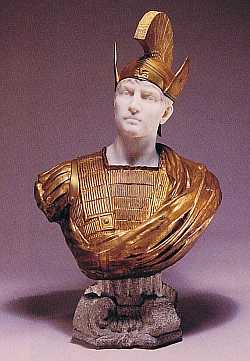
In the Acts 10 passage above, the Roman centurion Cornelius receives mention. Roman Soldier by Luigi BelliThe Scriptures describe three distinctives of this soldier:

  • He feared God (as did the rest of his household).
  • He gave generously to the needy.
  • He prayed continually.

Luke goes on to write that an angel appeared to Cornelius and prepared a way for his family to go down in history as the first Gentile believers. As a result, his name is forever enshrined in the Scriptures.

Let’s concentrate on those three distinctives of Cornelius. Because he proved faithful, God looked upon him and decided to use him in a special way to forever change the course of human history. This man’s dedication and humility marked him as the perfect choice for receiving the Holy Spirit apart from any Jewish lineage. It’s not hard to align the manner in which Cornelius conducted his life with this well-known verse:

He has told you, O man, what is good; and what does the LORD require of you but to do justice, and to love kindness, and to walk humbly with your God?
—Micah 6:8

Sounds like Cornelius, doesn’t it?

Note what caught the Lord’s eye about this man:

Your prayers and your alms have ascended as a memorial before God.

Prayers and giving to the needy.

I think we miss how easy it is to live out a life faithful to the Lord. We add rules and subtract others. We get sidelined in the kind of affairs that would never distract a true soldier of Christ. We can’t spend one hour in prayer. We can’t do without our wants so that others can receive their needs. We fear not keeping up with the Joneses, we fear what the neighbors might think, and we fear the wrong party will see their candidate become the next president, but we don’t truly fear God.

So we don’t receive visions. Angels don’t deliver messages to us. And perhaps God chooses to use a more faithful believer on the other side of the world to alter the course of history.

In the end, we say that visions are passe. Angels don’t come around anymore. The tongues that Cornelius and his family spoke were for another time, but not ours.

And our faith grows smaller for our dismissals.

Is it really that hard to fear God in America 2007? Or to pray continually? Or to put down the mail-order catalog long enough to meet the needs of someone dashed on the rocks by the vicissitudes of life?

Is it?

Lord, I pray that you would mold each and every person reading this into the kind of believer Cornelius was. Bless us as you did Cornelius, and use us to change the world.