

A Show About Nothing

Standard

Modern Evangelicals?“It’s a show about nothing.”

In what was probably the most famous self-referential line in the history of television, Seinfeld ‘s Jerry and George attempted to pitch their comedy pilot to NBC. The incredulous execs just stared at each other dumbfounded. How can a TV show be about nothing? Doesn’t something happen? After all, life isn’t about nothing. People actually go out and do things—don’t they?

Last week, some of the most important Christian figures in the 21st century unleashed “An Evangelical Manifesto: A Declaration of Evangelical Indentity and Public Commitment,” a document that attempts to reiterate the values of Evangelicalism for a modern age (though a few of us would claim this was adequately covered by the Lausanne Covenant). The list of signatories on the manifesto includes Os Guinness, Max Lucado, Alvin Plantinga, Leighton Ford, Rebecca Manley Pippert, H. Wayne Huizenga Jr., Stephen Strang, Jack Hayford, Erwin Lutzer, and a former pastor of mine, Stuart Briscoe. That’s a powerful and intriguing mix of backers just in those few names. Many more signed the document.

I would encourage everyone to read the manifesto. I would encourage just as many to consider what might have been.

Beyond the “okay, so we’re apologizing for a lot of stupid stuff we did” tone of “An Evangelical Manifesto,” the one thing a manfesto truly must address is the old question that Francis Schaeffer once used for book title: “How should we then live?”

To be a proper manifesto, a document must not only clarify core foundational truths that the audience of “manifestees” should hold corporately, but it must also reveal its plan. It must give its adherents something to strive for, an inarguable destination outlined by a clear roadmap that will lead true believers forward.

When a real manifesto makes claims, it states them like this:

We believe Truth Statement, therefore we will Intended Consequence by Practical Response.

A case in point:

We believe that Jesus meets the needs of the least of these, therefore we will love the widow and orphan by bringing them into our homes to live with us.

That’s a manifesto statement.

But this is what we get in “An Evangelical Manifesto”:

We call humbly for a restoration of the Evangelical reforming principle, and therefore for deep reformation and renewal in all our Christian ways of life and thought.

Okay, so the Truth Statement there is not immediately obvious, but one can deduce that it might be that Jesus values reformation in all our ways of life and thought.

The Intended Consequence? We call for a restoration of the Evangelical reforming principle. A little high concept, but there it is.

Now does anyone see what’s missing?

Reading “An Evangelical Manifesto” soon reveals to us the problem facing modern day Evangelicalism. Ultimately, for want of any kind of practical response to what is supposedly so dearly believed, Evangelicalism becomes like Seinfeld, ” a show about nothing.”

A real manifesto, especially one devised by some of the most brilliant minds in Christendom today, will not be satisfied with high concepts alone. Yet that is all we read here.

Here’s the $64,000 question: “How does this manifesto alter my daily living?” Answer? It doesn’t. Not at all.

And that’s an enormous loss to us because here Evangelicals have the chance to prove they are more than talk. They have a chance to show that what they believe makes a profound difference in American life. And man, do they drop the ball.

Take the previous statement about reforming principles. In what way does that statement have any impact on the guy who gets up at 5:00 AM, spends almost an hour commuting to work, grinds out ten hours of work while worrying about whether he’ll have that job tomorrow due to a lousy economy, repeats the commute, grabs a fast food dinner, spends about ten minutes of quality time with his kids, five minutes talking with his wife, watches a repeat of Seinfeld or two, checks his e-mail, and goes to bed at 11:00 PM?

It’s not enough to say we believe something and would like to see that something come to fruition. We have to find ways of answering that elusive question of How. How do we practically put this manifesto into play in the way we live from day to day?

As it stands, we can’t. No one tells us how. No one gives us the Practical Response we need to know what to do with what we believe and claim to desire to see in the world around us. And therefore “An Evangelical Manifesto” and the branch of Christianity it claims to represent proves itself, sadly, to be utterly irrelevant in your life and mine.
More on Charismatic Gifts

Standard

Several people have asked questions about my post on praying in tongues from earlier this week, so I thought I’d post a few more thoughts.

My reference texts:

Now there are varieties of gifts, but the same Spirit; and there are varieties of service, but the same Lord; and there are varieties of activities, but it is the same God who empowers them all in everyone. To each is given the manifestation of the Spirit for the common good. For to one is given through the Spirit the utterance of wisdom, and to another the utterance of knowledge according to the same Spirit, to another faith by the same Spirit, to another gifts of healing by the one Spirit, to another the working of miracles, to another prophecy, to another the ability to distinguish between spirits, to another various kinds of tongues, to another the interpretation of tongues. All these are empowered by one and the same Spirit, who apportions to each one individually as he wills.
—1 Corinthians 12:4-11

And God has appointed in the church first apostles, second prophets, third teachers, then miracles, then gifts of healing, helping, administrating, and various kinds of tongues. Are all apostles? Are all prophets? Are all teachers? Do all work miracles? Do all possess gifts of healing? Do all speak with tongues? Do all interpret? But earnestly desire the higher gifts. And I will show you a still more excellent way.
—1 Corinthians 12:28-31

In a nutshell, here’s what I believe about the charismatic gifts:

  • The gifts are still for today.
  • Some of the gifts are more rare than what we see expressed.
  • Not all people will have all gifts.
  • A person who lacks a particular gift is not a lesser Christian for that lack because he or she may possess other “compensatory” God-given talents and anointings.
  • We should always ask God for empowering through the gifts yet be satisfied should He elect not give us a particular gift on our timetable.
  • Sometimes there is a long delay between asking for and receiving a gift.
  • As the Lord sees fit, some gifts may only be given for a time or season.
  • Because the Lord gives to us according to our measure of faith, He will not give charismatic gifts to people who don’t believe that they are still in operation.
  • While a person may appear to have a gift, it may indeed be nothing more than a well-developed talent and lack the full nature of a genuine charismatic gift.
  • As with all spiritual abilities, as we grow in the Lord we better understand how to use the charismatic gifts He has given us.
  • The Lord may remove gifts from people who fail to properly use them.
  • Yes, sadly, some people fake gifts.
  • People who fake gifts should be exposed immediately and not tolerated.
  • Yes, the Enemy does mimic some gifts and empower deceived people with ungodly versions.
  • All gifts must be tested.
  • Churches that support the gifts must do a better job policing those who use them in public.
  • Church leaders are responsible for encouraging and discouraging the use of the gifts by their congregants.
  • We are a poorer Church if we fail to use the gifts.

A convenient way to break down the gifts is into three categories of three gifts each:

Gifts of Discernment:

Word of knowledge

Word of wisdom

Discerning of spirits

Gifts of Power:

Faith

Miracles

Healing

Gifts of Proclamation:

Prophecy

Tongues

Interpreting tongues

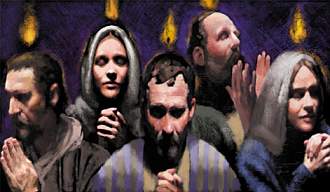
Like tongues of fire...I feel strongly that one of our greatest failings in our churches is that our spiritual leaders are not calling out the gifts in people. By that I mean that too many churches rely on people self-identifying their own spiritual gifts rather than the leadership of the church doing it. Of course, this necessitates that the leaders of a church actually KNOW their people well and spend time helping each individual cultivate the gifts (and talents) God has given them. (Kind of precludes being an anonymous face in a megachurch, doesn’t it?)

Instead, too many churches have let their leadership off the hook by resorting to congregant self-identification of gifts, often through spiritual gift inventories—a recipe for disaster, if you ask me. Gift inventory checklists are responsible for myriad people being placed in the wrong positions within a church or trying to use gifts they don’t truly have, thus leading themselves and others astray. My experience has been that too many people identify wants rather than gifts through this inventory methodology. If I want to be a prophet and fancy myself one, how will I fill out my gift inventory? Sort of self-fulfilling, isn’t it? And that makes for enormous problems.

Now, what is your take on the charismata?

The Pain on the Far Side of the World

Standard

Today’s city newspaper featured a front page story about a school bus rear-ended by a dump truck. A teenager was killed. Someone’s 18-year-old son, all ready for graduation, all geared up for college in the fall (“Mom, Dad, I got accepted!”), wolfs down his breakfast, maybe says goodbye, maybe even offers a kiss on a good day, gets on that bus and winds up a few minutes later in eternity.

A couple days ago, I read an obituary in my town newspaper about a 27-year-old man who died in a freak accident while on vacation. The part that got me was that he was very active in the Big Brothers organization. They ran his picture in the obit, a smiling face bright with possibilities. Now some boys who don’t have fathers don’t have the surrogate dad who took time out of his schedule to help them.

Personally, I find it very hard to read these kinds of stories. I’m thinking that perhaps I shouldn’t.

David Kuo at Beliefnet recently wrote the following in his post Thoughts on Suffering after seeing for himself the misery in Uganda:

Is that [poor decision-making] God’s fault?

I think not. Because at every moment those decisions were made God was whispering for people to do the right thing, the just thing, the merciful thing. But we chose not to listen.

God has done his job. We haven’t done ours.

I used to think the suffering question was a serious head scratcher, a truly troubling thing—the best evidence against God. No more. I think it is largely an excuse to make ourselves comfortable in our complacency by blaming God for the suffering we aren’t spending our lives addressing.

We live in unusual times, times that didn’t exist until a handful of years ago. It is said that the average person today is inundated with more data in a few weeks than most people in the 18th century and previous got in their entire lives.

We can thank our instantaneous global news networks for this. All the world’s misery can be pumped into my home in a matter of seconds. Every day of the year. For as long as I live.

I’ve thought for many years that this constant stream of anguish and pain coming at us from every corner of the globe is an aberration of our age. God never intended Man to process so much misery at once. Misery, Want, PainIf we’re increasingly a nation of people on psychoactive medication, should we be surprised? Isn’t there enough pain within ten miles of our homes to last us a lifetime? What then do we do when we hear an orphanage was buried under a mudslide in Ecuador or a bus full of nuns holding babies in their arms went off a cliff in Singapore?

If you and I were serious about praying for others, we’d have enough prayer requests from hurting people in just our church alone to last most of us from week to week. Isn’t that the case with you? I know it is for me.

I could probably spend two or three hours a day just praying for the crushing needs of people I know. So how can I shoulder the rest of the world’s problems?

I believe that many of us are suffering from compassion fatigue. The flood of misery washes over us and we’re just numb to it anymore. That’s a problem, because God never intended that we live our lives as if anesthetized to pain.

Somewhere, though, we have to draw the line.

With all due respect to David Kuo, I can’t blame myself for the problems of Africa. If he wants to blame himself, that’s his prerogative. This is not to say that I don’t care about the pain in Africa, only that if I want to be sensitive to the needs of others, I can’t let myself grow numb in the waterfall of misery that is the entire world in 2008. And that means I have to find a means to turn off at least part of that waterfall. For my own effectiveness as a Christian.

That may seem callous, but I have to ask myself what my responsibility would have been a couple hundred years ago. Before the instant news update on the earthquake in Japan. Before the daily notification of genocide in Sudan. Before the suffering of the entire world landed on my doorstep and asked me in one united voice to solve the problems of 6.5 billion people.

It’s not that I don’t care, only that God never intended for me to be the savior of the world.