Lord, To Whom Shall We Go?

Standard

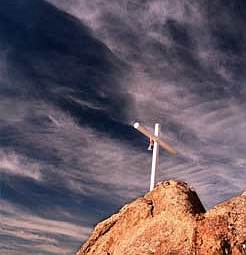
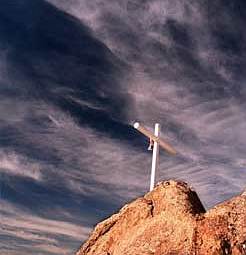
White cross on a hillRob Wilkerson of Miscellanies on the Gospel (latest winner of a Warnie Award, I might add) burns up the Internet with the question of why Christians aren’t satisfied with Christ and have to go to other sources for their spiritual fulfillment:

In closing, might I add a more practical way that we can lurch backwards into the simplicity of the gospel message of Christ and Him crucified? It involves a ‘put off’ and a ‘put on.’ First, let’s put off Hollywood. It offers nothing but a mirage. Too many Christians, including myself, watch movies in order to gain some redemptive element which we can use as common ground to share the gospel with others. That works sometimes. But I’m beginning to think that when that is used as common ground, generally their perception of Christianity, priests, and preachers is just what Hollywood has told them it is. So if we start with Hollywood, we’re already starting with a broken tool…a severely broken tool. I say let’s ditch the whole thing. Ironically, it’s filled with nothing but emptiness. There’s no gospel in Hollywood, so let’s stop allowing it to seep into our minds, hearts, and homes.

Second, let’s put on the Lord Jesus Christ as He’s already revealed Himself in the Bible. He hasn’t revealed anything of Himself in Hollywood. If we read our Bibles as much as we watched Hollywood’s products, or better yet, if we read our Bible as much as we watched Hollywood’s products and instead of Hollywood’s products, what kind of Christians do you think we would be?

Amen, Rob.

A few years ago, I came to the stunning revelation that nothing ultimately satisfies but Jesus. I stopped giving my time and effort to things that accomplished nothing but satisfying my own craving to be entertained. So much of Christianity has turned into entertainment! Seymour over at The Light Is Sweet posted this perfect commentary from one of my personal faves, Leonard Ravenhill:

Entertainment is the devil’s substitute for Joy; the less joy of the Lord you have, the more entertainment you need.

How eerily true.

Too many want to justify their entertainment fixation by saying that one can find truth in films. My answer? You can pan for flecks of gold in vast fields of manure, but why do it when Christ can fill you up with an infinitely more satisfying treasure: Himself.

Anyway, my journey into the revelation that only Jesus is needed came about because of a passage that has always been one of my favorites, but which I did not fully understand until two years ago:

After this many of his disciples turned back and no longer walked with him. So Jesus said to the Twelve, “Do you want to go away as well?” Simon Peter answered him, “Lord, to whom shall we go? You have the words of eternal life, and we have believed, and have come to know, that you are the Holy One of God.”
—John 6:66-69 ESV

Lord Jesus Christ, to whom shall we go? There is no truth apart from You. There is nothing that satisfies forever like You do. There is nothing worth possessing more than You. There is no one worth knowing more than You.

And yet how easily so many go careening from one cheap, throwaway thrill to the next. Even people who call themselves by Christ’s name. How desperately sad.

That’s not me anymore. I hope it’s not you, either.

A Plague of Viral Green Memes

Standard

World MapAnyone who follows this blog knows that my wife and I are using sustainable permaculture methods to run our small, organic farm. My wife and I both firmly believe that too many Christians ignore our environmental responsibilities—we need to live on less and take better care of our resources. You’ve read that here many times, too.


So we have some familiarity with the green movement and the figures it uses to whip up hysteria. The latest viral meme to hit some Christian Web sites (those that tend to lean more left than right) takes the form of this link to My Footprint.

Unfortunately, I know that the figures behind this quiz are highly questionable. Sustainability has been long questioned because the basis often used by green advocates is ridiculously low. Paul Ehrlich, a widely admired green advocate, “prophesied” that the Earth would be ravaged by the time we hit the 1990s. We know that this was patently false, yet green advocates continue to use Ehrlich’s ridiculous assertions and statistics in their message.

Most people do not understand how empty our planet is or how much arable land is available. Anyone traveling across the United States can see that this country is basically uninhabited. The actual land used for dwellings is remarkably small. This is true over much of the earth. To see how empty the world is, consider this:

Land masses area total: 1,597,676,459,241,800 sq. ft.
Population estimate for the Earth as of July 2005: 6.5 billion

Now divide the one by the other. You will find that there is nearly a quarter million square feet per person. If you can’t sustain one person off a quarter million square feet, well, you’re a fool. That’s 5.7 acres per person. But since single individuals come nowhere near requiring that amount of food production or housing space, we are nowhere close to filling up the earth or running out of land that can produce food (and the deserts and other uninhabitable spots are more than countered by the amount of water-based living and aquaculture. This also fails to factor in that a third of the population of the planet is not adult; the world’s two billion children aged 0-14 require even less space and food production acreage.)

One of the greatest conceits of the figures (go ahead, take the test) is that it operates off surface area and not volume of space. Most resources exist in volume of space, not merely area, but this is never factored into green data. For instance, our food supplies are using volume more efficiently by growing taller plants that yield more vertically or by utilizing stacked growing containers. Nor is living space confined to a single, above-ground story. Much of the world’s population lives stacked in multi-floor dwellings. This takes more pressure off the dwelling space requirements. Even then, if you gave every person on the planet a 20′ x 20′ room to live in, restricting those rooms to a single level, the amount of surface space taken would be less than an area the size of the state of Michigan. Again, we are nowhere close to filling up the planet.

And even if this were not the case, we have come long ways in getting more food out of an acre of land. Too often, green advocates use production figures close to worst case scenarios, but those production figures are an order or two of magnitude too low when using today’s far more efficient farming methods. Those low figures create fear that puts money into the pockets of the green movement. There are six billion mouths to feed and no indication that we are anywhere close to not being able to feed them. Famine in the 21st century is a political construct. This is true of poverty in general. Without reforming the oppressive governments that typically keep poor nations poor, current efforts to eliminate poverty are misguided and a waste of money and resources. The same folks who are trumpeting the One program or Live8 learned nothing from the abysmal failure of LiveAid.

Yes, we need to live more sustainably, especially in the United States. But as far as requiring more Earths to sustain you or me? Well, you know what Disraeli said about lies, don’t you?

Isolationism, Materialism, and the Evils of Our Age

Standard

Just a monkey in a cageIt doesn’t take a genius to see that something is drastically wrong at the very heart of our daily living. After reading Brad over at The Broken Messenger blogging about the American Dream and how it is destroying us through our materialism and outright stinginess toward tithing, I have to wonder if the cure we Christians are offering is just a Band-Aid pasted over something gangrenous.

Though I want to charge ahead in this post, let’s first consider Brad’s lament:

We blend the definitions between “need” and “desire” such that they are indistinguishable so that we can justify not giving to the Body of Christ our time and or money; yet somehow we find the means to set aside regular portions of our wages and time in our lives for our dreams – all with the expectation that once the allotted time has passed, we will reap the rewards for our patience and self sacrifices. But in the same manner that we pursue our earthly dreams, Jesus has asks us to abandon them along with everything else. He asks that we sacrifice all for a little while, for inconceivable and imperishable riches later.

With all respect to Brad, there is a far deeper problem here. Not only do we suffer from the very things Brad so rightly accuses, but we cannot NOT suffer from them because of the way we’ve setup our societal structures.

I’ve blogged about this many times before, most recently in part in my business series, but it bears repeating. I own a large farm tractor. I bought it when we moved to our property with the idea of having a small farm. All my neighbors own farm tractors, too, in various sizes, capabilities, and vintages. There are five families that live on about sixty acres of land. We all have need for a tractor, but do each of us have to have one that is strictly ours?

With our island mentality of existence, each man must have his own self-sufficient world supplied with things that keep him isolated. A man must have his own tractor because he rarely interacts with his neighbor at all, so it makes borrowing an issue.

It goes beyond sharing commonly used items, too. If fifty acres of wheat need harvesting, he, his wife, and his 2.1 children can’t do it by themselves if they try to do it by inexpensive hand labor—they need the machinery that will enable them to work alone. The machinery costs money—a lot of money. Now they’ve got to work even harder to make more money to afford the expensive machines, the fuel to power them, and their upkeep. Maybe the wife takes an outside job now. And the kids wind up latchkey kids because he’s moonlighting at night and there’s that overlap when both he and his wife are gone. It’s all too common and the reason is that there is no community left that will come to his side to eliminate his need for the expensive equipment in the first place.

What if instead of going bankrupt trying to buy a $75,000 combine, all his neighbors came over and helped harvest the wheat using little more than a horse-drawn scythe or two? Inexpensive and communal, too. The labor is divided. Repeat that pattern over a number of families and many hands make for easier work.

Sure, that may work for organic farm communities, hardcore Amish-types, and the like, but what about the VP of Operations at the soap making company? Well, what about him? What are we Christians failing to work through when it comes to problems like this?

Brad’s issue over the American Dream and how it afflicts us Christians will NEVER go away no matter how hard we try unless we jettison our self-sufficiency. If you aren’t part of a community that strategically works to see that no one gets left behind in the grinding wheel of modern life, then each one of us has to have a complete set of stuff to be self-sufficient enough to live. Even Saint Francis could not have been Saint Francis unless some person out there included him in the life of a community. Yes, a few people can drop out altogether and live like hermits, but all of us can’t do that. The only answer is for Christians to start abandoning the pie-in-the-sky idea that we will somehow stop with the self-sufficiency and the requisite materialism that naturally attends it without covering each other’s backs!

Initially we put our parents into nursing homes when they were aged not because we have hard hearts, but because no one would be there to support us in our support of them. Pull the right stick out of the Kerplunk game and all the marbles will fall. Name a problem in our society and I bet you can trace it back to our misguided belief in self-sufficiency.

Ever wonder why there are a hundred different types of breakfast cereal in the grocery store? Self-sufficiency breeds self-centeredness. Self-centeredness naturally evolves into the concept that I am the master of my own kingdom. As a king, I need something that sets me apart from the commoner. They may eat cornflakes, but I need the organic muesli with non-GMO, freeze-dried ollaliberries added. The common becomes despised because I require something better. Whining for “better” promotes greed. Need I say more?

Folks, being more holy won’t fix this. We’ve tried that route and failed miserably. Nor will attempting to live a simpler life get us out from under the burden that reinforces the very complexity we try to avoid. The brick wall awaits and we’re going ninety even with the brakes on. The system is broken at a fundamental level: We lack real, connected community and our need to overcome that lack results in our becoming self-sufficient. If I don’t need you, I need everything that is not you that might replace you. And soon enough, the thing that replaces you is viewed as more essential than you are. Is it any surprise then that we live in such an angry society? If I don’t need you, then all you are doing is competing against me. There’s that Darwinian ethic again—seems to crop up everywhere.

Our self-imposed isolation is destroying us on the inside and driving us to lengths that dishonor God. But a Christian community founded upon the ideals that no one is ignored and that your problem is my problem will not succumb to isolation, self-sufficiency, and materialism. It will naturally avoid living out a disconnected, stingy, ungrateful life before God.

Trying to undo entrenched societal structures that diminish our potential for the Lord takes brave men and women. Any of them still out there?