 Over the last year, one topic has arisen on more blogs than any other: proper worship. The tenor of these posts is typically aimed at how to do worship right, with the writer explaining why his/her token method of worship is THE ONLY KIND THAT WORSHIPS GOD IN SPIRIT AND IN TRUTH. Like so many aspects of the Faith, we’ve turned worship into a tangle of pointing fingers. Rarely do we claim any higher ground than to contend that our higher ground is loftier than someone else’s.
Yiddish speakers have a name for this: Oy Vey!
There’s no better place to start than the battle between modern worship choruses and classic hymns. Nothing will split a church faster than forcing people to take sides on which is better. Advocates of modern worship choruses tend to be younger, middle class, with less history of long-term church attendance, and a greater affinity for Third Wave and Megachurches. The Vineyard churches get a lot of press—good and bad—for being the nexus for the trends in church music today; a Vineyard moldy oldie like John Wimber’s “Isn’t He” is a classic example of a modern worship song. The Pentecostal church I attend favors this kind of music, and as the drummer on our worship team, it’s what I’m used to playing for church music.
On the other side are those who advocate the old hymns. These folks tend to be older, were raised in the church (usually in a conservative congregation) and tend to be from churches that are either wealthy/upper-middle class or dirt poor. On the Web, most of the Reformed bloggers are fans of the old hymns; they tend to be the most vocal critics of modern worship choruses, too. I grew up in the Lutheran church (and spent time in an old-fashioned AoG and modern Presbyterian church who supported the hymns) so my history is also with the hymns.
If you listen hard enough, you hear the arguments pro and con for one side or another, but I want to cut through the rhetoric and tackle the common talking points we hear on the Web.
Modern worship songs are theologically shallow.
Yep, many of them are. The hymn supporters get a point there. Unfortunately, they lose it, too. The problem? The hymns we commonly sing today are a tiny fraction of all the hymns that have ever been written. Only the best have survived the test of time. In defense of the modern worship song camp, time will have the same pruning effect on worship choruses. A hundred years from now, we may still be singing some of them. Chances are that those that will have survived will be the ones that have the deepest theological meaning—just like the old hymns.
Now this doesn’t excuse shallow lyrics and brain-dead melodies in today’s worship music, but we need to apply standards fairly. There have been many hymns that were popular in their day, but have since vanished from our Sunday repertoires because they weren’t all that deep. They played into the era’s popular music styles, corresponded to theological fads that have since passed away, or weren’t all that great to begin with. Sounds a lot like modern worship songs and the deficiencies noted by those folks who love to criticize them. Outcome? Draw.
Worship music (and the people who write it) must reflect our doctrine.
Oh really? Let’s look at the facts.
- If we believe that the only source of revelation is Scripture, then we must oppose singing “How Great Thou Art,” “Great Is Thy Faithfulness,” “This Is My Father’s World,” and a whole host of other hymns that have lyrics that support the fact that God’s creation speaks—apart from the Scriptures—attesting to His glory. If we’re part of that group of Christians who believes that it’s all going to burn one day anyway—so why not cut down the rainforests now—then these hymns must also be verboten. That’s a tough loss; a lot of people really like those hymns.
- If we believe that Christian mysticism is just another word for apostasy, then we’ve got to cut out hymns like “O Sacred Head Now Wounded” by Catholic (uh oh, there’s another problem) mystic Bernard of Clairvaux. That puts a serious damper on Good Friday services, now doesn’t it? Clairvaux also wrote the popular hymns “Jesus, the Very Thought of Thee” and “O Jesus, Joy of Loving Hearts.” Too bad. He and all the other mystic hymnwriters are out.
- If our eschatology is not postmillennial, then we must no longer sing “Onward, Christian Soldiers,” “The Battle Hymn of the Republic,” and just about any hymn that came out of The Salvation Army movement. That’s a big chunk of hymns in the 1865-1890 timeframe, too.
- If we’re Reformed and reject books written by Arminian authors, then in order to remain consistent we should also reject hymns written by Arminians. This is particularly painful since that means all hymns by Charles Wesley have to go. Considering he wrote more than 900, that’s a big loss. Say goodbye to “O for a Thousand Tongues to Sing,” “Jesus, Lover of My Soul,” “Love Divine, All Loves Excelling,” and “Come, Thou Long-Expected Jesus.” We also have to reject “Hark! The Herald Angels Sing” because not only did Wesley write it, but George Whitefield changed it so that it was no longer Scripturally accurate to the Luke 2 passage Wesley based it on (because nowhere does it say that the angels were singing.) The two fought bitterly over the change, and we can’t be supporting two Christian brothers fighting, now can we?
- If we’re Arminian and can’t stand what Reformed hymn writers have to say, then we’re probably Dave Hunt and could care less what this blog has to say about anything anyway, nevermind my comments on hymnody.
- If hymns written by the unconverted and apostates are out, then we need to delete “O Holy Night” from our Christmas services. The lyricist was a Catholic who later renounced Christianity and became a Marxist, while the music was written by a Jewish composer. That song contains political overtones, too, by dealing with the then current issue of slavery. We all know that politics and hymnody should never mix.
- If we oppose Catholic theology, then besides all the Bernard of Clairvaux hymns we must stop singing, scratch everything written before the Protestant Reformation. Wow, that’s a lot of hymns we need to chuck!
At issue here is that the same people who are unwilling to stop singing the hymns listed above are the same people who rant and rave against writers, pastors, and whomever doesn’t toe their doctrinal party line. That’s profoundly hypocritical no matter how we look at it. It’s even worse when we apply those filtering criteria to modern worship songs and their writers, while giving the hymns a pass. Yet we seem to do it all the time. Call it just another case of selective memory on the part of Evangelicals. Just be consistent—that’s all I’m asking for here. If we can’t be, then we need to stop judging other houses because we can’t get our own in order.
Too many of today’s worship songs sound like nothing more than “God is my boyfriend” songs.
You know what I mean, the “I love you, I love you, I love you” kinds of worship choruses that never point out who the “you” is. We could be singing them to our sweetheart or to God…who knows?
This is a favorite argument among hymn supporters and there’s a legitimate beef there. However, my experience is the amount of these kinds of worship choruses is highly overinflated by those who oppose them. I looked through all the worship choruses I’ve played in church over the span of three years and only one or two fit this accusation. If you ask me, this argument is a non-starter.
If there’s a legitimate beef against “God is my boyfriend” worship music, it’s actually the modern worship chorus fans who have a better case against the hymn supporters. Any perusal of hymns written in the hundred years between 1800 and 1900 shows a fascinating tendency of hymn writers of that era to portray an overly feminized Jesus who resembles a sort of sensitive 1980’s man. Hymns like “Softly and Tenderly Jesus Is Calling,” “In the Garden,” and “Pass Me Not, O Gentle Savior” were often criticized in their day by clergy who believed they were softening the manliness of Christ. When compared with hymns that came a hundred years before them, it’s difficult to argue against that criticism. Later Church historians can point to these and other hymns of their day as one of the sources for the long-term feminizing effect on the Church in this country, a problem cited by many of the same people who sing those very hymns and defend them tooth and nail.
Our worship needs to be Scripturally based.
Do we really believe this? I mean truly? If so, where are the loud crashing cymbals, tambourines, and dancers?
Praise the LORD! Praise God in his sanctuary; praise him in his mighty heavens! Praise him for his mighty deeds; praise him according to his excellent greatness! Praise him with trumpet sound; praise him with lute and harp! Praise him with tambourine and dance; praise him with strings and pipe! Praise him with sounding cymbals; praise him with loud clashing cymbals! Let everything that has breath praise the LORD! Praise the LORD!
—Psalms 150:1-6 ESV
Some would argue that this doesn’t represent a New Testament worship sensibility. However, if you do worship-related keyword searches on the New Testament, there’s not a single Scripture that would imply that the early Church negated psalms like Psalm 150 above in order to dial down to some different form of worship. The early Church worshiped in the temple, right? Would that worship not include Psalm 150 styles of worship? Unlikely.
I hear far too many Christians negating the kind of worship styles that their brothers in Christ might use. Whenever I hear some stone-faced believer saying that his church doesn’t provide “entertaining worship,” I look at Psalm 150 and ask myself how it would be possible for those worshiping with trumpets, dance, cymbals, tambourines, stringed instruments and pipes not to find that stirring!
True worship involves ________.
That’s a pretty big blank. Some things that can fill that blank include:
* Our minds
* Our emotions
* Our cultural identities
* Our confession before God
* Our personal histories
No matter what we put in that blank, true worship involves our whole man, driven by the Holy Spirit alone. When we read this oft-quoted passage
But the hour is coming, and is now here, when the true worshipers will worship the Father in spirit and truth, for the Father is seeking such people to worship him. God is spirit, and those who worship him must worship in spirit and truth.”
—John 4:23-24 ESV
we use it to justify our particular form of worship without asking if it means something totally different. Truthfully, worship that is done in spirit and in truth is worship that proceeds from the Holy Spirit alone. The Holy Spirit is the one who enables us to know God, and knowing God is what leads to true worship. Jesus’ rebuke of the woman at the well for discussing the means by which people worship is the whole point here. The focus is not on externals, yet so often this is all we can note when we hold our own ways of worshiping up as the only way, while deriding those who worship in ways we don’t understand.
Is it possible to worship the wrong way? I believe it is. Like I’ve said a trillion times here, discernment is always needed. The Holy Spirit will not guide true worshipers into worship that is not true. But the Spirit is not so concerned with the cultural trappings, which is why a lot of us are going to be shocked when we get to heaven and see forms of worship that are not familiar to us culturally. Our worship wars are based on cultural trappings more than anything, and that’s too bad because that’s a very narrow slice of reality that we bring to worship. The true worshiper of God is content in all worship environments that are driven by the Holy Spirit. Such a worshiper is equally at home with an a cappella choir, an amplified worship band, a pulse-pounding black gospel group, a classical quartet, or any other musical expression that is fueled by the Holy Spirit.
Worship isn’t just about music, but you would think it was all that matters from all the furor over its musical aspect. I’ve talked only about music in this post, but all of worship incorporates this same common sense. Worshipers with hearts focused on God, worshiping by the Spirit, can sing (and dance) to any kind of music and God will be pleased with their offering.
Why do we strain so hard to define what is appropriate? We want to honor God. We want to do the right thing. But the right thing is focusing more on God and less on our methods.

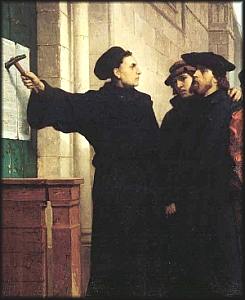
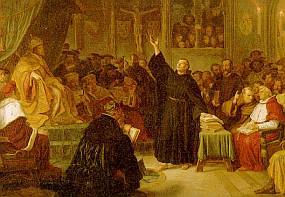 On Monday, I asked whether we had seen the last reformation within the Church. Many people believe Martin Luther's stand against the evils of the Roman Catholic Church was the last time God sought to reform His Church.
 From the Shepherd’s Conference (so ably liveblogged by