

Creation in the Heart of the Christian

Standard

View from Mt. Lassen, Callifornia

When I was a child, my favorite hymn was, by far, “This Is My Father’s World.” There was something inherently organic, yet otherworldly, in the simple words that begin this hymn:

This is my Father’s world,
and to my listening ears
all nature sings, and round me rings
the music of the spheres.
This is my Father’s world:
I rest me in the thought
of rocks and trees, of skies and seas;
His hand the wonders wrought.

This is my Father’s world,
the birds their carols raise,
the morning light, the lily white,
declare their maker’s praise.
This is my Father’s world:
He shines in all that’s fair;
in the rustling grass I hear Him pass;
He speaks to me everywhere.

The planets (the “spheres” as so elegantly put in the hymn) sing the praises of God. Contrary to the small-minded who believe God stopped speaking the second the canon of Scripture was closed, God continues to speak to us through His creation. The beauty of an unfolding lily attests to the artistry of God and His profound love for us that we may delight in what He delights in.

I know that God takes pleasure in what His words have wrought. I also know that I take pleasure in those things. So far this April it has averaged about 70 degrees and sunny here in SW Ohio. I cannot remember an April so auspicious in its loveliness. This kind of weather lifts everyone’s spirit.

Yesterday was the first cutting of the grass. Our property is a bit over thirteen acres, with much of it grass at this point. But as I sit up on my tractor and mow, I cannot help but feel something warm within me. The senses God gave me collect a host of data that all point to one thing: God can speak to us through the land.

I’ve blogged on this before, but I want to reiterate the thought. I believe that one of the reasons that many Christians feel impoverished in their souls is because they lack any connection to the land. Too many of us get all our food from the grocery store and never eat what we could grow ourselves if we had a tie to the land. This divorces us from God’s creation, a state I believe He never intended us to dwell in. Being able to till the soil and grow our own food puts more of our reliance back on the Creator and less on nameless and faceless multinational food production companies.

I believe God is calling Christians to get back to the land, to be better stewards of God’s world than we have been, and to outdo the pantheistic leftists (who seem to inhabit all the environmental groups out there) in our ability to care for Creation. We need to be less reliant on food distribution systems and more reliant on the Lord. I believe that Christians who are considering purchasing a new home buy one with a smaller house, but more property on which to grow food.

This year we are putting in a permaculture fruit orchard with apples, cherries, and Asian pears, plus all the supporting flora (to cut down on our use of harsh chemicals.) We want to be as organic as possible. Since my wife and I both enjoy a nice glass of wine with meals from time to time, we plan on putting in a vineyard after that—we have great soil for it. We live in the viticultural area that in the 1800s was the equivalent to what Napa is today, so we know it can be done.

And there is a blessing that comes from this that I think too many of us are missing. When we become detached from the land, we lose our ability to appreciate the bounty of God’s provision, taking for granted everything we consume. And while the Fall made growing our own food more difficult, the original call of God to be fruitful and to subdue the land has not been rescinded.

Every time I stroll through this property, I thank the Lord. I watched red-bellied woodpeckers cavort on a dying tree yesterday. The meadowlarks stroll in packs through the grass, disturbing the bugs they eat. Bats tear through the sky in random patterns, flying over the blooming pear trees, and the roses with their fresh green leaves. Warblers begin their re-acclimation to southern Ohio, their babbling songs ringing through the budding walnut, sycamore, and locust. Tadpoles swim the creek, while adult frogs croak their mating calls from the pond.

It all speaks to the majesty of God and too many people are missing it, casually ignoring Creation as they fly from one activity to another, dead to the voice of God speaking in the mulberry trees, the bluebirds, or the cirrus clouds wafting by overhead.

This year, rediscover the voice of God in Creation. Find a way to grow your food. Seek out the quiet places in the woods where God can charm you with His verdant lullabies.

In the words of another hymn:

For the beauty of the earth,
For the glory of the skies;
For the love which from our birth,
Over and around us lies;
Lord of all, to Thee we raise
This, our hymn of grateful praise.
The Devil’s Instrument

Standard

I sometimes wonder if too many people out there who call themselves Christians have become little more than bouncers for the Kingdom. By this I mean that they seek to spend all their time outside of the party trying to keep out the “rabble.”

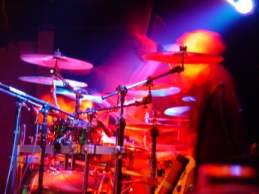
In 1984, I attended InterVarsity’s Urbana conference. My goal was to get on with an evangelistic music group Playing the drumsthat would tour the communist satellite countries like Hungary and Czechoslovakia. What I did not expect was to run into problems with my choice of instrument.
Several music ministries had set up for the conference and I hit each one. On only my second interview with a group, I was asked what instrument I played by a very pleasant late thirty-ish woman with a mushroom cloud of hair that dwarfed her elfin face. I told her, “Drums.”

She swiftly drew back in her chair and put her hand to her mouth as if I had said I was a big fan of Baal. In her best Southern drawl she let me know my deception: “Well, young man, drums are the devil’s instrument—and we’ll have none of that.” She just shook her head full of Basic Youth Conflicts messages as if to say, “Such a nice young man and yet he’s one of the Enemy’s footsoldiers.”

Shock. Complete and total—that’s all I could say about how I felt. No one had ever said such a thing to me before despite my having played for more than a dozen years (at that time.) But then I started to consider the source and just walked away to the next booth.

I was greeted by skeletally thin man with an even thinner tie and the look of a lot of years of tobacco abuse before he saw the light. Told him what I was hoping to do and he, too, asked the vital question, “Waddya play?”

I told him.

This time there was less of a look of horror and more of a “Son, I was a prisoner of that hellish music, too, but now I’ve come clean.” He said, “We’ve got no place for that kind of instrument. We sing for the glory of God.”

So okay. Two out of three and already I’m starting to despair. How much had I paid to come here?

No one was at the next booth—it was singers only anyway.

At the end of the row was a lovely young woman about my age. Conservatively dressed, quite perky, with a fashionable hairstyle, she was the quintessential spokesperson for her traveling musical group. I looked over the material she had. Lots of good-looking young people and a full band—with one glaring exception.

“I see all sorts of instruments in your band, but I don’t see any drums.”

“Oh,” she said, taken aback, “drums are the devil’s instrument.”

I wanted to ask if she was somehow related to the Gothard with the bouffant, but what was the point? In a row of five musical evangelistic groups, three of them had basically told me I was going to hell because of my choice of instrument.

Eric Liddell, the great missionary of China (and martyred in an internment camp), said that the reason he loved to run was that when he ran, he felt God’s pleasure. I feel that same pleasure every time I pick up a pair of drumsticks.

I wonder if we truly know what it is to feel God’s pleasure. Many would contend, and rightly so, that much of Christianity has fallen under the spell of emotionalism. But we cannot merely chuck our emotions out of worship, nor can we assume that God’s pleasure cannot be experienced outside of a church building.

God’s pleasure is felt by the man putting the final touches on a piece of handmade furniture that will grace a home. God’s pleasure is revealed in the accountant who manages to save his company a small fortune by finding inefficiencies in the business process. God’s pleasure is alive in the mother who bakes her children cookies from scratch. God’s pleasure is in an elderly couple savoring the bottle of Cabernet Sauvignon they’ve been saving since their honeymoon in Paris fifty years ago.

Tim Challies has a well-reasoned look at worship that I think all of us should read. However, I think Tim’s reasoning has the tendency to turn worship into a “bloodless” experience. Not all of Christian worship can be reasoned, I think. When Isaiah fell on his face in his vision when King Uzziah died (Isaiah 6), I don’t believe he was filtering any of this through the “Regulatory principle of worship.” Not everything is so easily categorized. I don’t care if the Regulatory principle forbids dancing in worship, Psalm 150 says to go for it:

Praise him with tambourine and dance; praise him with strings and pipe!
—Psalms 150:4 ESV

Honestly, what are we afraid of? Do we fear that God enjoys listening to a full-bodied band of musicians playing for Him? Does the thought that dancing before the Lord might shake the dust off a few people frighten us? “Good grief, Martha, look at that woman over there raising up her hands during worship! Have you ever?”

God is worshiped when we experience His pleasure, when we open ourselves and lay bare our hearts in adoration of Him. When He is pleased, we are pleased. Even as I type, the Lord is preparing the greatest party that will ever be. Why are we so interested in being the bouncers?

So as I step back onto the role of drummer for the worship team at my new church, I just want to tell the boothminders at Urbana all those twenty-one years ago, “This pleases God more than you can know.”

Praise the LORD!
Praise God in his sanctuary; praise him in his mighty heavens!
Praise him for his mighty deeds; praise him according to his excellent greatness!
Praise him with trumpet sound; praise him with lute and harp!
Praise him with tambourine and dance; praise him with strings and pipe!
Praise him with sounding cymbals; praise him with loud clashing cymbals!
Let everything that has breath praise the LORD! Praise the LORD!
(Psalms 150:1-6 ESV)

Recovering Christianity’s Balance

Standard

A couple weeks back, I asked the question, "Is Christianity Broken?" Today, I want to revisit this issue, probably the most popular post to Cerulean Sanctum thus far.

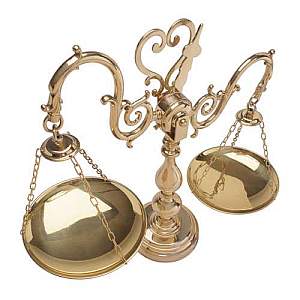
Golden balanceAs a Christian for close to thirty years, I've seen a lot of movements within the Church in America rise and fall. In the 1960s, I witnessed the Protestant appropriation of Vatican II ideals, the rediscovery of the charismata by mainline churches, and the first flowering of contemporary worship music. The 1970s brought the Jesus People, the growth of Evangelicalism as a dominant political force, and the rise of the Third Wave churches. The 1980s gave us the beginnings of the Church Growth movement and the ascendancy of seeker-sensitivity. The 1990s have proven to be a backlash time, with every aspect of the faith being questioned and reconsidered, finding charismatics adrift within fads, the "Emerging Church" attempting a shaky counter-reformation, and—sadly—greater concessions to the spirit of the age within American Evangelicalism.

Now in the new millennium, with so many opportunities to stake a claim for the next thousand years, I would offer an old direction. To the question of "Is Christianity broken?" I can only say, No. What we are instead as American Christians is horribly out of balance. We have become a church of fads, running after what appears to work, but all the while ignoring the tools, wisdom, and gifts Christ purchased for us through His blood two thousand years ago.

I cannot escape this passage:

Then if anyone says to you, 'Look, here is the Christ!' or 'There he is!' do not believe it. For false christs and false prophets will arise and perform great signs and wonders, so as to lead astray, if possible, even the elect. See, I have told you beforehand. So, if they say to you, 'Look, he is in the wilderness,' do not go out. If they say, 'Look, he is in the inner rooms,' do not believe it.
—Matthew 24:23-26

Now certainly, this is an eschatological reference, but I want to focus on the mindset behind it. When we go rushing around trying to get on board with the latest "appearance of the Lord," we swing like a pendulum. There is a tendency for us to accommodate to the wisdom of our times, too, picking up whatever business or pop-psychology trend is hot, fusing it to our new Christian fad. But for those of us who have been around a while—and have kept our eyes open and our discernment intact—all this is not coordinated movement, but spasmodic lurching from one soon-to-be-abandoned methodology to another.

Today it is the "Emerging Church" or the "Purpose-Driven Life" and so on. The future will bring some new trends. But what about yesterday's hot new ministry or devotional style? Do we even remember what it was? Or are we too busy reacting to the fallout of it as we swing on the pendulum to the other extreme, far, far away from what we so eagerly endorsed just a couple years ago?

To the world, this means one thing: "The Church has no eternal focus; we can find no answers within it."

In our attempts to read the times and accommodate to them, we have lost our balance. We continue, also, to stake out positions that only exist at the extremes on issues, rather than considering the holy middle.

Lately, I have been involved in several discussions on topics relevant to the Christian walk. Those discussions show out out of balance we are:

  • On the topic of prayer, I have talked with others about focused times of prayer and about "practicing the presence" of God all day. Supporters have gravitated to the extremes, favoring only one or the other. But isn't the truth of our prayer life centered in the balance between those two?
  • On the topic of the Holy Spirit, I have encountered cessationists and "charismaniacs," but isn't it true that the Holy Spirit still works today and that He does not contradict the Word of God? Aren't both the cessationists and the charismaniacs stuck at the extreme swings of the pendulum?
  • On the topic of Calvinism and Arminianism, like I wrote in a previous post (On the Brink of a Quantum Singularity with Calvin and Arminius), are those two positions possibly at the extremes and not in the center of where the Lord would have us be?
  • On the topic of the social gospel versus the moral gospel, is this not a false dichotomy to be making? Isn't the true Gospel a complete whole that encompasses both? (Wrongly Dividing the Gospel)
  • On the topic of the nature of Christ, isn't our Lord both a Lover who draws us to Him and a Warrior who will slay His enemies with the sword of His mouth? Isn't He both the Lamb of God AND the Lion of Judah? Why are we so often given to exalting one side of the Lord's person over the other, clubbing those people on the other pole with our "enlightened" view?
  • On the topic of the Christian's duty to the environment, must we divide into camps that either support radical groups like Earth First! or who ascribe to a pillage-the-Earth mentality based off a mangled reading of the Creation account? Is there no wise middle ground that we can support?
  • On the topic of the Bible, why must we dwell at the extremes: one that practically elevates the Bible above the person of the Lord Himself and one that shuns the Bible in favor of just hanging out with Jesus relationally? Where is the balance?
  • On the topic of the role of the Church, aren't we supposed to make disciples AND stand in the gap within our society?

No one said this kind of discernment—or the natural walking out of the results—would be easy. But isn't that why the Holy Spirit was given, to guide us into all truth?

Our failure to achieve balance in our Christian worldview has only confused the lost, the very ones who need to hear a right and balanced message from the Lord. If the Church in North America is to be all that the Lord desires us to be we have got to work for balance and show more discipline in standing against the fads of our day.

This is not to say that we compromise. In most cases, there truly is no compromise needed. We have simply spent too much time at one end of the pendulum swing to know the difference, though. It may seem uncomfortable to leave those extremes, but in truth we have done so quite a bit in just the last thirty years as we react to changes in worldly wisdom; this should not be unknown to us. Our problem is our inability to stop our momentum as we swing from one side to the reactionary other.

Cultural relevance does not trump eternal significance, and this is where we most suffer. We must be more discerning, testing the spirits—especially the spirit of the age—to see if it is of God or not. Nor should we be afraid to ask the hard questions and to administer the test at all. Examining an extreme position does not naturally lead to error if we are examining it against the Word and by the Spirit. Such an examination may reveal our own extremism and allow us to come to the truth of the center.

In closing, I offer three points that will align us:

  1. We must be prepared to look out of step with culture and culturally compromised churches. Balance is never fashionable.
  2. We must never forget our history. As Goethe once noted, "He who cannot draw upon three thousand years is living hand to mouth." Historical perspective compels balance.
  3. We must always ask, "What is eternally significant?" The answer to that question will bring us into balance.

Think about this. I believe the issue of balance is the single most important issue facing the Church today.

Blessings!