

Banking on God: Crisis, Part 1

Standard

Woe unto the grasshopper!That I’m still under the weather makes today’s post all the more apt. Feeling lousy may be a state many of us will better understand in the days ahead.

The fifth largest investment bank in the United States collapsed Monday. Please read that again.

Now read this: 60,000 homes in my state of Ohio are in the process of foreclosure as of last quarter. That’s the worst in the nation.

When I first read a nondescript, well-hidden article in The Wall Street Journal last May concerning problems in the sub-prime mortgage industry, I told my wife, “This is it. The ripples are going to be devastating.”

Long-time readers of Cerulean Sanctum know that this is one of the few Christian blogs out of thousands that talks about economic issues facing the Church in America. I’m no prophet, but it didn’t take a seer to read the handwriting on the last recession’s wall. My church’s number one prayer request was for meaningful work. Number one. Sadly, many of those who lost jobs in the last recession could not find jobs that paid as well as the ones they lost. This is a serious concern that many people, including economists, ignored.

The chance that we would suffer another economic meltdown worse than the one that hurt us for nearly five years seemed lost on all the stampeding bulls when the US economy supposedly turned the corner sometime in 2004-2005. Sadly, though, that corner turn didn’t trickle down to many people. Every economic survey known to man showed that real wages only improved during the last “rebound” for those in the top one or two percent of wage-earners. The rest of us could not keep pace with inflation. But those dour, yet real, numbers got lost in the giddiness over the fact that the ultra-rich got ultra-richer, and their continued ultra-richness drove up all the positive economic figures disproportionately.

Now the greed of many of those ultra-rich, particularly those who drove ludicrous speculation in investment sectors, is threatening the entire world economy.

Once again, the question must be asked: How has the Church prepared for any of this?

Perhaps this poll figure will show us:

[poll=35]

Answer? Not at all, it seems. Once again, we’ve been caught napping.

And this is patently sad, as I see it. One can’t read the Bible and not note that God blesses people who are prepared. Imagine a world where Noah failed to build the ark. Think on Joseph ignoring God’s counsel, leading to an Egypt ill-equipped to handle seven years of famine. Scratch those and there is no story of salvation, folks. The world grinds to a wet, watery end. Or it starves to death.

So which of our churches stored up for seven years of famine during the few years of “plenty” we supposedly just experienced? Just two percent by the poll responses. As far as I see it, every “unknown” response might as well be a “false,” because if it’s not obvious we’re preparing (and our preachers aren’t talking about it), then we haven’t been.

[poll=39]

Half of us said we could help a family in need up to a month’s worth of groceries. I figure that’s good for a one-time gift of $200-$300.

My concern here, though, is whether this will be enough when the need moves from being a lone family in your church and mine to dozens. Or in the case of some megachurches, hundreds.

[poll=38]

While it looks as if this poll shows a drop in what respondents thought would be the largess of their church versus what they would give themselves, it balances out because some believed their churches would handle more expensive needs. That’s a positive answer. Let’s all pray that it reflects reality.

[poll=37]

The last recession lasted three to five years, depending on which economists you read. The news for this poll question, though, deals with the increasing length of time it takes job searchers to find decent jobs lost during an economic downturn.

On average, the last recession saw the unemployed enduring ten months of nada before finding replacement work. Considering that most unemployment payments end after six months, it’s a four month shortfall on income. That’s all that half the respondents had set aside. God help us if things should be worse this recession.

About five years ago, I sat in a church amid 2,500 or so people and raised my hand when the pastor asked how many had at least six months income set aside. I looked around that massive auditorium filled with people and a grand total of six hands were raised. My wife and I counted for two of those hands.

This was not a throwaway poll by that pastor, either. He beseeched people to be honest. What was most scary was I would deem the majority of people sitting in that church that night to be middle to upper-middle class. These weren’t poor people already scraping by, but the ones who should know better.

How is it that we are not better savers? Why is the savings rate in this country in the negative numbers? I was playing a trivia game a couple weeks ago and a question asked, “What percentage of Americans spend more in a year than they earn in wages?” I guessed around 30 percent. The answer? Closer to 75.

Yeah, you read that right.

Folks, we Christians need to be better prepared than that and far more serious about money than we appear to be.

[poll=41]

If this answer were truly the case, then why are our churches unprepared to take care of people, both members and outsiders, if and when the economy tanks?

[poll=42]

A CNN poll today said that three out of four people believe we’re in a recession. I wonder what the poll above would show today versus three weeks ago if I re-ran it.

[poll=40]

In the church finances poll, most respondents said that staff salaries comprised the largest chunk of financial outlay for their churches. Fortunately, clergy positions are exempt from payroll taxes. Same for property taxes for churches.

Now imagine if those were removed on a church on thirty acres of land that had a dozen exempt-clergy positions. That’s a mighty big resulting ouch.

I would not be surprised if in my lifetime churches lost their tax exemption. Increasingly, city governments are fighting harder to keep churches out of any area deemed business-worthy. Why? Because the locality can’t draw taxes from that church, and the church keeps one more business from locating on prime, taxable turf. You can bet that sooner or later someone, somewhere, is going to run the numbers on all that uncollected tax money and somebody’s not going to be happy with failing to get a cut.

This issue becomes even scarier when we realize that the Fed position on church tax exemption considers it a privilege rather than a right. A series of court rulings in the 1970s formalized that “privilege, not right” position legally. And what is labeled a privilege is typically taken away when it seems most expedient to do so. Like in a deep, protracted recession. Just the kind that economic experts at the University of Michigan claim we now face.

Wouldn’t it be dispiritingly ironic if the American Church lost its tax exemption in order for the government to fund social services the Church should’ve been handling anyway?

[poll=43]

Pascal’s Wager is a famous apologetic that states it is far wiser to believe that God exists than to bet that He does not and be forced to pay the consequences of His existing. In other words, if God doesn’t exist, then it doesn’t matter who believes in Him or not, the end of all humans is the same. But if He does exist (and particularly if the Bible establishes His rules for living), then those who don’t believe in Him are in one world of hurt when they die. Better then to believe in Him.

Describing the Church’s position on the End of All Things poses the same problem, except for Christians. It’s nearly impossible to gather a room of noted theologians and get them to agree on issues like the Rapture, the millennial reign of Christ, and the meaning of the symbols and events of Revelation. Eschatology divides more Christians than just about any other issue.

In that case, would it not behoove Christians to prepare for the worst possible end times scenario rather than the least? If so, the worst would be that the Church goes through the entire Great Tribulation. If the Church gets raptured out of here at the first sign of trouble, then great! We avoid the Great Tribulation altogether. But what if that’s not the way it works? (And no one thought it worked that way until the late 19th century, so what does that tell us?)

Where then is our preparation? How will our churches handle persecution? What alternative economic systems are church leaders developing so Christians can exist outside the corrupted world economic system? Have we identified people in our churches with specialized skills? Are we doing anything at all to weather even a few months of the storm? Anything?

We simply are not ready and have no excuse for our lack of preparedness.

[poll=44]

Almost a third of poll respondents said they believed that Jesus would return in the next 5 to 25 years. That’s a pretty astounding number, though not unusual. I believe that most Christians throughout history have believed that the Lord’s Second Advent would come in their lifetimes.

Still, if one person out of three believes this, where is the evidence of our preparation for His return? One out of ten of you believe Christ will not only return soon, but that the Church will persist through the Great Tribulation. Where then is the evidence that one church in ten is prepping for that reality?

What we say we believe and how we live that belief MUST align or else we deceive ourselves.

I don’t want to sound like a broken record here, but it’s hard not to see today’s Church in America as the grasshopper in Aesop’s tale. We need to be more like the ant—or should I say that we needed to be more like the ant. Because if winter is indeed already upon us, it’s going to be a brutal and savage cold like we’ve never experienced before.

***

Banking On God: Series Compendium

Banking on God: Church Finances, Part 1

Standard

We work, we give. But what happens to that money once it leaves our wallets and hits the red velvet bullseye of the collection plate?

[poll=13]

Well, this poll does a good job showing that most of us know where the money goes. Good for those churches who are clear about their finances. I know mine goes into excruciating detail.

For those few who aren’t getting the whole story, what’s your take on the situation? Why do some churches hide their finances, even when there’s nothing illicit going on? As for those who said that not all line items got equal attention, what expenditures do you believe the church isn’t telling you about?

[poll=14]

As befits an active and informed readership, most of you knew what was up with your church’s finances. That’s a good thing. I wish every Christian in this country knew what was up with church expenditures.

[poll=15]

In keeping with the state of the stats so far, few had anything bad to say about how their church spent money. Anyone care to share their displeasure and what can be done to resolve it?

[poll=16]

If poll respondents are any indication, one church out of three has a negative cash flow. I would love to know (and should have asked) which of the negative responders belonged to a church with less than 200 members and which might actually belong to a megachurch. We assume that megachurches are rolling in dough, but that’s less true, I think, than some would imagine.

For the people who responded that their churches were highly prosperous, what do you believe made them so? And on the opposite end, to those who said their churches were running in the red, what made them that way?

[poll=17]

A quarter of you said that money interfered with your church’s mission. In what ways? Not having enough money can put a negative spin on even the best of intentions and lead to a sense of doom within a congregation. Too much money turns a church into Laodiceans.
[poll=18]

While it’s nice to see that two-thirds of you feel confident enough to inform your church should you encounter financial hardship, the third who could not…well, you have my condolences. I would hope that we all could. While some of that reluctance may be our own pride, I know that for some of you, the gossip would start flying about you the second you opened your mouth. And that’s a shame. Fear in a church can be a real poison, especially when lack of trust undergirds it.

[poll=19]

This surprised me most of all. I’m glad to see that such an astounding number of people could go to their churches and request financial help and get it without strings attached. That’s very heartening.

David Fitch wrote in The Great Giveaway that this is one area that most churches do poorly. From the answers here, a large majority of people go to very generous churches. So perhaps Fitch is wrong.

What say you all?

[poll=20]

This must be one of those “only in other people’s churches” questions because I can tell you dozens of gruesome stories about how badly some folks who needed financial help got pummeled by their churches. Each of those stories just breaks my heart.

But evidently, that’s not you folks. That’s good to hear.

So where are all these churches that mistreat their people in this regard? Perhaps it’s a different kind of Christian who gets the cold shoulder, not the kind who visits blogs like this one and answers poll questions about giving. I don’t know. Like I said, I know plenty of examples, some too close for comfort.

I’ll turn this around and ask you all if the runaway majority answer on this question surprised you.

[poll=21]

[poll=22]

The results on this poll surprised me, too, since I know few churches who have benevolence funds set aside for members. Non-members, outsiders, and folks from the community, yes, but sometimes the flock gets neglected when it comes to the largess.

[poll=23]

Given the previous two poll answers, who then is handing out the money in these churches that give it away? Is it simply individuals acting apart from the church, or is it the pastor on his own?

For those who answered that their church has a benevolence fund, if there’s no group overseeing that money, who is doling it out?

[poll=24]

[poll=25]

I find these last two polls fascinating because they seem to show that people aren’t so interested in spending money on the administration of their church as they are the mission. The decaying remains of HeritageUSAYet how do you have the mission without paying for the administration?
It’s a poser, as the Brits say.

We all want to give to charities that have low overhead, but I’ve got to believe that churches are not such ministries. I’ve seen enough balance books over the years to know that the actual running of the church as business entity saps more funds than most of us realize. I know that my own church has been attempting to pay off its mortgage by adding a premium payment. We also got several thousand dollars upgrade of our sound system.

It’s a tough, tough call, isn’t it, knowing what finances advance the Kingdom and what ones may not? At least not on the surface…

Next post, I’ll give my own take on church expenditures and offer a few ideas for better addressing the mission while spending less on those things that burn in the end.

Stay tuned.

(And if you have a few minutes to pray for my family, I’d appreciate it. Sickness, bad news, and “What next?” have been the orders of the week. Thanks!)

***

Banking On God: Series Compendium

Preaching for Results

Standard

Jared Wilson at The Gospel-Driven Church pointed out six framing questions for preaching the word as suggested by Mark Driscoll of Mars Hill Church in Seattle. I think this list is outstanding, but I also think it is missing a critically important #7. The list:

1. The Biblical Question: What does Scripture say?

To answer this we need to check translations, do our word studies, and find out exactly what words best convey the meaning of Scripture.

2. The Theological Question: What does Scripture mean?

Here we need to interpret what is said, which requires commentaries, cultural background studies, etc. At this phase, John Glynn’s Commentary and Reference Survey is a must-have for every preacher and teacher. He rates all of the best commentaries and other reference material on various books of the Bible and theological topics.

3. The Memorable Question: What is my hook?

A word, image, concept, doctrine, emotion, or person needs to be the hook that is woven through the sermon. Without a unifying hook, the sermon will not be memorable for the hearer and will end up seeming like a number of disjointed thoughts.

4. The Apologetical Question: Why do we resist this truth?

Here we are assuming that people will not simply embrace God’s truth but fight it with their thoughts and/or actions because they are sinners who, like Romans 1:18 says, suppress the truth. So, we attempt to predict their objections so that we can answer them and remove their resistance to get them to embrace God’s truth for their life. This part of the sermon must be confrontational and often results in people walking out, standing up to argue, and sending nasty emails, all of which indicates you’ve hit a nerve like God wants you to. The real fight begins at this point and a preacher needs to come with his hands up looking for an opening much like a boxer. The issue here is uncovering the idols that people have and breaking their resistance to the truth of the gospel. This is also accomplished by co-opting their cultural hopes and presenting the gospel as the only answer to their deepest longing.

5. The Missional Question: Why does this matter?

We need to connect all that we have said to a missional purpose for our lives, families, church, and ultimately God’s glory. Something may be true but if people do not find it to also be important, they tend not to act on it. On this point I like to connect Scripture to the character of God, nature of the gospel, our mission in our city, and the quality of our lives both individually and collectively as a city of God within our city.

6. The Christological Question: How is Jesus the hero/savior?

The Bible is one story in which Jesus is the hero. Therefore, to properly teach/preach the Bible we have to continually lift Him up as the hero. Any sermon in which the focus is not on the person and work of Jesus will lack spiritual authority and power because the Holy Spirit will not bless the teaching of any hero other than Jesus.

Like I said, great stuff.

But I also think there’s a glaring omission.

As I look around the Church in America today, I see and hear a lot of preaching that is nothing more than pop psychology packaged in spiritual terms. It’s Christianity as self-help therapy, stripped of the cross, the blood, sin, redemption, and the Lord. In truth, it is no gospel at all.

On the other hand, I see and hear sermons that contain the full Gospel of grace. Yet something is still missing. Curiously, the item that is missing is the one item that previously mentioned pop-psych sermons address very well. And that’s to ask

7. The Praxis Question: So what are the next steps toward daily living out this truth in your life and mine?

If you read my post “The Question No One Wants to Ask…” you’ll know that our preaching today has not been very effective at making disciples. I give some reasons why in that post and note what we can do to help address the problem. I think what Driscoll lists above is very valuable at fixing the problem also. He’s just missing that seventh step.

The #5 Missional Question comes close to #7, but it’s still too conceptual. People in the seats are dying to know how the Gospel works in a practical way in their modern lives. They might hear the world’s best theological explanation of the cross, but if no one will tell them what to do to make that explanation real in their own lives, the message becomes like seed sown on hardened, baked soil.

Those of us in the seats today are clueless. Seriously, we are. Most of the foundation of Christianity that undergirded this nation is gone. We’ve got people today who don’t know what a hymn is. Even if what was in the past was merely a reflection of American civil religion, at least people understood that language and what to do with it. Today, few do.

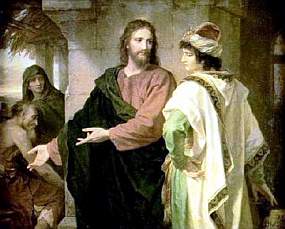
Folks today have to be shown. They need to have someone tell them in detail what to do. Just as the Paul explicitly told the Philippian jailer what he needed to do to be saved, preachers today must give some idea what the next step should be. 'Jesus & the Rich Young Ruler' by Heinrich Hoffman“Jesus is Lord!” Yes, now what must we do next? “Sin kills!” Yes, now what must we do next?

Jesus, whenever He spoke with individuals or small groups, absolutely taught this way. Consider His example of washing His disciples’ feet. I think they got that message of love and service pretty clearly because Jesus showed them what to do next. Or take the negative example of the rich, young ruler who asked the high concept question about the commandments. Jesus responded by telling him what the next step should be in response. Jesus left no doubt as to what to do next; the ruler simply didn’t want to do it.

I’m not sure we’re preaching what to do next in Gospel-centered churches. I think we sometimes spend too much time filling people with knowledge they can’t figure out how to use. But if the difference between the sheep and the goats in Matthew 25 is what they did and didn’t do, then the people in the seats have to know what the godly next step is for what they have learned. They must have a clearly directed outlet for praxis.

Not only this, but as Jesus showed, people need something else that very few preachers are willing to offer—and that’s for the preacher to model the truth so obviously in true servant fashion that no one can miss how the message is supposed to be lived out.

It’s one thing to say that Jesus Christ is the only way to salvation, quite another to show how that should inform our evangelism, and quite another again to have the preacher model how it’s done. Yet I would guess that the number of churches where that occurs in all three steps can be listed in the single digits percentage-wise. I suspect that in the biggest churches with the most famous pastors it’s impossible for the average Joe to even scheduled a meeting with that pastor, much less hang out with him doing door-to-door evangelism together.

We need that #7 question. And we need our leaders to draw alongside the people and show them how it’s done.