Luciano Pavarotti died last week. I don’t know why, but the loss of the greatest opera tenor of the last century hit me hard. When I consider the sheer amount of music that overwhelms us, Pavarotti singing his signature aria, “Nessun dorma” from Turandot, still manages to claw through millions of musical pretenders as it ascends to that upper echelon of musical perfection. That last series of the legendary tenor’s sung notes still sends chills down my spine.
This morning, I listened to his rendition of “Che gelida manina” from La Bohème and I couldn’t stop the tears.
Maybe, on second thought, I do know why I’m melancholy. And it’s not just the thought of losing Pavarotti’s stellar voice. He represents one of my only remaining links to my father who died in 2000.
Dad would sit in his favorite chair and listen to Pavarotti for hours. He bought a high-end stereo system in 1970 just to listen to the Italian tenor sing. Dad could barely operate the thing, but all the fumbling with the controls was worth it when Pavarotti (just entering his prime) sang with so much passion and skill it made those Dynaco speakers weep.
You see, it’s about legacy.
Pavarotti not only left a tremendous musical legacy—he’s sold an astonishing 100 million albums—but he was known as a true humanitarian who raised millions of dollars for a variety of charities around the world. Remembering his humble days as a baker’s son, Pavarotti routinely used his fame to help others. In one celebrated gesture, he flew in a noted vet from Britain to examine a neighbor’s ailing dog.
More than 150,000 showed up to view Pavarotti’s body for the few hours it lay in state. Italian TV notes that at least five million in that nation watched the funeral on TV.
My Dad didn’t draw quite so many. His legacy won’t touch Luciano’s. Fact is, he didn’t leave much legacy at all except for a son who appreciates a good aria sung well. Dad focused on the wrong things and it showed in how he died. All this makes me sensitive to the issue of legacy.
When I’m in bed at night listening to the tinny strains of katydids outside, the issue of legacy creeps up on me. Legacy’s consumed more than a few sleep cycles, keeping me up late, wondering. Why? Because, in many ways, we Christians are defined by our legacies.
What are we leaving behind as entropy claws at us? Are we building a house of straw or one of gold encrusted with jewels?
Mention heaven and everyone will ooh and aah about how wonderful it will be, but they’ll never talk about the fire. As I’m thinking about my legacy, though, I can’t escape that purifying flame:
According to the grace of God given to me, like a skilled master builder I laid a foundation, and someone else is building upon it. Let each one take care how he builds upon it. For no one can lay a foundation other than that which is laid, which is Jesus Christ. Now if anyone builds on the foundation with gold, silver, precious stones, wood, hay, straw– each one’s work will become manifest, for the Day will disclose it, because it will be revealed by fire, and the fire will test what sort of work each one has done. If the work that anyone has built on the foundation survives, he will receive a reward. If anyone’s work is burned up, he will suffer loss, though he himself will be saved, but only as through fire.
—1 Corinthians 3:10-15
One of the main reasons that Detroit lost to Tokyo can be traced to legacy. Ford, GM and Chrysler opted to live for the quarter. Toyota and Honda went for the 50-year plan. The Japanese manufacturers understood the necessity of planning so as to deliver a legacy of quality and innovation.
My son and I do a lot of geocaching. Because the little treasure boxes they use in that sport/game are best stashed on public land, we find a lot of them in cemeteries. 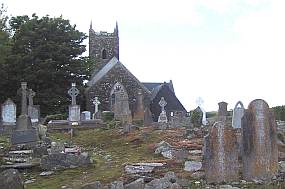 More than a few of those abut church property. Perhaps if every church went back to burying its congregants in a plot of ground the living would need to pass through every Sunday, it would do a lot toward getting us to think about our legacies.
Instead, we’ve buried ourselves in the present. In one moment in time, most of us met Christ, in an instant, in the blink of an eye. And we were changed. But now what?
See, just stepping into the starting blocks isn’t as important as finishing the race of life well. This is our training ground. Are we learning anything for the Kingdom? Are we doing anything for the Kingdom? Considering that most of us became Christians before the age of 21, we’ve got another 60 years of discipleship looking to build a legacy on the foundation of Jesus Christ.
It’s not just you and it’s not just me building, either. Together, we are building. That’s because Christ founded a community.
So what legacy is our community leaving as time passes? By most studies, the average church has 15 peak years before an inevitable decline. I suspect that’s largely due to the reality of Detroit Syndrome in our churches. We shoot to make our short-term goals, but what’s the long-range plan? Why is it that most churches don’t have a 50-year plan?
I think even a plan of that length doesn’t cut it. If more and more people live into their 80s and beyond, then we need a church plan that covers them from cradle to grave.
Now, let me see all the hands for those of you who attend a church with an 80-year plan? None? How about 50-year? Or say, 20? Ten? Man, I’ve feelin’ like Abraham here. How about a year plan? Okay, so you’ve got that. Oh, you say you don’t? Uh…
I can’t say that Pavarotti had a 70-year plan, but he was savvy enough to mine his talents for everything they were worth. That amounted to something.
But what of you and me and our churches? What legacy are we leaving behind?
Anyone here led more than ten people to Christ? Truth be told, that shouldn’t be so hard. What’s so hard about leading at least one person to Christ every year? Yet I’ve got believe that most of us have failed in this task.
So we’re actively discipling a dozen or more newbie Christians every year, right?
***crickets***
Do you ever wonder about your legacy? It matters to God. It also matters to people around you, both those who don’t know Christ and those who do. Your legacy can change the world because of Christ in you.
For most of us, life is easy right now. Better think about that legacy in the fat years because when the thin ones come, it may be too late.

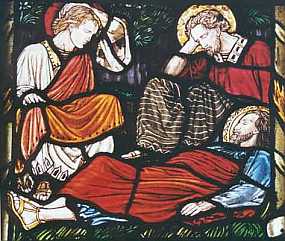 That’s a tragedy of untold sorrow. Yet it’s what too many Christians face each Sunday in either their dead churches or their dog-and-pony-show excuses for a live one.
 The image of David Byrne of The Talking Heads thumping himself in the noggin in the video for “