The Little Things: Illegal Worship

Standard

Magnifying GlassA new randomly posted series that I hope to birth here today is "The Little Things." The devil may be in the details, but the Bible says this:

One who is faithful in a very little is also faithful in much, and one who is dishonest in a very little is also dishonest in much.
—Luke 16:10 ESV

"The Little Things" will discuss those issues in the Christian life, both individually and corporately, that mark the difference between the way of the world and the way of Christ. Do the right little things and you'll be immensely blessed, but do the wrong and—well, you get the picture.

The lead for this is a testy issue: illegal worship. Now I'm not talking about unregistered Chinese house churches, but about a crime that goes on every day across the world.

Most people don't realize that when lyrics for songs are projected in public, those lyrics are subject to copyright laws. Be it a slide of handwritten words on an overhead projector or the latest top 40 Christian worship song on a Powerpoint presentation, if your church doesn't have a license to project those words to the worship song you are singing, it's against the law. Now we can debate whether music intended for praising God should be copyrighted or not if you wish, but the fact remains that almost all of it is. Christian Copyright Licensing International can give you more details.

I can almost hear the collective "So what?" ringing from the masses on this one, but what if God is displeased because we're willfully waving our hand at the whole issue? I for one don't want to think that Christians don't care about this point, but the collective shrug is unnerving. I know some people will say that control of this issue is in the hands of the U.N., the Illuminati, the Tri-lateral Commission, and (for you more liberal readers), good old Yale University's Skull and Bones, but the fact remains. If your church hasn't paid for the license to use the copyrighted songs you are singing in worship, then you are breaking the law.

Zacchaeus, noted Palestine tax hustler, on this issue:

And Zacchaeus stood and said to the Lord, "Behold, Lord, the half of my goods I give to the poor. And if I have defrauded anyone of anything, I restore it fourfold."

The Lord's response was

And Jesus said to him, "Today salvation has come to this house, since he also is a son of Abraham."
—Luke 19:8-9 ESV

How interesting that Jesus absolved this diminutive defrauder and declared him righteous. Zacchaeus uttered no pronouncement of faith in Christ at that point other than to offer to pay restitution. How then can we who have declared our faith in Christ publicly going on flaunting this requirement of our laws regarding paying for licensing for worship music use?

Is your church not doing so well? Maybe this is the reason why. Just another hindrance we should be laying aside. Because in the end, little things matter.


The Always Answer

Standard

…in your hearts regard Christ the Lord as holy, always being prepared to make a defense to anyone who asks you for a reason for the hope that is in you; yet do it with gentleness and respect, having a good conscience, so that, when you are slandered, those who revile your good behavior in Christ may be put to shame.
—1 Peter 3:15-16 ESV

Peter writes that the answer we must always have ready is our reason for our hope in Christ.

I emphasize that point because too often I see that our defense comes down to answering more than we should. We open our mouths and wax poetic over any and all subjects as if the world’s wisdom rested solely between our ears.Stumped by the Question? For some, it is a life’s calling squeezing an infinite God into a diminutive box that can be attached to a keychain and whipped out when the need to go somewhere important calls.

In November, I will be 43. I’ve been a Christian for 29 years. On most doctrinal issues I’ve crafted a bullet-proof answer for anyone who asks. But I have less of them than I once did. What I desire to have instead of an answer for everything is the reason for my hope in Christ. I need to ensure that answer is always buffed and ready for the asking.

I think too many Christians suffer from a need to have not just their reason ready for their hope in Christ, but their reason for all that is, both seen and unseen. Ensuring that no one ever finds a chink in the spiritual edifice they’ve constructed drives them. They must possess an answer to everything.

But even the Bible leaves some questions unanswered. We don’t know exactly what heaven looks like, for instance. We know that Enoch and Elijah were taken up into heaven without dying, but how exactly does that work? And are they really the two witnesses returned to earth as described in Revelation? What are all the things that Jesus did that aren’t written down in the Bible, as the last verse in the Gospel of John says at its end? And those are only a few mysteries; I’m sure you could come up with plenty more.

When did “I don’t know” become the hardest thing for Christians to say? Why do some Christians feel compelled to answer life’s every question? Some of the men through whom God spoke, men who wrote the very words of the Bible, weren’t so bold as to provide a running discourse on every subject imaginable. Some had the nerve to say

Three things are too wonderful for me; four I do not understand: the way of an eagle in the sky, the way of a serpent on a rock, the way of a ship on the high seas, and the way of a man with a virgin.
—Proverbs 30:18-19 ESV

The writer of Proverbs here didn’t try to erect an entire epistemology to explain these wonderful things. Why do so many Christians today think they can do better? Has God left us no enigmas at all?

I think it comes down to pride and fear. Pride in our ability to answer. Fear that if we cannot, the chink in our doctrinal armor will have been exposed. If only more Christians left enigmas alone rather than answer the way they do.

The one answer we should always be ready to give is based off the question, “Why do you hope in Jesus?” Our answer ultimately matters more than all others. Go back to the Bible and reason from it, but don’t forget that the answer always contains an element of the personal. Something of you has to be in there, something that no one else on the planet shares in common. Your story of faith in Christ matters. It is my hope that you know it well enough for it to be your “always answer.”

Hell Is for Children

Standard

Brad over at The Broken Messenger takes Steve Camp to task for his curious post about children and salvation (or the lack of it.) I have to be honest in that I scratch my head when I read these kinds of conversations. I wonder if we have bound God by the very theological systems we hold so dear.

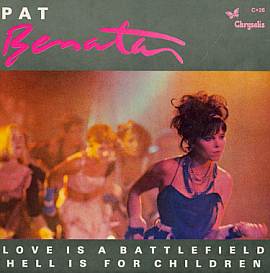
Hell Is for ChildrenI seem to be reading more than my share of tortured arguments lately. Sadly, this argument reminds me of the title of an old Pat Benatar song. While I will be accused of ascribing to "the sentimental model," I have to ask anyone who has children, "Which of your children are you willing to consign to hell and be satisfied with that result?"

I'm not sure if I'm okay with saying that a three-year old is doomed by his or her lack of understanding the Gospel and that there's nothing that can be done about it should that child die in an accident. It seems that Steve is saying we should be glad in this! I wonder if he extends that same thinking to his own children.

I hear some people saying that a particular child was assigned by God to perdition and is just fulfilling her role as a child of wrath. Still, did Jesus say, "Suffer some of the little children to come unto me?" If we are to receive the Kingdom as a "little child," then is it possible that little children have a covering of grace through Christ's finished work on the cross that in adults has been outlived because we have heard, understood, and now have no excuse? It appears that Steve would answer in the negative to this (and possibly Brad, too, though he disagrees with Camp's ultimate answer), but I'm not so certain.

So, I come to the end of Camp's rationale and am left with with no more answer than when I started. The stillborn child of this couple goes to heaven while this couple's SIDS child goes to hell? Camp would argue this position based on predestination and election, but a case like this makes such certainty seem capricious. God may indeed be no respecter of persons, but something about the conclusions we are coming to on this topic are unsettling to me by nature of their complete helplessness and the shrug we must toss in as a result.

The salvation of my child could not possibly matter to me more, but I don't know when his statements of faith are what someone would call "saving faith" and what others would consider the default childhood interest in things relating to God.

What do you believe the Holy Spirit is saying to us on this topic?