
Over the course of the last six weeks, I’ve been working my way through Frank Viola’s series of books on organic church. I’ve completed Pagan Christianity, and I’m now reading Reimagining Church.
In those books, Viola does a stellar job of sharing stories about how near and dear to the New Testament these naturally formed and free-form, Spirit-led organic churches are. They supposedly embody all the positive characteristics I wrote about yesterday in “I Had a Dream.”
Having been around churches all my life, with a degree now called Spiritual Transformation (once Christian Education) from the top Christian college, and a keen sense that something is definitely amiss with the way we do church, I am dying to see a church like the one Frank Viola describes in his books.
I wish it could prove to be more real, though.
My son came home from school last weekend totally enthralled with the musical The Music Man, which his music class at school had shown. That it’s my favorite musical—and I own the soundtrack, though not the Preston/Jones movie, sadly—made it all the more a father-son shared experience, since we played the heck out of the soundtrack last weekend, driving my wife bats with our mutual singing of the question of how can there be any sin in sincere.
That said, sometimes all the sincerity in the world can’t necessarily change reality.
I can’t shake the feeling that Frank Viola comes off a little like the infamous Professor Harold Hill of the musical’s fame. Just as Hill paints a marching band as the cure for every moral ill confronting the youth of River City, Iowa, so Viola lauds the organic church as the only viable answer for Christians who long for a more genuine experience of community in Christ than the “pagan-inspired” institutional church offers.
While I don’t think that Viola intends to skip town with anyone’s cash like Professor Hill did, the comparison is still apt, since both the marching band and the organic church seem more mythical than real.
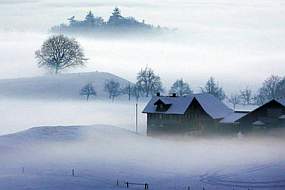 I say this because the more I attempt to locate the type of organic/house church that Viola says has been blessing his life for the last few decades, the more it seems like the fabled destination of another famous musical, Brigadoon.
What my search for the organic church has yielded:
- I emailed Viola’s organization for more info, which landed me on a mailing list to receive more stuff from Viola and his cohorts, yet none of it yet addresses the main question: Where can I find an organic church in my area?
- I’ve visited the websites of numerous top house church and organic church organizations that tout access to church locations and resources. What I’ve found are moldy, old sites filled with broken links, out of date church info, dead and buried churches, and all the wrong kinds of impressions that such organizations want to make on someone looking to connect with them. In short, visiting organic and house church websites is akin to hanging out on MySpace or Friendster.
- What does it say about the rosiness of organic church when you discover some of these churches no longer meet because the people who started them left to go back to paid, institutional church ministry?
I live just outside a metropolitan area of 2.2 million people that is heavily churched. When Christian pollsters and church resource magazines publish info about influential institutional churches, this area contains a disproportionately large number of them. Which is why I continue to scratch my head at the utter lack in such an area of anything resembling Viola’s ethereal organic church. Hasn’t anyone burned out of those institutional megachurches and fled to the supposed refuge of an organic church?
Reading the testimonials of organic church members included in Viola’s books makes my heart ache. But like so many tales one hears in the American Church today, it seems like those beautiful stories are happening in some hazy, distant place, almost like Narnia, except even harder to find.
UPDATED NOTE TO ALL COMMENTERS—Please read:
If you are NOT a regular reader of Cerulean Sanctum, please do not use this blog as a means to carry out a long-running battle between advocates and critics of Frank Viola or any house church organizations affiliated with him. I don’t care if you are defending or attacking, NEITHER TYPE OF COMMENT BELONGS HERE. I am both saddened and appalled that this blog has been drawn into some ongoing feud between Christian brothers and sisters who are so ruthlessly concerned with getting the upperhand in that feud that they’ll hijack this blog to do it. Simply put, doing so is not Christ-like. Please take your feuds elsewhere and know that I’ll delete any comments that even remotely seem abusive.
Really, as a rebuke from a fellow Christian brother of some experience: Grow up.
This is not to say that people can’t comment about their positive or negative experiences in house churches. But please refrain from scandalous attacks on any named person. And please, no comments allowed from “hired guns,” truly hired or merely self-appointed.
Because, frankly, I’m tired of it.
 1. Church leaders failed to address “sticking points” within the church despite others (usually nonleaders) noting those issues.