
Stupid Hymn Tricks

Standard

Always on the lookout for God-centric music that is intelligent and beautiful, I encountered a song a few weeks back that reminded me of hymns gone by. The melody was easily sung and the lyrics that I caught on first hearing were great.

Or so I thought.

The song in question is Fernando Ortega's "Our Great God" as performed with Mac Powell off the City on a Hill—Alleluia CD. Beautiful song and very hymn-like. HymnalThe chord transitions from major to minor keys are lovely and the production on the CD is exquisite. Best of all, because the phrasing is simple and the meter consistent, it is easy to sing, unlike many of today's recent worship music offerings. And the tune is so adaptable that you could sing a thousand other old hymns to it, including "Amazing Grace."
Here's the first line:

Eternal God unchanging, mysterious and unknown

  • God is eternal—check
  • God is unchanging—check
  • God is mysterious— (to the extent that His thoughts are higher than ours and His ways are sometimes hard to understand) check
  • God is unknown—Uh oh

I guess no one checked with the Bible on that last one:

So Paul, standing in the midst of the Areopagus, said: "Men of Athens, I perceive that in every way you are very religious. For as I passed along and observed the objects of your worship, I found also an altar with this inscription, 'To the unknown god.' What therefore you worship as unknown, this I proclaim to you. The God who made the world and everything in it, being Lord of heaven and earth, does not live in temples made by man, nor is he served by human hands, as though he needed anything, since he himself gives to all mankind life and breath and everything. And he made from one man every nation of mankind to live on all the face of the earth, having determined allotted periods and the boundaries of their dwelling place, that they should seek God, in the hope that they might feel their way toward him and find him. Yet he is actually not far from each one of us, for "'In him we live and move and have our being'; as even some of your own poets have said, "'For we are indeed his offspring.' Being then God's offspring, we ought not to think that the divine being is like gold or silver or stone, an image formed by the art and imagination of man. The times of ignorance God overlooked, but now he commands all people everywhere to repent, because he has fixed a day on which he will judge the world in righteousness by a man whom he has appointed; and of this he has given assurance to all by raising him from the dead."
—Acts 17:22-31 ESV

The true light, which enlightens everyone, was coming into the world. He was in the world, and the world was made through him, yet the world did not know him. He came to his own, and his own people did not receive him. But to all who did receive him, who believed in his name, he gave the right to become children of God, who were born, not of blood nor of the will of the flesh nor of the will of man, but of God. And the Word became flesh and dwelt among us, and we have seen his glory, glory as of the only Son from the Father, full of grace and truth. (John bore witness about him, and cried out, "This was he of whom I said, 'He who comes after me ranks before me, because he was before me.'") And from his fullness we have all received, grace upon grace. For the law was given through Moses; grace and truth came through Jesus Christ. No one has ever seen God; the only God, who is at the Father's side, he has made him known.
—John 1:9-18 ESV

But, as it is written, "What no eye has seen, nor ear heard, nor the heart of man imagined, what God has prepared for those who love him"— these things God has revealed to us through the Spirit. For the Spirit searches everything, even the depths of God.
—1 Corinthians 2:9-10 ESV

Thomas said to him, "Lord, we do not know where you are going. How can we know the way?" Jesus said to him, "I am the way, and the truth, and the life. No one comes to the Father except through me. If you had known me, you would have known my Father also. From now on you do know him and have seen him." Philip said to him, "Lord, show us the Father, and it is enough for us." Jesus said to him, "Have I been with you so long, and you still do not know me, Philip? Whoever has seen me has seen the Father. How can you say, 'Show us the Father'? Do you not believe that I am in the Father and the Father is in me? The words that I say to you I do not speak on my own authority, but the Father who dwells in me does his works.
—John 14:5-10 ESV

God is NOT unknown. He has been revealed. This is one of the distinguishing marks of the Christian faith: God is knowable through the Person of Jesus Christ. What we have in this song is rank postmodernism raising its ugly head. It's that attempt to sound religious by saying God is lurking on the outskirts of the universe, inscrutably doing whatever it is an inscrutable god does.

Jesus said that God is knowable because He (Jesus) is knowable, having revealed God in His very Person. Paul clearly addresses the "unknown god" fallacy, though, saying that while some may worship unknown gods, Christians do not. John writes that Jesus Christ made God known.

Now I'm not so charged by this song. The "unknown" lyric also reveals that the intention of the "mysterious" is not so much to say that God is higher than us, but to shroud Him in fog. It sounds like a vain attempt to restore the veil in the temple.

I don't want anyone in my church singing that God is unknown, so I guess "Our Great God" is out. Too bad.

How's about it folks; what songs or hymns out there strike you as being doctrinally suspect? Your comments are most welcome!
That Strong Hand

Standard

This is a break from the “Hidden Messages of American Christianity” series.

I’m at that age where I think about mortality more readily. There’s something about reaching your forties that the aura of invincibility has totally worn off. I turned 43 a few weeks ago and my middle brother joins me in that fifth decade this weekend.

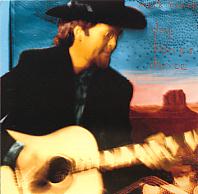
I seem to like a lot of dead authors and musicians, especially those that shuffled off this mortal coil before their time. Keith Green has long occupied my pantheon of greats, Rich Mullins and I attended the same church for a while, and Mark Heard penned the one Christian song that I wish I had written. Dry Bones DanceGreen never made it to 30 and Mullins and Heard were barely into their 40s.

After a long while searching for a pristine example of Heard’s Dry Bones Dance, I was able to find an unopened copy. Evidently it’s in print again—lucky me. This makes the second CD I’ve purchased in the last three years. (Note to young guys: You won’t believe me, but you start getting burned out on music. Somewhere along the line you’ll be fifty and playing nothing but old Coldplay albums, harkening back to your youth. Trust me on this one. I’m still stuck in that era from 1976-1991. I hear “More Than a Feeling” or “Wheel in the Sky” and start getting all misty-eyed.)

My copy of this outstanding zydeco/country/pop/folk album from 1990 arrived today and I can’t stop playing it. I never got into all of Heard’s stuff, but this collection is superior. My hard drive is just about fried from looping through it all day—I burned it to iTunes almost immediately.

Why such passion? Like I mentioned a few paragraphs ago, this album contains what I consider to be the best lyrics ever written in a CCM song. That song is “Strong Hand of Love”:

Down peppers the rain from a clear blue sky
Down trickles a tear on a youthful face
Feeling in haste and wondering why
Up struggles the sun from a wounded night
Out venture our hearts from their silent shrouds
Trying to ignite but wondering how

We can laugh and we can cry
And never see the strong hand of love hidden in the shadows
We can dance and we can sigh
And never see the strong hand of love hidden in the shadows

Young dreamers explode like popped balloons
Some kind of emotional rodeo
Learning too slow and acting too soon
Time marches away like a lost platoon
We gracefully age as we feel the weight
Of loving too late and leaving too soon

We can laugh and we can cry
And never see the strong hand of love hidden in the shadows
We can dance and we can sigh
And never see the strong hand of love hidden in the shadows

Mark Heard – 1990 Ideola Music

I told my wife that I want this song played at my funeral. I can promise you that even if I go at 109, I would still want to have others know that the Father’s Strong Hand of Love is always there, even in the shadows.

Too many of us love too late and leave too soon. God knows how much of my life has been lived with regrets. All those years consumed by the locusts and still I’m picking them off me.

Far too maudlin for the Christmas season? Jesus was born to die and so are we. What gets us through to the end is seeing the Strong Hand of Love hidden in the shadows.

May this season be filled with us noticing that Strong Hand more than we ever have before.

Have a great weekend.

Response to “Some Say It Blundered”

Standard

Tongues of FireWell, like a zombie, the issue of the cessation of the gifts of the Holy Spirit raises its head yet again as The Pyromaniac just can’t let the issue drop without getting in the last word. The biggest gift that seems to stick in his flaming craw is that of the gift of prophecy, so he takes up the sword yet again—even as the cessationist vs. charismatic debate has cooled elsewhere—to take one last whack at post-apostolic prophets.

I like reading Pyromaniac, and Phil certainly contends for the Gospel. More power to him! His upholding of the authority of the Scriptures in an age of concession is admirable. He’s ten times the thinker, theologian, and Christian that I am, and I mean that. But in light of this whole debate, I don’t get some comments from him in his latest post, “Some Say It Blundered“:

The continuationists’ response to this series of posts continues to amaze and amuse me. No matter how many times I point out that I am not making an argument for cessationism—not trying to make one; wasn’t planning to make one; wasn’t talking about the issue; did not even intend to bring it up when I began this series—we still have this flood of frantic comments from people who think cessationism is the issue and who demand to be given proof-texts so that they can dismantle whatever exegetical claims cessationism might rest on.

So Phil, who vehemently claims he’s not talking about cessationism here, ends his post this way:

So here’s my challenge to those continuationists who insist that the problem of bogus prophecies pales in importance compared to the exegetical issues raised by cessationism: Name one faithful modern prophet whose prognostications are both objectively verifiable and always one-hundred percent accurate. Because that is the biblical standard (Deuteronomy 18:20-22).

If you argue (as most do) that the gifts being practiced today are different in quality from the gifts possessed by the apostles themselves, you are actually arguing for a kind of cessationism yourself. If no one can identify a prophet who meets the biblical standard for basic accuracy, the question of cessationism is essentially moot anyway.

Let me understand this then. He’s never talked about cessationism being the issue? Then why does he end his post saying that if he’s right, then the whole point is that the gift of prophecy has ceased?

Hmm.

Honestly, I have no arguments with Phil on the issue of bogus modern day prophets. There are too many charismaniac flakes out there spouting man-inspired nonsense passed off as “The Word of the Lord.” What I do object to is his massive implication that just because there are a whole host of nutjobs out there claiming to be prophets that the real gift of prophecy ceased the second the Apostle John drew his last breath. (Using Phil’s same arugment, there are a whole host of lousy preachers, but that doesn’t mean preaching has passed away, has it? Or did I miss something?)

Phil’s burden of proof for charismatics is to spotlight one modern prophet who is 100% accurate. For the purpose of exceptions, I would like to turn that around on Phil (especially in the light of his post’s conclusion above) and have him prove that beginning the day after John died, not a single accurate prophetic word has been uttered by anyone in the rest of Christian history. Now that’s a burden of proof!

Phil’s biggest beef with prophets seems to be that of their predictive role. He’s skipping over the prophetic role of exhortation and correction, which it would be hard to claim has passed away. That being the case, I would offer A.W. Tozer as a prophetic voice. He most definitely exhorted and corrected the Church in his day. And forty years after his death, his writings look more prescient than ever as he describes the death throes of evangelicalism, so perhaps he was even predictive. No one would claim that John MacArthur fails to correct wayward charismatics in the manner of a prophet or that C.H. Spurgeon’s collected sermons no longer exhort today’s men and women. It’s that predictive part that is troublesome.

But if the gift of prophecy is merely predictive, then what to make of this:

But this is what was uttered through the prophet Joel: “‘And in the last days it shall be, God declares, that I will pour out my Spirit on all flesh, and your sons and your daughters shall prophesy, and your young men shall see visions, and your old men shall dream dreams; even on my male servants and female servants in those days I will pour out my Spirit, and they shall prophesy.
—Acts 2:16-18 ESV

And

Pursue love, and earnestly desire the spiritual gifts, especially that you may prophesy. For one who speaks in a tongue speaks not to men but to God; for no one understands him, but he utters mysteries in the Spirit. On the other hand, the one who prophesies speaks to people for their upbuilding and encouragement and consolation.
—1 Corinthians 14:1-3 ESV

And

Thus tongues are a sign not for believers but for unbelievers, while prophecy is a sign not for unbelievers but for believers. If, therefore, the whole church comes together and all speak in tongues, and outsiders or unbelievers enter, will they not say that you are out of your minds? But if all prophesy, and an unbeliever or outsider enters, he is convicted by all, he is called to account by all, the secrets of his heart are disclosed, and so, falling on his face, he will worship God and declare that God is really among you.
—1 Corinthians 14:22-25 ESV

The nature of the gift doesn’t appear in these passages to be focused on predicting the future. This does not mean that the gift never entails prediction:

Now in these days prophets came down from Jerusalem to Antioch. And one of them named Agabus stood up and foretold by the Spirit that there would be a great famine over all the world (this took place in the days of Claudius). So the disciples determined, everyone according to his ability, to send relief to the brothers living in Judea. And they did so, sending it to the elders by the hand of Barnabas and Saul.
—Acts 11:27-30 ESV

And

On the next day we departed and came to Caesarea, and we entered the house of Philip the evangelist, who was one of the seven, and stayed with him. He had four unmarried daughters, who prophesied. While we were staying for many days, a prophet named Agabus came down from Judea. And coming to us, he took Paul’s belt and bound his own feet and hands and said, “Thus says the Holy Spirit, ‘This is how the Jews at Jerusalem will bind the man who owns this belt and deliver him into the hands of the Gentiles.'” When we heard this, we and the people there urged him not to go up to Jerusalem. Then Paul answered, “What are you doing, weeping and breaking my heart? For I am ready not only to be imprisoned but even to die in Jerusalem for the name of the Lord Jesus.” And since he would not be persuaded, we ceased and said, “Let the will of the Lord be done.”
—Acts 21:8-14 ESV

Agabus predicts a famine that Luke confirms. The response by the believers was to prepare to meet the need that would erupt; the Church was guided to react to a specific event in the future. In this way, Agabus’ prophecy mirrors that of Joseph in his predictive interpretation of the dream of pharaoh.

We also hear about the prophetic daughters of Philip, but curiously, their prophetic utterances are not recorded. God did not deem them—whether they were predictive, exhortative, or corrective—worthy of inclusion in the Scriptures. Luke does take care to note the existence of these gifted women, however.

Lastly, we see Agabus again. His prediction as to how Paul would be taken into custody not only foretold future events, but steeled the young Church to the truth that their leading light was going to be extinguished.

Prophecy has a number of components, obviously, but Phil is solely troubled by the predictive aspect of the gift and still wants proof of modern prophets.

Is John Knox prophesying the future a good enough example? Over at The Calvinist Corner there are records of Knox, plus Calvinist Robert Fleming (who studied under the tutelage of one of the framers of the Westminster Confession), and friend of Knox, George Wishart, predicting the future, having visions and dreams, hearing the audible voice of God, and other “charismatic” experiences. Click on the links. As Dave Barry says, “I’m not making this up!”

Modern? No. Inspired by God in the manner of the gift of prophecy and the description of the operation of the Spirit as spoken by the prophet Joel and referenced by Peter on Pentecost (Acts 2:14-18)? Absolutely!

Anyway, there’s a post-death-of-the-Apostle-John set of examples right from Calvinist history. I’m sure there have been plenty more like them in the post-apostolic age among Calvinists and non-Calvinists.

The problem, and I’m totally sympathetic to Phil’s complaint about bogus prophets, is that the scientific rationalism and “We’re rich and enlightened so we don’t need God” attitude only kills the miraculous among people who don’t believe it. While this may be prevalent in the West, it does not negate the fact that God is going to do supernaturally miraculous kinds of things (that some claim don’t happen anymore) among people who still take Him at His Word concerning the gifts. This is why revival is sweeping China and other less scientifically-indoctrinated cultures and is missing the West.

In other words, I think that predictive prophetic utterances that are truly of the Lord are rare in the West. But experience does not trump Truth! That our experience of prophecy today is rare does not mean that it is non-existent or rare in places around that world where those who speak predictive prophecy prophesy in obscurity.

God has a history of taking away from those who do not appreciate what He has given them and giving to people who do. Just because the wind has died down here in our anti-supernatural, rationalistic country does not mean that there are not prophets even now speaking to the Church in China and in places where people are willing to believe because belief is all they have.

So no, I can’t give Phil names of any 100% accurate predictive prophets in 2005 (because tracking supposed prophets is not my calling), but neither can he prove that none exist elsewhere in the world, either today or at any time since the death of the apostles—especially since some leading Calvinists of yesteryear were definitely prophesying, hearing the audible voice of God, and having visions in a Europe not yet overcome by anti-supernaturalism and the Enlightenment.

And that’s all I have to say on this topic.