
How Not to Be a Charismatic Headcase

Standard

If you don’t know by now, I’m a charismatic. I let that get out from time to time online, but some might consider it my dirty little secret and immediately write me off.

My journey to the charismata was inspired by a man I could not explain. If ever there was a man around whom a halo flowed, it was this man. He knew things about people that they did not tell him. He laid his hands on people and they were made well. He prayed big prayers that asked for big answers from God and he got them more often than not. He knew the Scriptures in such a way that every time he opened his mouth to speak, wisdom flowed out that set people on fire. He disarmed every person who got close enough to be hugged by him. He could even call to birds and animals and they would come to him. And he was a Lutheran.

Quite apart from him, but because of his influence in the lives of so many people, I started asking God what made this man this way. So God began teaching me. How appropriate that this same man who had led me to the Lord years before just happened to be around the night I was baptized in the Holy Spirit so fully that I felt more alive than at any moment in my life to that point. Like warm oil, the Holy Spirit was poured out on me and He was life more abundant in a way that I pray everyone who comes to Cerulean Sanctum experiences at least once in their life, if not every day. That touch from God changed everything for the better in my life.

That’s my story in a nutshell.

Now that the blogosphere is loaded lately with commentary about all things charismatic, I feel I must comment. Being one of the few active charismatic bloggers almost necessitates that I say something. This post is part of that something.

Being a defender of the truth of the charismatic gifts for today is tough. Not because I’m fighting from a position of weakness, but because the astonishing reality of the gifts is too often buried by over-the-top charismatic excess, or as Chuck Smith dubbed it, “charismania.”

Now THAT'S a snake handler!I hate charismania. It’s one of the things I loathe most of all. If the devil is in the details, then charismania is an in-depth laundry list of heresy and stupidity. Pyromaniac Phil has posted several things on charismania lately (1, 2, 3, 4) and reading the comments from an infertile couple rung through the ringer by clueless charismaniacs had me seething. I wish some people knew how brutally they dishonor the Lord when they engage in charismania.

I’ve been around the American Church in a variety of denominations, parachurch organizations, and individual churches enough to know that every sector of what passes for the “Church” here has enough people who long ago went off the deep end to fill book after book with nonsense passing for Christian expression. No denomination is exempt and neither is any individual church. Craziness is out there everywhere, and with that craziness comes error and omission, whether it be in doctrine or in practice. Yet nothing gets the big guns locked and loaded than a bunch charismatic headcases.

I’ll be the first to admit that far too many self-labeled charismatics cashed in their orthodoxy cards a long time ago and deserve all the criticism they pass off as persecution.

No post on Cerulean Sanctum has generated more hits and links than one of the first I posted two years ago called “Charismatic Churches and the Cult of the New.” I would encourage everyone to read that post because a lot of what follows here stems from that entry. What grieves me is that too many ardent Christians looking to bash all modern expressions of the charismata and charismatics love to cite that post as a reason why charismatics have been deceived by the Enemy. That was never my intent, nor is it my intent for this post to continue to add kindling to their arguments.

Nevertheless, I press on and offer this post as a warning to all charismatics. If you love the Lord, if you desire to see the Holy Spirit honored, if you long to see other Christians stop bashing charismatics, if you want to see the Spirit of God sweep through our churches with revival, then these admonitions are for you.

1. Stop being so undiscerning
The gift of discerning of spirits is a favorite charismatic gift, yet how terrible that so few actually practice it as God intends. Charismaniacs long ago excised 1 John 4:1 from their Bibles, so how can they not pass off every spiritual manifestation, no matter how deviant from the Scriptures it may be, as an act of God? “Look before you leap” may not be in the Bible, but I would love to see more charismatics just sit still for a few moments and lift what they may be hearing before God Himself before they rush to deliver some “word from the Lord.” I almost never speak anything out to anyone until I’m absolutely sure it’s of God. As a result, I speak out far less than I could. If only more charismatics had that kind of restraint.

2. Stop letting immature people minister to others “charismatically”
Nothing bothers me more than this. I don’t know a single church, charismatic or not, that perfectly practices the discipline noted in the Scriptures when it comes to correcting the wayward. Yet for some reason charismatic churches are worst of all when it comes to dealing with people who are blowing it. Too many charismaniacs are pronouncing bogus words of knowledge, wisdom, and prophecy over people. Too many people who are ministering to others have a vaunted opinion of their “giftings” and should instead be told to sit down and stifle it until they have a solid grounding in Scriptural knowledge and proper church practice.

A couple years ago, I felt compelled to start telling the leadership in charismatic churches that people were giving false words to people. The list of false things people have said to me (and people I know well) over the years dwarfs the number of correct words people have relayed. Like 100:1.

Anyone looking to discredit modern charismata need look no further than this kind of abuse to find a reason to lay a blanket condemnation over it all. That kills me, but we charismatics have only our astonishing lack of discipline of the immature to blame for this.

Personally, I think all charismatic “word gifts” should be run past the pastors and elders. (God help that church if the leadership is just as undisciplined.) A credible accuracy of words and actions need to be established in anyone. You simply don’t give a howitzer to a baby to play with, and neither should church leaders allow people whose spiritual lives have not been tried by fire to abuse spiritual gifts.

3. Stop overemphasizing the gifts and the people who have them
One the greatest reasons for abuse of the charismata is that too many charismatics have made possessing those charismatic gifts the ne plus ultra of faith. As a result, people are led to conjure up those gifts just to fit in. Those folks, desperate to seem mature in the Lord, are practicing phony gifts—end of story. Frankly, that should bring immediate correction from church leadership, but more often than not it is simply written off without any disciplinary action.

Most charismatics don’t want to hear this, but I believe the true gifts are far more rare in the Western Church than we see in actual expression. That means a lot of people are trying to maintain a false image of being a fount of charismatic experience when they may not be. The damage that is done as a result of that fakery is astonishing. When we put so much emphasis on the charismata and “moving” in them, we create this problem. It’s time we regained some sense and put our emphasis on knowing the Scriptures, prayer, and holiness, rather than putting all our eggs into the gift basket.

4. Stop living in a charismatic ghetto
All people who call themselves charismatics would do well to read authors and teachers outside charismatic ranks. Not only would this go a long way in cutting down on some of the bizarre practices of charismania, it would aid charismatics in all aspects of ministry.

All Christians have their blind spots theologically and charismatics are no different. Too many Christians stay within their theological comfort zones and never grow deeper in Christ as a result. Certain charismatic churches are especially prone to this, particularly those that trace their lineage back to Azusa Street.

Along with a tendency to stay in the charismatic ghettos, the rabid anti-intellectualism I see in some charismatic circles is especially disturbing, as if if the Holy Spirit is quenched by a sharpened mind. Nonsense! Again, discernment is needed constantly in the Christian life, but if we can’t engage ideas that are outside our realms of experience, then we are not living up to the potential that God holds out for us.

5. Stop practicing magic
Nothing dishonors God more than attributing His power to objects, words, or certain rituals. The essence of witchcraft is to imbue things with power that radiates from within them. It is the very mark of idolatry.

Prayer hankies, rugs, and flags; “holy water”; certain repetitions of phrases and actions—they have no power. When charismatics start treating the manmade as if it has the power to bring about change for the Kingdom, then we have replaced the Holy Spirit with those objects and actions.

The charismaniac fringe is rife with such magic. This one issue bothers me tremendously when I see it espoused or practiced. Some charismatic churches base prayers prayed for others on odd little vocal tics, phrases, and chants as if God is being conjured up somehow. I’ve seen and heard of all sorts of excesses using items and actions, like placing numerous Bibles on people when praying for them, playing musical instruments around people while ministering them, and on and on. Folks, that’s magic being practiced. Other churches may not play around with magic in their services, but many of their members do privately. We need to cut out this cancer now.

If you’re a charismatic, I hope this post has made you think. If you’re not, I hope you understand that there are certainly problems in your church and denomination that may very well be just as deviant as some of the things that afflict charismatic churches and believers. If that’s you and this is just all grist for your particular mill, then you’ve missed the entire point.

I believe with all my heart that the Church of the 21st century should be no different than the Church of the 1st century in its expression to the dying world around it. Nor should it be any different between the brethren. That’s why all this is so important. The abuse of the charismata today is no more a proof against them than a lack of love expressed to hurting people negates the Gospel.

And we all know how easily each of us falters in displaying the love of Christ to our neighbors and our brothers in Christ, don’t we?

God Is Still Speaking

Standard

IlluminationThis is a response to Steve Camp’s post “Worship Wars.” While I greatly respect Steve’s teachings in general, I believe there is a problem with his limited view of God’s speaking to people today. The underlying idea he expresses is that God ceased to speak to us once the canon of Scripture was closed. This perspective is very common and I hear it all the time in the Christian blogosphere, but I contend it makes Christianity into a dead religion that was codified in a book by a God who once spoke, but does so no longer.
At issue is this quote from Steve’s article:

Worship cannot be about my feelings or personal moorings based on what I think God is mystically communicating to me in a supernatural way.

While it is true that feelings cannot be the basis for worship, what God is communicating to us when we are communing with Him is critically important, especially if that communication is “supernatural,” as Steve puts it. Steve limits what God can say only to what He has chosen to have written down in the Bible.

I start my response with a man who intimately knew God in a way that few do today:

In the beginning was the Word, and the Word was with God, and the Word was God—John 1:1

An intelligent, plain man, untaught in the truths of Christianity, coming upon this text, would likely conclude that John meant to teach that it is the nature of God to speak, to communicate His thoughts to others. And he would be right. A word is a medium by which thoughts are expressed, and the application of the term to the eternal Son leads us to believe that self-expression is inherent in the Godhead, that God is forever seeking to speak Himself out to His creation. The whole Bible supports this idea. God is speaking. Not God spoke, but God is speaking. He is, by His nature, continuously articulate. He fills the world with His speaking voice. One of the great realities with which we have to deal is the voice of God in His world. The briefest and only cosmogony is this: “He spake, and it was done” (Psalm 33:9). The why of natural law is the loving voice of God immanent in His creation. And this word of God which brought all worlds into being cannot be understood to mean the Bible, for it is not a written or printed word at all, but the expression of the will of God is the breath of God filling the world with living potentiality. The voice of God is the most powerful force in nature, indeed the only force in nature, for all energy is here only because the power-filled Word is being spoken.

The Bible is the written word of God, and because it is written it is confined and limited by the necessities of ink and paper and leather. The voice of God, however, is alive and free as the sovereign God is free. “The words that I speak unto you, they are spirit and they are life” (John 6:63). The life is in the speaking words. God’s word in the Bible can have power only because it corresponds to God’s word in the universe. It is the present Voice which makes the written Word all-powerful. Otherwise it would lie locked in slumber within the covers of a book.
—A.W. Tozer, excerpt from the chapter “The Speaking Voice” from The Pursuit of God

Agree or disagree?

Does God not still speak to us? If He does not, then what is the purpose of having the Holy Spirit placed in us if God did not intend to continue to speak through His Spirit? The Spirit is more than a stamp of salvific approval on the Christian. If He were only that, then there would be no reason for Him to be a living Person. Stamps do not speak, only persons do.

And what of inspiration or the words of a preacher like Whitefield brought to life by the unction of the Spirit? If God does not still speak, then there is no sense for us to be Christians any longer, for all inspiration is lost. It may have been codified once, but there is nothing more to say, therefore there would be no reason for us to speak a single word to anyone, preaching going the way of the dodo. Anyone here believe that to be true?

While I greatly respect Mr. Camp, he may one day come up against a person who meets the very criteria Camp himself sets forth, someone who is delivering the voice of God. What then?

Why are we so very afraid that God may still be speaking? Why should we be afraid of the Voice today? The Spirit blows where He wills; does He do so no longer? If He still does, would He come without a message? By no means! Because it is the very nature of God to always be speaking.

You could open your Bible anywhere and find God speaking to His human creations, but the one I choose here is God speaking to His wayward prophet Elijah. After God’s trouncing of the prophets of Baal through Elijah and the subsequent destruction of the Baalites, Elijah fears for his life and takes off into the wilderness, hiding from King Ahab and his wicked wife Jezebel:

Then Jezebel sent a messenger to Elijah, saying, “So may the gods do to me and more also, if I do not make your life as the life of one of them by this time tomorrow.” (3) Then he was afraid, and he arose and ran for his life and came to Beersheba, which belongs to Judah, and left his servant there. (4) But he himself went a day’s journey into the wilderness and came and sat down under a broom tree. And he asked that he might die, saying, “It is enough; now, O LORD, take away my life, for I am no better than my fathers.” (5) And he lay down and slept under a broom tree. And behold, an angel touched him and said to him, “Arise and eat.” (6) And he looked, and behold, there was at his head a cake baked on hot stones and a jar of water. And he ate and drank and lay down again. (7) And the angel of the LORD came again a second time and touched him and said, “Arise and eat, for the journey is too great for you.” (8) And he arose and ate and drank, and went in the strength of that food forty days and forty nights to Horeb, the mount of God. (9) There he came to a cave and lodged in it. And behold, the word of the LORD came to him, and he said to him, “What are you doing here, Elijah?” (10) He said, “I have been very jealous for the LORD, the God of hosts. For the people of Israel have forsaken your covenant, thrown down your altars, and killed your prophets with the sword, and I, even I only, am left, and they seek my life, to take it away.” (11) And he said, “Go out and stand on the mount before the LORD.” And behold, the LORD passed by, and a great and strong wind tore the mountains and broke in pieces the rocks before the LORD, but the LORD was not in the wind. And after the wind an earthquake, but the LORD was not in the earthquake. (12) And after the earthquake a fire, but the LORD was not in the fire. And after the fire the sound of a low whisper. (13) And when Elijah heard it, he wrapped his face in his cloak and went out and stood at the entrance of the cave. And behold, there came a voice to him and said, “What are you doing here, Elijah?” (14) He said, “I have been very jealous for the LORD, the God of hosts. For the people of Israel have forsaken your covenant, thrown down your altars, and killed your prophets with the sword, and I, even I only, am left, and they seek my life, to take it away.” (15) And the LORD said to him, “Go, return on your way to the wilderness of Damascus. And when you arrive, you shall anoint Hazael to be king over Syria. (16) And Jehu the son of Nimshi you shall anoint to be king over Israel, and Elisha the son of Shaphat of Abel-meholah you shall anoint to be prophet in your place. (17) And the one who escapes from the sword of Hazael shall Jehu put to death, and the one who escapes from the sword of Jehu shall Elisha put to death. (18) Yet I will leave seven thousand in Israel, all the knees that have not bowed to Baal, and every mouth that has not kissed him.”
—1 Kings 19:2-18 ESV

Notice a few things concerning Elijah and the Lord here:
1. Elijah was consecrated to God in the same way as we read in Romans 12:1 (“I appeal to you therefore, brothers, by the mercies of God, to present your bodies as a living sacrifice, holy and acceptable to God, which is your spiritual worship.) He was a true worshiper of God.

2. Even though Elijah trusted God, he was afraid and depressed enough to die. While we don’t associate fear and depression with faithfulness, there was no doubt that God still considered Elijah faithful and still spoke to Him in a personal way.

3. God spoke to Elijah through the exact means needed to reach him. God’s tenderness is shown to the prophet. And while we are not to base our worship on feelings, God is mindful of the emotional state of His prophet and takes this into account in the way that He deals with His servant.

In light of this encounter, should any of us believe that God does not speak to us in the same way that He spoke to Elijah? As true worshipers, is the depth of relationship we have with God somehow capped so we can never experience the level of intimacy that Elijah experienced when God spoke to him in the whisper? Are we somehow perpetually lesser servants of God? I see nothing in the Bible that says that God cannot speak to me in the same way that He spoke to Elijah, even when I am afraid or depressed, just like the prophet. Why should we limit God? In fact, with the Spirit of God actually indwelling us, I believe that our potential for intimacy with God, to have amazing conversations with Him, are even greater than in the days of the Old Testament when God would periodically dwell on people rather than remaining in them.

Therefore, not only does God speak, but He speaks personally. He speaks to each one of us. His intimacy is with each one of His children, those who bear the Holy Spirit within. And not only does He still speak, but He speaks to our need, our place in Him, and in measure to our ability to respond. If Steve Camp has any fair remark it’s that too many self-appointed and highly immature “mouthpieces for God” want to talk when they should be listening, allowing God to mature them to the point where He will truly use them to speak if He wills. However, that fair criticism is used in a blanket way to establish a rule by which no one can ever relay the voice of God for an individual or group in the moment. By Steve’s rule, God would never speak in the way that He does here:

While they were worshiping the Lord and fasting, the Holy Spirit said, “Set apart for me Barnabas and Saul for the work to which I have called them.”
—Acts 13:2 ESV

If that kind of speaking is out today, then how are we to function as a Church?

Lastly, as the bearers of His Light, that Light speaks out from us to those in the darkness. Even our lives can be the words of God to mankind. Because God is still speaking, we should not be surprised when the person sitting next to us on the bus hears the Lord’s voice in our very countenance.

So if God is still speaking, the only question that remains is, Are we listening?

Another Look at the Church’s Missing Men

Standard

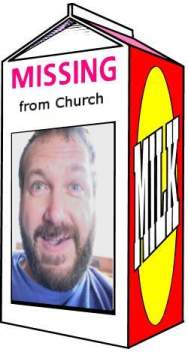
Dan is Missing!Last June, I blogged about the George Barna report that showed that the American Church’s face was largely female, with many men skipping church altogether. Since that time, another male-centric book has appeared on the market, David Morrow’s Why Men Hate Going to Church. This tome joins the mania created by John Eldredge’s Wild at Heart in seeking to find out why men feel bored in the pews on Sunday. Morrow even has a website www.churchformen.com that delves deeper into the mystery of the church’s missing men.

Like John Eldredge before him, Morrow’s solution focuses on recovering lost masculinity. While Eldredge aims to recover a masculine “adventure,” Morrow looks at masculinizing the Church:

We have to give men opportunities to use their strengths and their gifts in the service of God instead of trying to squeeze them into roles that they feel are feminine or emasculating. We need to start valuing masculine traits such as aggression, boldness, and competitiveness and figuring out ways that we can integrate that into every area of church life.

But are these assertions the real reason behind the church’s missing men?

Having been a part of two churches with extensive ministries that were strongly male focused, I contend that Morrow’s response does not play out in reality. One of those churches had a popular sports ministry and brought sports illustrations into nearly every sermon. The pastor of the church served as chaplain to a number of professional sports teams and was a well-known author. Still, that church was about 60% women. Again, in the second church, wacky humor, Eldredge’s reliance on movies to pitch the Gospel, numerous men’s groups, and plenty of ministries that called on uniquely male gifts did not budge the number of men. They were still only 40% of the attendees.

So what is the problem?

I alluded to this earlier in my post “Advertising Ashes.” The main reason that men are not in church is that they simply are not seeing the Holy Spirit move in power. At the risk of alienating the many women who read Cerulean Sanctum, I want to make a bold point: even if the Holy Spirit were not present in a supernatural way in our churches, I still believe women would still show up on Sundays. The Church has no problem attracting women because women are naturally drawn to the community and relationships that a church provides. However, this attractor does not work for many men. Men need a profound experience of God in order to get them to sit up and take notice. If the Holy Spirit doesn’t fall on them in power, then the positives a church can provide outside of the supernatural make little difference. A church can hypermasculinize itself to death and still not break that three women to every two men ratio if the Spirit is barely discernible on Sundays. Men have a better built-in B.S. detector than women do and function more out of the rationale of “prove it to me.” Without the manifest presence of the Holy Spirit in our gatherings, we have little to combat a set of crossed arms and a raised eyebrow.

The second problem is also one I have mentioned in the past, the issue of a man’s career. You almost never hear any sermons about jobs. Most churches have nothing in place to help the unemployed within their ranks. And the Church in America no longer speaks to the business world on issues of cut-throat downsizing, outsourcing, discrimination against older employees, and the relentless expectation that employees put in longer hours at work. In short, the Church in this country has almost nothing to say about the one thing men spend more hours doing than anything else in their lives. That silence speaks volumes to men.

In an e-mail I received from David Morrow in response to this, he wrote that as many women work today as men, yet despite their jobs and greater limitations on their time, women still make it to church. To this, I have a few counters:

  • Our society still defines men by their jobs. Introduce a man to a group and the first question he’s asked is, “So what do you do for a living?” This emphasis on work is taken to extremes because the gold standard espoused in Evangelicalism is that the husband is the sole breadwinner while the wife stays at home with the kids. A man without a job has no place in society’s eyes, but a place is still available to women who do not work.
  • A caste system still exists for men. Men are categorized by their work and valued accordingly. The doctor and the mechanic are not viewed as having the same worth, even within many churches. Again, this system does not plague women to the same extent. The man making minimum wage is perceived in a far worse light than the woman who works for the same pay. No one ridicules women in traditionally male jobs, but a man who performs what has traditionally been a female job is usually held up for scorn—particularly by other men.
  • Women marry with an eye to financial security, but this is not the case for men. Therefore, the onus is always on the man to bring in money. To meet this need, the man is usually the one striving to succeed in his career. Our society continues to reinforce this for men, while placing less burden on women to reach the pinnacle of success in their field.

A woman’s job and a man’s job, therefore, are not the same. To treat them as such is to ignore cultural mandates that simmer beneath everything a man does in his life. If the Church in America cannot grasp this, then we should not wonder why men see the Church as having little to say about how they define themselves using the cultural constructs placed on them in our society. With this paucity of wisdom about the key role a man plays for eight to ten hours a day, why should men abide church at all?

I believe that the reason the message of Eldredge and Morrow resonates with many men is that those men can’t put a finger on what they are truly missing. If you’ve never tasted champagne, why would you miss it? In this way, if our church gatherings are not filled with the Holy Spirit and our churches are not speaking to the one thing we still use to define a man, then the loss of both cannot be fully appreciated by the man who feels empty after the church service is over. All he knows is “Well, that wasn’t it.” So he goes off to hunt bear with a pointy stick or to climb mountains like Eldredge says. And while that might captivate him for a while, it does not fill the vacuum in his soul. His expectation then becomes that of simply muddling through the day. He can’t even look forward to the gold watch at retirement because the company he works for now fires (or forces into an early retirement with subsequently diminished benefits) everyone over fifty before the watch can be attained. At sixty-five and with his funds cut short, the job as a greeter at WalMart never looked so good.

We as the Body of Christ have got to do better than this or we may someday look around our churches and see no men at all.