
Better Than a Beating

Standard

After you take the time to read this post today, I’d love to hear your feedback. I ask because I’m starting to think I’m crazy. Seems everywhere I go, I get the same response from people, so perhaps I’m the one who is wrong.

So fire away.

I’ve written a bit lately about the Internet’s ire. Everyone seems angry. Everyone is mad at some heretic, petty or otherwise. Plenty of talk of wolves. Plenty of hand wringing.

In all of this tension, a few positives go lacking. I talked about one, loving one’s foes. This post is about one of the others.

From the Bible:

Now a Jew named Apollos, a native of Alexandria, came to Ephesus. He was an eloquent man, competent in the Scriptures. He had been instructed in the way of the Lord. And being fervent in spirit, he spoke and taught accurately the things concerning Jesus, though he knew only the baptism of John. He began to speak boldly in the synagogue, but when Priscilla and Aquila heard him, they took him and explained to him the way of God more accurately. And when he wished to cross to Achaia, the brothers encouraged him and wrote to the disciples to welcome him. When he arrived, he greatly helped those who through grace had believed, for he powerfully refuted the Jews in public, showing by the Scriptures that the Christ was Jesus.
—Acts 18:24-28

I love that passage. It’s a gentle, godly, pastoral one. I wish it were the model for how we raise up leaders in the Church.

Here’s this Jewish fellow Apollos who is preaching Jesus. He’s a great speaker; people listen to him. He’s got charisma. Knows a few things about Jesus and passes them on fairly well.

Priscilla and Aquila stumble across Apollos and think he’s got potential. He’s mostly there, but he could use some polishing and needs to understand just a few more things more accurately in order to have the Faith down right.
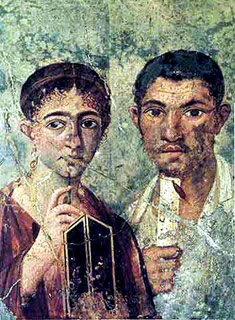
Priscilla and Aquila

Priscilla & Aquila

So rather than correct him in front of everyone, this godly couple takes Apollos aside and better explains the ways of God so as to overcome the young man’s theological deficiencies. They take time to help their charge work out the kinks. They introduce him to the right Church crowd. And Apollos goes on to become such a heavy hitter that the Apostle Paul must later address the tendency of some to say that they are “of Apollos.” (I guess there were fanboys even back then.)

I keep thinking that if this situation existed today, Apollos would be torn to shreds on the Internet or have some book written by a name pastor/teacher denouncing him for those things he said that were not deemed perfect. The court of Christian public opinion would trumpet to the world that Apollos had theological problems here and there. Plus, he knew only John’s baptism at the time. The horror. 😉

Instead, we get Priscilla and Aquila. Thank God for them. Because of them, and because of God’s great mercy, the story went in a far better direction.

Priscilla and Aquila seem like a couple I’d love to hang with. I’m sure they could teach me many things, especially about the grace needed to see raw giftings and know how to refine them with tenderness and love.

Now comes the crazy Dan part.

I’ve questioned in a few forums why it is so easy for Christians with a national pulpit or some name recognition to scold rather than to draw alongside those younger Christians who own a strong voice but who may not have all the particulars down. Actually, scold is too lax a word. Most of the time the better word is brutalize, as that’s the kind of verbal beating meted out.

Priscilla and Aquila seem long forgotten, as if they have nothing to model for older, established, respected pastors/teachers with a national voice—or you and me for that matter. Better that we defend the Faith than actually mold raw people and win them to a better position.

Here’s what really gets me: When I suggest that it would be great if one of these older, established, respected pastor/teachers calls up the “Apollos of the moment” and asks to chat or even sit down over a few meals to work out how things could be done with greater adherence to Scripture and the leading of the Spirit, the mere hint of this kind of pastoral compassion sends people into fits. Such an idea seems like anathema to some, especially the fans of those respected pastor/teachers. They’ve already piled the wood and found a suitable stake.

I’m not stupid enough to believe that all of these almost-but-not-quite-there modern Apolloses are going to wind up corrected and perfect. Yet at the same time, why do I almost never hear of any of these older, established, respected pastor/teachers with a national pulpit reaching out as Priscilla and Aquila did to people they think are slightly off? Instead, out comes the nuclear option, and the public gets to see how much supposed Christians can really hate.

I wonder sometimes if all this constant clashing is only driving the bystanders to cross Christianity off their list of viable sources of truth.

Yes, sometimes we must wipe our feet of the dust of people who will not listen. But at the same time, I see a whole lot of dust-wipers and not a whole lot of Priscillas and Aquilas.


Are Scholars and Teachers Truly Leading the Church? And Should They?

Standard
Don Miller

Donald Miller

Many of my Christian friends have noted Donald Miller’s recent post about rescuing the Christian Church from leadership dominated by scholars. Miller, the firebrand behind the famous (or infamous, depending on your view) Blue Like Jazz, sells his perspective hard. As always, I recommend you read the whole thing.

But is he right?

The Internet is a screwy place. If one were to view the whole of American Christendom by what one reads on the Internet, Miller’s contention might seem accurate. What’s written on the Internet does skew toward academic discussions, and yes, people fight like cats and dogs over doctrines (both macro and micro) on Web sites of all sizes.

But the Internet is skewed toward odd demographic leanings, and as a result, I don’t believe what is discussed on the Internet mirrors the discussion of the average church. Plus, those of us who write about church-related issues should not believe our own press. Fact is, the average Christian could care less about the Godblogosphere.

Or their nearest Christian seminary, for that matter. “Normal” people just don’t have the wherewithal to care about the background machinations of American Christendom. They leave such ponderings for eggheads who write blogs they don’t read or brainiacs who inhabit seminary classrooms they’ll never darken.

Hey, let’s get real, OK?

By some counts, we have 300,000 churches in the United States. In my wanderings through the Church over the course of 35 years, I’ve met perhaps two dozen people I would deem genuine scholars, and not a single one of them was running a church. I’m not sure from where Miller is getting his academic oligarchy, but if even a tenth of those 300,000 churches are pastored by someone who can translate a chapter of John from Greek to English, I’ll volunteer to shine Miller’s shoes for a year.

So much for the scholars. If anything, churches are hurting for a good scholar or two, leaders or laymen. I once attended a church that had a genuine scholar in its midst, and the church leaders would trot him out from time to time to give his academic imprimatur on some supposedly weighty theological matter, and then they would usher him back into his hermetically sealed container to await his next rethawing. If anything, when true scholars do exist in our pews, we tend to treat them as something of a sideshow act. Shame on us, but there it is. In addition, some local church leaders see scholars as a threat, not as a resource. Human nature being what it is, when you’re trying to prepare a sermon on a text and you’ve got someone sitting in the seats who held that passage in Dead Sea Scroll-version in his hands and read the Hebrew right off it, well, it’s a tad unnerving to most guys who barely made it through seminary, if they even made it to seminary at all.

Teachers are another issue, though. And on this, Miller may have a bit of a point. But, as we’ll see, only a bit, because perception and reality are not the same thing.

We have a fundamental problem in the American Christian Church regarding roles and gifts. Somehow, and more and more books are appearing that look at this problem, we’ve developed a way of doing church that focuses all the responsibility and leadership initiative on one soul: the pastor.

Yet even a casual reading of the New Testament tears down our idolmaking for that calling. The pastor simply cannot be the focal point of all ministry within a given church. The Bible makes this clear:

Now you are the body of Christ and individually members of it. And God has appointed in the church first apostles, second prophets, third teachers, then miracles, then gifts of healing, helping, administrating, and various kinds of tongues. Are all apostles? Are all prophets? Are all teachers? Do all work miracles? Do all possess gifts of healing? Do all speak with tongues? Do all interpret?
—1 Corinthians 12:27-30

Fact is, pastor isn’t even mentioned in that passage. The closest we get is apostle, and plenty of folks out there who get all worked up about things don’t believe apostles exist anymore, so where does that leave us?

Well, back at pastor, because our societal and cultural constructs have made pastor the be all and end all of ministry.

I’ve talked to many pastors over the years. Most of them didn’t receive a call to teach others. Most received a calling to help the Church and the people in it however best they could with whatever gifts they had. Though Miller would have us believe that church leadership at the local level is crawling with teachers, it’s really only crawling with those people who have had teaching thrust upon them. And that’s a massive distinction.

For years George Barna has polled the American Church to get a sense of where we’re at. A few years back, he polled pastors and asked them how well they thought they were teaching their charges. The mutual pastoral backslapping commenced, as pastors uniformly believed they were doing a great job teaching. But when Barna polled the congregations of those same pastors, ignorance of even basic doctrine was rampant. The disconnect was startling.

And why shouldn’t it be when we keep expecting pastors to be the primary teachers in a church? They simply aren’t in most cases. They weren’t trained to teach, don’t know how to teach well, and were cast into the role of teacher with the facts, but not the skills.

Scratch the surface of the average church pastor, and you are most likely to find someone who excels at creating vision, connecting to people relationally, or has gifts for administration and management. Some are gifted teachers, but not most, yet they are expected to teach at all times.

Miller is wrong if he believes that scholars and teachers are leading the Church for the simple reasons that genuine scholars are rarities (and even rarer in leadership within a local church) and the average teaching pastor has been ill-equipped to teach. Tossing labels around is one thing, but let’s be honest about the true state of the Church.

The better question is whether we value teaching too highly. I don’t believe that can ever be the case. Barna’s polling not only revealed the overconfidence of pastors in their teaching, but it also exposed the general ignorance about the Faith that wreaks havoc everywhere ignorant Christians go. People ARE destroyed for lack of knowledge. Christians who don’t know what they believe cannot transmit what they believe to others who do not understand. End of argument.

So, where is the balance in all this?

Ideally, the Church should…

Teach its people the Faith.

Encourage the giftings of each person within the local church for service to that church and the greater whole of Christendom.

We’re not doing either of those well.

If you’ve read me long enough, you know I have a beef about our lack of a cradle-to-grave educational plan in our churches. We must have one. Each church must determine theirs.

AND we need to identify the gifts and talents of people in the seats so that they are released to minister as God would have them. Sadly, the “pastor as church emperor” stifles that potential. If anything, the pastoral role should be just one of several. Many pastors don’t preach well. Then who is the best preacher in the church?  Many pastors are less-than-ideal comforters of the bereaved and hurting. Then who are the best comforters? Many pastors don’t listen well, either to their people or to the Lord. Then who are the best listeners and the best prophets? Many pastors don’t teach well. Then who does? Let’s get the right people in the right roles and start doing this right. And if that means the pastor reads the Scriptures on Sunday and someone else preaches or teaches, then fine. If that means that no one is paid staff, then fine. If that means the staff is huge and paid, fine. If that means that the whole church lives in one large apartment complex and does a kibbutz-type thing, fine. But let’s stop whatever we’re doing with the current model because it just doesn’t work all that well.

In short, does the Church function as a body with Christ as the head or with the pastor as the head? We know the answer. Now what are we doing to rethink how we do church so that everyone in the church is operating in their genuine giftings and receives the honor due them?

Ultimately, this is what Miller is aiming for. Taking a potshot at scholars and teachers isn’t the way to get there, though. We know the Church is a body, so let’s stop shooting that body in the foot.

The Question of Hell

Standard

Hell signIf you’re a Christian who regularly peruses the Web, it’s impossible to have missed the recent brouhaha over a book that talks about hell. The author of the book says he wrote it to address the questions of people regarding hell and the afterlife. Most every review of the book mentions that the book raises more questions than it answers and that its few answers aren’t all that great.

And the battle rages…

A lot of Christians don’t want to talk about their questions about the Bible and their faith. To have the standard theology handed to us and to be left with questions afterward makes Christians uncomfortable. It makes people doubt their faith or question their church or denomination. So people clam up and bury their questions.

I’ve been a Christian for nearly 35 years. In that time, I’ve read countless books on various topics within the Christian faith. Honestly, I don’t think I’ve ever read a book that discussed the issue of hell in a way that didn’t leave me with more questions than answers. I don’t believe I’m alone.

That said, I do hew to the standard of belief that hell is a real place. People will go to hell, which is the worst place imaginable and reflects separation from God. Hell is meant for beings who rebel against God. Jesus Christ is the answer to the question of hell. He is the path that leads away from hell. His death and resurrection made it possible that people who are found in Him will not go to hell.

That may sound simplistic. If it does, I apologize in advance. But I think that when we look at the whole of Christian theology since the passing of the apostles, that brief paragraph adequately covers the majority of what scholars have gleaned from the Bible about hell. On many of the nuances, especially concerning what was left out of that paragraph, you will find considerable questions or disagreements.

One of the struggles I have with understanding hell is that that the two major streams of thought on salvation from hell have some articulation issues that only lead to further questions.

Most Christians believe that God created mankind for His own pleasure. Most believe that mankind sinned by rebelling against God. Questions of justice and love now lead us to ask what happens to the rebels.

Some Christians believe that God sends His Spirit to some people He has selected and that these people will become believers in Jesus and thus avoid hell. They have been chosen by God.

But there is the question of what to do with those God didn’t select. They didn’t ask to be born. They didn’t ask to be in the group that didn’t get chosen. They ended up there by default with no opportunity of getting out of that group. If you’ve ever been passed over by the “team captain” when sides are chosen in a sport, you know what it’s like to be left out because of your deficiencies. Only being left off the team destined for heaven is far, far worse.

Some Christians believe that God sends His Spirit to all people and that people choose to believe in Jesus and thus avoid hell. They choose God.

But there is the question of what kind of choice this is. If I am given the choice of an all-expenses paid trip to Hawaii for eternity or being doused with gasoline and set on fire (even for just a couple minutes), can it be said that I am making a real choice? And is it possible that a person can choose heaven just because it sounds like a great place but at the same time be indifferent to God?

Both positions leave open many, many questions. What about the person who lived in the jungles of South America in AD 500? What about the good person who acknowledges there is one God but doesn’t know about Jesus? Is the only opportunity to come to Jesus available in this life ? Jesus says a lot about people who call Him Lord but who do not do what He asks of them. What about those people?

Those who spend a great deal of time studying the Bible and are wise in interpreting it always caution us to be careful when we try to build entire theologies from a couple verses. Some of the questions in the previous paragraph are briefly addressed in the Bible, but those questions of the “good pagan” and “the spirits in prison” that Paul and Peter discuss respectively have been debated for generations.

I’ve been a Christian for a long time. I still have questions about these issues.

Some people would point to these questions and try to say something negative about the Bible and the Christian faith. That’s a foolish thing to do.

My question is this: What are you and I doing with the indisputable facts about Jesus, the rebellion of sin, and heaven and hell?

Anyone who has been a soldier in a war will tell you that the commands that come down from HQ will tell you all you need to know for the fight. Not every detail will be covered, and at times you’ll need another guide when events play out in battle in ways unanticipated or unique to the fight. Between the commands and the guide, the war is winnable.

Our faith works the same way.

The Bible tells us that hell is a real place. We know that sin exists. We know that Jesus is the answer to questions of both sin and hell.

Now what are we doing about those truths?