
Failing the Sniff Test

Standard

The last few days, I’ve been unable to shake this thought: In what ways do American Christians appear different from their non-Christian neighbors?

I’m sure each of us knows of people who volunteer their time to help the less fortunate, take opportunities to seek out deeper meaning in life, are kind and considerate, who engage in common rituals, pay their taxes, love their kids, help their neighbors, work hard to better their community, shun the obvious sins, and are generally nice, fine people.Yet those same folks make no pretenses of being born-again believers in Jesus.

For some reason, though, we apply those same traits and qualities to Christians and ascribe them a passing grade for being a good follower of Christ.

The Bible says:

But thanks be to God, who in Christ always leads us in triumphal procession, and through us spreads the fragrance of the knowledge of him everywhere. For we are the aroma of Christ to God among those who are being saved and among those who are perishing, to one a fragrance from death to death, to the other a fragrance from life to life. Who is sufficient for these things? For we are not, like so many, peddlers of God’s word, but as men of sincerity, as commissioned by God, in the sight of God we speak in Christ.
—2 Corinthians 2:14-17

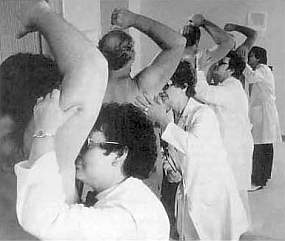
Any guy who has wondered about the suitability of a garment worn once knows about the sniff test. Stick a nose in that shirt and inhale. If it doesn’t smell like Satan’s backside, it’s still wearable.

Christians have their own sniff test to pass, though the aroma is far more pleasing than a simple lack of BO. At least it should be. The sniff testWhat really bugged me as I thought about this passage is that I’m no longer certain if the Church in America today smells any different than the world.
In a lot of ways, too many Christians in America ARE little more than peddlers of God’s word. In fact, we’ve somehow made being a peddler of God’s word a good thing, as if it shows commitment to a spiritual life! Even worse, too many of us aren’t even devoted enough to be a peddler of God’s word. We just kind of exist. Just like that nice, fine non-Christian who pays his taxes and volunteers to read to elderly people a few times a week.

Seriously, I think that too many of us have substituted rituals for genuine knowledge of Christ. And for those who claim genuine knowledge of Christ, what of their lives makes them smell different from the rest of humanity? What does genuine Christianity look like in America 2010?

I like Keith Green. His music has meant a lot to me. In one of his live recordings, he says that the defining quality of a true Christian is being bananas for Jesus. Again, I like Keith, but the tepid applause on that recording to his definition underlines his swing and miss. Being bananas for Jesus simply isn’t enough.

What I cannot escape is this passage:

For all who are led by the Spirit of God are sons of God.
—Romans 8:14

Ask any Christian about being led by the Spirit of God, and you’ll get a million different replies as to what that means. Most of those answers, sadly, will fall into a category of vague impressions about decision-making or about being nice to people—again, the kinds of motivations that stir non-Christians. That’s not good enough to pass the sniff test.

Consider this:

Now there was a disciple at Damascus named Ananias. The Lord said to him in a vision, “Ananias.” And he said, “Here I am, Lord.” And the Lord said to him, “Rise and go to the street called Straight, and at the house of Judas look for a man of Tarsus named Saul, for behold, he is praying, and he has seen in a vision a man named Ananias come in and lay his hands on him so that he might regain his sight.” But Ananias answered, “Lord, I have heard from many about this man, how much evil he has done to your saints at Jerusalem. And here he has authority from the chief priests to bind all who call on your name.” But the Lord said to him, “Go, for he is a chosen instrument of mine to carry my name before the Gentiles and kings and the children of Israel. For I will show him how much he must suffer for the sake of my name.” So Ananias departed and entered the house. And laying his hands on him he said, “Brother Saul, the Lord Jesus who appeared to you on the road by which you came has sent me so that you may regain your sight and be filled with the Holy Spirit.” And immediately something like scales fell from his eyes, and he regained his sight. Then he rose and was baptized; and taking food, he was strengthened. For some days he was with the disciples at Damascus.
—Acts 9:10-19

Isn’t that the “led by the Spirit of God” that Paul is talking about in Romans 8:14? How ironic that it serves as part of his own conversion story.

Now we can talk all we want about visions and miracles and so on, but part of us doesn’t believe they’re real. We’re hardcore rationalists in America, and if someone came up to us and shared the story that God said to go down to such and such a place to pray over a blind enemy so that enemy would receive his sight again, our deflector shields would be cranked up to 11. The first thought we’d have is that this is a dangerously unstable individual. A religious nutjob.

And that’s why we no longer pass the sniff test.

If we’re to be the aroma of Christ, then we have to smell—and act—in ways that look nothing like the world. I’m not talking about being an anti-culture warrior, either, but living supernaturally.

Too many of us have lost that aroma because we have no place in our lives for being led by the Spirit. The only thing that separates the person with Christian sympathies from the genuine believer is the presence of the Holy Spirit indwelling the believer. No religion on this planet makes the contention that Christianity does about the indwelling of the Holy Spirit. That IS the mark of the Church.

Yet the average “born-again Christian” in America exhibits no signs of being indwelt by God Himself. There may be plenty of signs of being a “peddler of God’s word,” but next to nothing that shows evidence of the genuinely supernatural. And if that’s the case, that person won’t pass the sniff test.

The only hope for the American Church is that we get serious about rectifying the lack of presence of the Holy Spirit in our lives. Christians are not of this world. Our Kingdom flows from the supernatural and penetrates the natural. If that’s not how we think, work, and live, then it’s no wonder that we smell like this decaying world.

Hardship, Blame, and the Real Will of God

Standard

One phenomenon I’ve noted in the American Church that keeps getting resurrected and used as a club to beat frustrated and hurting Christian is this issue of who is at fault when things go awry.

In the Christian pantheon of blame, these four are the most prominent whipping boys:

  • God
  • Satan
  • The Individual
  • Society

Frankly, I’m burned out of the “it’s okay to get mad at God” mantra that I hear from some Christians. Job expected God to explain Himself for all of Job’s troubles and God smacked that down hard. So, the get mad at God thing is a dead end.

Well, it should be a dead end except that a lot of Christians sugarcoat that same idea by framing it within the context of God’s will. Bad things happen because of God’s will, and, because we love God so much, we should be happy that our house collapsed and our kids perished. It was all for our good.

Honestly, though, Job wasn’t happy with that answer. While he did not take his wife’s advice to “curse God and die,” this most righteous man still bristled at all the things that had happened to him. He still wanted God to explain Himself. If Job wasn’t happy with “God’s will” in his own awful situation, what chance do I have when things blow up miserably?

So we peel back the curtain on the Job epic and find that fouler Satan messing with the rigging backstage. Blaming the Enemy is big, especially within those churches that sprang from the Azusa revival.

Sadly, for many Christians, Satan becomes the universal excuse when something goes wrong. We blame him and that’s the end of the discussion. Calls for spiritual warfare go out, everyone prays binding and loosing prayers, and that’s the end of it.

Should that approach not work—and from my own experiences it doesn’t a lot of the time (because Satan isn’t entirely the cause)—some Christians start blaming themselves. “I did something wrong and have no one to blame but myself” may be true or it may not be. And if nearly 48 years of living have taught me anything, rarely is the individual entirely at fault either.  Sure, we sin and do stupid things. But God gives grace to follow, which covers our individual sins and deficiencies. With that the case, can I postulate that God’s grace is insufficient for a dingbat such as myself? Hardly.

Then society gets the blame hammer. The Christian culture wars are almost entirely driven by the idea that our society is the cause of every bad thing in…well, our society. Beyond the circular logic on that one, yeah, sometimes society does foster awful outcomes.  Sometimes society is to blame for problems—or at least for serving as a petri dish for their wicked growth. Problem is, the Bible makes it clear that we Christians can’t blame society for every bad thing in life. Rarely did society stand in the way of early Christians accomplishing miraculous things for God.

Ultimately, organizing blame into one or more of those four basins still cannot completely answer the question of why some happenings in life are just plain rotten.

I love the practicalness of the Book of James. In it are these true words:

What good is it, my brothers, if someone says he has faith but does not have works? Can that faith save him? If a brother or sister is poorly clothed and lacking in daily food, and one of you says to them, “Go in peace, be warmed and filled,” without giving them the things needed for the body, what good is that? So also faith by itself, if it does not have works, is dead. But someone will say, “You have faith and I have works.” Show me your faith apart from your works, and I will show you my faith by my works. You believe that God is one; you do well. Even the demons believe–and shudder! Do you want to be shown, you foolish person, that faith apart from works is useless? Was not Abraham our father justified by works when he offered up his son Isaac on the altar? You see that faith was active along with his works, and faith was completed by his works; and the Scripture was fulfilled that says, “Abraham believed God, and it was counted to him as righteousness”–and he was called a friend of God. You see that a person is justified by works and not by faith alone. And in the same way was not also Rahab the prostitute justified by works when she received the messengers and sent them out by another way? For as the body apart from the spirit is dead, so also faith apart from works is dead.
—James 2:14-26

In this case, whose problem is it that a brother and sister is poorly clothed and lacking in daily food? Is God to blame? Satan? The individual? Society?

While most people quote this passage as a primer on practical faith, too few understand it as a lesson on God’s will, which it is—in spades.

See, when we want to find blame for the condition of that brother and sister, it is the rare few who ask the question of the Church’s role in the will of God and the vagaries of life. We’ll blame our typical four sources, but do we in the Church ever wonder if we as a group are the reason for some of the awfulness we see in life?

Now, I’m not talking about being the cause of awfulness, but as the unused, mothballed resource for fixing that awfulness. James would rightfully contend that the brother and sister in Christ who remain poor and hungry will stay so unless the Church wakes up and does something to rectify the problem.

But we don’t hear that enough in our churches, do we?

Actually, let me revise that. We hear the clarion call to action in the culture wars, but we almost never hear it in cases of individual need, especially those needs that fly under the radar.

What about the case of the person crushed for the rest of her life under the burden of an uninsured operation? Does the Church have anything to say about that need? Better yet, does the Church have any responsibility toward rectifying that situation? Or will we blame God, Satan, the sick woman, or society for her plight?

More than anything, I wish more Christians would break from the standard blame game and instead ask, “What can we as a Church do?”

I’ve had a terribly stressful last couple weeks that landed me in the doctor’s office yesterday. I missed church on Sunday, which is not something I do. I play drums on the church worship team, and I don’t really have a backup at this point, so me calling in sick meant a scramble for the team leaders. Mercy in the midst of griefMore stress, more feeling bad, but I’d been up most of the night before and was just exhausted.

Now I could come up with a lot of directions for blame for causing all this stress, and I could imagine a million things God, Satan, society, and li’l ol’ me have to do with it all, but none of them trump dinner last night. Yes, dinner. Because Lisa, our pastor’s wife, brought us a homemade dinner last night.

And honestly, that kind of small act by the Body of Christ goes a long way toward defusing all these issues of God’s will and blame and highfalutin’ solutions and all that wacky stuff we get into.

When the Body of Christ is working as it should, these radically tough-to-solve problems suddenly lose much of their juice. Sometimes the answer to rotten things happening in life is as simple as showing up at the bedside of a sick person, writing a card to a shut-in, banding together to pay a medical bill, clothing someone who has nothing to wear, and on and on. It’s keeping our feelers feeling out where people need a little touch from the Lord through our being His hands.

It’s so easy to point fingers. But Church, more often than not the finger is reflected in a mirror right back at us. Rather than assigning blame or explaining the reason for someone’s plight, what are we doing to meet the needs of others in their times of distress?

What You Won’t Hear Christian Leaders Say—And Why That Makes All the Difference

Standard

NOT overheard at a local church board meeting, parachurch ministry press conference, year-end megachurch round table, or big Christian conference:

“We’re not going to make plans, set goals, commit to any programming, buy any teaching materials, start any further ministries, hire or fire any staff, or even talk about the future until we see what the Father is doing.”

No, that’s not something you’re going to hear any time soon—despite the words of Jesus:

So Jesus said to them, “Truly, truly, I say to you, the Son can do nothing of his own accord, but only what he sees the Father doing. For whatever the Father does, that the Son does likewise….”
—John 5:19

How is it possible then that we consider ourselves better than our Lord by acting without first checking to see what the Father is doing?

It seems to me that we Christians in America would be far more effective in nearly everything we do if we stopped with the Type-A personalities, stopped all the works that aren’t working,Seeking God and instead did whatever it took to see what the Father is doing—and then did it.

If that means prayer for months on end, calling an all-church/ministry/organization fast, and actually practicing the revelatory gifts of the Holy Spirit, then that’s what we do. Then maybe we American Christians would see some success and see a changed nation.

Because if we’re truly doing what we see the Father doing, that thing He is doing WILL be effective, and all the more so when the Body of Christ gets on board.

It seems so simple. Why then do we not do this? Why do we charge ahead and waste time on works that God is not in?

The answer: We’re spiritually lazy and unwilling to let our laziness be found out.

Jesus didn’t see what the Father is doing by any means other than a deep prayer life and listening to the Holy Spirit. You can’t fake that, though, and expect to see what the Father is doing. Sadly, many churches, parachurch ministries, and national-stage Christian leaders make the attempt.

Which is how we’ve gotten to this place of disparity where our nation is brimming with Christians yet they have little or no effect on the culture and society at large.

What if a church was bold enough to drop all the worthless running around and instead prayed, fasted, and learned to hear the voice of the Spirit for the purposes of understanding what the Lord is doing? What if a parachurch ministry said, “Honestly, we’ve been wasting your donations because we didn’t first check to see what God was doing before we barged ahead with our plans”? What if a nationally known Christian leader said that he was going to take a year off to seek God so as to know what He is doing so that leader could present that to his followers?

I keep hoping to see this happen, but I’m not getting any younger.