I’m wondering about wonder and why so many Christians seem to be down on it and its sibling, mystery. Go just about anywhere in the Christian blogosphere and you’ll hear oodles about the emerging church (hereafter “EC”), and one of the primary components of the EC that sets some people’s teeth on edge is that the EC loves to talk about wonder and mystery. Some Christians in their rush to condemn the EC turn to the EC’s repeated allusions to wonder and mystery and point like the crazed man in Poe’s “The Tell-tale Heart” to the pulsating blob of wonder/mystery under the floorboards that throbs in their ears and drives them to insanity.
I find this bizarre.
(Just the other day I wrote about Christians who are compelled to have an answer for everything, even those topics that go beyond merely addressing our need to give others a good reason for the hope of Christ we have within us. This topic piggybacks that one and extends it.)
Wonder is at the heart of whom God made us as Mankind. It is as natural to wonder and to be overwhelmed with mystery as it is to breathe. Not a single advancement we men have made on this blue orb would have come about if not for wonder and mystery.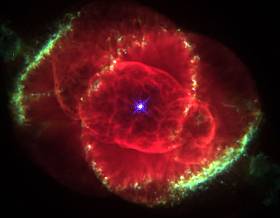
At some point someone sat down and looked up at the sky and tried to understand its secrets. Copernicus, Kepler, Newton, Einstein, and Hawking have all gazed up and wondered. That wonder led to the space program and mankind setting foot on the moon.
Our fascination with anything we do not understand drives us to master its hidden truths. There can be no learning without a catalyst of wonder. There can be no advancements without mysteries to unlock. I believe this is an extension of the original call of God in the Garden to subdue the planet. Only the curious, the dreamers, the wonderers, and those who wish to pick the lock of mystery will drive us as men to greater accomplishments. This pleases God.
It pleases us, too. Because someone wondered about moving objects from one place to another did we develop the wheel. A group of wonderers developed the computer we are reading this on. From the clothes we wear, to the houses we live in, to the medical instruments that have prolonged our lives, all the things that daily benefit us came from the desire of wonderers to delve into mysteries.
The only time that wonder is bad is when it is “vain imagining.” Such types of wonder take men’s minds away from God. Science is good and blessed of God, but when it becomes an end to itself it has lost its mooring. However, anything that takes our view off God is devilish, not merely vain imaginings and the means by which they play out.
Part of our problem with wonder is that we make the mistake of concentrating on what it is not rather than on what it is. Trying to frame the positive characteristics of a thing by only considering what that thing is not is no way to find truth. As much as wonder can lead men away from God if it is directed in the wrong way, it must also drive us to God when correctly used. Consider this:
When I look at your heavens, the work of your fingers, the moon and the stars, which you have set in place, what is man that you are mindful of him, and the son of man that you care for him? Yet you have made him a little lower than the heavenly beings and crowned him with glory and honor. You have given him dominion over the works of your hands; you have put all things under his feet, all sheep and oxen, and also the beasts of the field, the birds of the heavens, and the fish of the sea, whatever passes along the paths of the seas. O LORD, our Lord, how majestic is your name in all the earth!
—Psalms 8:3-9 ESV
Clearly this is wonder and mystery driving man’s praise back to a God who is wonderful. God is filled with wonders and He has built within us the capacity to wonder at the things He has done and the wonder that He is. It is a gift aimed at summoning men back to God. A newborn child in one’s hands, the pastel colors of a sunset, or a miraculous healing are all ways in which wonder returns us to God.
Also, consider God’s monologue to Job in which He overwhelms the broken man with His created wonder:
Then the LORD answered Job out of the whirlwind and said: “Who is this that darkens counsel by words without knowledge? Dress for action like a man; I will question you, and you make it known to me. “Where were you when I laid the foundation of the earth? Tell me, if you have understanding. Who determined its measurements—surely you know! Or who stretched the line upon it? On what were its bases sunk, or who laid its cornerstone, when the morning stars sang together and all the sons of God shouted for joy?
—Job 38:1-7 ESV
What is Job’s response to all these wonders that God lays out in express detail in the following chapters? Repentance and awe. He clasps his hands over his mouth and regrets uttering a single word in all his trials. The tsunami of wonders of God and His mysteries therein have washed Job away. He is at a loss for words. But it could have been worse for Job; he could have remained unmoved. The man who never wonders at the mysteries of life is a man cut off from God entirely.
To denigrate wonders or to abolish mystery is foolish. Worse, it is the foundation for thanklessness. For if we are in command of all mysteries, if we have eliminated wonder, then we have taken the place of God Himself or made God so small that He is easily contained in our epistemology. A man so sure of his surety is one who has no reason to adore God or marvel at anything outside himself. He is the true ingrate. Unlike Job, wonder and mystery cannot put him in his rightful place bowed down before the awesome King of Glory. He is a man lost in his conceit.
For this reason, I don’t understand why wonder and mystery send some Christians into fits of apoplexy. I suspect that too many of them are the hybrid children of reasoned theology and the Enlightenment. To simply say that something is mysterious does not mean that absolute truth no longer exists, nor that it can’t be known to some extent. Mystery and wonder do not obliterate absolute truth any more than nightfall destroys the sun. The folly in both the EC and those that castigate it is in this mistaken notion. The EC needs to understand that the absolute and inviolable truths of the Gospel are not suddenly cloaked in impervious fog that necessitates us redefining how they appear. Nor should the EC-hunters recoil at the thought that some things in life are mysteries and God has made them that way for His good purpose.
With so many Christians at each other’s throats about wonder and mystery, it’s a wonder that the Church is still standing!
Or should I not have said anything about wonder?