They called him Farmer John, and that was OK by him. He had a farm. His name was John. He was a practical man, and the appellation made sense to him.
Farmer John was the sort that didn’t say much, but when he did, people listened. He’d been around long enough so that his voice in town meetings carried some weight. Some folks would toss around the word wise when talking about John, but he preferred practical. Folks can say lots of things, but no one ever considered practical a bad thing, so in John’s eyes, practical won out.
Practical was not what that semi driver had been when he decided to take a wrong turn off the highway and down that old gravel road a month back. The supposedly abandoned road ran past Farmer John’s house and crossed a gorge via a bridge John believed must’ve been built when Chester A. Arthur was president.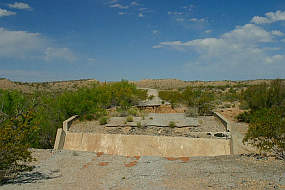 Along with Arthur, most folks had let the bridge slip into the Sea of Forget. Seems the bridge suffered a bout of amnesia, too, because the sudden application of a semi filled with ball bearings across its surface made the bridge forget its own sole purpose for being, and the whole thing collapsed into the gorge.
A knock on Farmer John’s door that morning revealed a rather sheepish truck driver who somehow escaped a 200-foot freefall into the gorge, though the man’s conveyance had not fared as well. The county took one look at the wreckage, chalked it all up to rare misfortune, and left the whole mess sitting at the bottom of the gorge to rust.
When John happened to mention the empty space where a bridge had once been, the county engineers looked at him and said, “No one comes by here anyway.” They didn’t even bother to put up a “Bridge Out” sign, which John thought was rather an impractical way of dealing with a missing roadway over a 200-foot-deep gorge. “Budget cuts,” one of the engineers said with a laugh.
John stared at the place where the bridge had been. He then trudged the half mile down the road to his barn and found the biggest sheet of plywood he had. He painted “Danger—Bridge Out” on it, lugged it back to the gorge, and propped it up on the gravel road with a couple small boulders. It wasn’t art, but then he was a farmer and not Picasso. Still, it served its purpose, and if he himself should be careless some day and in the grip of a “senior moment” forget the missing bridge, the sign might just help him too.
One day, Farmer John heard wheels spinning on gravel.
Outside his window, John saw the unmistakable plume. He walked down to his drive to where a red Camaro hunkered. In his youth, Farmer John had once owned a Camaro, but it proved less practical than a tractor for farming purposes, so he sold it. Still, he knew a Camaro when he saw it, even if it was “one of them new ones.”
A young man with tossled hair popped his head out the driver’s window and said, “I think I’m lost.”
John replied, “If you’re here, I’m certain of it.”
“But my GPS said to turn here if I wanted to get to Frederickstown,” the man said.
“Wrong is wrong,” said John as he walked up to the driver’s window, “even if a computer says otherwise.” He looked at the man and added a couple beats later, “And perhaps especially if a computer says.”
The man pulled the GPS from its suction-cupped holder, popped open the glove compartment indignantly, and tossed the device inside. He turned back to John. “So where does the road go?”
“Nowhere you want to be,” John said, “unless you don’t like yourself or your car too much. Bridge out.”
The man laughed. “Look, I’m lost. I know it. How do I get to Frederickstown?”
“Go back out to the highway.” John motioned with his good hand, drawing in the warm, summer air. “Take a left. Drive until you see the Exit 77 sign. Take that exit, then hang another left. Twenty minutes and you’re there.”
But the man kept looking down the gravel road.
“Son, I’ve lived here more decades than you’ve been breathin’,” John said, the serious creeping into the many lines on his face. “You go down that road there, and it will not end well for you. I know the way you need to go. If’n you need, I can ride with you down to that exit and you can let me off there. I’ve got no problem walkin’ back.”
The man’s countenance seemed to soften, and his head swiveled back to the highway. “That’s a kind offer, but I think I’ve got it. Thanks.”
The old farmer extended a hand. “John.”
The young man gripped it. “Steve. Thanks, John.”
“God bless you, Steve.”
The young man nodded and shifted the car into reverse, the throaty growl of the engine a familiar sound to the old farmer. John waved, stood in place, and watched his visitor shift again, make a left, and enter the highway.
A pheasant called in the distance, and by the time John’s eyes returned from where it might be hiding to the place the Camaro had been a heartbeat before, both the car and its driver were out of sight.
***
Most people are headed toward the gorge, and the bridge is out. Christians know this. How we respond to lost people makes all the difference in whether they listen to our warnings or not. Frankly, we’re not sharing what we know as well as Farmer John did.
Rescue those who are being taken away to death; hold back those who are stumbling to the slaughter. If you say, “Behold, we did not know this,” does not he who weighs the heart perceive it? Does not he who keeps watch over your soul know it, and will he not repay man according to his work?
—Proverbs 24:11-12 ESV
John was wise enough to know others would come down that road. He knew how it would end, even if others pretended not to. He didn’t want to see anyone end up dead at the bottom of the gorge. People mattered to him.
Why do you see the speck that is in your brother’s eye, but do not notice the log that is in your own eye? Or how can you say to your brother, ‘Let me take the speck out of your eye,’ when there is the log in your own eye? You hypocrite, first take the log out of your own eye, and then you will see clearly to take the speck out of your brother’s eye.
—Matthew 7:3-5 ESV
John was wise enough to know that in a weak, forgetful moment, he too might drive into the gorge unless he set up a warning. He dealt with his own failings first. This granted him the right to speak to other people’s weaknesses.
In addition, John didn’t question the preceding part of the man’s trip or how he had come to end up in his driveway. All he knew was that the man was going the wrong way, and that steering him the right way was the best approach. Then John offered that better way.
…but in your hearts honor Christ the Lord as holy, always being prepared to make a defense to anyone who asks you for a reason for the hope that is in you; yet do it with gentleness and respect…
—1 Peter 3:15 ESV
John kept to the main and the plain. He didn’t rail against the man’s head turning back to the gravel road. He was gentle, respectful, and genuinely concerned. No, he didn’t back down, but he didn’t yell, cause a scene, or draw too much attention to himself. He shared what he knew and did it simply.
Do nothing from selfish ambition or conceit, but in humility count others more significant than yourselves. Let each of you look not only to his own interests, but also to the interests of others.
—Philippians 2:3-4 ESV
John not only gave directions, he offered to ride with the stranger down to the proper exit to ensure he was going the right way. Even though the walk back might be considered an inconvenience to some, to John it was part of caring for this man God put in front of him.
If we Christians keep these four verses in mind whenever we deal with lost people, our interactions with them will be as God wills them to be.
This isn’t hard. Farmer John didn’t do anything impractical or wild. When dealing with lost people, we don’t need to either. John kept it simple. So should we.

 Men tend to keep their mouths shut unless asked for advice. Women, though, sometimes go barging into other people’s lives with their “godly wisdom,” whether it is asked for or not. To their credit, women do a better job with prayer requests, bumping up the men’s 57½ seconds of total prayer time for requests to at least a minute and a half. 😉