Did we in our own strength confide
Our striving would be losing…
—Martin Luther, “A Mighty Fortress Is Our God”
One of the phenomena I continue to watch within some Evangelical and charismatic circles is an extreme dependence on the Old Testament, almost to the detriment of the New. I see people routinely going back to the OT to craft esoteric theologies made pointless by the death and resurrection of Christ. And I watch people fall into a weird, mystical legalism that seems superspiritual but in the end is nothing more than a negation of the work of Christ.
And this is everywhere around us.
It’s as if we don’t know what the Gospel is or what it says. Instead, like so many aspects of our obsession to redeem culture, we’re on a mission to take the OT Law and Christianize it.
While it’s a dangerous thing to try to sum up the entirety of the Gospel in a few verses, I will attempt it here (and may God’s Spirit lead me). My purpose is to show how simple the Gospel is and how much it covers:
And [Jesus] came to Nazareth, where he had been brought up. And as was his custom, he went to the synagogue on the Sabbath day, and he stood up to read. And the scroll of the prophet Isaiah was given to him. He unrolled the scroll and found the place where it was written, “The Spirit of the Lord is upon me, because he has anointed me to proclaim good news to the poor. He has sent me to proclaim liberty to the captives and recovering of sight to the blind, to set at liberty those who are oppressed, to proclaim the year of the Lord’s favor.” And he rolled up the scroll and gave it back to the attendant and sat down. And the eyes of all in the synagogue were fixed on him. And he began to say to them, “Today this Scripture has been fulfilled in your hearing.”
—Luke 4:16-21
Now I [Paul] would remind you, brothers, of the gospel I preached to you, which you received, in which you stand, and by which you are being saved, if you hold fast to the word I preached to you—unless you believed in vain. For I delivered to you as of first importance what I also received: that Christ died for our sins in accordance with the Scriptures, that he was buried, that he was raised on the third day in accordance with the Scriptures, and that he appeared to Cephas, then to the twelve.
—1 Corinthians 15:1-5
But now the righteousness of God has been manifested apart from the law, although the Law and the Prophets bear witness to it—the righteousness of God through faith in Jesus Christ for all who believe. For there is no distinction: for all have sinned and fall short of the glory of God, and are justified by his grace as a gift, through the redemption that is in Christ Jesus, whom God put forward as a propitiation by his blood, to be received by faith. This was to show God’s righteousness, because in his divine forbearance he had passed over former sins. It was to show his righteousness at the present time, so that he might be just and the justifier of the one who has faith in Jesus. Then what becomes of our boasting? It is excluded. By what kind of law? By a law of works? No, but by the law of faith. For we hold that one is justified by faith apart from works of the law.
—Romans 3:21-28
But when the fullness of time had come, God sent forth his Son, born of woman, born under the law, to redeem those who were under the law, so that we might receive adoption as sons. And because you are sons, God has sent the Spirit of his Son into our hearts, crying, “Abba! Father!” So you are no longer a slave, but a son, and if a son, then an heir through God.
—Galatians 4:4-7
There is therefore now no condemnation for those who are in Christ Jesus. For the law of the Spirit of life has set you free in Christ Jesus from the law of sin and death.
—Romans 8:1-2
Now the Lord is the Spirit, and where the Spirit of the Lord is, there is freedom. And we all, with unveiled face, beholding the glory of the Lord, are being transformed into the same image from one degree of glory to another. For this comes from the Lord who is the Spirit.
—2 Corinthians 3:17-18
For you have died, and your life is hidden with Christ in God. When Christ who is your life appears, then you also will appear with him in glory.
—Colossians 3:3-4
Jesus came to meet the needs of the oppressed, sick, broken, and hopeless. We tried to obey God’s Law, but could not; no matter how hard we worked righteous works of the Law, our sin and guilt remained. But Jesus died as a perfect, sinless sacrifice in our place on the cross to pay for our sins with the blood demanded. Jesus rose again and conquered death. He puts His own Spirit into any who put their faith in Him. The Spirit in us is a sign and seal of our adoption into the household/Kingdom of God. Jesus’ Spirit in us frees us from bondage and condemnation and transforms us into who we were always meant to be, as our old self has died and is being replaced by the image of Jesus. And when Jesus returns, we will join Him in glory.
That’s the Gospel in a nutshell. A handful of Scriptures and one summary paragraph lay it all out.
You’ll have to agree, that’s pretty simple. Which is why I grow so disquieted when people start adding to that simple Gospel.
Anyone familiar with the Old Testament knows that God had a lot of rules handed down to the Hebrews through Moses. The books of Exodus, Leviticus, Numbers, and Deuteronomy are packed with rules. And those same Hebrews found ways to add even more of their own takes on those laws, getting into minutia that would drive an ordinary man crazy if he attempted to keep them all perfectly.
Now the rules God gave were intended to keep the Hebrews in line. But that line was so strict and level that it only proved how far out of whack the Hebrews were in their practice of those laws. And that’s because mankind was bent out of shape by sin. In a way, it was a losing proposition, as no one was righteous enough—until Jesus came along to keep all the Law perfectly.
And this is why I’m troubled when I see Christians and churches going back to the very Law no one could keep perfectly, then trying to keep those laws perfectly by being their own substitute Jesus. Seems like a big waste of time if Jesus already kept them all perfectly and now we’re in Him.
One of the most stunning passages in all of Acts is so because of what is missing from it. Originally, the Church Jesus founded started within the Jewish community, the ones who had labored under the Law for centuries. But God never intended His Spirit to dwell inside converted Jews only. He wanted to pour out His Spirit on those who had no idea what the Jewish Law was. After God baptized with His Spirit those believers who were not Jews, the apostles understood the truth about their faith: It was for everyone, both Jew and non-Jew (Gentile). This is what they wrote to the Gentile believers concerning how they should live as Christians:
Then it seemed good to the apostles and the elders, with the whole church, to choose men from among them and send them to Antioch with Paul and Barnabas. They sent Judas called Barsabbas, and Silas, leading men among the brothers, with the following letter: “The brothers, both the apostles and the elders, to the brothers who are of the Gentiles in Antioch and Syria and Cilicia, greetings. Since we have heard that some persons have gone out from us and troubled you with words, unsettling your minds, although we gave them no instructions, it has seemed good to us, having come to one accord, to choose men and send them to you with our beloved Barnabas and Paul, men who have risked their lives for the sake of our Lord Jesus Christ. We have therefore sent Judas and Silas, who themselves will tell you the same things by word of mouth. For it has seemed good to the Holy Spirit and to us to lay on you no greater burden than these requirements: that you abstain from what has been sacrificed to idols, and from blood, and from what has been strangled, and from sexual immorality. If you keep yourselves from these, you will do well. Farewell.” So when they were sent off, they went down to Antioch, and having gathered the congregation together, they delivered the letter. And when they had read it, they rejoiced because of its encouragement.
—Acts 15:22-31
The major question here: Where is the Law? Well, it seems like a large chunk of the Old Testament never got transmitted to the Gentiles, including the Law. They didn’t get rules on circumcision, ceremonial cleansing after menstruation, who should marry widows, the proper disposition of agricultural increase (the tithe), the correct dimensions of artifacts used in the worship of God, or anything else found in the Law. Instead, what they got was the Spirit of Jesus living inside them and an encouragement that Jesus’ yoke was easy, His burden light, and that they had taken one very large step back toward the Garden of Eden.
You see, when mankind started off, God gave Adam and Eve a very limited set of laws to live by:
- Be fruitful and multiply.
- Take dominion over the earth and steward it.
- Don’t eat from the tree of the knowledge of good and evil.
That ideal that God set forth back then applies still. Adam had God’s Spirit in him before the fall, and we now have that blessed gift restored. God is taking us back to the Garden in a way. He’s taking us back to a time when life was not a set of laws but was evidenced by Himself dwelling in and with man in perfect communion.
Today, we still live in world that reeks of Adam’s fall. We know physical death, too, something Adam never should have tasted. But God will take care of even physical death when Christ appears. The new heaven and new earth to come will be governed by two simple commands, the same commands that we Christians must always live by:
And one of the scribes came up and heard them disputing with one another, and seeing that [Jesus] answered them well, asked him, “Which commandment is the most important of all?” Jesus answered, “The most important is, ‘Hear, O Israel: The Lord our God, the Lord is one. And you shall love the Lord your God with all your heart and with all your soul and with all your mind and with all your strength.’ The second is this: ‘You shall love your neighbor as yourself.’ There is no other commandment greater than these.”
—Mark 12:28-31
That’s what God is taking us back to. That’s the extent of the “Law” that we Christians must abide by. All the other minutia Christ fulfilled. In fact, He even loved God and our neighbor perfectly for us, so there’s grace even when we fail in those simple commands.
So why is it that so many Christians and churches fail to know the freedom that comes from the Gospel of Grace, choosing instead to pile up laws upon laws of things we should and should not do? Why are so many Christians buried under the guilt of failing to keep those improperly imposed laws when Jesus freed us from that burden?
We may say that “where the Spirit of the Lord is, there is freedom,” but too many Christians don’t live that way.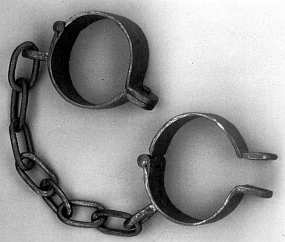 Instead they live broken lives, always striving, always attempting to do better, trying harder the next time, slaving to get it right—until it kills them.
But that’s not the Gospel.
Too many church leaders egg people on to do better. Often they impose man-made rules on people or attempt to resurrect the Law that Jesus fulfilled as if it were not completed by the Lord. How sad! People so burdened have no idea what freedom in Christ is. They never hear that Jesus came to proclaim freedom to those held captive by works of righteousness that were not righteous enough and never could be.
Last year, as part of the Bible reading plan I champion here at Cerulean Sanctum, I read through the entire book of Galatians each day for a month and truly meditated on what the Holy Spirit says in those pages. That month of reading so profoundly deepened my understanding of grace and the burden of the Law that I would have to say it was the best study I ever did in my life.
I recommend the same to you. If you’re in a church that spends too much time rehashing the Old Testament Law, I encourage you to read the entirety of Galatians every day for a month.
Christian, you are free. Don’t live under the Law. Live under the Gospel of Grace.
For all who rely on works of the law are under a curse; for it is written, “Cursed be everyone who does not abide by all things written in the Book of the Law, and do them.” Now it is evident that no one is justified before God by the law, for “The righteous shall live by faith.” But the law is not of faith, rather “The one who does them shall live by them.” Christ redeemed us from the curse of the law by becoming a curse for us—for it is written, “Cursed is everyone who is hanged on a tree”—so that in Christ Jesus the blessing of Abraham might come to the Gentiles, so that we might receive the promised Spirit through faith.
—Galatians 3:10-14
Amen and amen!

 Great wisdom is called for. And oftentimes ambassadors, as already noted, are ill thought of by people who would rather wage war. Yet it is by the ambassador’s adeptness with grace that warring factions might lay down their arms and be reconciled. Ambassadors must and always be the bigger person, even if it means they might appear diminished in the eyes of those who fail to see the greater reality. They understand that they must decrease so that the fruits of reconciliation increase.